
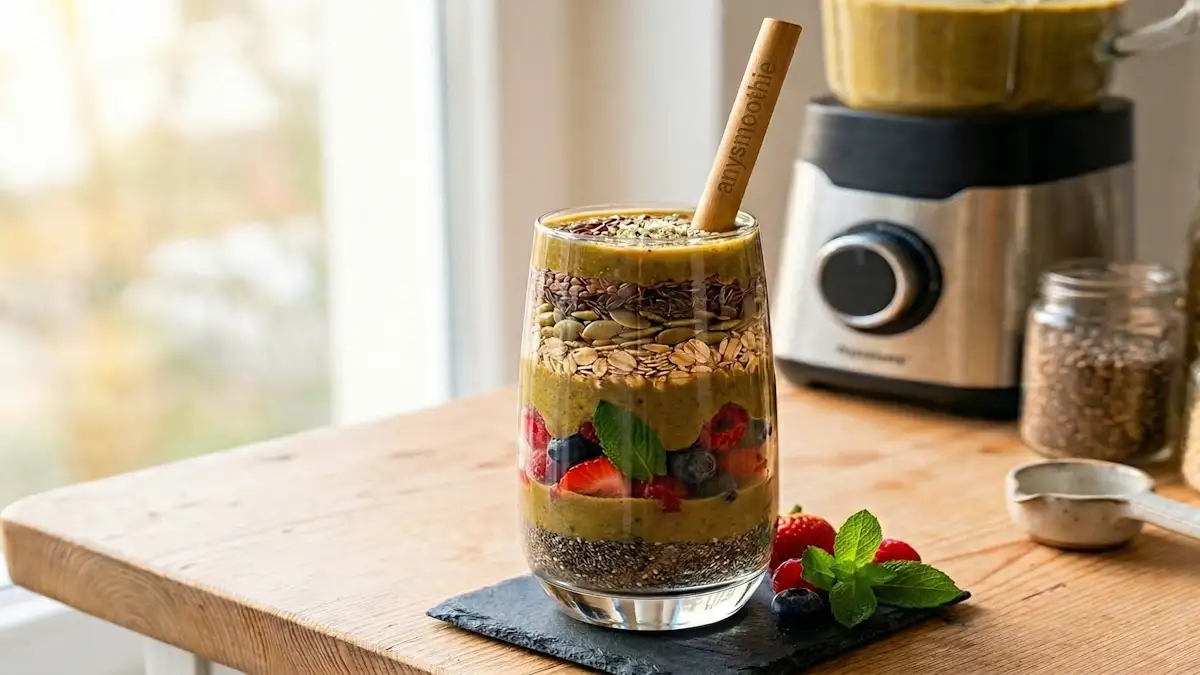
A seed and grain plant-based protein smoothie is a fast way to turn a blender into a full meal. Seeds bring protein density, healthy fats, and texture. Grains add a steadier carb base and help round out the amino acid mix.
The basic rule is protein complementation. The American Society for Nutrition explains it in protein complementation basics. When you build the blend with care, it can feel more filling before a workout, after a workout, or on a busy morning.
Amino Acid Complementarity: Solving the Limiting Factor Logic
Amino acids work together to improve protein quality by balancing the limitations of grains and seeds
Lysine and Methionine: The Synergistic Bridge Between Grains and Seeds
Many grains are lower in lysine, while seeds often bring more of it. On the other side, grains contribute more methionine and cysteine, the sulfur amino acids that help round out a blend.
When you combine them, each food covers part of the other’s gap. A review on combining plant proteins explains the same logic in a broader diet context. In a smoothie, the rule is simple, mix ingredients that do not repeat the same weakness.
How a Seed-Grain Blend Supports a More Complete Protein Profile
If the formula is planned well, the amino acid spread gets wider and the overall protein quality improves. That does not mean every shake becomes identical to meat or dairy.
It does mean a smart seed and grain plant-based protein smoothie can move toward a PDCAAS-equivalent pattern. That is useful in practical terms. You get a drink that works harder without getting complicated.
The Best Plant Protein Ingredients for a Stronger Smoothie
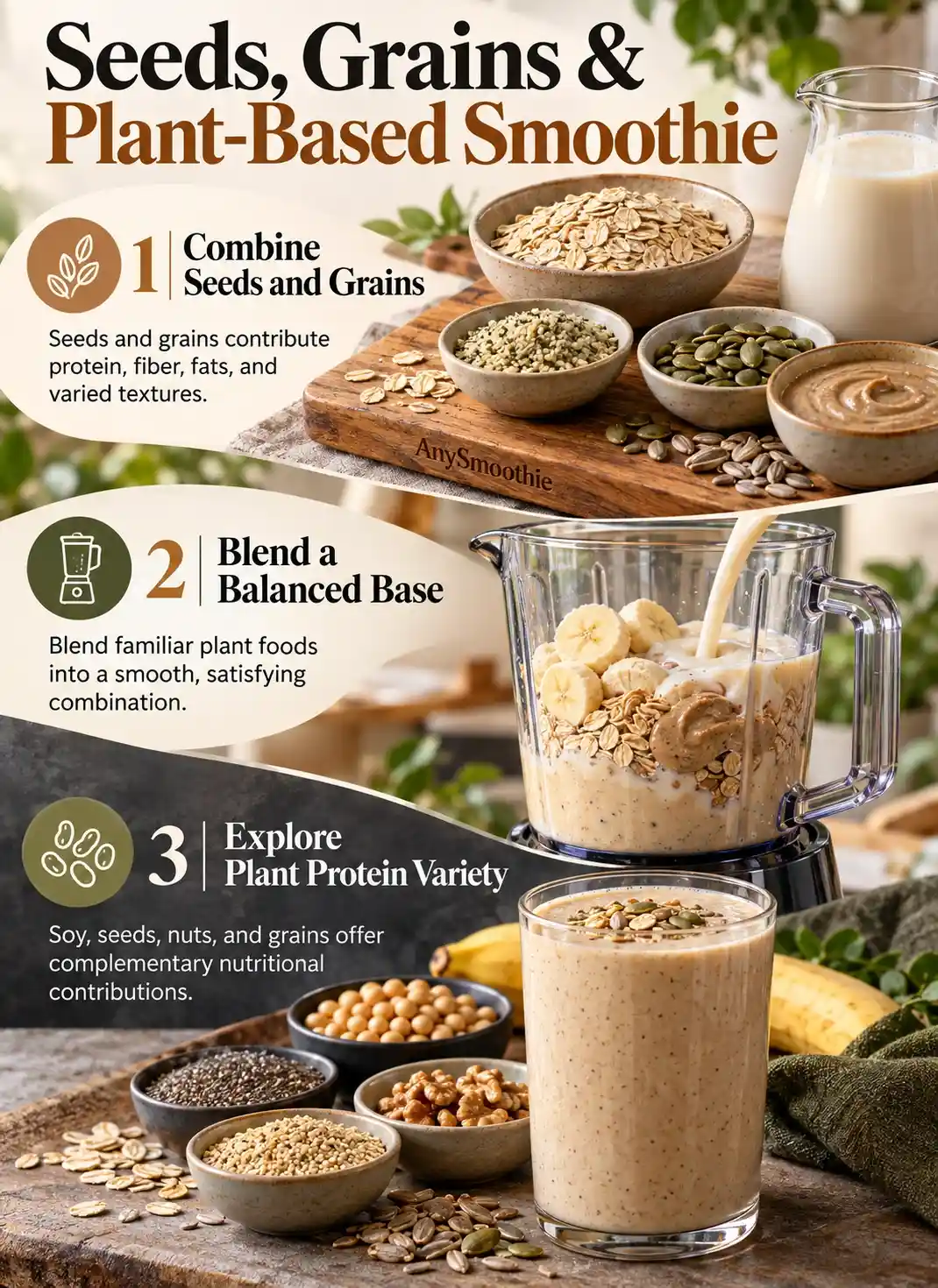
The best blends use ingredients that pull different weight. Hemp gives a smooth base, pumpkin seed adds depth, and sprouted brown rice fills in the grain side of the equation.
A hemp seed PDCAAS study is a good reminder that digestibility matters as much as raw protein grams.
| Plant Protein Source | Physiological Benefit | Primary Amino Acid Profile | Best Smoothie Pairing | Digestibility Factor |
|---|---|---|---|---|
| Hemp seeds (edestin) | Broad support for daily protein needs | Balanced seed protein with edestin | Banana, oat milk, cinnamon | Smooth texture, easy to blend |
| Pumpkin seeds | Supports muscle repair and protein synthesis | Leucine-rich, with useful arginine | Cocoa, dates, vanilla | Best when ground or blended well |
| Sprouted brown rice | Grain balance and redox support | More methionine and cysteine support | Hemp, berries, plant milk | Sprouting can improve tolerance |
Used together, these ingredients can move a smoothie toward a PDCAAS-equivalent profile. That is the real benefit of planning the blend instead of throwing ingredients together.
Hemp Seeds for Smooth Texture and Broad Protein Support
Hemp seeds are the easiest entry point. They have a mild flavor, a creamy mouthfeel, and edestin, hemp’s main storage protein. That helps the shake feel full without tasting grassy. Shelled hemp also mixes well with fruit. That is why it fits so many seed and grain plant-based protein smoothie recipes.
Pumpkin Seeds for a More Leucine-Rich Boost
Pumpkin seeds bring a firmer amino acid push, especially leucine. Leucine is the amino acid most tied to mTOR signaling and the start of protein synthesis. Pumpkin seed helps the blend feel more recovery-focused.
It also adds a nutty taste and a thicker body, which works well with cocoa or frozen banana.
Sprouted Brown Rice for Easier Digestion and Grain Balance
Sprouted brown rice is the quiet helper. It rounds out the grain side, adds methionine and cysteine support, and can feel easier to digest after sprouting. In a smoothie, it keeps the texture light while still giving the blend a stronger protein base.
Bioavailability Engineering: Breaking Down Phytic Acid and Lectins
Seeds and grains are packed with useful nutrients, but they also carry phytic acid and, in some cases, lectins. Those compounds can slow mineral access and make the protein less available.
Sprouting Mechanics: Unlocking Seed-Bound Nutrients for Absorption
Sprouting starts the seed’s own enzyme activity. As that process runs, phytate drops and the seed becomes easier to use. Soaking helps too, especially for grains and seeds that will be blended or cooked first.
Better preparation is part of protein quality.
Use the Right Liquid, Fiber, and Fat to Support Nutrient Delivery
A plant milk base keeps the flavor clean. Fruit adds carbs for training fuel. A little fat from nut butter, flax, or hemp slows the drink enough to feel satisfying.
Too much fiber makes the smoothie heavy, so keep chia or oats in balance.
3 ‘Plant-Power’ Seed and Grain Support Smoothie Recipes
These are simple templates, not rigid formulas. Adjust sweetness, thickness, and protein level to fit your day.
Biohacking Structural Repair: Supporting the Extracellular Matrix
Protein repair is not only about muscles. It also draws on the amino acids used in connective tissue and the extracellular matrix. After training, or after a long stretch without food, the body needs amino acids and usable energy at the same time.
A well-built smoothie gives both without heavy prep.
Mitochondrial Priming: Fueling the Energy-Intense Process of Protein Synthesis
Protein synthesis costs energy, so a smoothie with carbs, protein, and a little fat is a smart setup. That is why grain plus seed works so well.
The grain helps provide fuel, the seeds add amino acids, and the blend supports metabolic efficiency during recovery. Use it when you want a meal that does more than hold you over.
Conclusion
A seed grain plant based protein smoothie is one of the easiest ways to build a filling, nutrient-smart meal. Seeds and grains work better together because they cover amino acid gaps, and simple prep can improve what your body can use.
Pick one formula, adjust the texture and sweetness, and let the blend fit your routine instead of forcing the other way around. That makes it useful for breakfast, recovery, or any day that needs steady fuel.
🛡️ Safety Notes & Contraindications: Seed and grain smoothies
Antinutrient load: raw seeds and grains contain phytic acid and lectins that can inhibit the absorption of minerals like iron, zinc, and calcium; always use sprouted or soaked versions in smoothies to improve nutrient bioavailability.
Arsenic in Rice: brown rice can accumulate inorganic arsenic from the soil; if using brown rice protein or grains daily, ensure the product is third-party tested for heavy metals or rotate with other grains like quinoa or buckwheat.
Omega-3 to Omega-6 Balance: while hemp and pumpkin seeds are nutrient-dense, they are high in Omega-6 fatty acids; balance your smoothie with a source of Omega-3s (like chia or algae oil) to maintain a healthy inflammatory response.
Digestive bulk: the high fiber content in whole grain and seed blends can cause bloating, gas, or osmotic diarrhea if your gut is not accustomed to high-residue meals; start with small portions and ensure adequate hydration.
Aflatoxin risk: improperly stored seeds and grains can harbor molds that produce aflatoxins; store your ingredients in a cool, dry place and discard anything that smells musty or “off.”
How does “Protein Complementation” solve the limiting amino acid factor in seeds and grains?
Most plant proteins are considered “incomplete” because they are low in one or more essential amino acids. Biochemically, grains are typically low in lysine but rich in methionine, while seeds are often the opposite. Supporting this physiological system through seed and grain smoothies facilitates the biochemical mechanics of “complementation,” providing a wider amino acid spread that moves toward a PDCAAS-equivalent pattern for more efficient muscle and tissue repair.
Why is “Leucine” in pumpkin seeds critical for starting protein synthesis?
Leucine is a branched-chain amino acid that acts as a primary signaling molecule for the mTOR pathway, which initiates the process of building new proteins. Biochemically, pumpkin seeds are relatively rich in leucine compared to other plant sources. Supporting this physiological system through targeted smoothie blends optimizes the natural pathways of “muscle protein synthesis,” ensuring the biochemical mechanics of recovery are activated after physical demand.
How does “Sprouting and Soaking” improve the bioavailability of plant proteins?
Seeds and grains contain antinutrients like phytic acid and lectins that can bind to minerals and inhibit digestive enzymes. Biochemically, the process of sprouting activates the seed’s own enzymes, which break down these compounds and make the protein and minerals more accessible. Supporting this physiological system through sprouted ingredients optimizes the natural pathways of “nutrient uptake,” ensuring the biochemical mechanics of digestion are smooth and efficient.
What is the role of “Edestin” in hemp seeds for human protein support?
Hemp seeds are unique because they contain a high proportion of edestin, a globular storage protein that is very similar to the proteins found in human blood. Biochemically, edestin is highly digestible and supports the physiological systems involved in the production of antibodies and enzymes. Supporting this pathway through hemp-based smoothies facilitates the biochemical mechanics of systemic protein maintenance with minimal digestive load.
Why is “Mitochondrial Priming” necessary for the energy-intense process of protein synthesis?
Synthesizing new proteins is a highly energy-dependent process that requires significant amounts of ATP. Biochemically, pairing plant proteins with steady carbohydrates from grains like oats or quinoa provides the necessary fuel for cellular work. Supporting this physiological system through balanced seed and grain smoothies optimizes the natural pathways of “metabolic efficiency,” ensuring the biochemical mechanics of repair have both the amino acids (bricks) and the energy (workers) needed for success.

Medical Disclaimer: AnySmoothie content is for educational purposes only and is not a substitute for professional medical advice. Consult a healthcare provider for personalized guidance. See our full Disclaimer & Terms of Use. AI Transparency: AnySmoothie may use AI to support content development. All content undergoes human editorial review for accuracy, clarity, and editorial quality. See our full AI Transparency.