
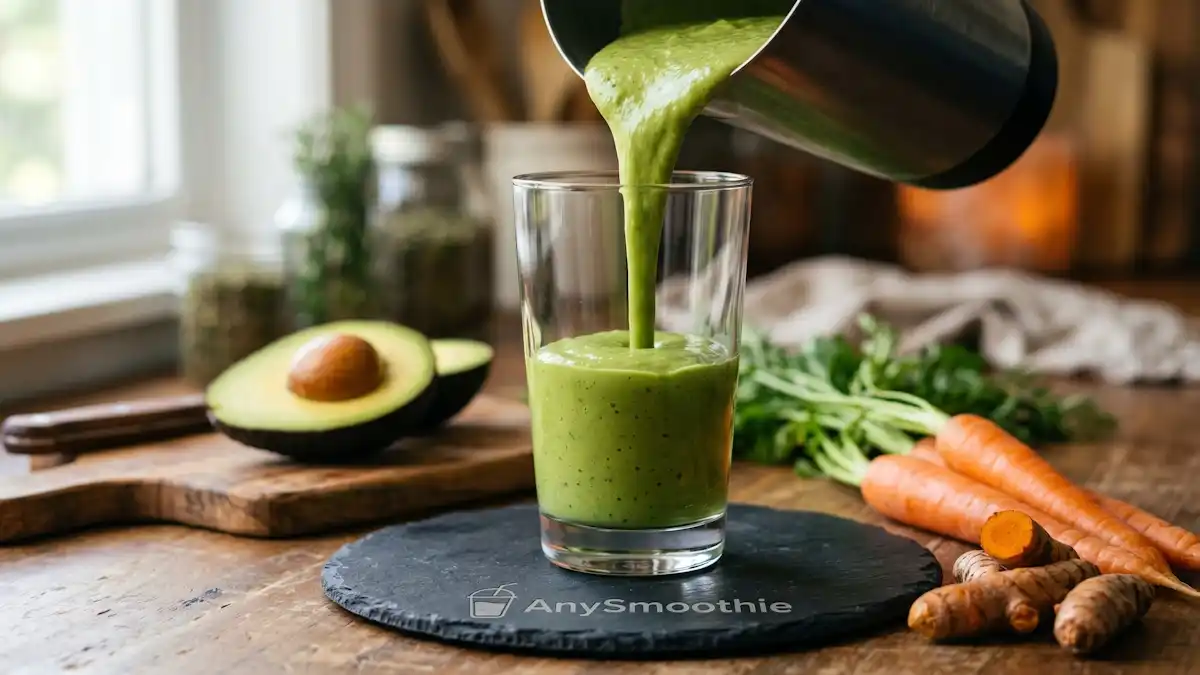
A smoothie can be more than a fast breakfast. When avocado is part of the blend, the drink can help your body absorb more of the nutrients already in it.
That matters because many plant compounds need fat to move well through digestion. Avocado also gives the smoothie a thicker texture and a slower, steadier feel after you drink it. The result is a simple avocado nutrient carrier smoothie that works harder than a fruit-only mix.
Below, the focus is on how avocado fat supports absorption, why the base matters, and how to make one at home without overthinking it.
The Lipid Vehicle: How Avocado Fats Transport Micronutrients
Avocado brings more than creaminess. Its fats help move certain nutrients through the digestive process, which improves how well your body can use them. In plain terms, fat acts like a transport helper for compounds that don’t travel well on their own.
That matters for nutrient partitioning. When fats are present, more of the useful material in your smoothie gets packaged for uptake, rather than passing through with little use. It also supports metabolic efficiency, because the body gets fuel and micronutrients in the same meal.
Fat is part of the transport system here. Without it, many plant compounds stay less available.
Liposomal Dynamics: Enhancing the Absorption of Vitamins A, D, E, and K
Vitamins A, D, E, and K are fat-soluble. That means your body absorbs them better when a lipid base is present. Avocado gives you a creamy fat source that can support this process better than a fat-free drink.
This does not mean every smoothie needs a lot of fat. It means a small amount can change how the body handles the whole blend. If you want the best return from spinach, kale, or carrot in a smoothie, avocado is a practical addition.
Carotenoid Synergy: Increasing Lutein and Lycopene Bioavailability
Carotenoids are another reason avocado works so well. These pigments include lutein and lycopene, which show up in foods like spinach, kale, mango, tomato, and berries. Fat helps the body absorb them, and avocado does that job well.
A human study found that adding avocado or avocado oil to salsa and salad boosted carotenoid absorption several times over the fat-free version, according to a PubMed study on avocado and carotenoid uptake. Other research on tomato sauce and carrots found the same pattern with provitamin A foods, which is detailed in this study on avocado and provitamin A absorption.
Some reports describe increases of up to 400 percent compared with fat-free bases. That number makes sense when you look at how strongly fat changes carotenoid bioavailability.
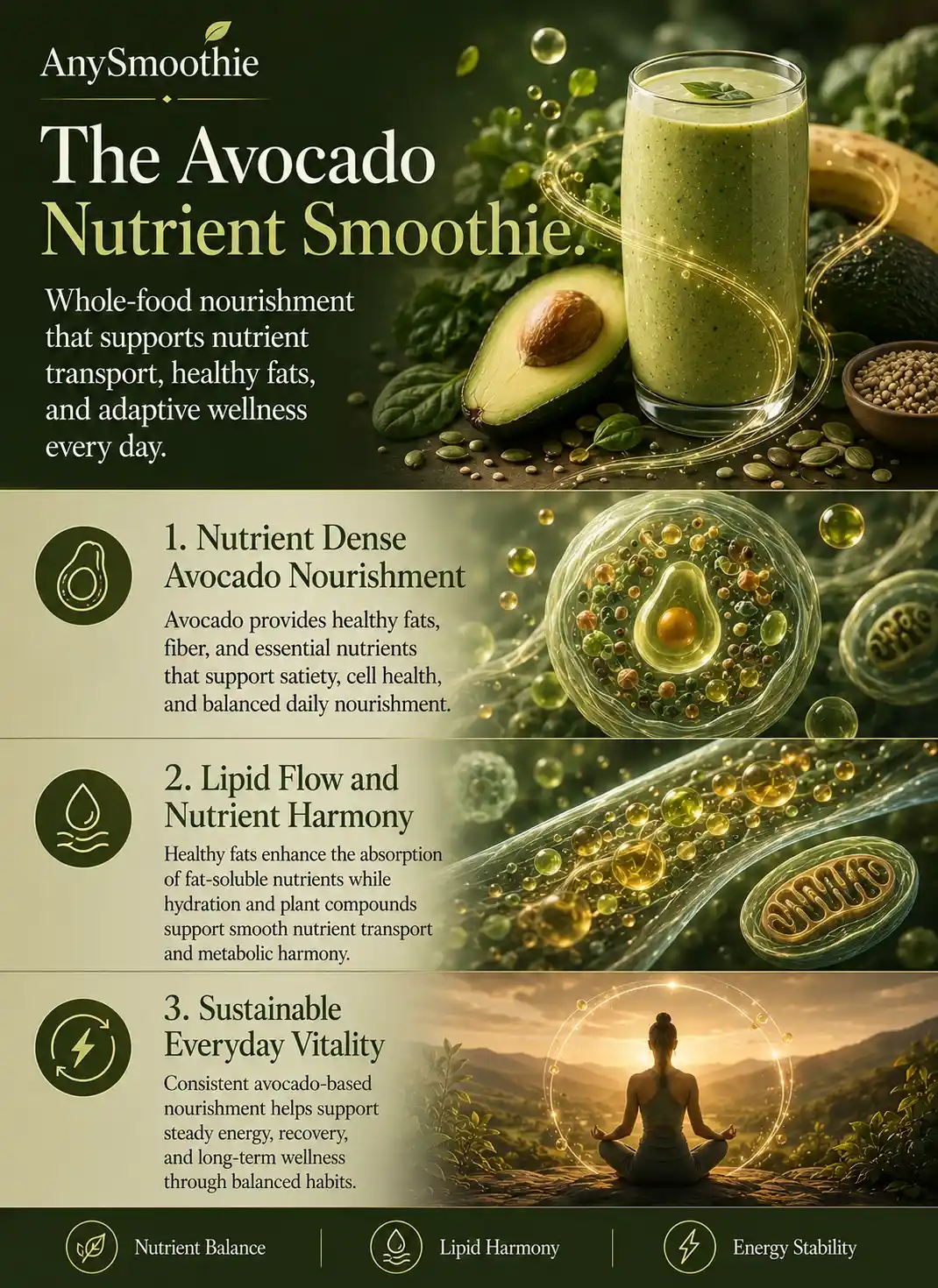
Beyond the Cream: The Role of Oleic Acid in Cellular Uptake
Avocado’s fat profile is one reason it works so well in smoothies. Its oleic acid content supports a smooth emulsion, so the drink feels thick instead of watery. That texture is more than a comfort feature. It often helps the blend digest at a calmer pace.
Here is a quick comparison of common smoothie bases.
| Smoothie Base | Vitamin Absorption Rate (Liposoluble) | Glycemic Impact (Insulin Response) | Texture Emulsification | Nutrient Transport Efficiency |
|---|---|---|---|---|
| Water/Juice | Low | Higher with juice | Thin, less stable | Low |
| Non-Fat Dairy or Plant Milk | Moderate | Moderate | Smooth, but lighter | Moderate |
| Avocado/Lipid Base | High | Often slower and more balanced | Thick, stable, creamy | High |
The takeaway is simple. Water and juice can taste bright, but they don’t support fat-soluble nutrient delivery as well. Non-fat milk or plant milk can help texture, yet they don’t match avocado’s lipid support. The avocado base often gives you better carotenoid absorption and a slower-digesting smoothie.
The trade-offs of lighter bases versus a lipid-rich blend
Water keeps calories low, and juice brings quick flavor. Still, both can leave a smoothie feeling thin and short-lived. Juice can also raise the glycemic hit faster than many people want in the morning.
Low-fat dairy or plant milk sits in the middle. It can make a decent base, but it usually lacks the fat needed for strong transport support. Avocado gives you more body, more fullness, and a better match for greens and colorful fruit.
Why avocado gives the smoothie better texture, satiety, and stability
A ripe avocado acts like a natural emulsifier in the blender. It helps the ingredients bind together, so the drink stays smooth and rich. That same structure can make the smoothie feel more filling.
This matters for appetite control and nutrient partitioning. A thicker blend often leads to steadier energy, because it slows the pace of digestion a bit. For many people, that means less of a sugar spike and a better lunch-time gap.
3 “Nutrient-Carrier” Avocado Smoothie Recipes
These ideas stay simple on purpose. Each one uses avocado as the base, then pairs it with ingredients that fit the goal.
Metabolic Efficiency: Balancing Satiety and Nutrient Partitioning
A good smoothie formula balances fat, fiber, protein, and carbs. That mix helps your body use the meal well, instead of burning through it too fast. It also supports mitochondrial priming, because the cells get a steadier stream of fuel and micronutrients.
Fiber and Fat Dual-Action: Supporting Glycemic Stability while Fueling Cells
Avocado brings both fat and fiber, which slows digestion. When you add fruit on top of that, the sugar load feels more stable. The result is a smoothie that can be satisfying without feeling heavy.
Easy Add-Ins That Improve the Formula without Ruining the Taste
Chia, flax, spinach, cocoa, ginger, cinnamon, and protein powder all work well here. Each one adds something useful without flattening the flavor. Keep the blend smooth, nutrient dense, and easy to drink.
Conclusion
Avocado is more than a texture fix. In a smoothie, it can act as a nutrient carrier that helps fat-soluble vitamins and carotenoids do their job. It also supports satiety, steadier energy, and a better blend overall. Start with one of the three recipes, then adjust the fruit and greens to fit your day.
⚠️ Safety Notes for Avocado Nutrient Carrier Smoothies
Caloric Density Awareness: Avocado is nutrient-dense but also high in calories. If you are tracking your energy intake for weight management, limit your portion to 1/4 or 1/2 of a medium avocado per smoothie to maintain metabolic balance.
Latex-Fruit Syndrome: Some individuals with a latex allergy may experience cross-reactivity with avocado (due to hevein-like proteins). Symptoms can range from oral itching to severe systemic reactions.
FODMAP Sensitivity: Avocado contains sorbitol, a polyol that can cause bloating, gas, or diarrhea in individuals with IBS or high sensitivity to FODMAPs. Stick to a serving size of 1/8 of an avocado if you are in the elimination phase.
Blood Thinner Interactions (Vitamin K): Because avocado significantly increases the absorption of Vitamin K from greens (like spinach or kale), it can affect the efficacy of anticoagulants like Warfarin. Maintain a consistent intake and consult your doctor if you are on these medications.
Ripeness and Mold: Never blend avocados that have dark, stringy brown flesh or a rancid smell, as these can contain fungal metabolites that stress the liver’s detoxification pathways.
FAQ
Why is avocado considered a “nutrient carrier” in smoothies
Avocado is uniquely rich in monounsaturated fatty acids (MUFAs), which act as a solvent for fat-soluble vitamins (A, D, E, and K) and antioxidants like carotenoids. Without a lipid source, many of these critical nutrients pass through the digestive tract unabsorbed. The biochemical mechanics of the avocado’s fats allow for the formation of micelles, supporting the natural pathways of intestinal absorption and ensuring that the “payload” of your smoothie actually reaches your cells.
How does oleic acid support cellular uptake of nutrients
Oleic acid, the primary fat in avocado, supports the fluidity of cell membranes. By optimizing the structural integrity of the lipid bilayer, it makes the cells more “receptive” to incoming nutrients. This process, known as liposomal transport, ensures that once nutrients are in the bloodstream, they can effectively be partitioned into the tissues that need them most for energy and repair.
Can avocado improve the benefits of kale or spinach in a blend
Absolutely. Green leafy vegetables are packed with lutein and zeaxanthin, pigments essential for eye and cognitive health. However, these are strictly fat-soluble. Pairing them with avocado creates a powerful bio-synergy; the fats “unlock” these pigments, increasing their bioavailability significantly. This is a prime example of metabolic efficiency—getting the maximum nutritional output from every ingredient.
Does the fiber in avocado interfere with its carrier function
On the contrary, avocado fiber supports the process. Avocado contains both soluble and insoluble fiber which slows down gastric emptying. This extended “transit time” in the small intestine gives the lipids more time to emulsify and transport the fat-soluble nutrients, supporting the physiological systems involved in thorough nutrient extraction and glycemic stability.
Is it better to use fresh avocado or avocado oil
For a complete “carrier” effect, fresh avocado is superior. It provides the full matrix of fiber, vitamins, and minerals that support the physiological pathways of digestion. While avocado oil is an excellent source of MUFAs, the whole fruit offers a more complex delivery system that includes natural emulsifiers, further optimizing the liposomal transport of the smoothie’s bioactive compounds.

Medical Disclaimer: AnySmoothie content is for educational purposes only and is not a substitute for professional medical advice. Consult a healthcare provider for personalized guidance. See our full Disclaimer & Terms of Use. AI Transparency: AnySmoothie may use AI to support content development. All content undergoes human editorial review for accuracy, clarity, and editorial quality. See our full AI Transparency.