
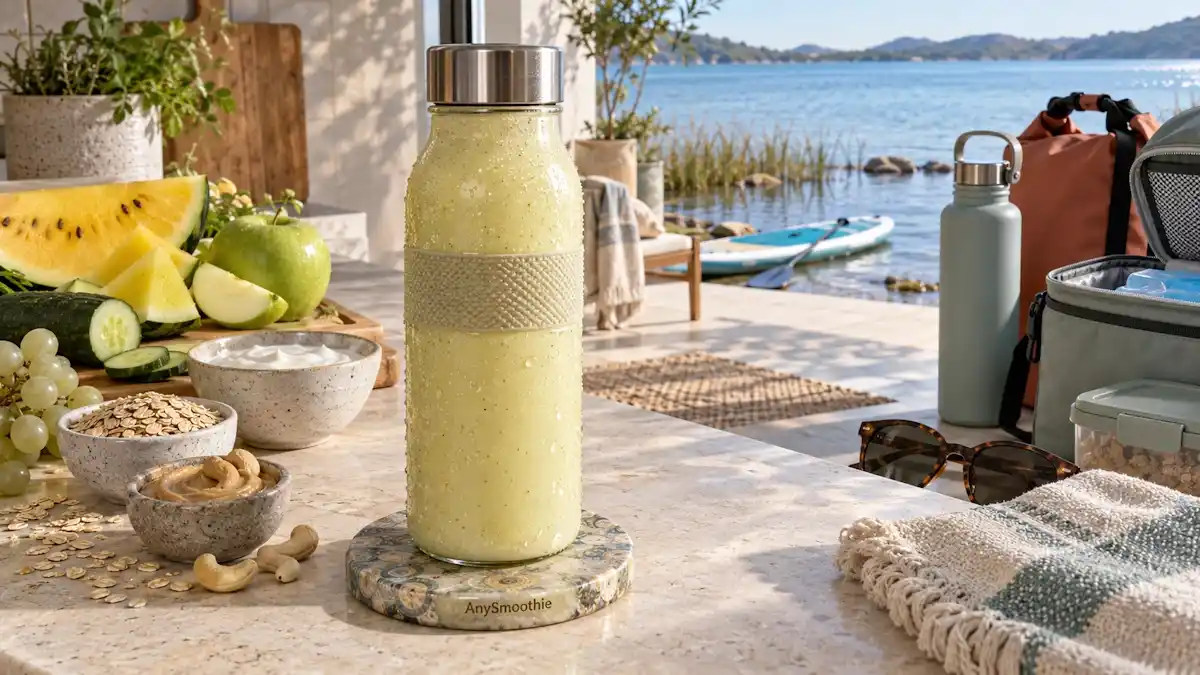
A cold smoothie can make a weekend paddleboarding trip feel even better, especially when the sunr weekend paddleboarding** can provide fluid, carbohydrates, and other nutrients in a portable drink without feeling unnecessarily heavy while you balance on the board.
These three blends use familiar ingredients, travel well in a leakproof bottle, and can be adjusted for your paddle plan. Start with a light base, then match the portion to the weather, outing length, and your own comfort.
What Makes a Paddleboarding Smoothie Work Well
A paddle-friendly smoothie needs enough liquid to sip easily, plus fruit or oats for carbohydrates your body can use as fuel. Water, coconut water, milk, and yogurt add fluid, while fruit brings flavor and naturally occurring sugars.
Fluids support normal hydration. Carbohydrates are metabolized to provide energy, sodium contributes to normal fluid balance, and protein supplies amino acids used for normal tissue maintenance.
Fluid needs vary considerably with weather, activity duration, sweat rate, and the individual. A position statement on fluid replacement for physically active people emphasizes avoiding both inadequate hydration and excessive fluid intake rather than following one intake strategy for everyone.
For a short recreational outing, you don’t need to load every nutrient or electrolyte into one bottle.
If you tend to feel full before paddling, choose a modest portion and familiar ingredients. Blend leafy greens sparingly, and save larger amounts of oats, seeds, or nut butter for times when you want a more substantial drink.
For another warm-weather outdoor routine, refreshing smoothies for summer golf days offers related ideas for keeping a portable smoothie light and cold.
Choose Ingredients That Stay Light and Refreshing
Watermelon, strawberries, pineapple, citrus, peaches, and berries bring water and bright flavor without requiring a thick base. Frozen fruit makes a smoothie cold and creamy with less ice, so the flavor stays stronger.
Cucumber, mint, lime, and fresh ginger add a crisp finish. Nut butter, larger oat portions, avocado, and rich dairy make a blend more substantial, so portion them according to when you plan to drink it and what feels comfortable for you.
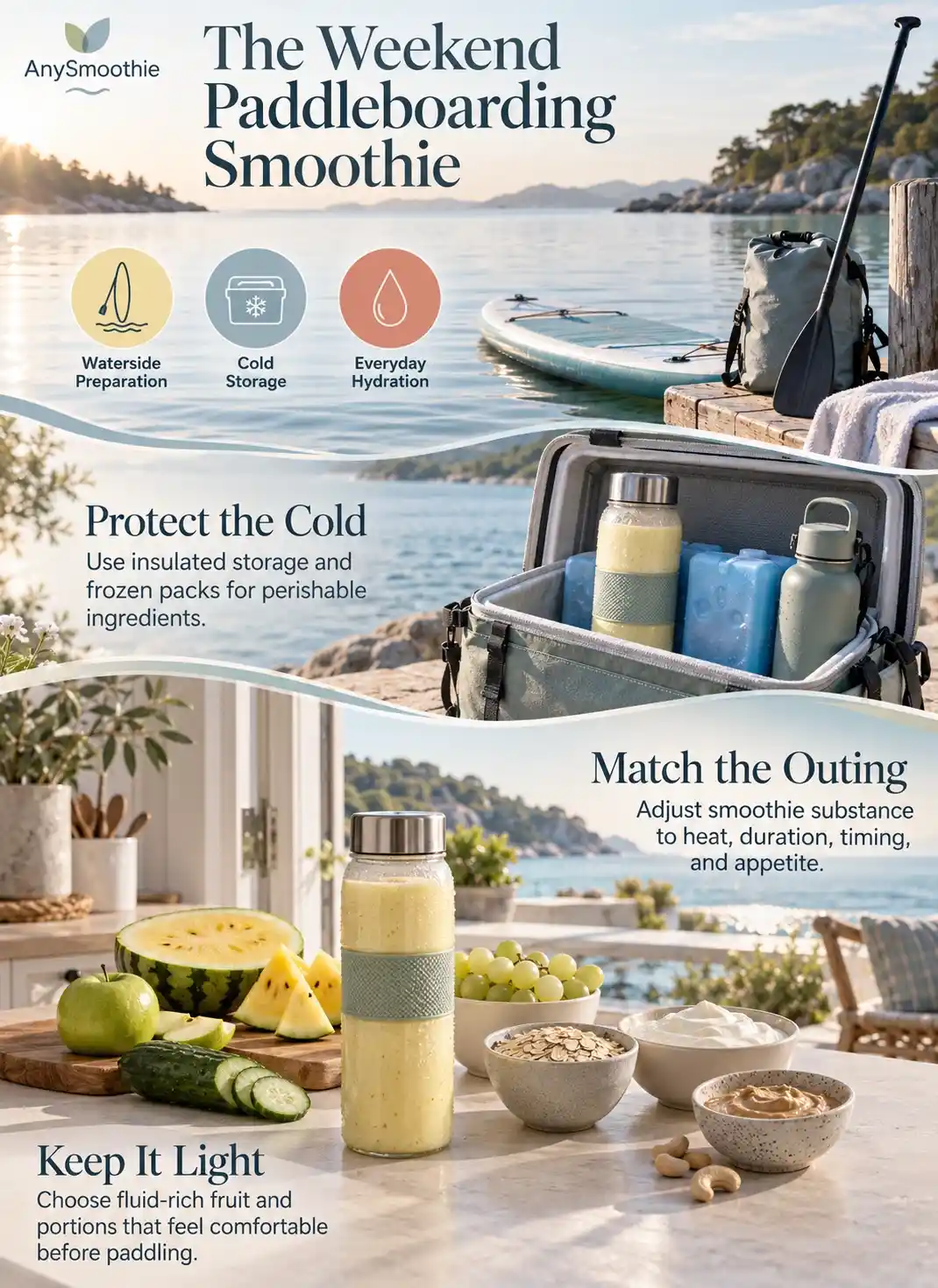
Match the Smoothie to Your Paddle Plan
For a casual paddle, a smaller smoothie may feel more comfortable than a large breakfast-sized blend shortly before launch. A more substantial smoothie can make sense after a longer outing or as breakfast when you have plenty of time before getting on the water.
Heat, route length, intensity, and personal tolerance should guide your portion size rather than a universal pre-paddle timing rule.
Bring plain water, too. For especially warm outdoor days, hydration smoothies for summer fatigue offers another useful perspective on building a fluid-focused blend.
3 Refreshing Smoothies for Weekend Paddleboarding
Each recipe makes one serving and fits easily in a 16- to 20-ounce insulated bottle. Add a few ice cubes for extra chill, or add water a tablespoon at a time if you want a thinner consistency.
| Smoothie | Main Ingredients | Best Timing | Texture and Flavor | Paddleboarding Purpose |
|---|---|---|---|---|
| Watermelon Lime Cooler | Watermelon, coconut water, lime, mint | Before or after a short warm-weather paddle | Thin, crisp, lightly sweet | A light, fluid-forward option |
| Berry Banana Oat Paddle Blend | Berries, banana, Greek yogurt, oats | Breakfast or after a longer paddle | Creamy, mildly tart | A more substantial option |
| Pineapple Cucumber Mint Cooler | Pineapple, cucumber, orange, mint | Around a casual paddle | Bright, juicy, dairy-free | A fresh option with few heavy ingredients |
The lighter watermelon and pineapple blends suit warm, shorter sessions. The berry blend has more body, so it works better when you want a more substantial snack or breakfast.
Watermelon Lime Electrolyte Cooler
Ingredients
- 1 1/2 cups cubed seedless watermelon
- 3/4 cup coconut water
- 1 tablespoon fresh lime juice
- 4 mint leaves
- 1 small pinch of salt
- Ice, optional
Steps
Add the coconut water first, followed by the watermelon, lime juice, mint, salt, and optional ice.
Blend until completely smooth, then pour into a chilled bottle.
Watermelon and coconut water contribute fluid and carbohydrates, while the small pinch of salt adds some sodium. Lime and mint keep the flavor bright rather than overly sweet.
This smoothie stays thin enough to sip and is a good fit when you want a lighter drink. Shake the bottle once before drinking if it separates.
Estimated Nutrition per Serving
- Calories: ~110 kcal
- Protein: ~2 g
- Carbohydrates: ~27 g
- Fat: ~0.5 g
- Fiber: ~1.5 g
- Sugars: ~22 g
Estimate uses unsweetened coconut water and does not include optional ice.
Berry Banana Oat Paddle Blend
Ingredients
- 3/4 cup frozen strawberries
- 1/2 medium banana
- 1/2 cup plain Greek yogurt
- 2 tablespoons rolled oats
- 3/4 cup unsweetened fortified soy milk
- Ice, optional
Steps
Add the soy milk and oats first and blend briefly to break down the oats.
Add the Greek yogurt, strawberries, banana, and optional ice, then blend until creamy and smooth.
Fruit and oats provide carbohydrates, while Greek yogurt and soy milk add protein. Because yogurt and oats give this drink more body, a smaller portion may feel more comfortable before paddling.
Estimated Nutrition per Serving
- Calories: ~255 kcal
- Protein: ~20 g
- Carbohydrates: ~35 g
- Fat: ~5 g
- Fiber: ~5 g
- Sugars: ~19 g
Estimate uses frozen strawberries, plain nonfat Greek yogurt, and unsweetened fortified soy milk.
If I knew I was drinking this after coming back ashore, I’d keep the full oat portion. Before a short paddle, I’d be more likely to choose one of the lighter fruit-forward blends instead.
For another paddle-based outing where cold storage and portability matter, smoothies for weekend kayaking trips is a closely related option.
Pineapple Cucumber Mint Cooler
Ingredients
- 1 cup frozen pineapple chunks
- 1/2 cup peeled, chopped cucumber
- 1 small orange, peeled and seeded
- 5 mint leaves
- 1 tablespoon fresh lime juice
- 1/2 cup cold water
Steps
Add the water first, followed by the cucumber, orange, pineapple, lime juice, and mint.
Blend until completely smooth and pour into a chilled bottle. Add another splash of water if you prefer a thinner consistency.
Pineapple and orange provide carbohydrates and citrus flavor, while cucumber and water create a lighter texture. Fresh mint gives the blend a cool finish without dairy.
Choose this recipe when you want a dairy-free smoothie that doesn’t feel overly substantial.
Estimated Nutrition per Serving
- Calories: ~140 kcal
- Protein: ~2 g
- Carbohydrates: ~35 g
- Fat: ~0.5 g
- Fiber: ~5 g
- Sugars: ~26 g
Estimate uses cold water rather than coconut water.
Pack, Chill, and Sip Smoothies Safely on the Water
Blend your drink shortly before leaving, then fill a clean, leakproof insulated bottle with a secure lid. Keep perishable smoothies cold in a cooler or insulated bag with sufficient ice or frozen gel packs, especially when the bottle contains yogurt, milk, tofu, or cut fruit.
USDA’s dedicated food-safety guidance for hiking, camping, and boating recommends packing coolers with ice or frozen gel packs and keeping perishable foods cold until they are needed.
On sunny days, avoid leaving a smoothie in a warm car or exposed on the board for extended periods.
Carry plain water and drink according to thirst, conditions, outing length, and your usual hydration needs. Test unfamiliar recipes at home rather than depending on a new ingredient combination for the first time on the water.
Make Ahead Without Losing Fresh Flavor
Portion frozen fruit into containers and wash produce the night before. Add liquid shortly before blending when possible, since texture, flavor, and appearance can change during storage.
Lemon or lime juice can brighten flavor, but it does not replace refrigeration. Label bottles when packing more than one drink.
Keep the Bottle Secure on Your Board
Choose a bottle that closes tightly and fits your board’s bungee cords or cooler pocket. Store it upright when possible, then open it while seated or when conditions are stable.
Don’t rely on a loose cup lid. A spill can leave your deck slippery and waste the drink you packed.
Conclusion: A Better Blend for Your Next Paddle
The watermelon cooler is light and crisp for short, warm paddles. The berry banana blend offers a more substantial option for breakfast or after a longer outing, while pineapple cucumber mint keeps things bright and dairy-free.
Choose smoothies for weekend paddleboarding based on your timing, comfort, and conditions. Adjust the sweetness, thickness, and portion size, then keep cold storage and plain water within reach before your next weekend on the water.
🛡️ Safety Notes & Dietary Interactions
- Water Safety First: Drink only when the board is stable and conditions allow safe handling. Sit or kneel if necessary, and never prioritize opening a bottle over balance, paddle control, awareness of traffic, wind, waves, or changing weather.
- Cold Storage: Yogurt, milk, cut fruit, and prepared smoothies require reliable chilling. Keep bottles in an insulated cooler or dry-bag setup with frozen packs, and avoid leaving them on a hot deck or inside a parked vehicle.
- Hydration Beyond Smoothies: Watermelon, coconut water, cucumber, and other fluid-rich ingredients contribute liquid, but smoothies should not replace plain water. Heat, sun, wind, exertion, and trip length can all increase hydration needs during paddleboarding.
- Digestive Comfort Before Paddling: Oats, yogurt, large fruit portions, or richer add-ins may feel heavy while balancing and paddling. Test serving size and timing on easier outings first, and choose the lighter watermelon or pineapple blend when fullness is a concern.
FAQs
Which smoothie is best before a short, hot-weather paddle?
The Watermelon Lime Electrolyte Cooler is the lightest pre-paddle option because it is thin, fluid-forward, and free from oats or dairy. Watermelon and coconut water provide carbohydrate and fluid, while a small pinch of salt adds sodium. Keep plain water available too, especially when the weather is hot or the route offers little shade.
Which smoothie is better after a longer paddleboarding session?
The Berry Banana Oat Paddle Blend is the most substantial of the three because it combines fruit, oats, Greek yogurt, and milk or water. That makes it more suitable after a longer outing or as a relaxed breakfast. Before paddling, use a smaller serving if oats and yogurt tend to feel heavy.
Is coconut water enough for hydration while paddleboarding?
No. Coconut water can contribute fluid, potassium, and carbohydrate, but it should not be treated as your only hydration source. Plain water remains important, and longer or hotter outings may require a more deliberate fluid and electrolyte plan depending on duration, weather, exertion, and your individual sweat losses.
How should I carry a smoothie on a paddleboard?
Use a tightly sealed insulated bottle that fits securely under the board’s bungee cords, inside a cooler pocket, or in another stable storage point. Keep it upright when possible and open it only on calm water or while seated. Loose cups or poorly sealed lids can create spills and a slippery deck.
Can I prepare a paddleboarding smoothie the night before?
You can prep fruit and other ingredients the night before, and a finished smoothie can also be refrigerated promptly in a sealed container. However, flavor, color, and texture may change as it sits. Oats thicken, fruit separates, and dairy still requires cold storage, so blending shortly before departure usually gives the best result.

Medical Disclaimer: AnySmoothie content is for educational purposes only and is not a substitute for professional medical advice. Consult a healthcare provider for personalized guidance. See our full Disclaimer & Terms of Use. AI Transparency: AnySmoothie may use AI to support content development. All content undergoes human editorial review for accuracy, clarity, and editorial quality. See our full AI Transparency.