
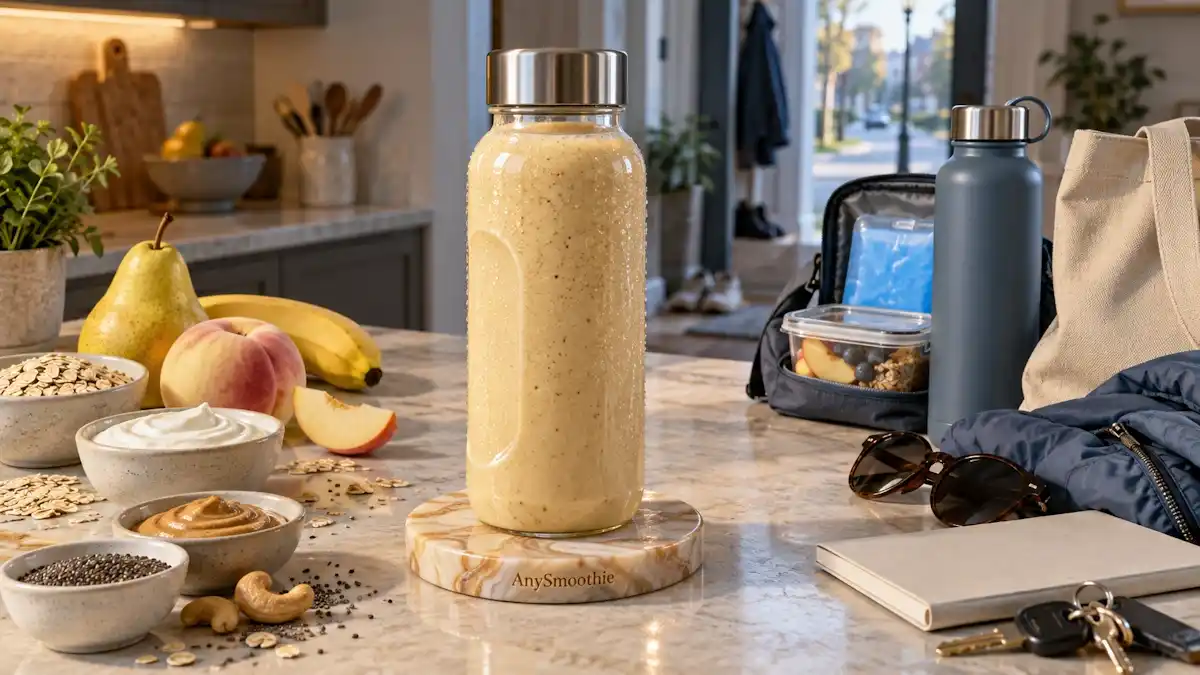
Leaving home early can leave you with a long commute, limited food choices, or hours of errands ahead. Smoothies before a long day away from home can put fluids, carbohydrates, protein, fiber, and fats into one portable meal.
They can provide a practical mix of energy-yielding nutrients and help with fullness, but they do not replace every meal or guarantee a certain result. Build one with enough substance for the time you’ll be away.
How to Build Smoothies That Keep You Going Longer
For smoothies before a long day away from home, use a simple formula: liquid, produce, protein, a fiber-rich ingredient, and a modest amount of fat. The right portions depend on whether the smoothie is breakfast, a snack, or one part of a larger meal plan.
Food texture and physical form can influence appetite differently between people. A systematic review and meta-analysis on food texture and satiety found that texture and viscosity can influence satiety-related responses, although the effects are not uniform enough to guarantee that one smoothie texture will keep everyone fuller for longer. A thicker or more viscous smoothie may feel more substantial than a very thin drink, but there isn’t one texture that guarantees longer fullness.
If you know you often struggle to fit meals around unpredictable travel or errands, hydration smoothies for frequent travelers can provide another useful portable-food perspective.
Choose the Right Ingredients for Energy and Fullness
Use milk, soy milk, or water as the liquid base. Add fruit and vegetables for flavor, carbohydrates, and texture. Greek yogurt, cottage cheese, silken tofu, or protein powder can raise the protein content.
For fiber, choose oats, chia seeds, ground flaxseed, or canned white beans. Nut butter, avocado, and seeds add fat. Carbohydrates provide an important source of energy, while protein supplies amino acids used in normal tissue maintenance. Fiber and fat can also influence digestion and the texture and substance of the meal.
A fruit-only smoothie can be perfectly useful as a snack, but a meal-sized blend usually needs additional ingredients to provide more protein, fiber, fat, or total energy.
Blend, Chill, and Pack It Safely
Blend until fully smooth, then taste before leaving home. Thin a thick blend with water or milk as needed.
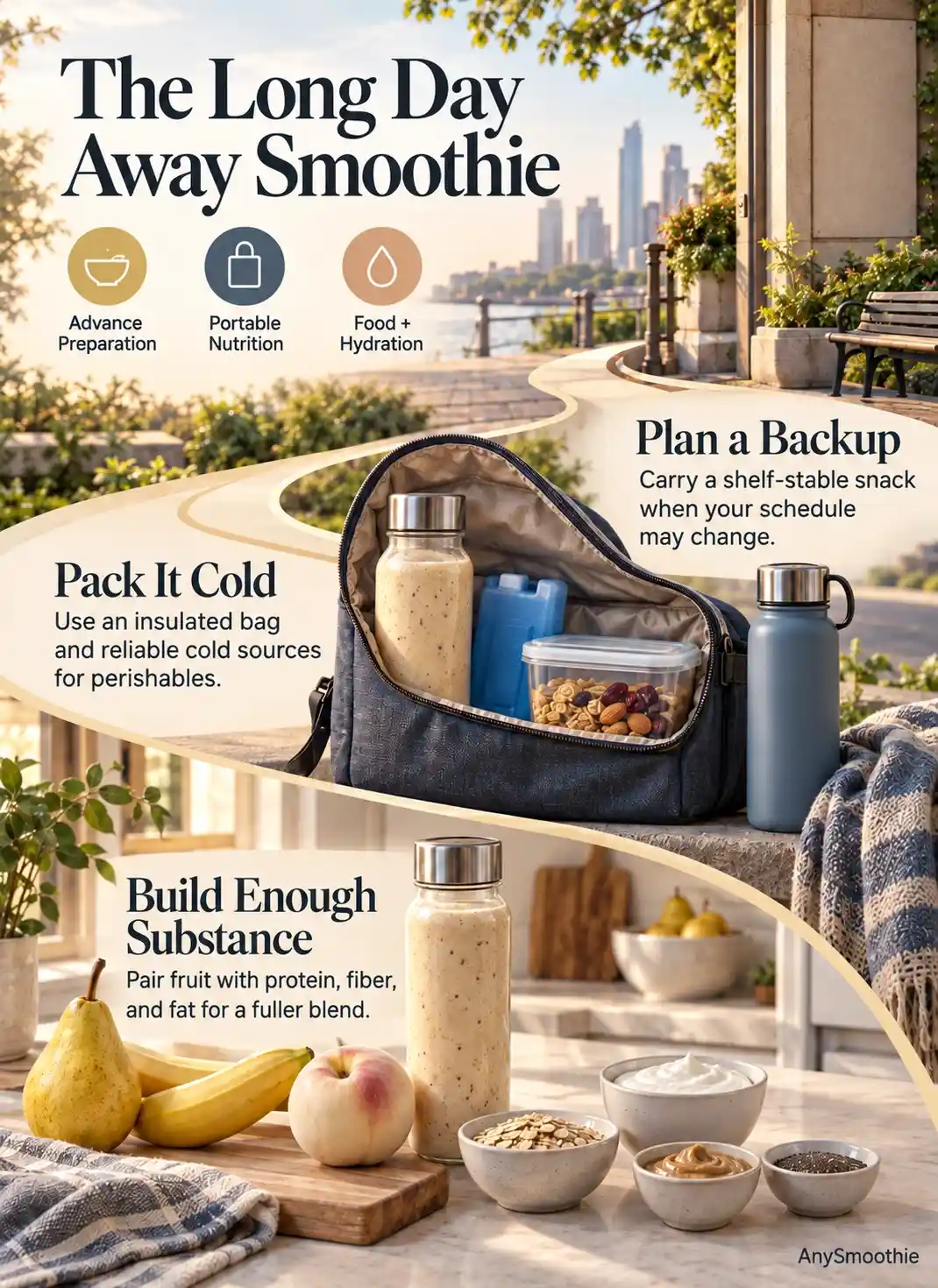
Use a leak-resistant bottle and place it in an insulated lunch bag. USDA food-safety guidance recommends packing perishable lunches with at least two cold sources, such as frozen gel packs or a combination of a gel pack and frozen water bottle, as explained in its guidance for keeping a bag lunch safe.
Separation is normal, so shake the bottle before drinking. When reliable cold storage is unavailable, choose a different portable food that does not require refrigeration.
For more planning around blends made in advance, smoothie storage and micronutrient stability covers freezer packs and storage considerations in more detail.
3 Smoothies Before a Long Day Away From Home
A useful travel smoothie has more than fruit and ice. These three options pair carbohydrates with protein, fiber, and fat, creating a more substantial drink for a busy day.
Berry Oat Smoothie for a Balanced Breakfast
Ingredients
- 1 cup frozen mixed berries
- 1/3 cup rolled oats
- 3/4 cup plain Greek yogurt
- 3/4 cup low-fat milk
- 1 tablespoon natural almond butter
Steps
Add the milk first, followed by the Greek yogurt, berries, oats, and almond butter.
Blend until the oats are fully incorporated and the texture is smooth. Add a small splash of milk or water if the blend is too thick to drink comfortably.
Berries add flavor and fiber, while oats provide carbohydrates. Yogurt contributes protein, and almond butter adds fat for a more substantial drink. This works well for a commute, school day, or workday.
For occasions when a smoothie needs to function as a more substantial meal, filling meal replacement smoothies guide offers another useful way to think about portions and ingredient balance.
Estimated Nutrition per Serving
- Calories: ~450 kcal
- Protein: ~26 g
- Carbohydrates: ~54 g
- Fat: ~16 g
- Fiber: ~10 g
- Sugars: ~24 g
Estimate uses plain nonfat Greek yogurt, low-fat dairy milk, mixed berries, and natural almond butter.
If I knew lunch might be delayed, I’d keep the oats and almond butter instead of turning this into a lighter berry-and-yogurt drink.
Banana Peanut Butter Smoothie for Busy Mornings
Ingredients
- 1 medium banana
- 1 tablespoon natural peanut butter
- 3/4 cup unsweetened fortified soy milk
- 1/2 cup plain Greek yogurt
- Pinch of cinnamon
- 1/2 cup ice
Steps
Add the soy milk first, followed by the Greek yogurt, banana, peanut butter, cinnamon, and ice.
Blend until smooth and creamy. Add a little water if you want a thinner texture.
This creamy option uses familiar pantry staples. Banana supplies carbohydrates, while peanut butter, soy milk, and yogurt make the drink more substantial.
For a peanut allergy, use sunflower seed butter or another safe alternative. Freeze banana slices ahead of time for a colder, thicker blend.
Estimated Nutrition per Serving
- Calories: ~325 kcal
- Protein: ~20 g
- Carbohydrates: ~36 g
- Fat: ~13 g
- Fiber: ~5 g
- Sugars: ~20 g
Estimate uses unsweetened fortified soy milk, plain nonfat Greek yogurt, and natural peanut butter.
Green Mango Smoothie for a Fresh, Portable Meal
Ingredients
- 1 cup frozen mango
- 1 packed cup baby spinach
- 1/4 medium avocado
- 1/2 cup silken tofu
- 1 tablespoon fresh lime juice
- 3/4 cup cold water
Steps
Add the water and silken tofu first, followed by the spinach, mango, avocado, and lime juice.
Blend until completely smooth. Add more water a tablespoon at a time if you prefer a lighter drinking texture.
Mango provides sweetness and carbohydrates. Spinach adds color and fiber, avocado gives the drink a creamy texture, and tofu provides protein.
Leafy greens alone do not make a complete portable meal, so include a protein source and choose a portion that fits the rest of your day’s food.
Estimated Nutrition per Serving
- Calories: ~275 kcal
- Protein: ~9 g
- Carbohydrates: ~37 g
- Fat: ~11 g
- Fiber: ~8 g
- Sugars: ~24 g
Estimate uses silken tofu and water rather than yogurt or coconut water.
If I wanted this as a lighter breakfast before leaving home, I’d keep the water base rather than adding juice or coconut water simply for extra sweetness.
Which Recipe Matches Your Day Best
Each recipe has a different balance of flavor, thickness, and packing needs.
| Smoothie | Best For | Main Ingredients | Texture and Flavor | Packing Note |
|---|---|---|---|---|
| Berry oat | Morning commute | Berries, oats, yogurt | Thick, tangy, fruity | Keep well chilled |
| Banana peanut butter | Fast breakfasts | Banana, peanut butter, yogurt | Creamy, mildly sweet | Freeze banana ahead |
| Green mango | Warm days | Mango, spinach, avocado, tofu | Bright, creamy, fresh | Keep tofu cold |
Choose based on how long you will be away, whether you can keep the drink cold, and your dietary needs. The berry oat smoothie suits a breakfast role, while the banana blend is fast to assemble. The green mango option works when you want a lighter-tasting blend with a protein source.
Match the Smoothie to Your Schedule
A shorter morning may only call for a smoothie and a piece of fruit. For travel, outdoor plans, or back-to-back errands, choose a more substantial recipe and pack a backup snack.
If the day unexpectedly runs through a normal meal, smoothies after missing a meal offers a related approach to rebuilding a balanced eating pattern rather than simply making the next smoothie larger.
Keep dairy-, tofu-, or other perishable smoothies chilled until you are ready to drink them.
Simple Ways to Make a Smoothie More Travel-Friendly
Freeze fruit ahead of time to make the drink colder without relying heavily on ice. You can also partially freeze a smoothie in a freezer-safe bottle, leaving adequate room for expansion, then transfer it to an insulated bag with cold packs.
Carry a spoon for thicker blends and pack a shelf-stable backup, such as roasted chickpeas or whole-grain crackers. Keep granola and other crunchy add-ins separate if texture matters.
Check labels for added sugar, allergens, and protein powder ingredients. A smoothie works best as part of a day’s meals and snacks, not as the only food source.
Conclusion: A Portable Meal That Fits the Day
The best smoothies before a long day away from home combine produce, carbohydrates, protein, fiber, and some fat in a bottle that is easy to carry. That balance can make the drink more substantial than a blend made only with juice or fruit.
Start with one recipe, then adjust the sweetness and thickness to your taste. Keep perishable ingredients cold, choose foods that fit your dietary needs, and bring a backup snack when the day may not go as planned.
🛡️ Safety Notes & Dietary Interactions
- Cold Storage Away From Home: Yogurt, milk, tofu, and prepared smoothies need dependable refrigeration during travel or errands. Use an insulated lunch bag with adequate frozen packs, and do not leave perishable bottles in a warm vehicle for extended periods.
- Allergens and Portable Foods: Dairy, soy, peanuts, seeds, and other common smoothie ingredients may require substitutions for allergies or intolerances. Check labels carefully, especially when packing packaged snacks or plant-based alternatives alongside the smoothie for a long day.
- Portion and Fullness: Oats, nut butter, avocado, yogurt, and protein powders can make a smoothie quite substantial. Match the serving to whether it replaces breakfast or acts as a snack, and avoid drinking a large portion quickly before travel.
- Backup Food Planning: A smoothie should not be the only food packed for an unpredictable day. Delays, long commutes, or limited meal access can extend the time between meals, so include a suitable shelf-stable snack and regular drinking water.
FAQs
Which smoothie is best before a very long day away from home?
The berry oat smoothie is the most meal-like option because it combines fruit, oats, yogurt, milk, and nut or seed butter. That gives it carbohydrate, protein, fiber, and fat in one serving. If you expect several hours before your next meal, it is the strongest starting point of the three.
Which recipe is fastest to make on a rushed morning?
The banana peanut butter smoothie is the simplest because it uses only a few familiar ingredients and does not require greens or multiple produce items. Freezing banana slices ahead of time makes it even quicker. Add oats only when you want a thicker, more substantial breakfast rather than a lighter portable drink.
How can I keep a smoothie cold if I am out all day?
Place the chilled smoothie in a leak-resistant bottle inside an insulated lunch bag with sufficient frozen gel packs. Keep the bag closed and away from direct heat. An insulated bottle alone should not automatically be treated as refrigeration for an entire day, especially when the smoothie contains dairy, soy, tofu, or other perishables.
Is it better to freeze the smoothie before leaving home?
Partial freezing can help keep it colder for longer, provided the bottle has enough empty space for expansion. Let it thaw gradually during the morning and shake well before drinking. Freezing can change texture slightly, especially with yogurt, oats, or avocado, so test the method before relying on it for a full day.
What should I pack in case the smoothie is not enough?
Bring a shelf-stable backup such as whole-grain crackers, roasted chickpeas, a seed-based bar, or another familiar portable snack. Water should also be packed separately. A smoothie can cover breakfast or a substantial snack, but long travel, errands, outdoor plans, or unexpected delays may require additional food later.

Medical Disclaimer: AnySmoothie content is for educational purposes only and is not a substitute for professional medical advice. Consult a healthcare provider for personalized guidance. See our full Disclaimer & Terms of Use. AI Transparency: AnySmoothie may use AI to support content development. All content undergoes human editorial review for accuracy, clarity, and editorial quality. See our full AI Transparency.