
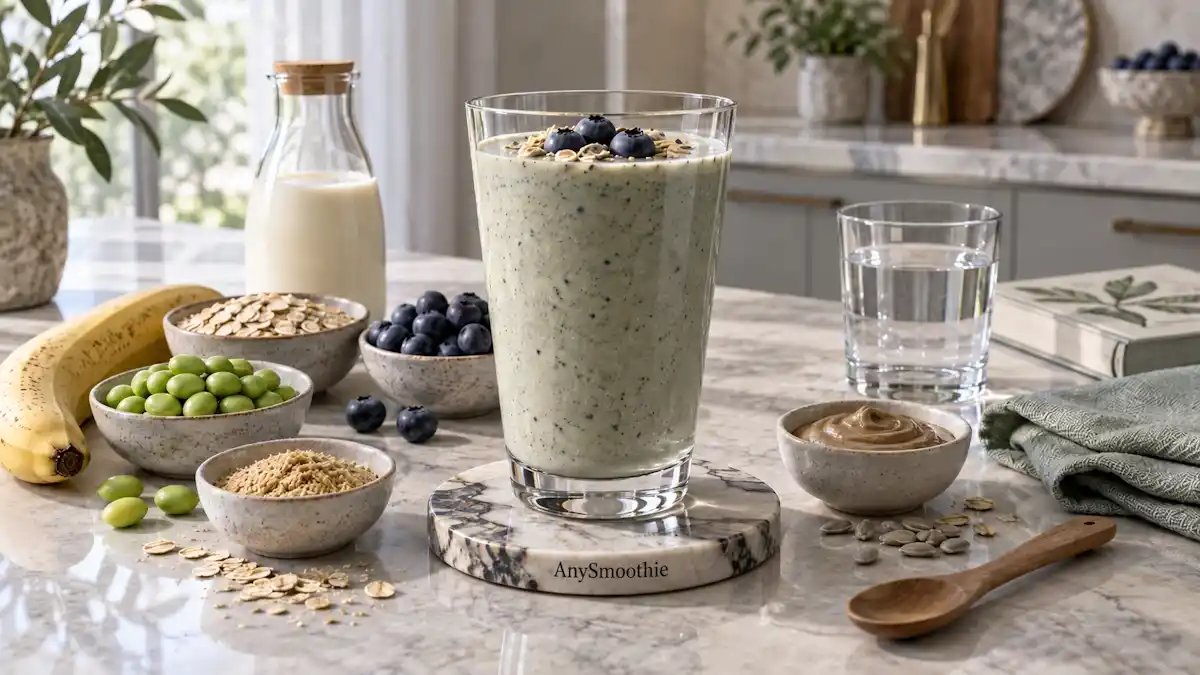
Nutrient-dense smoothies can support the body’s natural cholinergic pathways, but the wording matters. The phrase smoothies to optimize choline acetyltransferase sounds more certain than current research allows.
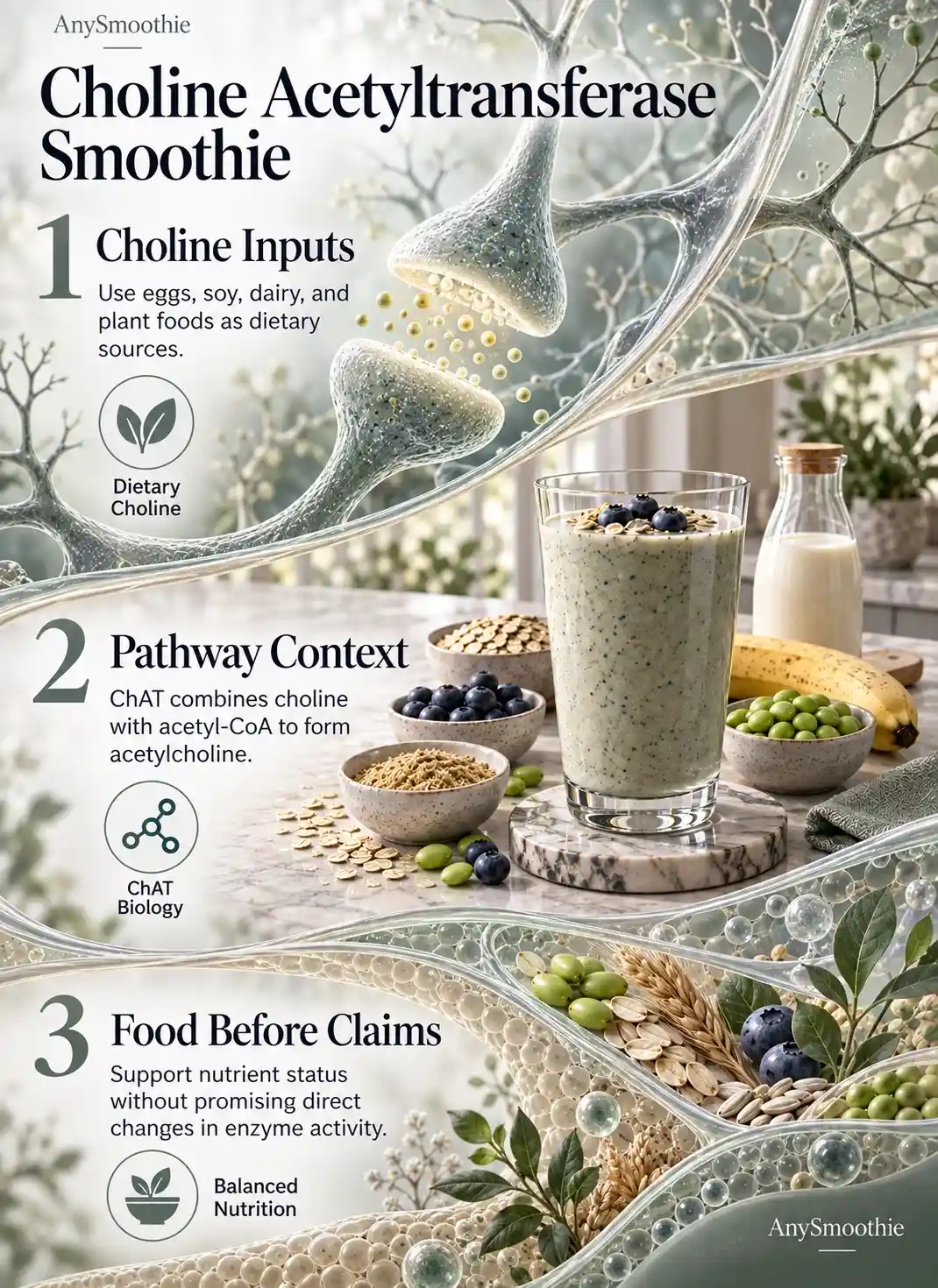
Choline acetyltransferase, or ChAT, is the enzyme that combines choline with acetyl-CoA to form acetylcholine. No smoothie has been proven to directly increase ChAT activity in humans. Still, balanced recipes can provide choline, protein, unsaturated fats, B vitamins, plant compounds, and energy-yielding nutrients. Start by focusing on the inputs your body uses every day.
How Nutrition Supports Choline and Acetylcholine Pathways
Choline is an essential nutrient involved in making acetylcholine, a chemical messenger used throughout the nervous system. Acetyl-CoA is a central metabolic molecule that cells generate during the metabolism of carbohydrate, fat, and protein. ChAT brings choline and acetyl-CoA together to synthesize acetylcholine.
Diet can support nutrient status, but it cannot be presented as a direct control switch for enzyme activity. Sleep, physical activity, overall dietary pattern, health status, and many physiological factors also influence nervous system function.
The NIH choline fact sheet identifies eggs, dairy products, meat, fish, soybeans, cruciferous vegetables, beans, nuts, seeds, and whole grains among dietary sources of choline.
For another food-based approach centered specifically on dietary choline, cauliflower smoothies for choline and brain health explores a cruciferous source in a different type of blend.
Key Smoothie Nutrients That Support Cholinergic Function
Use soy milk, dairy milk, Greek yogurt, or silken tofu as a creamy base with protein and some choline. These foods contribute nutrients used throughout normal metabolism without implying that a specific serving directly changes ChAT activity.
Bananas and oats add carbohydrate and fiber. Berries bring color and polyphenol-rich plant compounds, while spinach and avocado contribute folate, magnesium, fiber, and unsaturated fat. Ground flaxseed, chia seeds, or nut butter add fats and minerals without turning a smoothie into dessert.
Why balance matters more than one “brain food”
A single ingredient won’t directly boost ChAT. Instead, pair choline-containing foods with protein, fiber, carbohydrates, and unsaturated fats to build a more complete smoothie.
Research directly testing ordinary smoothie recipes against human ChAT activity is lacking. Food-based nutritional support is also different from treatment or pharmacological manipulation of cholinergic signaling.
For a broader look at food ingredients used as precursors within nervous-system pathways, neurotransmitter precursor smoothies for focus provides a related—but distinct—nutrition angle.
Most healthy adults can prioritize food first rather than high-dose supplements, while anyone with health conditions, pregnancy-related needs, or medication questions should speak with a qualified clinician.
3 Smoothies to Optimize Choline Acetyltransferase
These smoothies to optimize choline acetyltransferase are nutrient-supporting recipes, not tests or treatments for enzyme activity. Blend each recipe until smooth, adding ice or water if you prefer a thinner drink.
| Smoothie | Key Choline Sources | Supporting Nutrients | Approximate Preparation Time | Best Fit |
|---|---|---|---|---|
| Creamy Soy, Banana, and Oat | Soy milk, Greek yogurt | Protein, fiber, unsaturated fat | 5 minutes | Breakfast |
| Berry Spinach and Yogurt | Greek yogurt, soy milk | Folate, fiber, flax fats | 5 minutes | Snack |
| Avocado, Cocoa, and Egg | Pasteurized egg, soy milk | Fiber, unsaturated fat, protein | 7 minutes | Light meal |
The table makes the choices easy: pick the base and texture that fit your appetite, then rotate them through the week.
Creamy Soy, Banana, and Oat Smoothie
Ingredients
- 1 cup unsweetened fortified soy milk
- 1 small banana
- 1/4 cup rolled oats
- 1/2 cup plain Greek yogurt
- 1 teaspoon natural peanut butter
- Pinch of cinnamon
- 1/2 cup ice
Steps
Add the soy milk first, followed by the Greek yogurt, banana, oats, peanut butter, cinnamon, and ice.
Blend until the oats are fully incorporated and the texture is smooth. Add a small splash of water if you want a thinner drink.
Soy milk and yogurt provide protein and dietary choline, while oats and banana add carbohydrates and fiber. Check labels when using flavored plant milks or yogurt because added sugar can vary substantially between products.
Estimated Nutrition per Serving
- Calories: ~350 kcal
- Protein: ~24 g
- Carbohydrates: ~47 g
- Fat: ~9 g
- Fiber: ~6 g
- Sugars: ~19 g
Estimate uses unsweetened fortified soy milk, plain nonfat Greek yogurt, and natural peanut butter.
If I wanted this as breakfast rather than a small snack, I’d keep the oats rather than adding extra supplements or powders.
Berry Spinach and Yogurt Smoothie
Ingredients
- 3/4 cup plain Greek yogurt
- 1 cup frozen mixed berries
- 1 packed cup baby spinach
- 1/2 cup unsweetened fortified soy milk
- 1 tablespoon ground flaxseed
- Water as needed
Steps
Add the soy milk first, followed by the Greek yogurt, spinach, frozen berries, and flaxseed.
Blend until completely smooth. Add water a tablespoon at a time if the mixture becomes too thick.
Frozen berries create body without syrups or added sweeteners. Yogurt and soy milk provide protein and choline-containing ingredients, while spinach contributes folate and flaxseed adds fiber and polyunsaturated fats.
Estimated Nutrition per Serving
- Calories: ~255 kcal
- Protein: ~23 g
- Carbohydrates: ~27 g
- Fat: ~7 g
- Fiber: ~8 g
- Sugars: ~15 g
Estimate uses plain nonfat Greek yogurt and unsweetened fortified soy milk.
Avocado, Cocoa, and Egg Smoothie With a Safe-Food Note
Ingredients
- 1/4 cup pasteurized liquid whole egg
- 1/4 medium avocado
- 1 cup unsweetened fortified soy milk
- 1 tablespoon unsweetened cocoa powder
- 1/2 frozen medium banana
- Pinch of cinnamon
- Ice as needed
Steps
Add the soy milk and pasteurized liquid egg first, followed by the avocado, banana, cocoa powder, cinnamon, and ice.
Blend until completely smooth and creamy. Add cold water if you want a lighter texture.
Egg is a concentrated dietary source of choline, while avocado contributes unsaturated fat and fiber. Soy milk adds additional protein and some choline.
For recipes served without cooking, use pasteurized egg products rather than ordinary raw shell eggs. The FDA’s egg-safety guidance specifically recommends pasteurized eggs or pasteurized egg products for foods in which eggs remain raw or undercooked.
Greek yogurt or silken tofu can replace the egg when preferred.
Estimated Nutrition per Serving
- Calories: ~265 kcal
- Protein: ~15 g
- Carbohydrates: ~25 g
- Fat: ~13 g
- Fiber: ~6 g
- Sugars: ~11 g
Estimate uses pasteurized liquid whole egg and unsweetened fortified soy milk.
If I were making this specifically for the choline-rich food profile, I’d keep the pasteurized egg rather than adding a choline supplement on top.
Build Smoothies Into a Normal Eating Pattern
Choose one smoothie as a breakfast, snack, or occasional light meal. Pair it with whole foods when you need more staying power, such as whole-grain toast, fruit, or a simple egg dish.
Rotation also helps. Use berries one day, avocado the next, then switch between dairy, soy, and tofu based on your diet. A smoothie shouldn’t replace every meal, because a varied eating pattern makes it easier to obtain a broader range of nutrients.
For a related pathway-focused article, phosphatidylcholine smoothies for cell membranes looks at another major biological role of choline that is separate from acetylcholine synthesis.
A smoothie earns its place when it fits your regular meals, rather than becoming a reason to skip balanced food.
Use These Recipes Safely and Effectively
Keep portions realistic. One recipe can work as a meal component or substantial snack, depending on your appetite and the rest of your diet. Adjust ingredients for soy, dairy, nut, or egg allergies.
Be cautious with high-dose choline supplements. The NIH consumer guidance on choline notes that excessive choline intake can cause adverse effects and establishes upper intake limits that include food, beverages, and supplements.
Food sources alone are different from concentrated supplementation, so there is generally no reason to treat an ordinary choline-containing smoothie as though it were a pharmacological intervention.
Personalized advice matters for people managing liver or kidney concerns, pregnancy, neurological conditions, or medication use.
Consistent sleep, movement, hydration, and a balanced diet will matter more than any single recipe.
Conclusion: A Food-First Way to Support Cholinergic Nutrition
These smoothies provide food-based choline, protein, fiber, unsaturated fats, and supporting micronutrients. Current evidence doesn’t show that a smoothie directly increases choline acetyltransferase activity.
Choose the recipe that suits your diet, rotate ingredients, and keep added sugar low. Food-first nutrition works best as one steady part of a broader routine, with personalized guidance when medical conditions, pregnancy, allergies, or supplements are involved.

Medical Disclaimer: AnySmoothie content is for educational purposes only and is not a substitute for professional medical advice. Consult a healthcare provider for personalized guidance. See our full Disclaimer & Terms of Use. AI Transparency: AnySmoothie may use AI to support content development. All content undergoes human editorial review for accuracy, clarity, and editorial quality. See our full AI Transparency.