
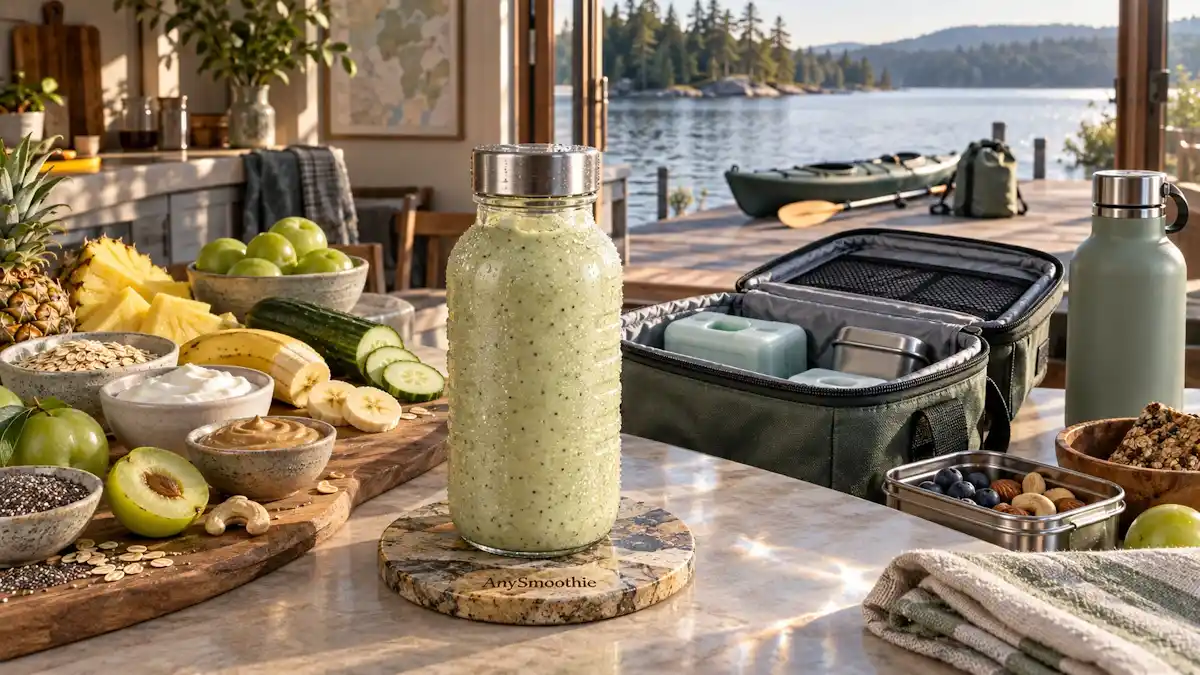
A cold smoothie can make a welcome breakfast before launch or a drinkable snack between shoreline stops. The best smoothies for weekend kayaking are portable, filling enough to matter, easy to sip, and cold even in a small cooler.
You don’t need specialty powders or complicated prep. A few smart ingredients, three reliable recipes, and careful packing will keep your paddle-day drink pleasant from the kitchen to the takeout point.
How to Build Smoothies That Hold Up on the Water
Start with carbohydrates from fruit or oats. Bananas, berries, mango, and rolled oats provide sugars and starches that break down into glucose, an available fuel source for working muscles during a paddle.
Next, add protein through Greek yogurt, dairy milk, soy milk, or silken tofu. Include a small portion of fat, such as peanut butter, chia seeds, or avocado. Protein, fiber, and fat can make a smoothie feel more substantial than fruit and juice alone.
This basic mix aligns with the food categories in the USDA’s MyPlate overview, including fruit, grains, dairy, and protein foods. The goal isn’t to make a drink heavy enough to slow you down. It’s to build a balanced bottle that tastes good after an hour on the water.
For another outdoor routine built around making food ahead and keeping it portable, make-ahead smoothies for fishing trips fits naturally with the same cooler-first approach.
Keep the texture thick, not spoon-thick
Use frozen fruit for body and a small amount of liquid at first. Blend, then add another splash of milk or water only if needed. A thick but pourable smoothie travels better than one that requires a spoon.
Skip delicate toppings, such as granola or coconut flakes. They turn soggy quickly. Too much ice also melts fast and waters down the flavor.
Choose ingredients that still taste good cold
Cold mutes sweetness, so ripe bananas, frozen mango, cocoa powder, cinnamon, and a pinch of salt work well. Fresh citrus juice adds brightness without making a drink overly sweet.
Avoid ingredients that depend on complicated preparation once you’re away from home. A dairy-based smoothie belongs in a properly chilled cooler, not in a deck bag.
If the trip involves minimal food-prep access after launch or an overnight campsite, no kitchen smoothies for camping trips offers another relevant outdoor preparation strategy.
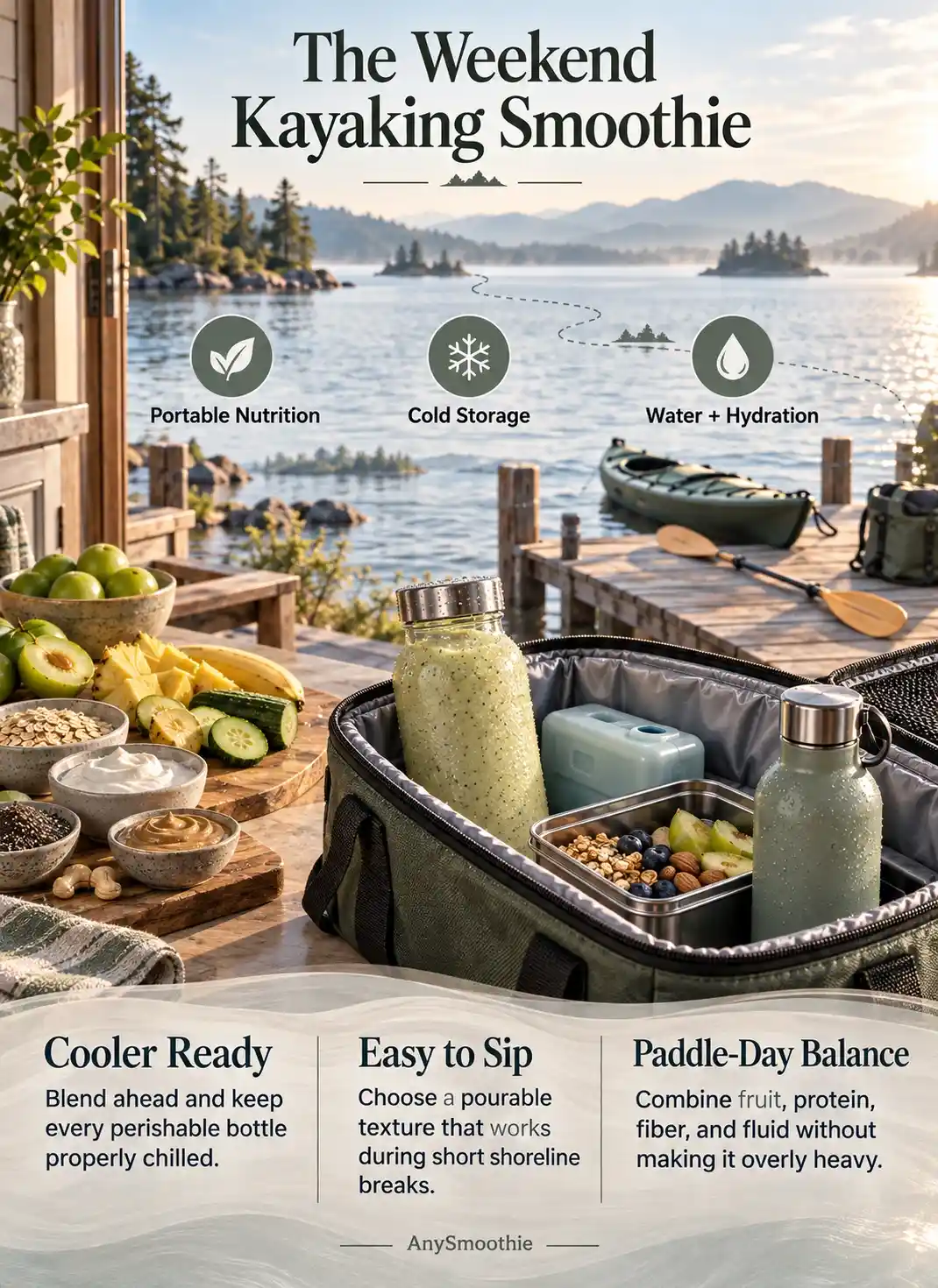
3 Cooler-Friendly Smoothies for Weekend Kayaking
Each recipe makes one large serving or two small servings. Blend at home until smooth, then pour into a chilled, leakproof bottle.
Here is a quick comparison before choosing your paddle-day flavor.
| Smoothie | Fruit Base | Protein Source | Staying-Power Ingredient | Best Paddle Moment |
|---|---|---|---|---|
| Banana Peanut Butter Oat | Banana | Greek yogurt | Peanut butter and oats | Before launch |
| Mango Lime Chia | Mango and banana | Soy milk and yogurt | Chia seeds | Mid-morning stop |
| Berry Cocoa Avocado | Mixed berries | Greek yogurt | Avocado | Afternoon snack |
The banana blend is the heartiest option, while mango feels lighter and berry cocoa brings a less-sweet finish.
Banana Peanut Butter Oat Smoothie
Ingredients
- 1 frozen medium banana
- 3/4 cup unsweetened soy milk
- 1/2 cup plain Greek yogurt
- 1/4 cup rolled oats
- 1 tablespoon natural peanut butter
- 1/2 teaspoon cinnamon
- Small pinch of salt
- 1–2 tablespoons water, if needed
Steps
Add the soy milk first, followed by the Greek yogurt, banana, oats, peanut butter, cinnamon, and salt.
Blend until the oats are fully incorporated. Add water one tablespoon at a time if the smoothie is too thick to pour easily into your bottle.
This smoothie has a mellow flavor and a thicker texture that stays drinkable. Pack it for an early launch, especially when breakfast needs to happen in the car or at the ramp. The oats add starch, while the yogurt and peanut butter make the blend more substantial.
Estimated Nutrition per Serving
- Calories: ~420 kcal
- Protein: ~25 g
- Carbohydrates: ~53 g
- Fat: ~14 g
- Fiber: ~7 g
- Sugars: ~22 g
Estimate uses unsweetened soy milk, plain nonfat Greek yogurt, and natural peanut butter.
If I wanted this before launch rather than during the paddle, I’d keep the full oat portion. For a bottle I planned to sip on the water, I’d thin it slightly with extra water.
Mango Lime Chia Smoothie
Ingredients
- 1 cup frozen mango
- 1/2 frozen medium banana
- 3/4 cup unsweetened soy milk
- 1/2 cup plain Greek yogurt
- 1 tablespoon chia seeds
- 1 teaspoon fresh lime juice
Steps
Add the soy milk first, followed by the Greek yogurt, mango, banana, chia seeds, and lime juice.
Blend until smooth. Let it sit for about five minutes if you want the chia to thicken slightly, then shake once before pouring.
Mango stays bright and pleasant when well chilled. Meanwhile, chia seeds absorb some liquid and give the drink a fuller texture. This is a good choice for a calm mid-morning break when you want something cold without the heavier oat-and-peanut-butter combination.
For another portable outdoor option where compact packing matters, portable smoothies for day hikers covers many of the same transport and temperature considerations. That page already has inbound links, so it isn’t an orphan, but it remains highly relevant here.
Estimated Nutrition per Serving
- Calories: ~335 kcal
- Protein: ~19 g
- Carbohydrates: ~51 g
- Fat: ~7 g
- Fiber: ~8 g
- Sugars: ~32 g
Estimate uses unsweetened soy milk and plain nonfat Greek yogurt.
Berry Cocoa Avocado Smoothie
Ingredients
- 1 cup frozen mixed berries
- 3/4 cup unsweetened soy milk
- 1/2 cup plain Greek yogurt
- 1/4 small ripe avocado
- 1 tablespoon unsweetened cocoa powder
- 1 teaspoon maple syrup
Steps
Add the soy milk first, followed by the Greek yogurt, berries, avocado, cocoa powder, and maple syrup.
Blend until completely smooth and no noticeable berry skins remain. Taste before adding any additional sweetness.
Berries and cocoa make a rich-tasting smoothie without relying on a large amount of sweetener. The avocado adds a smooth texture and helps keep the drink creamy. Bring this one for an afternoon paddle or a snack after you pull the kayak ashore.
Estimated Nutrition per Serving
- Calories: ~285 kcal
- Protein: ~19 g
- Carbohydrates: ~35 g
- Fat: ~9 g
- Fiber: ~10 g
- Sugars: ~21 g
Estimate uses unsweetened soy milk, plain nonfat Greek yogurt, and one teaspoon maple syrup.
If I were carrying this until later in the paddle, I’d place it deep in the cooler between frozen packs rather than keeping it near the lid where temperatures fluctuate more often.
Frozen fruit does more than chill a smoothie. It replaces much of the ice, so the flavor stays concentrated as the day warms up.
Pack and Store Your Kayaking Smoothies Safely
Blend smoothies at home, then pour them into clean, leakproof bottles with tight lids. Leave some empty space at the top, especially if you plan to partially freeze the drink before leaving.
Label bottles if you’re bringing more than one flavor. Place frozen water bottles or reusable ice packs around the drinks. Keep the cooler closed between stops and store it out of direct sun whenever possible.
USDA food-safety guidance recommends keeping cold perishable foods at 40°F (4.4°C) or below. It also advises that perishable food should not remain in the 40–140°F temperature danger zone for more than two hours, reduced to one hour when outdoor temperatures exceed 90°F, as detailed in its official guidance on the food-safety danger zone.
A yogurt-based smoothie belongs in the cooler until you’re ready to drink it.
Discard a perishable smoothie that has spent too long above safe cold-storage temperatures rather than relying on appearance or smell alone.
For a closely related paddle-day context, smoothies for weekend paddleboarding trips can provide another useful variation when cooler space, portability, and short breaks on the water matter.
Conclusion: A Better Paddle Starts Cold
Good smoothies for weekend kayaking are cold, balanced, leakproof, and easy to make ahead. Banana peanut butter oat offers a filling start, mango lime chia suits a light break, and berry cocoa avocado works well later in the day.
Keep the bottle cold from kitchen to launch, then protect the cooler from sun and frequent opening. Prepare one blend the night before, and adjust its thickness or sweetness until it tastes right to you.
🛡️ Safety Notes & Dietary Interactions
- Cold-Chain Safety: Yogurt, milk, soy milk, and prepared smoothies need dependable chilling throughout a kayaking day. Keep bottles surrounded by frozen packs in a well-insulated cooler and minimize opening, especially when air and deck temperatures are high.
- Water Safety Comes First: Eat or drink only when you can do so without compromising balance, paddle control, or awareness of currents, boat traffic, waves, or changing weather. Secure bottles so they cannot roll loose or interfere with equipment.
- Allergens and Digestion: Dairy, soy, peanuts, chia, and avocado may require substitutions for allergies or intolerances. Oats, nut butter, chia, and richer portions can also feel heavy before paddling, so test serving size and texture on easier outings first.
- Hydration Beyond Smoothies: A smoothie contributes fluid but should not replace regular drinking water during several hours on the water. Sun, wind, heat, exertion, and limited shade can increase fluid needs even when you do not feel especially thirsty.
FAQs
Which smoothie is best before launching the kayak?
The banana peanut butter oat smoothie is the most substantial of the three because it combines banana, oats, yogurt, milk, and peanut butter. It works well before launch when breakfast needs to be portable. If a fuller stomach feels uncomfortable while paddling, reduce the portion or drink it earlier before getting on the water.
Which smoothie is best for a mid-morning stop?
The mango lime chia smoothie is the lighter choice because it uses fruit, soy milk, yogurt, chia, and lime without the larger oat and peanut-butter components. Its texture stays refreshing when properly chilled. If chia thickens it too much in the cooler, shake well and add a little water before drinking.
How long can a smoothie stay in a kayak cooler?
There is no reliable fixed number of hours without knowing the actual cooler temperature. Perishable smoothies should remain at 40°F (4°C) or below. Use plenty of frozen packs, keep the cooler shaded and closed, and discard dairy-based drinks that have spent too long warm rather than judging safety only by taste or smell.
Should I partially freeze smoothies before a kayaking trip?
Yes, partial freezing can help keep a smoothie colder during transport and early hours on the water. Leave headspace in the bottle for expansion and allow enough time for it to become drinkable. Freezing does not eliminate the need for a properly packed cooler, especially with dairy or other perishable ingredients.
Can a smoothie replace food for an entire day of kayaking?
Usually not. A smoothie can cover breakfast or a substantial snack, but longer paddling days may require additional food, water, and possibly electrolytes depending on conditions and exertion. Pack familiar solid foods as well, particularly when the route is remote or access to supplies is limited once you launch.

Medical Disclaimer: AnySmoothie content is for educational purposes only and is not a substitute for professional medical advice. Consult a healthcare provider for personalized guidance. See our full Disclaimer & Terms of Use. AI Transparency: AnySmoothie may use AI to support content development. All content undergoes human editorial review for accuracy, clarity, and editorial quality. See our full AI Transparency.