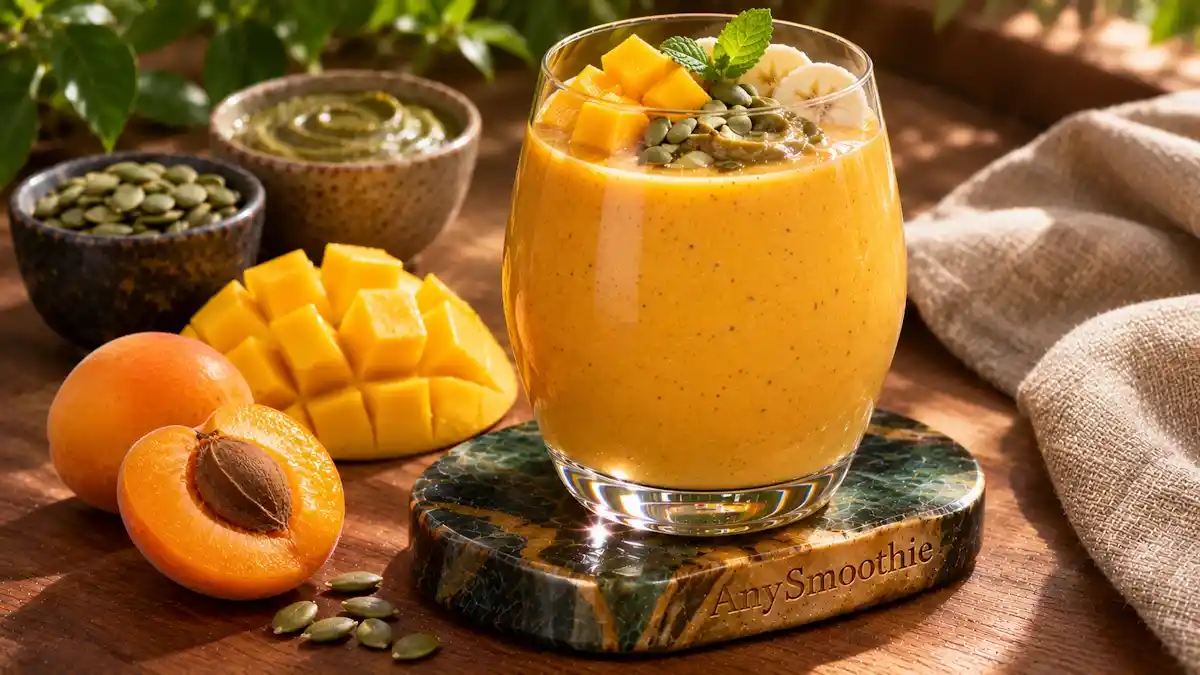
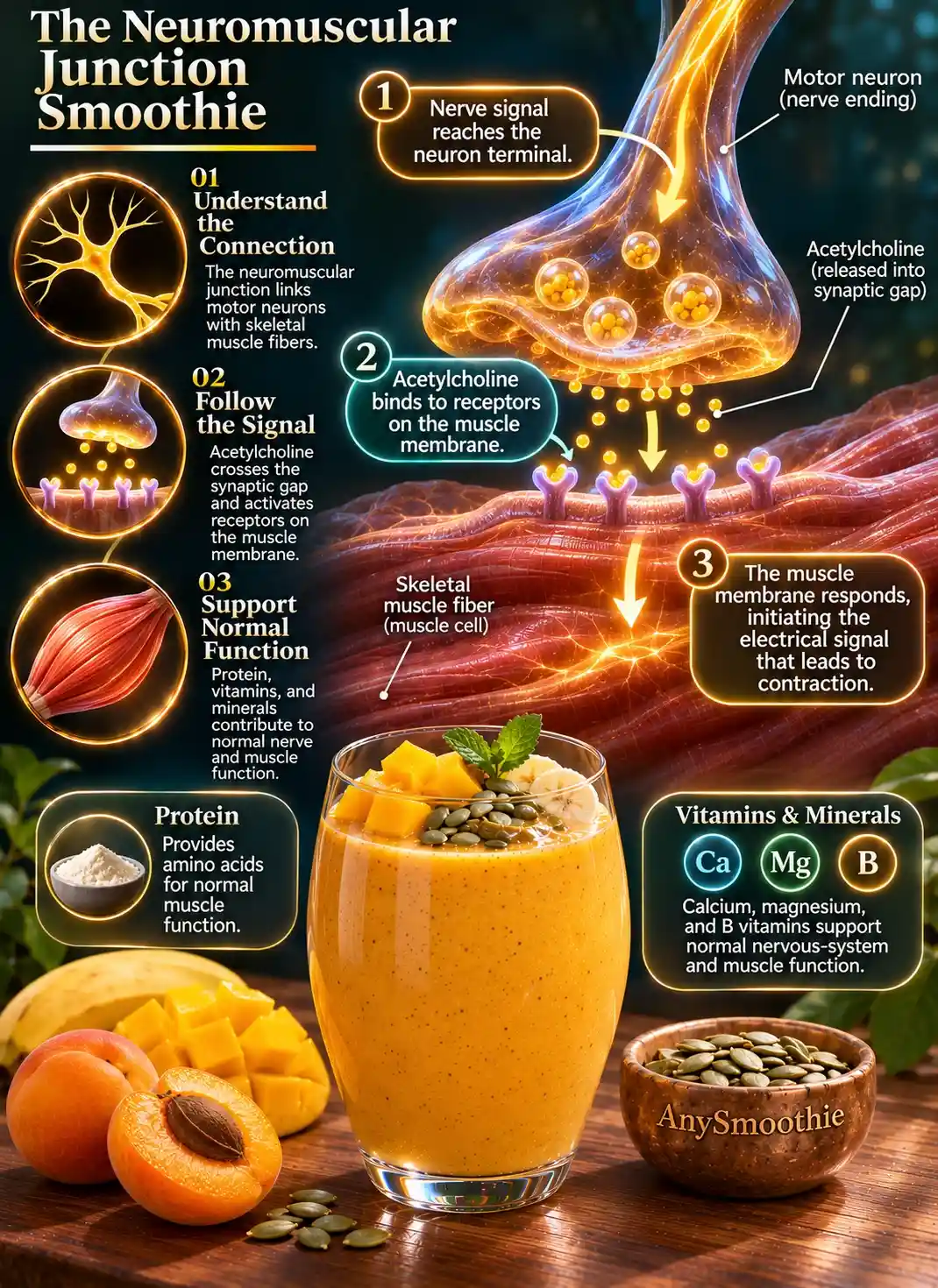
The neuromuscular junction is where a nerve signals a muscle to contract. A related example of muscle-associated signaling appears in smoothies for myokine irisin signaling. Smoothies for neuromuscular junction support provide nutrients for normal body processes, but they don’t treat neuromuscular conditions or guarantee better muscle function.
You can enjoy them as convenient meals or snacks, especially when whole fruit and protein-rich ingredients suit your routine. Start with these three recipes, then choose according to flavor, dietary needs, and how filling you want your drink to be.
What nutrients do nerves and muscles use, and what can smoothies provide?
Nerve-to-muscle communication depends on several normal body processes. Choline is used to make acetylcholine, the chemical messenger involved in signaling across the neuromuscular junction. The NIH Office of Dietary Supplements explains this role in its choline fact sheet. This role is distinct from gut microbial choline metabolism, discussed in smoothies for microbial choline-to-tma pathways. Eating choline-containing foods doesn’t guarantee stronger signaling or better muscle performance.
Protein supplies amino acids that your body uses to build and maintain tissues, including muscle. These recipes provide protein through dairy or soy ingredients. For another food-focused discussion of nutrition during low-energy periods, see recovery smoothies for fibromyalgia. However, your needs depend on your overall diet and individual circumstances.
B vitamins participate in normal metabolism, while minerals such as calcium, potassium, and magnesium take part in body signaling and muscle activity. Smoothie ingredients can contribute some of these nutrients, but the amounts depend on your choices. A related discussion of B vitamins and minerals in everyday energy-support blends appears in adaptogenic smoothies for energy stability.
One smoothie cannot cover every nutritional need or produce a predictable effect at the neuromuscular junction. Include varied meals with vegetables, whole grains, and suitable protein sources rather than relying on one drink.
Persistent weakness or swallowing trouble calls for prompt medical evaluation, not a food remedy. Breathing difficulty requires urgent medical care. If swallowing is difficult, don’t assume a thick smoothie is safe; texture needs vary by person.
3 Smoothies for Neuromuscular Junction Support
Each recipe makes one serving. Nutrition estimates are approximate and may vary by brand, produce size, and any substitutions you make.
Green Banana Yogurt Smoothie
Banana brings sweetness, while spinach adds a mild green flavor and chia thickens the blend.
Ingredients
- 1 medium banana
- 3/4 cup plain nonfat Greek yogurt
- 1 cup 2% milk
- 1/2 cup baby spinach
- 1 tablespoon chia seeds
Instructions
Blend all ingredients until smooth. Add a splash of water or milk if needed, and serve right away.
Estimated Nutrition (per serving)
- Calories: ~390 kcal
- Protein: ~28 g
- Carbohydrates: ~50 g
- Fat: ~10 g
- Fiber: ~8 g
- Sugars: ~32 g
Berry Oat Kefir Smoothie
Kefir gives this drink a tangy base; berries add sweetness and oats create a heartier texture.
Ingredients
- 1 cup blueberries
- 1/2 cup strawberries
- 1 cup plain low-fat kefir
- 1/4 cup rolled oats
- 1 tablespoon ground flaxseed
Instructions
Blend the berries, kefir, oats, and flaxseed until creamy. Let the smoothie stand for a few minutes if you prefer softer oats.
Estimated Nutrition (per serving)
- Calories: ~330 kcal
- Protein: ~13 g
- Carbohydrates: ~51 g
- Fat: ~8 g
- Fiber: ~9 g
- Sugars: ~27 g
Cherry Cocoa Soy Smoothie
Avocado and tofu create creaminess without dairy, while unsweetened cocoa gives the cherries a chocolate note.
Ingredients
- 1 cup unsweetened soy milk
- 3 ounces silken tofu
- 1/4 medium avocado
- 1/2 cup frozen pitted cherries
- 1 tablespoon unsweetened cocoa powder
Instructions
Blend all ingredients until smooth. If the drink is too thick, add a little more soy milk; taste before adding any sweetener.
Estimated Nutrition (per serving)
- Calories: ~280 kcal
- Protein: ~15 g
- Carbohydrates: ~25 g
- Fat: ~15 g
- Fiber: ~10 g
- Sugars: ~15 g
Compare the smoothies by nutrition, texture, and flavor
Use these differences to choose a drink that fits your appetite and preferences.
| Smoothie | Nutritional focus | Texture | Flavor profile | Best fit |
|---|---|---|---|---|
| Green Banana Yogurt | Higher protein, calcium | Thick and creamy | Mild, sweet, fresh | A filling breakfast |
| Berry Oat Kefir | Fruit, fiber, fermented dairy | Soft and hearty | Bright and tangy | A tart, satisfying snack |
| Cherry Cocoa Soy | Plant protein, unsaturated fat | Rich and smooth | Cocoa with a fruity note | A dairy-free option |
The main differences are protein content, dairy ingredients, and how rich or tangy you like your smoothie.
Choose according to your appetite
Green Banana Yogurt has the most protein and calories of the three, so it’s a practical choice for a substantial breakfast. However, fullness varies with your appetite and what else you eat.
Berry Oat Kefir suits a snack when you enjoy a thicker, fruit-forward drink. Oats and ground flaxseed add texture, so it won’t feel like strained juice. If you prefer a smaller snack, divide the serving rather than assuming you need to finish the full recipe.
Account for dairy and soy
Cherry Cocoa Soy is dairy-free as written, but it contains soy. Meanwhile, the yogurt and kefir recipes contain milk, so neither suits a milk allergy.
If you replace dairy with a plant-based option, choose one that fits your allergy needs and preferred flavor. Protein content varies across milk alternatives, and fortification affects calcium and vitamin B12 content. Because substitutions change the totals, use the recipe estimates as a starting point rather than an exact nutrition label.
Conclusion: Choose a smoothie that fits your needs
Choose yogurt for a more filling option, kefir for tangy fruit flavor, or soy for a dairy-free blend. Adjust ingredients for allergies and preferences.
Treat smoothies as one part of a varied eating pattern, and check labels for added sugar. Their role is nutritional support, not treatment for neuromuscular disorders or a promise of better muscle function.
🛡️ Safety Notes & Dietary Interactions
- Swallowing Safety: Thick smoothies are not automatically safe for someone with swallowing difficulty. If swallowing is impaired, use the texture recommendations provided by the person’s healthcare team rather than assuming a thicker drink is appropriate.
- Dairy and Soy: The Green Banana Yogurt and Berry Oat Kefir smoothies contain dairy, while the Cherry Cocoa Soy smoothie contains soy. Check labels carefully for milk or soy allergies and dietary restrictions.
- Fiber and Texture: Chia, flaxseed, oats, berries, spinach, and avocado contribute fiber and can thicken smoothies. Introduce higher-fiber blends gradually and adjust liquid according to individual tolerance.
- Neuromuscular Symptoms: These recipes provide nutrients for normal physiological processes but do not treat neuromuscular disorders. Persistent weakness or swallowing difficulty warrants medical evaluation, while breathing difficulty requires urgent medical attention.
FAQs
Which smoothie provides the most protein?
The Green Banana Yogurt Smoothie provides the highest estimated protein, at approximately 28 grams per serving. The Cherry Cocoa Soy Smoothie provides about 15 grams, while the Berry Oat Kefir Smoothie provides approximately 13 grams. These amounts describe nutritional composition rather than a guaranteed effect on neuromuscular function.
Is the Cherry Cocoa Soy Smoothie suitable for someone avoiding dairy?
Yes. It contains soy milk, silken tofu, avocado, cherries, and cocoa rather than milk, yogurt, or kefir. However, it is not soy-free. Anyone avoiding both dairy and soy would need a different protein base, with nutrition values changing accordingly.
Does eating more choline improve neuromuscular junction signaling?
Not predictably. Choline is used to make acetylcholine, an important chemical messenger at the neuromuscular junction, but dietary intake does not guarantee stronger signaling or improved muscle performance. These smoothies should therefore be viewed as sources of normal nutrition rather than targeted neuromuscular interventions.
Which smoothie is the most filling?
The Green Banana Yogurt Smoothie is the most substantial by the recipe’s estimates, providing approximately 390 calories and 28 grams of protein. Appetite varies, however, so a smaller portion or pairing another smoothie with additional food may be more appropriate for some people.
Can a thick smoothie help if swallowing is difficult?
Not necessarily. Swallowing safety depends on the individual’s specific impairment and recommended food or liquid texture. A thick smoothie should not be assumed to be safer. If swallowing difficulty is present, follow guidance from a qualified healthcare professional rather than modifying texture independently.

Medical Disclaimer: AnySmoothie content is for educational purposes only and is not a substitute for professional medical advice. Consult a healthcare provider for personalized guidance. See our full Disclaimer & Terms of Use. AI Transparency: AnySmoothie may use AI to support content development. All content undergoes human editorial review for accuracy, clarity, and editorial quality. See our full AI Transparency.