
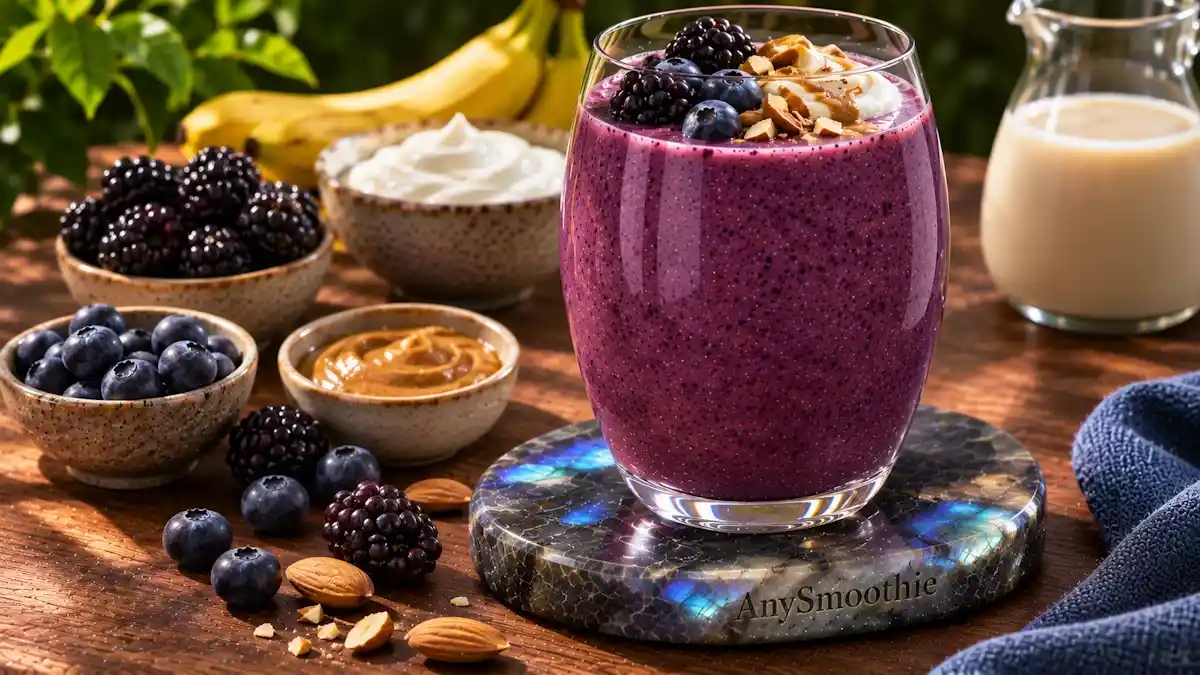
Smoothies can provide energy and nutrients, but no specific drink is proven to trigger irisin signaling. Physical activity is the main stimulus studied in relation to this muscle-associated signal.
If you’re looking for smoothies for myokine irisin signaling, treat them as everyday nourishment, rather than a way to activate a biochemical pathway. The three recipes below combine protein, carbohydrates, and fiber in practical portions. Start with the distinction between fueling your body and changing a signaling response.
How irisin signaling relates to exercise and nutrition
Irisin is a myokine, a protein signal associated with muscle activity. Researchers describe it as a fragment released from FNDC5, a protein found in cell membranes. Exercise is the central factor studied in this pathway, although findings differ across exercise protocols and measurement methods.
For a broader look at exercise and everyday nutrition, see biohacking exercise and metabolism smoothie.
A review of FNDC5 and irisin biology details unresolved questions about how researchers detect and measure irisin. Laboratory findings also don’t establish that a particular food produces a meaningful signaling response in people.
Another exercise-related signaling topic is covered in smoothies for bdnf and synaptic plasticity.
Detecting irisin in blood and proving that a food changes its activity are separate research questions.
Nutrition has a clearer supporting role. Carbohydrates supply glucose for energy, while dietary protein supplies amino acids for normal muscle protein turnover. Eating enough helps support these physiological systems alongside regular movement.
For a separate example of muscle-related exercise nutrition, see smoothies for beta-alanine and muscle buffering.
However, blueberries, kefir, cherries, and other smoothie ingredients haven’t been shown to switch irisin signaling on. Their practical contribution is nourishment. A balanced smoothie can fit your eating routine without carrying a claim about a particular molecular pathway.
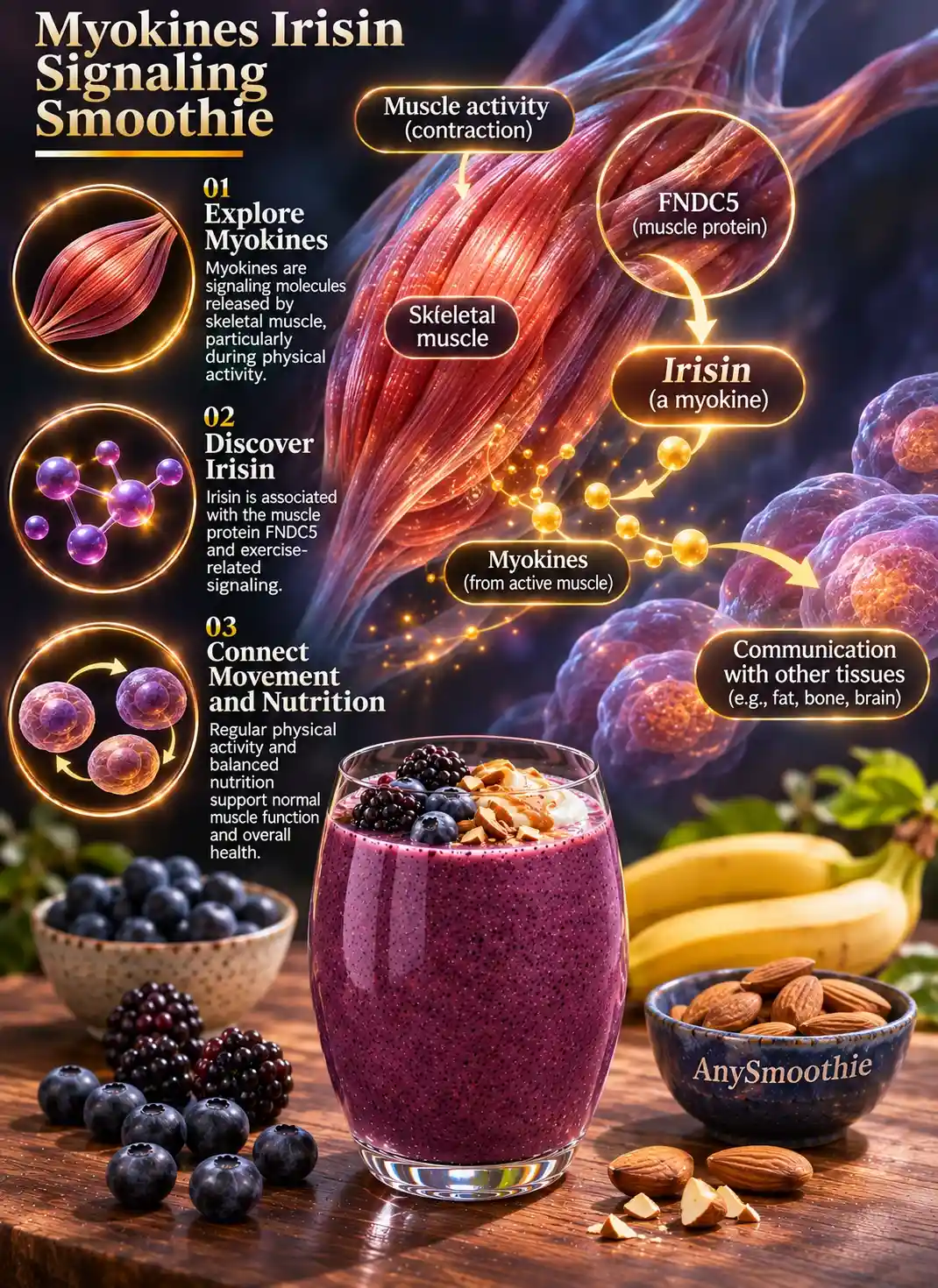
3 Smoothies for Myokine Irisin Signaling
Each recipe makes one serving. These are fueling options, not proven irisin activators. Nutrition estimates are approximate because brands, fruit sizes, and serving weights vary. Any extra milk or other additions will also change the totals.
The listed sugars include naturally occurring sugars in fruit and dairy. None of these recipes requires added sweeteners.
Berry Oat Yogurt Smoothie
Ingredients
- 3/4 cup plain nonfat Greek yogurt
- 1/2 cup blueberries
- 1/4 cup rolled oats
- 1 tablespoon chia seeds
- 1/2 cup 2% milk
Instructions
Blend until smooth; add a little more milk if needed.
Estimated Nutrition (per serving)
- Calories: ~300 kcal
- Protein: ~21 g
- Carbohydrates: ~43 g
- Fat: ~7 g
- Fiber: ~8 g
- Sugars: ~20 g
Yogurt and milk provide protein, while oats, berries, and chia add carbohydrates and fiber. The berries bring sweetness and a mild tartness without juice or syrup.
This is a practical breakfast option when you prefer something drinkable. Because oats and chia absorb liquid, the smoothie thickens as it stands.
Green Banana Kefir Smoothie
Ingredients
- 1 cup plain low-fat kefir
- 1 medium banana
- 1 cup baby spinach
- 1 tablespoon almond butter
- 1 teaspoon unsweetened cocoa powder
Instructions
Blend until creamy, scraping down the sides once if needed.
Estimated Nutrition (per serving)
- Calories: ~330 kcal
- Protein: ~14 g
- Carbohydrates: ~44 g
- Fat: ~12 g
- Fiber: ~6 g
- Sugars: ~26 g
Kefir supplies protein and a tangy base, while banana contributes carbohydrates and sweetness. Almond butter adds fat and a fuller texture. Cocoa gives the mixture a light chocolate flavor rather than the sweetness of a dessert shake.
The combination suits someone who enjoys a creamy drink with a more pronounced fermented flavor. Its mix of nutrients doesn’t establish any direct effect on irisin.
Tart Cherry Cottage Cheese Smoothie
Ingredients
- 1 cup unsweetened frozen tart cherries
- 1/2 cup low-fat cottage cheese
- 1/2 cup unsweetened soy milk
- 1 tablespoon ground flaxseed
- 1/4 cup rolled oats
Instructions
Blend until smooth; let it stand briefly if you prefer a thicker texture.
Estimated Nutrition (per serving)
- Calories: ~300 kcal
- Protein: ~20 g
- Carbohydrates: ~41 g
- Fat: ~8 g
- Fiber: ~7 g
- Sugars: ~23 g
Cottage cheese and soy milk provide protein, while cherries, flaxseed, and oats contribute fiber. Blending breaks up the curds for a smooth texture, although the finished drink stays thick.
Dietary protein supplies amino acids used in muscle protein synthesis, a process discussed in research on nutrition after exercise. That general role doesn’t make this smoothie an irisin or recovery treatment. Enjoy it as a filling, tart option with protein and fiber.
Choose a smoothie that fits your activity and appetite
Portion size should match your hunger, overall meals, and activity. You might prefer a full serving for breakfast or a smaller portion alongside other food. A smoothie is optional; exercise-related signaling doesn’t require one.
For another movement-focused nutrition routine, see metabolic boost smoothie for aquatic fitness.
Use this comparison to choose by flavor and eating occasion.
| Smoothie | Protein profile | Carbohydrate profile | Texture and flavor | Best fit |
|---|---|---|---|---|
| Berry Oat Yogurt | Higher protein | Balanced with protein | Thick, mildly tart | Drinkable breakfast |
| Green Banana Kefir | Moderate protein | Carbohydrate-forward | Creamy, sweet-tangy | Substantial snack |
| Tart Cherry Cottage Cheese | Higher protein | Balanced with protein | Thick, distinctly tart | Filling small meal |
Choose the flavor you’ll enjoy, then adjust the portion to your appetite.
For more sweetness, use riper fruit. For more protein, increase the plain yogurt or cottage cheese, understanding that nutrition totals will change.
Research on nutrition and exercise performance places fueling within a broader eating and activity routine. Timing matters more during demanding training than around an ordinary walk. Whole foods, adequate meals, and regular movement deserve more attention than any single smoothie ingredient.
Conclusion: Keep nourishment separate from signaling claims
Smoothies can support everyday nourishment, but there’s no established recipe that directly activates irisin signaling. Exercise remains the main factor studied in this pathway, and questions about measurement remain.
Choose a recipe you enjoy and a portion that fits your appetite. Pair balanced eating with regular physical activity, without expecting a particular drink to produce a specific molecular result.
🛡️ Safety Notes & Dietary Interactions
- Protein Choices: Greek yogurt, kefir, cottage cheese, soy milk, and almond butter contribute different proteins and allergens. Choose products that fit your dietary needs rather than increasing protein specifically for irisin signaling.
- Fiber and Texture: Oats, chia, flaxseed, and berries can make these smoothies increasingly thick as they stand. Increase liquid gradually and introduce higher-fiber portions according to individual digestive tolerance.
- Allergen Awareness: The recipes include dairy, almonds, soy, and seeds. Check labels carefully, especially for cottage cheese, kefir, soy milk, almond butter, and chia or flax products when accommodating allergies.
- Exercise Context: A smoothie does not make exercise safer or guarantee an irisin response. Match portions to activity and appetite, and maintain adequate hydration and overall food intake around demanding training.
FAQs
Does any of these smoothies directly activate irisin signaling?
No. The article specifically distinguishes nourishment from signaling claims. Exercise is the main stimulus studied in relation to irisin, while these smoothies provide carbohydrates, protein, fats, and fiber. Their ingredients have not been established as reliable triggers of irisin signaling in people.
Which smoothie has the most protein?
The Berry Oat Yogurt Smoothie provides approximately 21 grams of protein per serving, followed closely by the Tart Cherry Cottage Cheese Smoothie at about 20 grams. The Green Banana Kefir Smoothie provides approximately 14 grams. These differences describe nutritional composition rather than differences in irisin activity.
Which smoothie works best as a breakfast?
The Berry Oat Yogurt Smoothie is presented as the most natural breakfast option. Greek yogurt and milk provide protein, while oats, blueberries, and chia contribute carbohydrates and fiber. Because oats and chia absorb liquid, it can become thicker if prepared well before drinking.
Can I drink one of these smoothies after exercise?
Yes, if it fits your overall eating pattern and appetite. The recipes provide protein and carbohydrates that can contribute to normal nutritional needs after activity. However, drinking one does not make it an irisin or exercise-recovery treatment, and a smoothie isn’t required after every workout.
Is the tart cherry smoothie better for muscle signaling?
Not based on the information presented. Tart cherries, cottage cheese, soy milk, flaxseed, and oats create a protein- and fiber-containing smoothie, but the recipe has not been shown to produce a specific irisin response. Choose it for its flavor, texture, and nutritional fit rather than a signaling effect.

Medical Disclaimer: AnySmoothie content is for educational purposes only and is not a substitute for professional medical advice. Consult a healthcare provider for personalized guidance. See our full Disclaimer & Terms of Use. AI Transparency: AnySmoothie may use AI to support content development. All content undergoes human editorial review for accuracy, clarity, and editorial quality. See our full AI Transparency.