
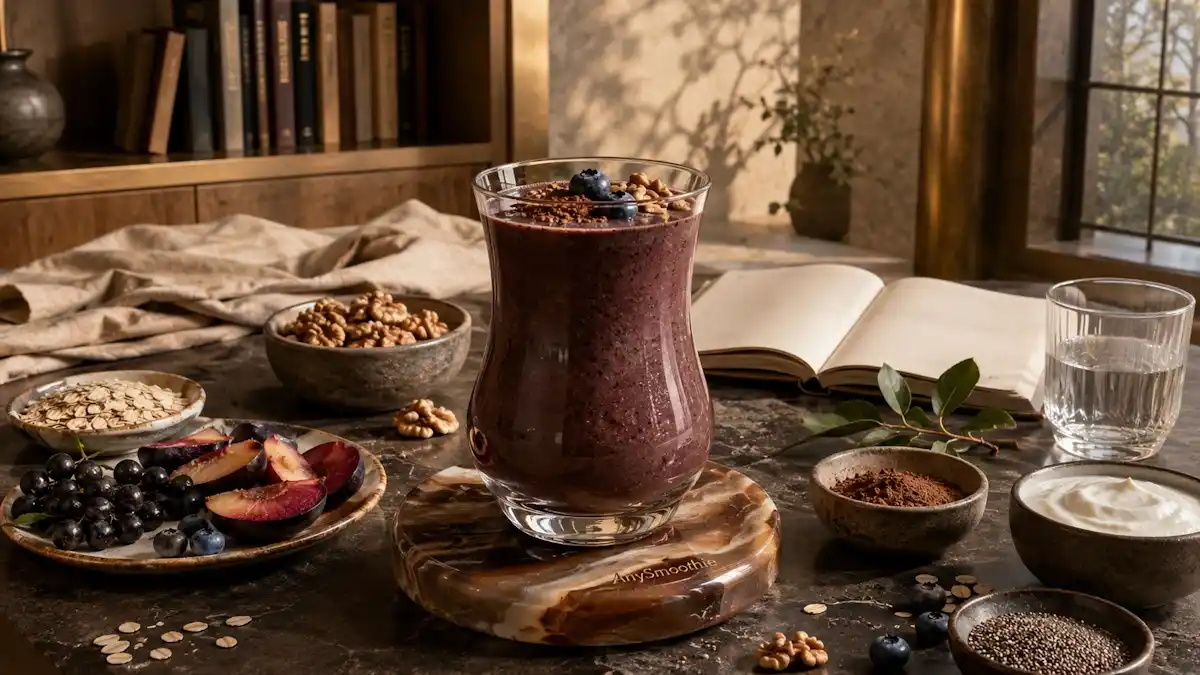
Learning, memory, and focus rely on more than willpower. Your brain needs steady energy, healthy circulation, quality sleep, movement, and repeated mental challenge.
Smoothies for BDNF can be a practical way to combine fruit, protein, fiber, and unsaturated fats. BDNF helps support the survival, function, and adaptability of neurons, while synaptic plasticity describes how connections between nerve cells strengthen or change over time. No smoothie guarantees higher BDNF, but smart ingredient choices can support the broader nutritional systems involved.
How Smoothies for BDNF Support Synaptic Plasticity
BDNF, short for brain-derived neurotrophic factor, is a signaling protein involved in maintaining adaptable neural networks. Synaptic plasticity is the brain’s capacity to modify communication between nerve cells, a process tied to learning and memory.
Food does not act alone. Still, nutrient-dense meals can support energy metabolism, antioxidant defenses, blood flow, gut health, and the fats that make up cell membranes. Berries, unsweetened cocoa, greens, cultured dairy, seeds, and walnuts offer useful combinations of polyphenols, fiber, protein, and unsaturated fat.
Research often examines whole dietary patterns, exercise, or isolated nutrients rather than smoothies themselves. For example, an NIH review of nutrients and brain function discusses relationships among dietary omega-3 fats, neuronal membranes, signaling, and synaptic plasticity. Human research on food and BDNF is still developing, so avoid treating any recipe as a memory enhancer or a way to change lab values.
A smoothie is a convenient meal format, not a test for BDNF levels or a treatment for cognitive concerns.
For a closer look at the nutritional building blocks involved in neuronal communication, this guide to smoothies for neurotransmitter signaling explores amino acids, cofactors, fats, and energy availability from a complementary angle.
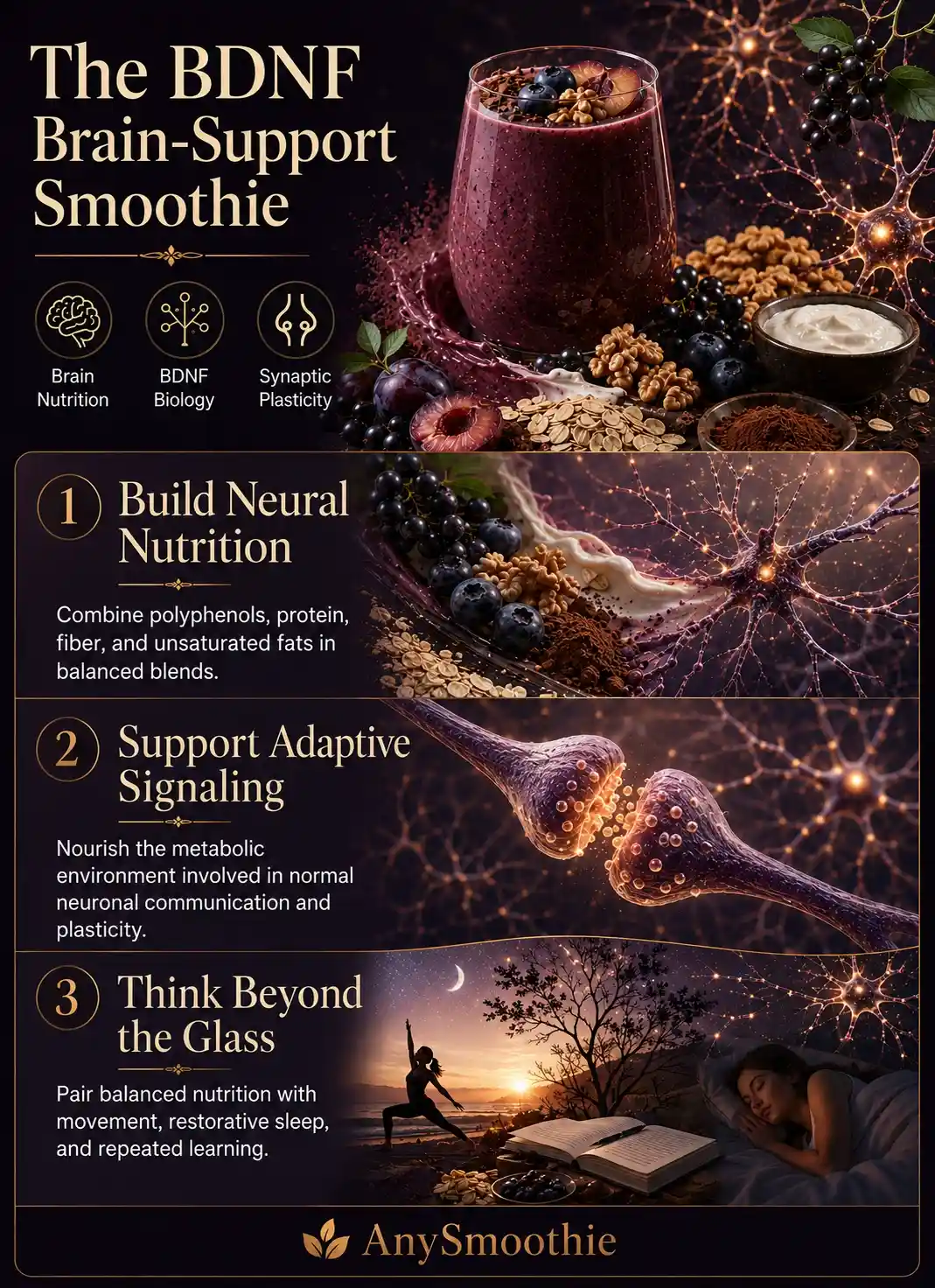
3 Smoothies for BDNF and Synaptic Plasticity
These smoothies pair complementary whole foods and keep added sugar low. Each includes protein, fiber, and fat, which usually makes a drink more satisfying than fruit and juice alone.
| Smoothie | Main Ingredients | Brain-Support Nutrients | Best Time to Enjoy | Key Considerations |
|---|---|---|---|---|
| Berry Cocoa and Walnut | Berries, cocoa, kefir, walnuts | Polyphenols, protein, fiber | Breakfast or snack | Contains dairy and tree nuts |
| Green Tea, Spinach, and Citrus | Green tea, spinach, kiwi, avocado | Catechins, folate, vitamin C | Morning or early afternoon | Contains caffeine |
| Cherry, Flax, and Kefir | Tart cherries, kefir, flax, oats | Protein, soluble fiber, ALA fat | Breakfast or post-activity | Check cherry product sugar |
The common thread is balance. Protein, fiber, unsaturated fats, and colorful plant foods make these blends more nutritionally complete than relying on a single so-called brain ingredient.
Berry Cocoa and Walnut Smoothie
Ingredients
- 1 cup frozen blueberries or mixed berries
- 1 tablespoon unsweetened cocoa powder
- 3/4 cup plain Greek yogurt or kefir
- 1 tablespoon walnuts
- 1 teaspoon chia seeds
- 1/2 to 3/4 cup unsweetened milk
Blend until smooth, adding the milk gradually until the texture suits you.
Berries supply polyphenols, while cocoa contributes flavanols. Walnuts and chia add fiber and plant omega-3 fat, and yogurt or kefir provides protein. Use plain cocoa powder, not chocolate syrup or sweetened cocoa mix.
If dairy bothers you, choose lactose-free kefir or a plain soy yogurt. Nut allergies require a swap, such as hemp hearts. Walnuts are calorie-dense, so one tablespoon is plenty for a single serving.
Estimated Nutrition per Serving
Estimated with mixed berries, unsweetened cocoa, plain nonfat Greek yogurt, walnuts, chia seeds, and unsweetened soy milk.
- Calories: ~315 kcal
- Protein: ~25 g
- Carbohydrates: ~36 g
- Fat: ~12 g
- Fiber: ~11 g
- Sugars: ~20 g
Cocoa can form dry pockets when it lands directly on frozen berries. Add it beside the yogurt or into the milk before blending; the cocoa disperses more evenly and the berry flavor stays cleaner instead of producing occasional bitter streaks.
For another practical approach to berries, walnuts, greens, and steady cognitive nutrition, see these smoothies to support mental clarity.
Green Tea, Spinach, and Citrus Smoothie
Ingredients
- 3/4 cup brewed green tea, fully cooled
- 1 packed cup baby spinach
- 1 kiwi, peeled, or 1/2 orange
- 1/4 avocado
- 1/2 cup plain yogurt or unsweetened soy yogurt
- A little grated ginger, optional
Brew the green tea and cool it completely. Blend it with the spinach, kiwi or orange, avocado, yogurt, and ginger until smooth.
Green tea provides catechins and caffeine, while spinach adds folate and carotenoids. Kiwi or orange brings vitamin C, and avocado adds fiber with monounsaturated fat. The result is lighter and brighter than a berry-based blend.
Use brewed tea, not concentrated green tea extracts. Also, move this smoothie earlier in the day if caffeine affects sleep, because protecting sleep is important for overall cognitive health.
Estimated Nutrition per Serving
Estimated with brewed green tea, spinach, one medium kiwi, avocado, plain nonfat Greek yogurt, and a small amount of ginger.
- Calories: ~205 kcal
- Protein: ~14 g
- Carbohydrates: ~25 g
- Fat: ~8 g
- Fiber: ~7 g
- Sugars: ~14 g
Green tea can become noticeably bitter when brewed too strongly, especially beside spinach and ginger. Brew it normally and cool it rather than using extra tea leaves; kiwi then stays bright enough to balance the vegetal notes without needing added sweetener.
Cherry, Flax, and Kefir Recovery Smoothie
Ingredients
- 3/4 cup frozen tart cherries
- 3/4 cup plain kefir
- 1 tablespoon ground flaxseed
- 1/4 cup rolled oats
- 1/4 teaspoon cinnamon
- 1/2 cup unsweetened milk or water
Blend until smooth. Let it sit for two minutes after blending if you prefer softer oats.
Tart cherries bring polyphenols, while kefir supplies protein and a fermented-food element. Oats contribute soluble fiber, and ground flax offers alpha-linolenic acid (ALA), a plant omega-3 fatty acid. Use ground rather than whole flax when possible.
This option fits well after exercise or as breakfast. Exercise itself matters here, since a review on exercise, nutrition, and the brain describes their connected roles in brain function and BDNF-related pathways. Choose plain kefir, and check tart cherry labels carefully because sugar levels vary widely.
Estimated Nutrition per Serving
Estimated with unsweetened frozen tart cherries, plain low-fat kefir, ground flaxseed, rolled oats, cinnamon, and unsweetened soy milk.
- Calories: ~335 kcal
- Protein: ~16 g
- Carbohydrates: ~45 g
- Fat: ~11 g
- Fiber: ~8 g
- Sugars: ~23 g
How to Build a Brain-Supportive Smoothie Without Overdoing It
A reliable formula uses one serving of fruit or vegetables, a protein source, a fiber-rich ingredient, a healthy fat, and a low-sugar liquid. Start with berries, spinach, kiwi, or cherries. Then add kefir, Greek yogurt, soy yogurt, or silken tofu.
Next, use oats, chia, or ground flax for fiber. Avocado, walnuts, or seeds add fat and make the smoothie more filling. Cinnamon, vanilla, cocoa, and ginger add flavor without relying on juice, syrup, or large amounts of honey.
Smoothies for BDNF can fit at breakfast, after activity, or as a snack. However, portions still matter. Consider your overall calorie and carbohydrate needs, notice how different recipes affect your energy and fullness, and ask a pharmacist or healthcare professional about food or caffeine interactions if you take medication.
A systematic review of nutrition interventions and BDNF concentrations examined controlled human intervention studies involving dietary patterns, polyphenols, omega-3 fats, probiotics, vitamins, minerals, and other nutritional factors. The findings show why aggressive claims deserve caution: some nutritional interventions appear promising, particularly in parts of the polyphenol literature, but results are not consistent across dietary factors and peripheral BDNF measurements do not necessarily reflect what is happening in the brain.
Choose whole foods first. A smoothie can’t replace varied meals, aerobic activity, resistance training, restorative sleep, stress management, or mentally demanding work.
Conclusion: A Practical Place for These Smoothies
The value of these recipes comes from the overall pattern, not one “brain” ingredient. Berries, cocoa, leafy greens, cultured foods, seeds, and nuts can make a satisfying smoothie with several nutrients in one glass.
BDNF and synaptic plasticity are influenced by interconnected biological and lifestyle factors, with regular movement, sleep, learning, and nutrition all contributing to the broader environment in which the brain functions. Pick one recipe, keep added sugar modest, and notice how its protein and fiber affect your energy and fullness over time.

Medical Disclaimer: AnySmoothie content is for educational purposes only and is not a substitute for professional medical advice. Consult a healthcare provider for personalized guidance. See our full Disclaimer & Terms of Use. AI Transparency: AnySmoothie may use AI to support content development. All content undergoes human editorial review for accuracy, clarity, and editorial quality. See our full AI Transparency.