
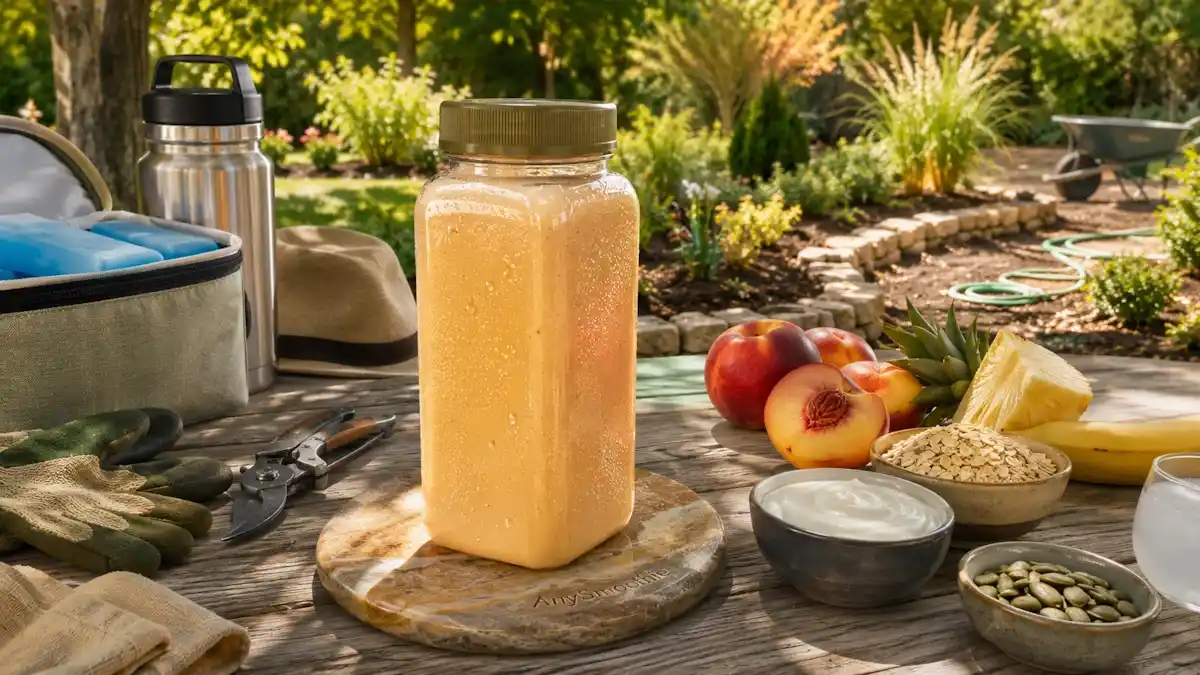
A summer shift can mean hours of lifting, walking, mowing, and working in direct heat with few chances to eat. Outdoor workday smoothies for landscapers offer a portable way to bring fluids, carbohydrates, protein, fiber, and minerals along for the ride.
They don’t replace water or balanced meals. However, a well-packed smoothie can make an early start or a long gap between breaks easier to manage. These three recipes fit in a cooler and use familiar ingredients.
Why Outdoor Workday Smoothies Help Landscapers Stay Fueled
Physical labor uses energy and increases fluid loss through sweat. A smoothie made with water, milk, fruit, or coconut water adds liquid, while electrolyte-containing foods can contribute minerals involved in normal fluid balance and muscle function.
For more ideas built around fluid-focused smoothie preparation, advanced cellular hydration smoothie blends provides a useful companion guide.
Carbohydrates from fruit and oats break down into glucose, which the body uses in energy metabolism. Meanwhile, protein from yogurt, milk, tofu, or nut butter supports normal tissue maintenance. Fiber and fats can slow digestion and make the drink more satisfying than juice alone.
Smoothies work best beside regular meals, snacks, and frequent water breaks. Drink one before loading the truck, or split it into two smaller portions during a long shift. For nutrient details on individual ingredients, use USDA FoodData Central.
Build a Better Landscaping Work Smoothie With Five Simple Parts
Start with a liquid base: water, milk, or an unsweetened fortified milk alternative. Next, add fruit or another carbohydrate source, such as banana, berries, mango, or rolled oats.
Add protein with Greek yogurt, milk, silken tofu, or nut butter. A handful of spinach blends into most fruit combinations without a strong flavor. Chia seeds, lime juice, and cinnamon can change texture or taste without complicating prep.
When you need something more substantial than a light fruit drink, the same protein, carbohydrate, fiber, and fat structure used in filling meal replacement smoothies guide can help you build a more satisfying blend.
Coconut water adds sweetness and some electrolytes, but plain water should still be the main drink throughout the day. Keep recipes simple enough to blend before work and drink from a leakproof bottle.
3 Outdoor Workday Smoothies for Landscapers
Each recipe makes one large smoothie, about 20 to 24 ounces. Adjust the liquid by a few tablespoons if your blender needs help moving frozen fruit.
| Smoothie | Main Ingredients | Best Timing | Key Nutrients | Flavor Profile |
|---|---|---|---|---|
| Banana Berry Oat | Banana, berries, oats, Greek yogurt, milk | Before an early shift | Carbohydrates, protein, fiber | Creamy and berry-forward |
| Mango Lime Coconut Water | Mango, coconut water, yogurt or tofu, lime | Warm mornings or breaks | Fluids, carbohydrates, protein | Bright and tangy |
| Green Peanut Butter | Spinach, banana, peanut butter, milk, chia | Mid-shift snack | Protein, fats, fiber | Nutty and mild |
Banana Berry Oat Smoothie for a Steady Start
Ingredients
- 1 medium banana
- 1 cup frozen mixed berries
- 1/3 cup rolled oats
- 3/4 cup plain Greek yogurt
- 3/4 cup milk or fortified soy milk
- Pinch of cinnamon
- A few ice cubes, optional
Steps
Add all ingredients to the blender and blend until completely smooth. Add ice only if you want a thicker, colder drink.
Estimated Nutrition per Serving
Estimated with plain nonfat Greek yogurt and unsweetened fortified soy milk.
- Calories: ~440 kcal
- Protein: ~28 g
- Carbohydrates: ~72 g
- Fat: ~7 g
- Fiber: ~13 g
- Sugars: ~34 g
Banana, berries, and oats provide carbohydrates plus fiber. Greek yogurt adds protein, while milk adds more fluid. This option works well as a pre-shift breakfast, especially when solid food feels hard to manage before sunrise.
If I were packing this for later rather than drinking it immediately, I’d leave it slightly thinner. Oats continue absorbing liquid while the bottle sits in the cooler.
Mango Lime Coconut Water Smoothie for Hot Mornings
Ingredients
- 1 cup frozen mango chunks
- 1 cup coconut water
- 1/2 cup plain yogurt or silken tofu
- 1 tablespoon fresh lime juice
- 1/2 cup ice
Steps
Blend all ingredients until smooth. The result should be cold enough for a quick drink before heading out.
Mango supplies carbohydrates, and coconut water contributes fluid with some electrolytes. Yogurt or tofu adds protein, which makes the drink more substantial. Coconut water doesn’t replace regular water, especially during high heat, so keep a separate water bottle close by.
Landscapers who regularly work through very warm conditions may also find hydration smoothies for summer fatigue useful for additional ingredient and hydration ideas.
Estimated Nutrition per Serving
Estimated with plain nonfat Greek yogurt. Values will differ if silken tofu is used instead.
- Calories: ~255 kcal
- Protein: ~14 g
- Carbohydrates: ~50 g
- Fat: ~1 g
- Fiber: ~4 g
- Sugars: ~41 g
Frozen mango already gives this smoothie plenty of chill. On a work morning, I’d start without the full amount of ice and add only what is needed so the drink stays easy to sip rather than becoming overly slushy.
Green Peanut Butter Smoothie for a Longer Shift
Ingredients
- 1 packed cup spinach
- 1 frozen banana
- 1 tablespoon peanut butter
- 1 cup milk or fortified soy milk
- 1 tablespoon chia seeds
- 1/2 cup ice
Steps
Blend until completely smooth. Add another splash of milk if the chia seeds make it too thick.
Estimated Nutrition per Serving
Estimated with unsweetened fortified soy milk and standard unsweetened peanut butter.
- Calories: ~380 kcal
- Protein: ~17 g
- Carbohydrates: ~47 g
- Fat: ~17 g
- Fiber: ~12 g
- Sugars: ~19 g
Spinach adds produce, while banana supplies carbohydrates. Peanut butter and milk provide protein and fat, and chia adds fiber. If peanuts aren’t safe for your crew or household, use sunflower seed butter. Drink half during a scheduled break if a full smoothie feels too filling.
Prepare, Pack, and Drink Smoothies Safely on a Job Site
Blend smoothies before leaving home, or use a portable blender only at a clean, stable location. Wash produce first, then pack frozen fruit in portioned containers the night before. That cuts morning prep and helps keep the drink cold.
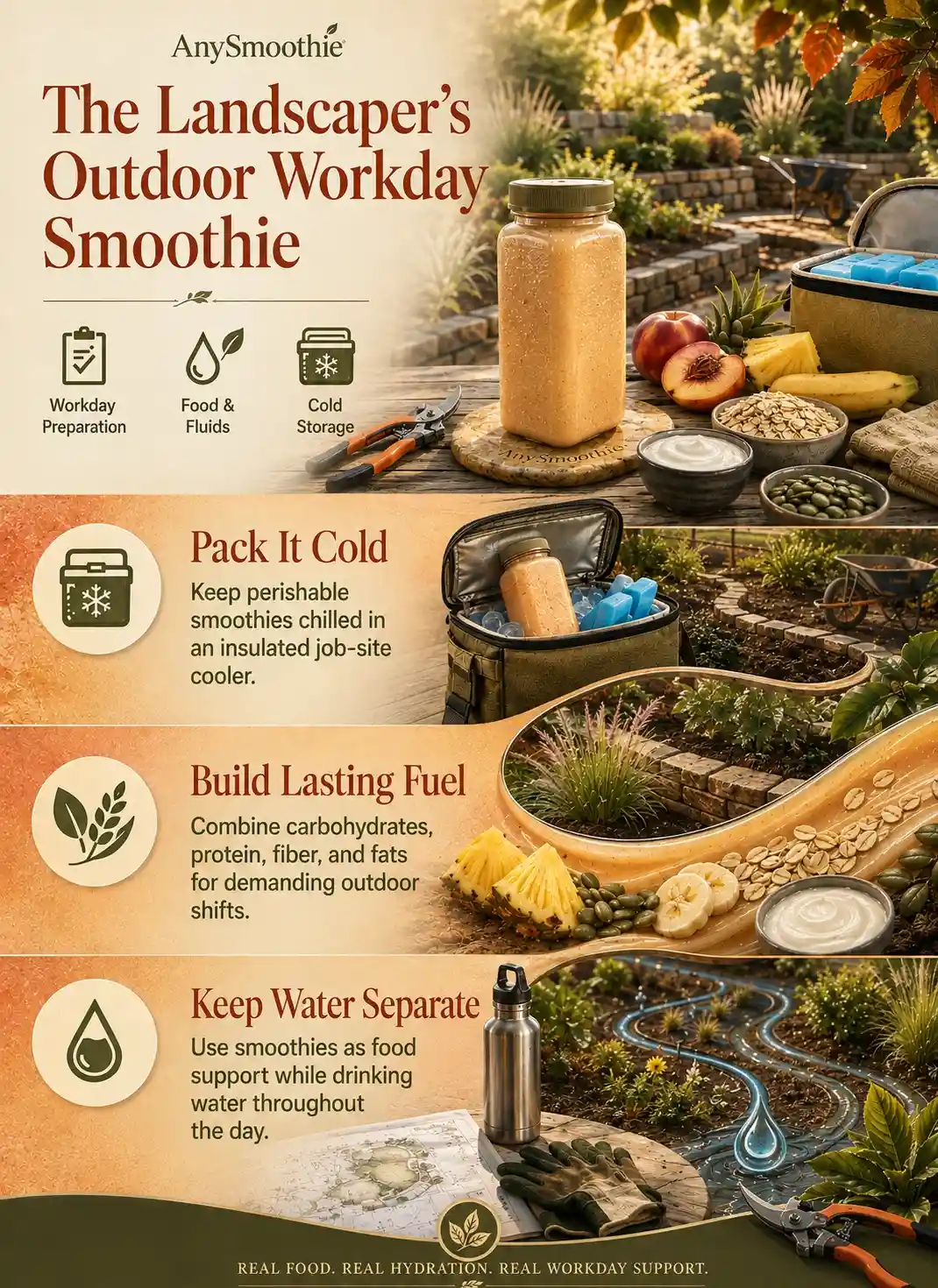
Dairy, yogurt, tofu, and cut produce need an insulated cooler with plenty of ice packs. USDA guidance recommends keeping cold foods at 40°F (4.4°C) or below. Perishable foods should not remain unrefrigerated for more than two hours, reduced to one hour when the outside temperature is above 90°F (32.2°C). See the USDA’s Danger Zone food safety guidance for the full recommendations.
A smoothie with yogurt or tofu belongs in the cooler, not on the truck seat between stops.
Use leakproof bottles, label servings if several people are packing food, and wash blender parts as soon as the shift ends. Check workplace rules, food allergies, and personal dietary needs. Smaller bottles are often easier to finish during short breaks.
Conclusion: A Practical Addition to the Workday
Outdoor workday smoothies for landscapers can combine fluids, carbohydrates, protein, produce, and fiber in one portable drink. Choose berry oats for an early start, mango lime for warm weather, or green peanut butter when you need a more filling break.
Prep ingredients the night before, keep every perishable drink cold, and sip water regularly. A smoothie works best as part of a full workday food plan, alongside meals and scheduled breaks.
🛡️ Safety Notes & Dietary Interactions
- Heat and Hydration: Smoothies contribute fluid but should never replace frequent water intake during landscaping work in hot weather. Fluid needs rise with temperature, humidity, workload, clothing, and individual sweat rate, so plan water access throughout the shift.
- Job-Site Cold Storage: Yogurt, milk, tofu, and prepared produce require dependable refrigeration. Keep smoothies at 40°F (4°C) or below in a well-insulated cooler with sufficient ice packs rather than leaving bottles inside a hot truck.
- Heat-Illness Warning Signs: Headache, dizziness, nausea, unusual weakness, confusion, fainting, or worsening muscle cramps during outdoor labor require attention beyond food or smoothies. Stop work, move somewhere cooler, follow workplace heat procedures, and seek appropriate medical assistance when necessary.
- Allergens and Digestion: Dairy, soy, peanuts, and chia may require substitutions for allergies or intolerances. Oats, chia, and nut butter can also feel heavy during strenuous work, so test portions and ingredients before relying on them during demanding shifts.
FAQs
Which smoothie is best before an early landscaping shift?
The banana berry oat smoothie is the most breakfast-like option because it combines carbohydrates from fruit and oats with protein from Greek yogurt and milk. Its fiber also makes it more substantial than a fruit-and-water blend. If strenuous work begins immediately, adjust the portion or reduce the oats if a large breakfast feels uncomfortable.
Is coconut water enough for hydration during a hot landscaping shift?
No. Coconut water contributes fluid, potassium, and carbohydrate, but it should not replace regular water throughout prolonged outdoor work. Hydration needs vary considerably with heat, humidity, physical workload, clothing, and sweat losses. Keep plain water readily available and follow workplace hydration and heat-safety procedures rather than depending on one smoothie or beverage.
Which smoothie is easiest to drink during very hot weather?
The mango lime coconut water smoothie is the lightest of the three because it avoids oats, chia, and nut butter. Yogurt or tofu still provides some protein while mango supplies carbohydrate. During extreme heat, however, appetite and tolerance vary, so a smaller portion alongside regular water may feel more comfortable than finishing a large smoothie quickly.
How should landscapers keep smoothies safe in a work truck?
Pack the smoothie immediately into a leakproof bottle and place it inside an insulated cooler with plenty of frozen gel packs. Keep the cooler closed and out of direct sunlight whenever possible. A truck cab, shaded seat, or insulated bottle alone should not be assumed to provide dependable refrigeration for perishable ingredients throughout a summer workday.
Can a smoothie replace lunch during a long landscaping shift?
These recipes can supplement a workday food plan, but they should not automatically replace a complete lunch during hours of physical labor. Energy and nutrient requirements depend on workload, shift duration, body size, weather, and other meals. Carry familiar solid foods or snacks as well, particularly when scheduled breaks or finishing times may change unexpectedly.

Medical Disclaimer: AnySmoothie content is for educational purposes only and is not a substitute for professional medical advice. Consult a healthcare provider for personalized guidance. See our full Disclaimer & Terms of Use. AI Transparency: AnySmoothie may use AI to support content development. All content undergoes human editorial review for accuracy, clarity, and editorial quality. See our full AI Transparency.