
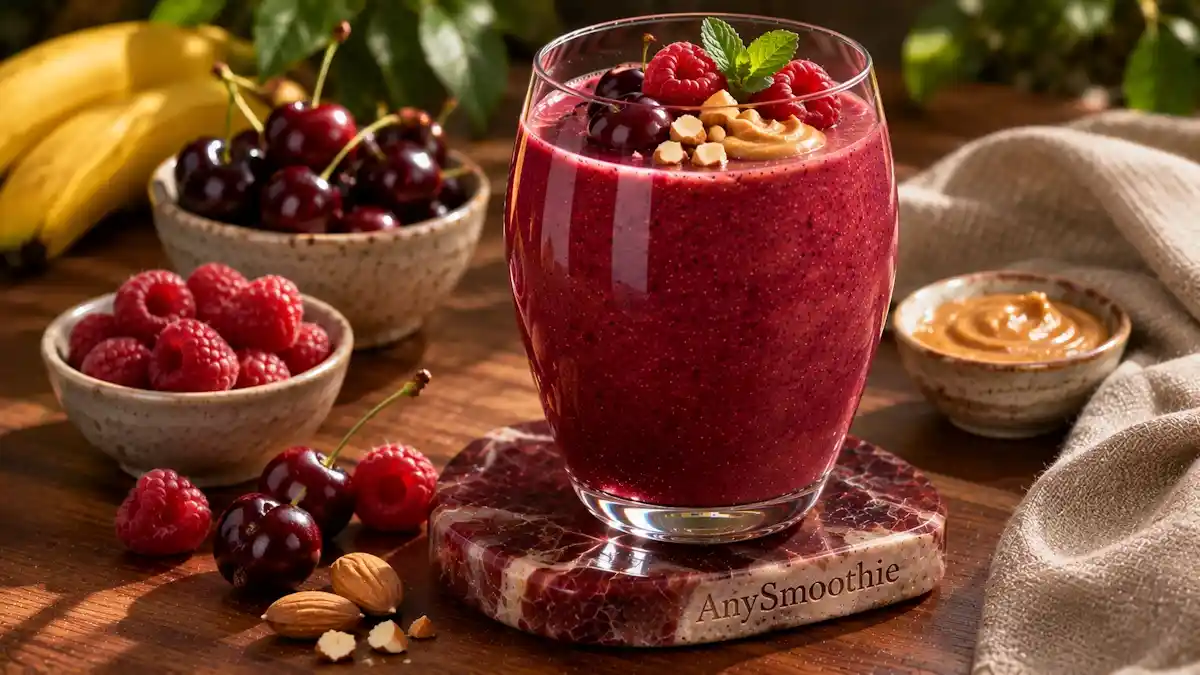
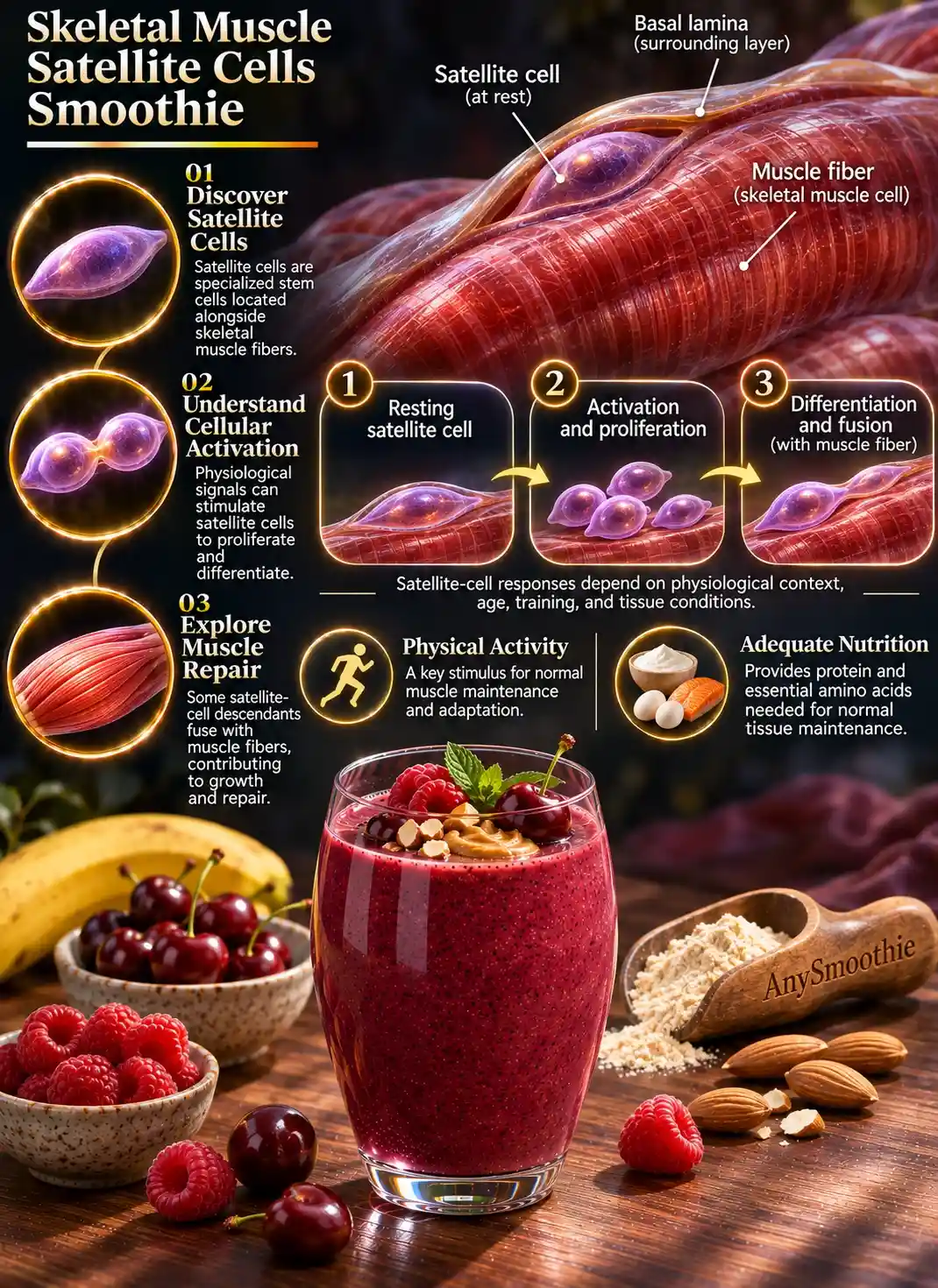
Certain smoothie ingredients provide nutrients used in muscle recovery, but no smoothie switches skeletal muscle satellite cells on by itself. These cells help support muscle repair and adaptation after exercise. For a related process in skeletal muscle physiology, see smoothies for neuromuscular junction support. Nerve-to-muscle communication and satellite-cell signaling are distinct biological processes.
If you’re choosing smoothies for skeletal muscle satellite cell signaling, focus on overall recovery. Protein and carbohydrates can contribute alongside enough food, training, and sleep, but evidence about individual nutrients doesn’t prove a cellular benefit from a recipe.
Start with what these cells do and where nutrition fits.
Smoothies and Skeletal Muscle Recovery
Food supports the broader recovery process. Protein supplies amino acids for building muscle proteins, while carbohydrates help replenish glycogen, the stored fuel muscles use during activity. Milk, yogurt, whey, and soy provide protein, while fruit and oats add carbohydrates. For another example of combining protein and carbohydrates in a recovery-focused drink, see post sauna recovery smoothies for heat adaptation.
These nutritional roles don’t establish that a blend directly activates satellite cells. Muscle protein synthesis and satellite-cell activity are related aspects of adaptation, but they aren’t interchangeable measurements.
Cell signaling also depends on exercise demands, the local muscle environment, and the body’s own regulatory processes. Sleep and total food intake matter for recovery, too. Research on an isolated nutrient or supplement cannot establish what a whole smoothie does inside human muscle. A separate discussion of mitochondrial energy metabolism is available in smoothies for malate-aspartate shuttle support. Assess a recipe by how it helps meet your nutrition needs rather than a promised cellular outcome.
3 Smoothies for Skeletal Muscle Satellite Cell Signaling
Each recipe makes one serving and supplies protein plus carbohydrate. Research on nutritional regulation of muscle stem cells doesn’t establish these blends as direct activators. Nutrition estimates vary by brand.
These are substantial portions, so consider each drink part of your day’s food intake rather than an automatic addition after every workout.
Blueberry Oat and Flax Recovery Smoothie
Ingredients
- 1 cup 2% milk
- 3/4 cup plain nonfat Greek yogurt
- 1 cup blueberries, fresh or frozen
- 1/2 medium banana
- 1 tablespoon ground flaxseed
- 1/4 cup rolled oats
Instructions
Blend all ingredients until smooth. Add a splash of milk if needed to reach your preferred texture.
Estimated Nutrition (per serving)
- Calories: ~470 kcal
- Protein: ~30 g
- Carbohydrates: ~68 g
- Fat: ~10 g
- Fiber: ~13 g
- Sugars: ~40 g
Tart Cherry Cocoa Kefir Smoothie
Ingredients
- 1 cup plain low-fat kefir
- 1 scoop whey protein powder, about 30 g
- 1 cup frozen tart cherries
- 1 tablespoon unsweetened cocoa powder
- 1/2 medium banana
- 1 tablespoon chia seeds
Instructions
Blend everything until creamy. If the mixture is too thick, add cold water a little at a time.
Estimated Nutrition (per serving)
- Calories: ~430 kcal
- Protein: ~39 g
- Carbohydrates: ~57 g
- Fat: ~8 g
- Fiber: ~12 g
- Sugars: ~37 g
Mango Spinach Soy and Tofu Smoothie
Ingredients
- 1 cup unsweetened soy milk
- 150 g silken tofu
- 1 cup mango chunks, fresh or frozen
- 1 cup baby spinach
- 1/4 cup rolled oats
- 1 tablespoon pumpkin seeds
Instructions
Blend all ingredients until smooth. Add water or soy milk to thin it, if desired.
Estimated Nutrition (per serving)
- Calories: ~400 kcal
- Protein: ~23 g
- Carbohydrates: ~48 g
- Fat: ~15 g
- Fiber: ~7 g
- Sugars: ~26 g
Choose a smoothie that fits your training and nutrition needs
Use these differences to choose a drink you’ll enjoy and fit into your usual meals. None of the options has a proven advantage for satellite-cell signaling.
Compare the three blends at a glance
The comparison below highlights practical differences in nutrition, texture, and taste.
| Smoothie | Main nutrition focus | Texture | Flavor profile | Best fit |
|---|---|---|---|---|
| Blueberry Oat and Flax | Protein, carbohydrate, and fiber | Thick and creamy | Fruity, mild, lightly nutty | A filling option after training |
| Tart Cherry Cocoa Kefir | Higher protein with a tangy dairy base | Creamy and cool | Tart, cocoa-rich | Readers who like kefir and a sharper fruit flavor |
| Mango Spinach Soy and Tofu | Plant-based protein and varied plant foods | Smooth and substantial | Sweet mango with a mild green note | A dairy-free choice, if ingredients suit the reader |
The biggest practical differences are protein content, dairy ingredients, and how filling each drink feels.
Match your blend to your day
The kefir recipe supplies the most estimated protein, while the blueberry blend offers a higher-carbohydrate option with oats and fruit. Meanwhile, soy milk and tofu provide a dairy-free option for readers who prefer plant-based foods.
Choose according to your protein needs, appetite, and flavor preferences. If you have allergies or dietary restrictions, check labels and choose suitable alternatives. Milk, kefir, yogurt, and whey contain dairy; the plant-based recipe contains soy. Substitutions will also change the nutrition estimates.
Timing is flexible. A smoothie can fit after training or at another convenient meal or snack. If a thick, fiber-rich drink feels uncomfortable before exercise, have it later instead. There’s no need to force a narrow drinking window.
Conclusion: Keep the focus on overall recovery
These smoothies can make it easier to include protein, carbohydrates, and plant foods in your diet. Satellite-cell signaling remains part of the body’s broader response to exercise and recovery, and no recipe guarantees a particular cellular result.
Choose a blend you enjoy and can comfortably fit into your meals. Then consider it alongside your overall diet, training, and rest, rather than judging its value by an unproven promise about muscle cells.
🛡️ Safety Notes & Dietary Interactions
- Protein Load: These are substantial smoothies, with approximately 23–39 grams of protein per serving. If you follow a prescribed protein-restricted diet or have specific nutritional needs, adjust portions with professional guidance.
- Dairy and Soy: The first two recipes contain milk, yogurt, kefir, or whey, while the mango smoothie contains soy milk and tofu. Check labels carefully for dairy or soy allergies and dietary restrictions.
- Fiber and Timing: Oats, flaxseed, chia, blueberries, spinach, mango, and pumpkin seeds contribute fiber. If a thick smoothie feels uncomfortable before exercise, move it to a later meal or snack.
- Supplement Awareness: The Tart Cherry Cocoa Kefir Smoothie includes whey protein powder. Check the product’s ingredients and serving size, particularly when combining it with other protein supplements or when managing dietary restrictions.
FAQs
Which smoothie provides the most protein?
The Tart Cherry Cocoa Kefir Smoothie provides the highest estimated protein, at approximately 39 grams per serving. The Blueberry Oat and Flax Smoothie provides about 30 grams, while the Mango Spinach Soy and Tofu Smoothie provides approximately 23 grams.
Does more protein directly activate satellite cells?
No. Protein supplies amino acids used for muscle protein synthesis and contributes to overall recovery, but the article does not establish that increasing protein through one smoothie directly activates skeletal muscle satellite cells or produces a predictable cellular response.
Which smoothie is the best dairy-free option?
The Mango Spinach Soy and Tofu Smoothie is the dairy-free option as written. It uses soy milk and silken tofu for its protein base. However, it contains soy, so it is not suitable for someone avoiding both dairy and soy without further substitution.
Should I drink one immediately after every workout?
No narrow timing window is required by the article. A smoothie can fit after training or at another convenient meal or snack. Consider it part of your day’s total food intake, rather than an automatic addition after every workout.
Which smoothie is most suitable if I want more carbohydrates?
The Blueberry Oat and Flax Recovery Smoothie provides the most estimated carbohydrates, at approximately 68 grams per serving. Its milk, yogurt, blueberries, banana, and oats also make it the most calorie-dense option, so portion size should fit your overall daily intake.

Medical Disclaimer: AnySmoothie content is for educational purposes only and is not a substitute for professional medical advice. Consult a healthcare provider for personalized guidance. See our full Disclaimer & Terms of Use. AI Transparency: AnySmoothie may use AI to support content development. All content undergoes human editorial review for accuracy, clarity, and editorial quality. See our full AI Transparency.