
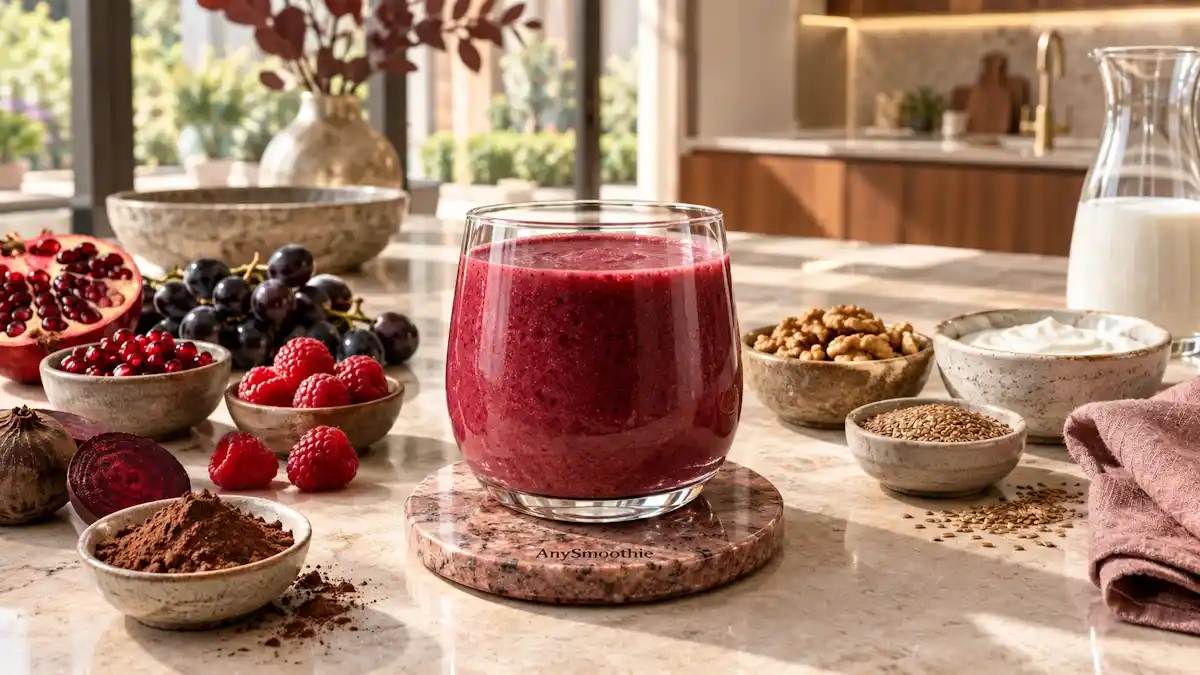
The endothelial glycocalyx is a delicate, carbohydrate-rich layer on the inner surface of blood vessels. Smoothies for endothelial glycocalyx support can supply fluid, fiber, plant compounds, minerals, and unsaturated fats, but food is not a treatment for vascular disease.
A well-built smoothie fits into a broader eating pattern that includes varied whole foods, movement, sleep, and medical care when needed. The ingredient choices below focus on balanced combinations, realistic portions, and practical safety.
How Nutrition May Support the Endothelial Glycocalyx
The glycocalyx is a thin coating of sugars, proteins, and other molecules around endothelial cells, the cells that line blood vessels. It helps those cells interact with flowing blood and their surrounding fluid environment. A review of glycocalyx changes in aging and disease also shows why broad lifestyle habits matter more than one food.
Hydration, glucose regulation, oxidative balance, and overall vascular health can influence the physiological environment surrounding the endothelium. A review of nutrition and glycocalyx preservation discusses how lifestyle factors, oxidative stress, and nutrition relate to this area of vascular biology. For a related vascular perspective, these smoothies for endothelial function and nitric oxide explore nutrition strategies connected with normal blood vessel signaling.
Research on a nutrient or food does not show that one smoothie can rebuild the glycocalyx or repair blood vessels.
The nutrients that create a better foundation
Berries and other deeply colored fruit provide polyphenols. Leafy greens add folate, potassium, and magnesium. Chia seeds or ground flax add soluble fiber and alpha-linolenic acid, an omega-3 fat.
Plain yogurt, kefir, silken tofu, or unsweetened soy milk can add protein. Protein and fiber slow fruit’s digestion and make a smoothie more satisfying. Whole ingredients also offer a broader mix of compounds than isolated powders.
Why hydration and blood sugar balance matter
The glycocalyx exists in a fluid environment, so regular fluid intake supports normal circulation. Water is usually the simplest smoothie base.
However, a drink made mostly from fruit juice, dates, and sweetened yogurt can deliver a large amount of sugar quickly. Pair fruit with greens, seeds, protein, and water instead. This approach keeps smoothies for endothelial glycocalyx support closer to a balanced snack or breakfast.

Build Glycocalyx-Supportive Smoothies With Real Food
Use a five-part formula rather than chasing specialty powders or dramatic claims. Choose unsweetened ingredients, then adjust the blend to your appetite and schedule. CoQ10 smoothies for vascular endothelial support offer another food-focused approach to building balanced blends around vascular wellness.
A five-part formula for balanced smoothie recipes
Start with 1 cup liquid, such as water, unsweetened soy milk, or plain kefir. Add 1 cup produce, including blueberries, strawberries, cherries, spinach, kale, or cooked beets.
Next, include a fiber source. One tablespoon of chia or ground flax works well, while oats and avocado add body. Then add protein, such as 3/4 cup plain Greek yogurt or 1/2 cup silken tofu. Finish with cinnamon, ginger, lemon, or unsweetened cocoa powder. Blend thoroughly and use water, rather than juice, to thin the texture.
3 Smoothies for Endothelial Glycocalyx Support
Compare ingredients by practical role
Whole fruit is usually preferable to juice because it retains more fiber.
| Ingredient group | Examples | Main nutrition contribution | Best pairing | Practical note |
|---|---|---|---|---|
| Berries | Blueberries, strawberries | Fiber and polyphenols | Yogurt or tofu | Frozen fruit adds thickness |
| Leafy greens | Spinach, kale | Folate and minerals | Berries and lemon | Begin with a small handful |
| Beets | Cooked beets | Color and natural nitrates | Orange and ginger | Add nutrients, not a repair claim |
| Chia or flax | Chia, ground flax | Fiber and unsaturated fats | Berries and yogurt | Ground flax blends smoothly |
| Yogurt or tofu | Greek yogurt, silken tofu | Protein | Fruit and greens | Choose plain, unsweetened options |
| Unsweetened liquid | Water, soy milk, kefir | Fluid, sometimes protein | Any blend | Use water to thin, not juice |
Make Smoothies Safer and More Useful
A balanced smoothie can work as breakfast, a snack, or part of a meal. Still, it shouldn’t replace every meal, because chewing whole foods supports dietary variety and different eating habits. Amla smoothies for endothelial protection provide another plant-focused option for exploring nutrition within the same vascular wellness theme.
Avoid common smoothie mistakes
Skip fruit juice, syrups, and sweetened yogurt when possible. Several servings of fruit without a fiber or protein source can turn a smoothie into a sweet drink instead of a satisfying meal component.
More ingredients don’t always improve nutrition. Wash produce under running water, refrigerate smoothies promptly, and drink them soon after blending. Acidic blends with citrus can also expose teeth to acid, so avoid sipping one over several hours.
Who should check ingredients with a health professional
People with diabetes, kidney disease, swallowing problems, food allergies, or prescribed dietary limits may need tailored portions and ingredients. Leafy greens, beets, grapefruit, high-potassium foods, and concentrated supplements can matter with certain medications or medical conditions.
Conclusion
The most useful smoothies for endothelial glycocalyx support combine colorful produce with fiber, protein, healthy fats, and an unsweetened liquid. That combination supports normal nutritional and antioxidant pathways without promising to treat a condition.
Choose one recipe that suits your taste, keep the portion reasonable, and pair it with a varied diet, regular movement, quality sleep, and professional guidance when needed. Consistency with everyday habits matters far more than any single blend.
🛡️ Safety Notes & Dietary Interactions
- Glucose Management: Fruit, yogurt, oats, and milk all contribute carbohydrates. People monitoring blood glucose may need smaller fruit portions, unsweetened products, and individualized guidance on carbohydrate amounts and smoothie timing.
- Medication Considerations: Leafy greens, grapefruit, beets, and mineral-rich ingredients may require attention with certain medications or prescribed diets. Major dietary changes should be discussed with a clinician or pharmacist when interactions are possible.
- Kidney and Mineral Needs: Spinach, beets, oranges, avocado, dairy, and soy products can contribute potassium, phosphorus, or other minerals. People with kidney-related dietary restrictions should personalize ingredients rather than following these recipes unchanged.
- Vascular Claims: Berries, flax, vegetables, and other whole foods support general cardiovascular nutrition, but smoothies have not been shown to rebuild or directly restore the endothelial glycocalyx. Continue prescribed cardiovascular care and medications.
FAQs
Can a smoothie actually repair the endothelial glycocalyx?
Current evidence doesn’t establish that a particular smoothie can rebuild or repair the endothelial glycocalyx. Research examines how nutrition, oxidative stress, metabolic health, and lifestyle relate to endothelial biology. These recipes instead provide fluid, fiber, protein, unsaturated fats, and plant compounds that fit a broader dietary pattern supporting normal vascular function.
Which smoothie ingredients make the most sense for this topic?
Berries, leafy greens, beets, chia, ground flax, plain yogurt, tofu, and unsweetened liquids are practical choices. They contribute combinations of polyphenols, fiber, minerals, protein, and unsaturated fats rather than targeting one pathway. Pairing fruit with protein and fiber also creates a more balanced blend than using fruit juice and sweeteners alone.
Are beets especially useful in an endothelial-focused smoothie?
Beets provide dietary nitrate, which the body can convert through pathways ultimately involved in nitric oxide availability and normal vascular function. That makes them a relevant whole-food ingredient for an endothelial-focused recipe. However, their presence doesn’t demonstrate glycocalyx restoration, and people with relevant dietary or medical restrictions should individualize the portion.
Is fruit juice a poor choice for these smoothies?
Whole fruit is generally more useful because it retains fiber and creates a more substantial blend. Juice can still fit in modest quantities, but using it as the primary liquid makes it easier to consume a larger carbohydrate load quickly. Water or an unsweetened protein-containing liquid provides a more balanced everyday foundation.
How often should I drink smoothies for endothelial glycocalyx support?
There is no established smoothie frequency for maintaining or restoring the glycocalyx. Instead of following a glycocalyx-specific protocol, fit smoothies naturally into a varied diet containing vegetables, fruit, legumes, whole grains, protein sources, nuts, and seeds. Overall dietary quality, physical activity, sleep, and appropriate medical care remain more important than smoothie frequency.

Medical Disclaimer: AnySmoothie content is for educational purposes only and is not a substitute for professional medical advice. Consult a healthcare provider for personalized guidance. See our full Disclaimer & Terms of Use. AI Transparency: AnySmoothie may use AI to support content development. All content undergoes human editorial review for accuracy, clarity, and editorial quality. See our full AI Transparency.