
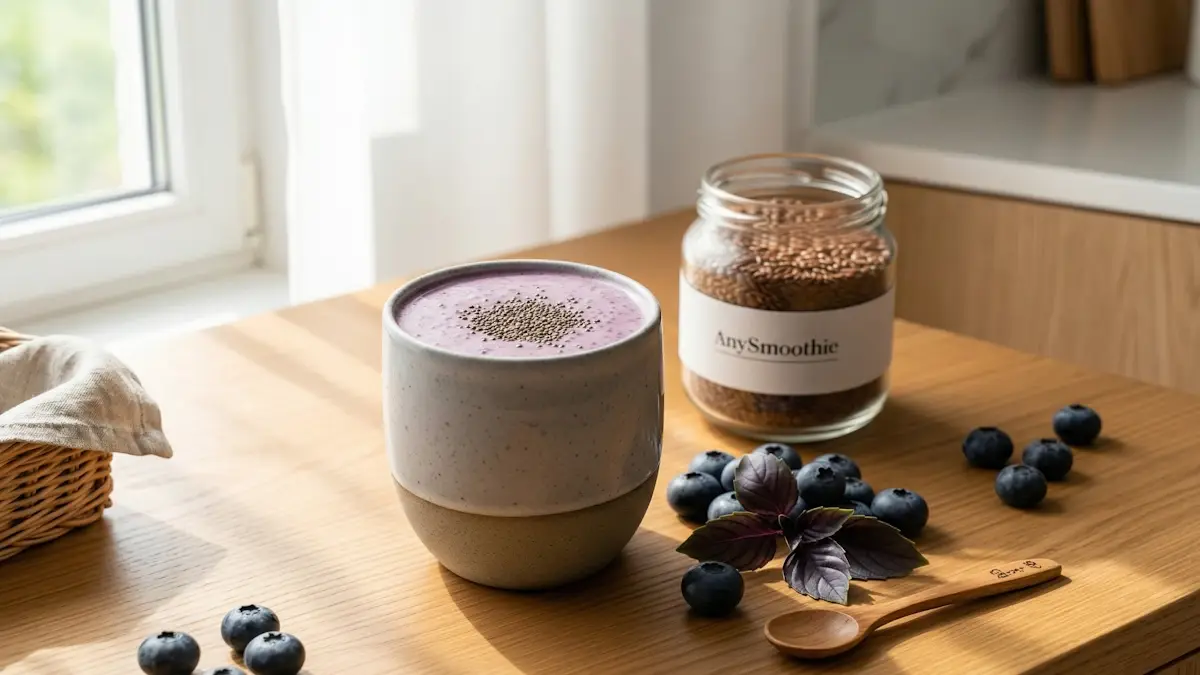
Many people want more fiber, but they feel worse when they add it too fast. If bloating, gas, cramping, or sudden urgency show up after a smoothie, the problem often isn’t fiber itself, it’s the wrong kind, the wrong texture, or too much at once.
That’s why high-fiber smoothies for sensitive guts need a gentler approach. Soluble fiber often feels easier on the stomach than rough, bulky fiber, and small changes like blending well, picking softer ingredients, and watching portion size can make a big difference. In other words, a low-bloat high-fiber smoothie should support digestion, not overload it, and adding extras like the probiotic smoothies for gut health approach may help some people tolerate blends better.
This guide keeps things practical, so you can learn how to increase fiber without more discomfort. Next, you’ll see what makes a smoothie feel gentle, and which ingredients tend to work best for sensitive stomachs.
Start with the kind of fiber your gut is most likely to tolerate
Weight Loss Programs

Diet & Weight Loss

Diet & Weight Loss

Diet & Weight Loss
The Mediterranean Diet – Diamond Evergreen Digital Diet Program

Diet & Weight Loss
If your stomach gets touchy with smoothies, the first move is not adding more ingredients. It’s picking the kind of fiber that tends to feel easier going down. For many people, that means starting with softer, more water-friendly foods instead of rough, bulky ones.
This matters because high-fiber smoothies for sensitive guts are not just about total fiber. Texture, portion size, and fiber type all shape how a blend feels after you drink it. A gentle start usually works better than a fiber overload.
Why soluble fiber is often the better first step
Soluble fiber mixes with water and forms more of a soft gel. In a smoothie, that often translates to a smoother texture and a calmer feel in the gut. It can be a helpful place to begin when you’re learning how soluble and insoluble fiber can affect IBS symptoms.
Good beginner choices are usually the foods that blend creamy, not scratchy. Think:
- Oats
- Chia seeds
- Ground flax
- Banana
- Kiwi
- Cooked pumpkin
These ingredients can add fiber without making a smoothie feel harsh. Banana and cooked pumpkin are especially useful because they thicken the drink while keeping the texture soft. Oats do something similar, which is one reason they show up so often in low-bloat high-fiber smoothies.
Seeds can help too, but go light at first. Chia and flax are often listed among the best seeds for sensitive gut support, yet a big scoop may still be too much if your system is already on edge. Start small, then see how you feel.
When your gut is sensitive, gentle fiber for sensitive stomach support usually works better than chasing the highest fiber number.
The safest way to test tolerance is simple: add one new ingredient at a time. If you throw in oats, chia, flax, berries, spinach, and nut butter all at once, it’s hard to know what helped and what caused trouble. A smoother path looks more like this:
- Pick one soft fiber source.
- Keep the serving modest.
- Drink it slowly.
- Repeat a few times before changing the recipe.
That slower build can make a big difference, especially if you’ve had bad luck with fiber in the past. For example, a banana smoothie for acid reflux can also give you ideas for softer, more soothing fruit-based blends.
When insoluble fiber can be too much at once
Insoluble fiber has benefits, but it can feel rougher for some people, especially in large amounts. Raw greens, fruit skins, bran, and hefty servings of broccoli or cauliflower may be harder to handle when your gut is already irritated.
That doesn’t make these foods “bad.” It just means dose matters. A handful of spinach may be fine, while two packed cups of raw kale could turn a smoothie into a lot of work for your stomach.
Think of insoluble fiber like a scrub brush and soluble fiber like a sponge. Both have a place, but the brush can feel like too much when things are already tender. That’s why soluble vs insoluble fiber for IBS often comes down to timing, symptoms, and serving size, not a strict good-food bad-food list.
A balanced approach usually works best:
- Start with smaller amounts of raw greens.
- Peel fruits if skins seem to bother you.
- Skip large scoops of bran in the beginning.
- Be careful with raw cruciferous vegetables in smoothies.
If you tolerate those foods later, great. Many people do better once their overall fiber intake is more steady. The goal isn’t to avoid healthy foods forever. It’s to stop turning one smoothie into a gut stress test.
How blending changes fiber, but does not remove it
A common myth says smoothies “destroy” fiber. They don’t. The fiber is still there unless you strain it out. What blending does change is particle size and texture. Food gets broken into smaller pieces, which can make a smoothie feel easier to drink and sometimes easier to digest.
That said, blending isn’t magic. A smoothie can still be too much if it’s very large or packed with fiber-rich add-ins. Two tablespoons of chia, half a cup of oats, berries with skins, greens, and flax in one glass may still overwhelm a sensitive stomach, even if everything is blended silky smooth.
This is where many digestive support smoothie recipes go off track. They sound healthy, but they pile on too much at once. A gentler blend usually has:
- One main fruit
- One modest fiber source
- Plenty of liquid
- A reasonable serving size
In other words, blending changes the feel of fiber, not the fact that it’s there. So if you’re trying to figure out how to increase fiber without gas, focus less on whether the smoothie is blended and more on what’s in it, how much you’re using, and how fast you increase it.
For a sensitive gut, that’s often the difference between a smoothie that helps and one that hits like a brick.
Choose smoothie ingredients that add fiber without causing a lot of gas
When you’re building high-fiber smoothies for sensitive guts, the goal is not to cram in every healthy ingredient at once. It’s to pick fibers that feel soft, hydrated, and easier to handle. A good smoothie should feel like support, not like a surprise test for your stomach.
That usually means choosing ripe fruit, modest seed portions, and a liquid base that keeps the blend light. In many cases, how to increase fiber without gas comes down to two things, fiber type and serving size.
Best fruits for a gentler high-fiber smoothie
Fruit can make or break a smoothie for a sensitive stomach. Softer, ripe fruits often work better because they blend smoothly and tend to feel less harsh than large amounts of raw, fibrous produce.
Some of the best starting points are:
- Banana, especially ripe banana, for creaminess and gentle texture
- Blueberries, in small portions, for fiber without too much bulk
- Strawberries, which can feel lighter than heavier fruit blends
- Kiwi, which many people find easier to fit into a gut-friendly routine
- Papaya, for a soft texture and mellow flavor
- Canned or cooked pear, if tolerated, because cooking can make fruit feel easier on digestion
Ripeness matters more than many people think. A very ripe banana usually blends into a soft, easy base, while an under-ripe one can feel starchier. The same idea applies to pears, kiwi, and papaya. If the fruit is hard, tart, or barely ripe, it may not feel as gentle.
Portion size matters too. Even a fruit that’s often well tolerated can feel like too much in a large serving. Start with a small amount, then repeat that same blend a few times before increasing it. That’s often a better path than switching fruits every morning and trying to guess what caused the bloat.
If you want a simple rule, start with one main fruit, not a whole fruit salad in a blender. For example, banana with a few strawberries usually lands softer than banana, apple, mango, raspberries, and dates all in one glass.
For readers comparing soluble vs insoluble fiber for IBS, softer fruits often fit the gentler side better than fruits with thick skins, lots of seeds, or a rough texture. If you want a practical overview of fruit choices, this guide on IBS-friendly fruits for better digestion is a useful reference.
In low-bloat high-fiber smoothies, soft texture often helps just as much as fiber content.
Best seeds for sensitive gut smoothies
Seeds can add a lot of fiber fast, which is exactly why they can backfire when you use too much. For the best seeds for sensitive gut smoothies, think small amounts and simple recipes.
Here is the basic difference:
| Seed | Fiber style | Texture in smoothies | Best way to start | | | | | | | Chia | Higher in soluble fiber | Thickens and gels | 1 teaspoon | | Ground flax | Adds soluble fiber and softness | Blends in well, slightly nutty | 1 teaspoon | | Hemp hearts | Lower in fiber | Creamy, mild, filling | 1 teaspoon to 1 tablespoon |
Chia seeds absorb liquid and form a gel, which can make a smoothie feel smoother and more filling. That same trait can also make a drink very thick if you overdo it. For a sensitive stomach, start with a teaspoon, not a heaping scoop.
Ground flax is another smart choice when you want gentle fiber for sensitive stomach support. It tends to blend well and adds soluble fiber without changing the texture too much. Ground flax usually works better in smoothies than whole flax because whole seeds may pass through with less effect on texture.
Hemp hearts are different. They are lower in fiber, so they may not boost fiber as much as chia or flax. Still, they can make a smoothie more satisfying by adding healthy fats and a creamy feel. If chia and flax seem too strong at first, hemp hearts can help create a more balanced smoothie without loading on extra fiber.
The biggest mistake is using all three at once. That sounds healthy on paper, but it can turn your smoothie into a fiber bomb. A better approach looks like this:
- Pick one seed to test.
- Start with 1 teaspoon.
- Stay there for a few days.
- If it feels fine, move up to 1 tablespoon.
That slow build matters because seeds are concentrated. A tablespoon or two doesn’t look like much, but your gut notices. If you want more context on how chia may fit into a sensitive-gut routine, this overview of chia seeds and IBS covers the basics in plain language.
Liquid bases and extras that support digestion
The liquid base sets the tone for the whole smoothie. It changes the thickness, the richness, and how heavy the drink feels afterward. When you’re making digestive support smoothie recipes, a gentler base often works better than a rich one.
Good options include:
- Water, if you want the lightest blend
- Coconut water, if you want a thinner, more refreshing smoothie
- Lactose-free milk, if regular milk doesn’t sit well
- Almond milk, for a mild and lower-heaviness option
- Oat milk, for a creamier texture, if tolerated
- Kefir, in small amounts, if you do well with cultured dairy
- Yogurt, if tolerated, to add body and a more balanced feel
The right choice depends on your goal. If your stomach feels touchy, water or coconut water may keep the smoothie easier to handle. If you want it more filling, lactose-free milk, almond milk, or oat milk may work better. Kefir can add tang and creaminess, but it makes sense to start small and see how your body responds.
A few extras can help the smoothie stay simple without feeling boring. Fresh ginger can brighten the flavor and make a heavy blend feel lighter. Cinnamon adds warmth without extra sugar. A spoonful of plain yogurt, if tolerated, can soften the texture and round out the drink.
Keep the add-ins modest. Sensitive guts often do better with one or two extras, not five. A smoothie with banana, blueberries, chia, kefir, yogurt, cinnamon, ginger, spinach, and nut butter may sound wholesome, but it can also be a lot to process in one sitting.
If you like the idea of cultured ingredients, a small splash of kefir may fit naturally into the same gentle style used in probiotic smoothies for gut health. The best blends stay simple, repeatable, and easy to trust.
Build your smoothie in a way that lowers the chance of bloating
With high-fiber smoothies for sensitive guts, the build matters as much as the ingredients. A smoothie can be full of good foods and still feel like too much if the portions are large, the fiber is stacked too high, or the drink goes down too fast. A gentler blend usually wins because it gives your gut less to wrestle with at one time.
Use the simple 1-2-1 smoothie formula
A good starting point is a simple 1-2-1 formula:
- 1 cup fruit
- 2 teaspoons to 2 tablespoons of a fiber add-in
- 1 cup liquid
This keeps your smoothie balanced without turning it into a dense fiber bomb. For fruit, stick with one main choice, such as banana, blueberries, or kiwi. For the fiber add-in, try oats, chia, or ground flax, then start at the low end if your gut is touchy.
After that, adjust texture only if needed. Add a little ice for a colder, lighter blend, or a spoonful of yogurt if you tolerate it and want more creaminess. The key is restraint. More fiber isn’t always better, especially when you’re learning how to increase fiber without gas.
Keep portions small when your gut is easily upset
Even a well-made smoothie can backfire if the serving is too big. For many people, 12 to 16 ounces feels easier than a giant meal-sized blend. That’s often enough to satisfy you without overloading your stomach.
Speed matters too. If you drink it quickly, you may end up with that sloshy, overfull feeling. Sip slowly instead, and give your body time to catch up. If needed, split one smoothie into two smaller servings and have the rest later. That one change can make low-bloat high-fiber smoothies feel much more manageable.
Pair fiber with protein and fat for better comfort
Fiber on its own can feel a little sharp, especially in a fruit-only smoothie. Adding some protein and fat can make the blend feel steadier and more satisfying. Good options include yogurt, kefir, protein powder if tolerated, nut butter, or hemp hearts.
For example, banana plus ground flax plus almond milk may feel better with a spoonful of yogurt or a little hemp heart mixed in. According to Verywell Health’s IBS-friendly smoothie ingredient guide, simple add-ins like kefir and non-dairy milk can help keep a smoothie easier on digestion.
Still, balance matters. Too much nut butter, too much full-fat dairy, or a heavy scoop of protein powder can make the smoothie rich and hard to handle. Think of it like padding around the fiber, not a pile-on.
Common smoothie mistakes that can make a sensitive stomach feel worse
Even well-made high-fiber smoothies for sensitive guts can backfire when a few small choices pile up. In many cases, the issue is not smoothies themselves. It’s the jump in fiber, the ingredient mix, or the way you drink them.
If your stomach feels worse after a “healthy” blend, that doesn’t mean you need to give up on smoothies. Usually, you just need a gentler setup and a little more patience.
Adding too much fiber too fast
This is one of the biggest mistakes. If you usually eat very little fiber, then suddenly drink a smoothie loaded with chia, flax, oats, berries, and spinach, your gut may push back with gas, bloating, or cramps. That’s not unusual. Your system often needs time to adjust.
The simplest fix is to raise fiber in small steps. Start with one modest add-in, such as 1 teaspoon of chia or a few spoonfuls of oats. Stay there for several days before adding more. If that feels fine, move up slowly over the next week or two.
For many people, how to increase fiber without gas comes down to a few basics:
- Start with one fiber source, not three.
- Keep the first serving small.
- Drink enough fluid during the day.
- Repeat the same recipe before changing it.
- Add more only when your stomach feels steady.
A sensitive gut usually does better with rhythm than with a big health kick. As Verywell Health explains about getting more fiber without bloating, slow increases tend to feel much easier than sudden jumps.
A gentle fiber plan works better than trying to hit a high number overnight.
Using too many high-FODMAP ingredients in one blend
Some people with IBS or a sensitive stomach react to certain carbs that ferment quickly in the gut. You don’t need to memorize a long food list to understand the pattern. If a smoothie includes several common triggers at once, it may feel rough even when each ingredient seems healthy on its own.
A few examples that may bother some people include apples, large amounts of mango, regular milk, honey, and some sweeteners. Certain protein powders, inulin, or chicory root fiber can also be hard on the stomach. Then everything gets blended together into one fast, concentrated drink.
The easiest move is to keep the recipe simple. Pick one fruit, one liquid, and one fiber add-in. If you’re troubleshooting, skip the extra sweeteners and avoid stacking several possible triggers in the same glass. A basic banana smoothie with almond milk and a little ground flax is often easier to test than a mix with apple, mango, yogurt, dates, and honey.
If FODMAPs seem to be part of the issue, this low-FODMAP smoothie guide gives a helpful overview of gentler ingredient patterns. The main point is simple: when your gut is sensitive, less variety in one blend often means less drama later.
Forgetting about temperature, sweetness, and speed
Sometimes the problem isn’t just the ingredients. It’s also how the smoothie feels when it hits your stomach. Very cold smoothies can feel harsh for some people, especially first thing in the morning. A blend packed with fruit juice, dates, or sweeteners can also land heavily, then lead to that too-full, sloshy feeling. And if you drink it fast, you may end up swallowing extra air along with it.
A few practical changes can help right away:
- Let the smoothie sit for 5 to 10 minutes before drinking.
- Use less ice, or skip it.
- Cut back on juice and use more water or milk instead.
- Keep sweetness mild, especially if the fruit is already ripe.
- Sip slowly, rather than chugging it like a shake.
Think of it this way: a smoothie should go down like a calm meal, not like a race. If your current blend feels like a cold sugar rush, soften the edges. That small shift can make low-bloat high-fiber smoothies much easier to tolerate.
Three gentle high-fiber smoothie ideas to try first
When you’re new to high-fiber smoothies for sensitive guts, the best recipes are usually the simplest ones. A soft fruit base, one gentle fiber add-in, and enough liquid to keep the texture easy can go a long way.
These three blends are good starting points because they focus on gentle fiber for a sensitive stomach, not maximum fiber at all costs. Keep the portions modest, blend well, and repeat the one that feels best before adding more ingredients.
Banana oat smoothie for a calm, filling breakfast
This is one of the easiest places to start because the texture is naturally soft and creamy. Blend 1 ripe banana, 2 to 4 tablespoons of oats, 1 cup lactose-free milk or plant milk, a pinch of cinnamon, and 1 teaspoon chia or ground flax.
Ripe banana and oats can work well together when you want more soluble fiber without a rough texture. The banana helps thicken the smoothie, while the oats add body and make it feel more like breakfast than a sweet drink. If your gut gets irritated by big jumps in fiber, that small amount of chia or flax is often enough for a gentle test.
A few simple tweaks can make this blend even easier to handle:
- Use a very ripe banana for a softer texture and milder taste.
- Let the oats soak in the liquid for a few minutes before blending if you want it smoother.
- Start with 1 teaspoon of chia or flax, not a full tablespoon.
- Add more liquid if the smoothie turns too thick.
This kind of blend often suits people comparing soluble vs insoluble fiber for IBS, because it leans away from raw, bulky ingredients. Think of it as a soft blanket, not a scratchy sweater. If you want another mild banana-based option, this banana smoothie for acid reflux shows the same gentle idea in a slightly different direction.
If your stomach is touchy in the morning, a thinner smoothie often feels better than a heavy, spoon-thick one.
Blueberry chia smoothie for low-bloat fiber support
If you want something fruitier, blueberries are a smart next step. Blend 1/2 to 3/4 cup blueberries, 1/2 cup yogurt or kefir if tolerated, 3/4 to 1 cup water or milk of choice, and 1 teaspoon chia seeds.
Blueberries bring fiber, but they usually feel lighter than a giant mixed-berry smoothie. In moderate portions, they can fit nicely into low-bloat high-fiber smoothies because you get fiber and flavor without piling on too much volume. Chia adds a little extra soluble fiber and helps the drink feel more satisfying, but the key is keeping the amount small at first.
Yogurt or kefir can make the smoothie creamier and may work well if cultured dairy sits okay with you. If not, just use almond milk, lactose-free milk, or water and keep the recipe simple. According to Verywell Health’s guide to IBS-friendly smoothie ingredients, ingredients like bananas, kefir, and non-dairy milk are often easier starting points for people with IBS-style symptoms, and that same simple approach works here too.
Portion control matters with berries. A small serving can feel refreshing, while a very large one may be more fiber than your gut wants in one sitting. That’s why berries are often a smart choice for how to increase fiber without gas, as long as you don’t turn one smoothie into a whole fruit bowl.
If you like a colder smoothie, use a few frozen blueberries and skip extra ice. That keeps the blend cool without making it too harsh.
Kiwi flax smoothie for easy digestive support
Kiwi can be a great fit when you want a smoothie that feels fresh but still gentle. Blend 1 to 2 peeled kiwis, 1/2 to 1 ripe banana, 1 cup liquid base, and 1 teaspoon ground flax. If you tolerate greens well, add a small handful of spinach, but skip it at first if raw greens tend to bother you.
This smoothie works because it stays simple. Kiwi adds fiber and a bright taste, banana softens the edges, and ground flax blends in smoothly without making the drink gritty. For many people, this kind of recipe fits naturally into digestive support smoothie recipes because it doesn’t rely on huge portions or lots of add-ins.
Spinach is optional for a reason. Some people do fine with a little, while others feel better leaving raw greens out at first. That’s not a failure, it’s just useful feedback from your body. You can always test a small amount later when your gut feels more settled.
A few ways to keep this one gentle:
- Peel the kiwi for a smoother result.
- Use ground flax, not whole flax, so it blends better.
- Keep spinach to a small handful, or leave it out.
- Add extra liquid if the flax thickens the smoothie too much.
Kiwi and flax can be a nice combo when you’re looking for the best seeds for sensitive gut choices beyond chia. The flax adds fiber in a softer way, and the banana keeps the smoothie from tasting too sharp. For many readers, that balance is what makes a smoothie repeatable, and repeatable is what usually helps most.
Conclusion
High-fiber smoothies for sensitive guts work best when you keep the goal simple: start small, choose gentler fiber, and pay attention to how your body responds. In most cases, simple beats loaded, especially when you’re sorting out soluble vs insoluble fiber for IBS and trying to find low-bloat high-fiber smoothies that actually feel good.
A soft fruit base, one of the best seeds for sensitive gut support, and a modest portion can go a long way. That steady approach makes it easier to learn how to increase fiber without gas, and it turns digestive support smoothie recipes into something useful, not stressful.
Treat smoothies as a tool, not a challenge. Pick one recipe, try it for a few days, track what feels good, and only then change one ingredient at a time.
Frequently Asked Questions: High-Fiber Smoothies
What is the best fiber for a sensitive stomach?
Soluble fiber is generally the best choice for sensitive stomachs. Unlike insoluble fiber, it dissolves in water to form a soothing gel, which aids digestion without causing the mechanical irritation or gas often associated with rougher fibers.
How do I add fiber to smoothies without getting bloated?
The secret is the ‘Low and Slow’ method. Start with just 1 teaspoon of gentle fiber like ground flax or chia seeds, blend thoroughly to break down particles, and drink slowly to avoid swallowing excess air.
Does blending destroy fiber in smoothies?
No, blending does not destroy fiber. It simply breaks it down into smaller particles, which can actually make it easier for a sensitive gut to process while keeping all the nutritional benefits intact.

The AnySmoothie team is all about smarter smoothie recipes made with whole-food ingredients. Everything we share centers on balanced nutrition, steady energy, and low-glycemic choices, so you can sip a smoothie that keeps you full, feels good, and helps you avoid sugar crashes.
- Disclaimer: This content is for educational use only. These smoothie recipes and nutrition details aren’t a substitute for medical advice from a licensed health professional. Please read our full Medical Disclaimer here.
Dietary Supplements

Dietary Supplements

Dietary Supplements
Dietary Supplements

Dietary Supplements