
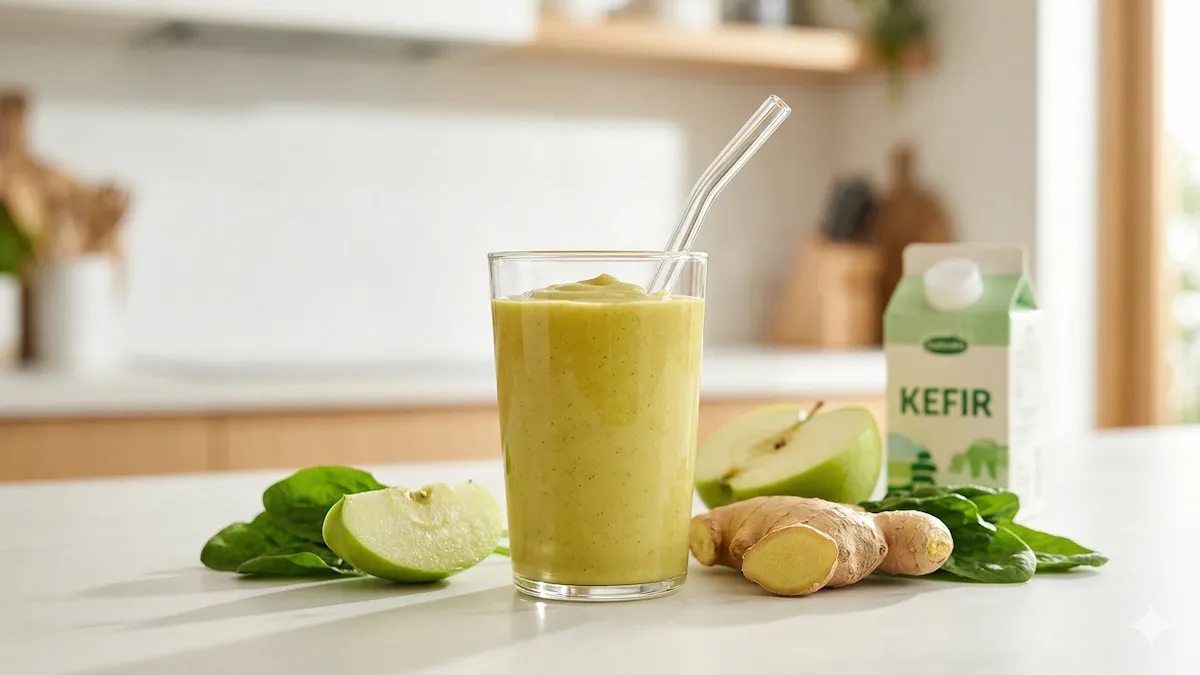
Antibiotics can clear out harmful bacteria, but they also thin the crowd that digests fiber and helps keep the gut calm. After the course ends, the goal is to rebuild balance, not to flood the system with every trendy ingredient at once.
A smoothie won’t replace sleep, regular meals, or a varied diet. It can, however, deliver nutrients in a form that is easier to tolerate when digestion feels off. This guide shows how to build a post-antibiotic smoothie for microbiome resilience that supports microbial balance, gut lining repair, and steady energy without overloading the system. Used well, it acts like a small, consistent input, which the gut often handles better than a giant reset.
The Microbial Void: Understanding Ecological Succession Post-Antibiotics
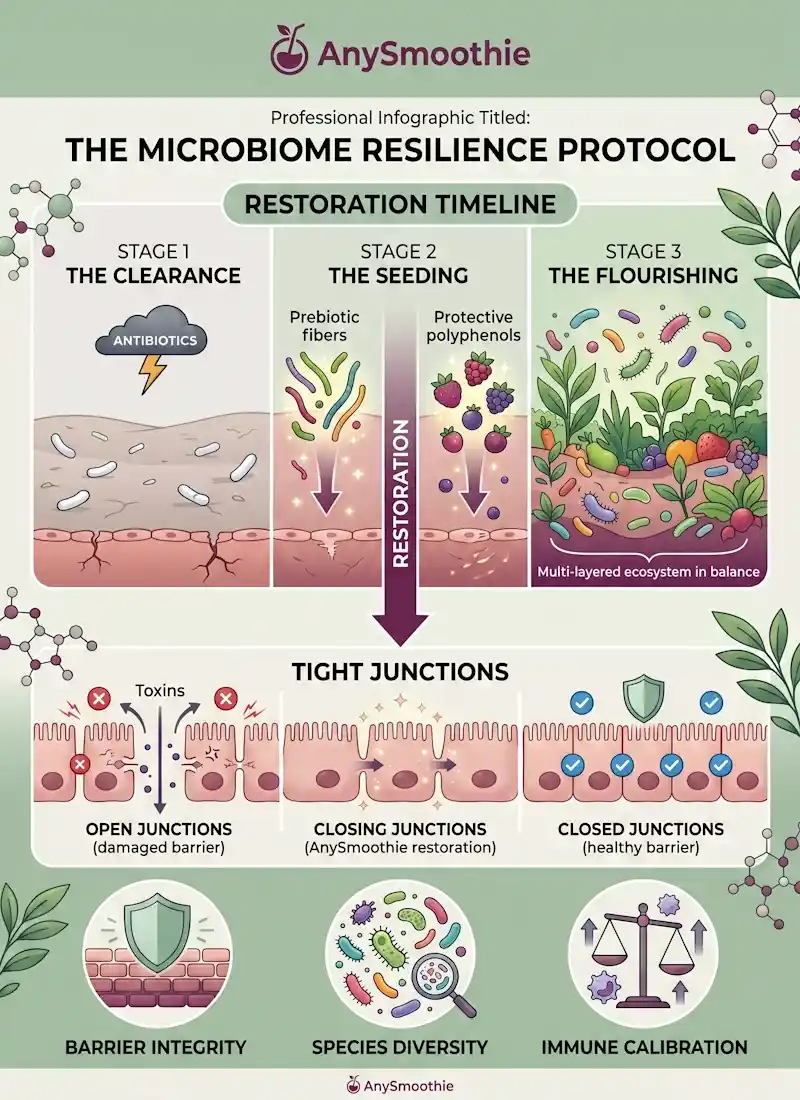
The gut works like an ecosystem after a major reset. Antibiotics can lower diversity, so some microbes rebound fast while others stay low. That leaves open spaces, and those spaces shape which organisms settle next. Recovery works best when the environment is steady enough for useful species to return.
A simple smoothies for gut health after antibiotics guide usually points toward the same idea, calm ingredients, modest fiber, and low sugar. Fiber and polyphenols help occupy the available niches in a healthier way, while regular meals keep the system predictable. In ecological terms, you want succession to move forward without leaving a long vacancy.
Niche Occupation: Preventing the Proliferation of Pathobionts
When helpful microbes drop, less helpful ones can take the open seats. They are called pathobionts when they stay in check, but get louder in the wrong setting.
You do not need a harsh cleanse to address that. Keep the gut fed with fiber, polyphenols, and steady nourishment, and the space fills in a more balanced way.
Why a Smoothie Works Well When Digestion Is Still Sensitive
Blended foods are easier to handle when appetite is low or the gut feels sensitive. A smoothie brings hydration, soft texture, and targeted ingredients in one cup.
That makes it easier to use glutamine, berries, or gentle prebiotic fibers without creating a heavy meal. The goal is support, not overload.
Synergistic Restoration: Prebiotic Fibers and Mucosal Repair
The best recovery blend is not just fruit. It needs a source of fuel for the gut lining, a gentle prebiotic fiber, and a polyphenol source that shapes microbial balance. That is why L-glutamine, PHGG, and pomegranate extract keep showing up in practical formulas.
For a quick background on gentle fiber, PHGG prebiotic fiber research is useful, especially if you want something that blends cleanly.
| Substrate | Physiological mechanism | Targeted area | Best smoothie pairing | Synergistic nutrient |
|---|---|---|---|---|
| L-Glutamine | Essential fuel for rapid enterocyte turnover after stress, supports tight-junction repair | Gut lining | Banana, kefir, oats | Zinc |
| PHGG | Selective prebiotic fermentation, feeds helpful microbes with less digestive drag | Large intestine diversity | Berries, chia, yogurt | Polyphenols |
| Pomegranate extract | Polyphenol-driven support for microbial balance | Microbial balance | Cacao, berries, seed butter | Small amount of fat |
The pattern is simple. One substrate supports the lining, one feeds microbes, and one shapes the chemical terrain.
L-Glutamine, PHGG, and Pomegranate Extract: How Each One Supports Recovery
L-glutamine is the preferred support for gut lining energy because enterocytes turn over fast after stress. PHGG is a selective prebiotic fiber, so it feeds beneficial microbes without the grit of heavier fibers. Pomegranate extract adds polyphenols that can support microbial balance, and it fits best in berry or cacao blends.
A controlled pomegranate extract and gut microbiota study found shifts in diversity and metabolites, which makes it a useful add-in, not the whole formula.
Glutamine and Zinc: Sealing the “Leaky” Post-Treatment Barrier
A glutamine and gut permeability review shows why the evidence is mixed, yet glutamine still fits well in food-first recovery. Pair it with zinc-friendly foods like pumpkin seeds or fortified yogurt.
That pairing keeps the focus on barrier support and makes the smoothie more complete.
Pairing Ingredients for Nutrient Partitioning and Smoother Digestion
Pair fiber with protein so the smoothie does not hit like dessert. Add berries for color and polyphenols, then use a modest amount of fat, such as seed butter, to help transport fat-soluble compounds.
That improves nutrient partitioning, because the body gets usable fuel without a sharp sugar spike. It also keeps the texture steady and easier to finish.
3 Resilience-Prime Recovery Support Smoothie Recipes
These three blends each push recovery in a slightly different direction. Pick the one that matches your current tolerance, then adjust slowly.
How to Use Recovery Smoothies Without Making Your Gut Work Harder
Recovery smoothies work best when they are boring at first. Start with a small serving, then let your gut tell you what it handles.
Use a smoothie as breakfast or a light snack, not next to a heavy meal. If bloating, loose stools, or low appetite show up, shorten the ingredient list and pause the stronger fibers.
Start Small, Then Build Tolerance Over Several Days
Begin with half portions or a short ingredient list, then add one item every few days. That gives your gut time to adjust and keeps the smoothie from becoming a stress test.
Consistency matters more than complexity here. A calm daily blend is easier to recover from than a perfect recipe that feels too heavy.
When to Keep It Simple, and When to Add More Prebiotic Power
Keep it simple when digestion feels raw, when fiber has caused bloating before, or when appetite is low. A banana, a little protein, and water may be enough.
Add more prebiotic fiber when the baseline feels steady and your response stays calm after a few servings. That is the right time to move from a gentle base to a stronger recovery blend.
Biohacking Long-Term Diversity: Beyond Probiotic Supplementation
A smoothie helps, but resilience comes from repeated inputs. Keep plant variety high across the week, eat enough protein, drink water, and protect sleep.
Probiotics can be useful, yet they are only one part of the picture. The body still needs substrate, energy, and regular meals to keep epithelial renewal moving.
Mitochondrial Priming: Supporting the Energetic Demand of Epithelial Renewal
Epithelial cells need ATP to rebuild well. A balanced smoothie with protein, a modest amount of fat, and not too much sugar supports that work with less strain.
That is the practical edge of metabolic efficiency. The blend gives tissue a clean fuel source without forcing a big glucose swing.
Conclusion
After antibiotics, the gut needs calm inputs more than clever tricks. A well-built smoothie can feed beneficial microbes, soften digestion, and give the gut lining useful fuel.
Keep the formula simple, then adjust based on how you feel. A small, steady habit often works better than a crowded blender.
That is the practical edge of a post-antibiotic smoothie for microbiome resilience, it supports recovery without asking the gut to do extra work.
🛡️ Safety Notes & Contraindications: Post-antibiotic smoothies
L-Glutamine and Neurological Sensitivity: while essential for the gut, high doses of L-glutamine can cross the blood-brain barrier and convert to glutamate, an excitatory neurotransmitter; individuals with a history of seizures, severe anxiety, or bipolar disorder should start with low doses (2g) to monitor for overstimulation.
PHGG & Rapid Fermentation: partially hydrolyzed guar gum (PHGG) is generally well-tolerated, but starting too fast can still cause osmotic shifts; if you experience sudden bloating or a change in bowel frequency, reduce the serving size by half.
Zinc Overdose: when adding zinc-rich seeds (pumpkin) or supplements to support gut junctions, avoid exceeding 40mg of total zinc per day; chronic excess can interfere with copper absorption and suppress immune function.
Pomegranate/Polyphenol Interactions: pomegranate extract can inhibit the enzyme CYP3A4 in the liver; if you are taking medications like statins or calcium channel blockers, consult a pharmacist as this could increase drug levels in your blood.
Prebiotic “Crowding Out”: do not add high-dose prebiotics (like inulin or FOS) during the first 48 hours post-antibiotics if you have active diarrhea; wait for stool consistency to stabilize before introducing fermentable substrates.
FAQ
Why is L-Glutamine considered the “Preferred Fuel” for gut lining recovery?
L-Glutamine is the most abundant amino acid used by enterocytes (the cells lining the gut) as their primary energy source, especially during periods of high metabolic stress. Biochemically, it supports protein synthesis required to repair the “tight junctions” that maintain the integrity of the intestinal barrier. Including glutamine in a post-antibiotic smoothie optimizes the natural pathways of epithelial renewal by providing immediate substrates for mucosal reconstruction.
How does PHGG fiber support microbial diversity without causing digestive drag?
Partially Hydrolyzed Guar Gum (PHGG) is a highly soluble prebiotic fiber that is fermented slowly by intestinal bacteria. Unlike harsher fibers, its biochemical structure allows for a selective fermentation process that feeds beneficial strains with a significantly lower risk of excessive gas production or irritation. This makes it an ideal substrate to facilitate the ecological succession of useful microbes in the colon during the sensitive post-treatment phase.
What is the role of “Pomegranate Polyphenols” in shaping the chemical terrain?
Pomegranate extract provides ellagitannins, phenolic compounds that act as selective modulators of microbial growth. Biochemically, these polyphenols favor the proliferation of beneficial species such as Akkermansia muciniphila, which is vital for the health of the mucus layer. Integrating these polyphenols into a recovery smoothie helps shape the biochemical landscape, making it less hospitable to opportunistic pathobionts that might otherwise fill open ecological niches.
How does “Mitochondrial Priming” accelerate the demand for epithelial renewal?
The turnover and repair of epithelial cells is a high-energy process that depends heavily on mitochondrial ATP production. A balanced smoothie containing proteins and modest fats provides a steady nutrient flux that supports this energetic demand without causing sharp glucose spikes. This approach facilitates the biochemical mechanics of tissue regeneration, ensuring that cells have the necessary energy and building blocks to restore barrier function efficiently.
Why is “Sequential Tolerance” essential when reintroducing prebiotics?
Following antibiotic treatment, the gut ecosystem is often sensitive and may react to high-fiber loads with bloating or discomfort. Biochemically, starting with half portions and a short ingredient list allows the recovering microbial population to adapt gradually to fermentation demands. This strategy of sequential tolerance optimizes the natural pathways of re-colonization, ensuring that the biochemical mechanics of the gut remain stable and resilient rather than overwhelmed.

Medical Disclaimer: AnySmoothie content is for educational purposes only and is not a substitute for professional medical advice. Consult a healthcare provider for personalized guidance. See our full Disclaimer & Terms of Use. AI Transparency: AnySmoothie may use AI to support content development. All content undergoes human editorial review for accuracy, clarity, and editorial quality. See our full AI Transparency.