
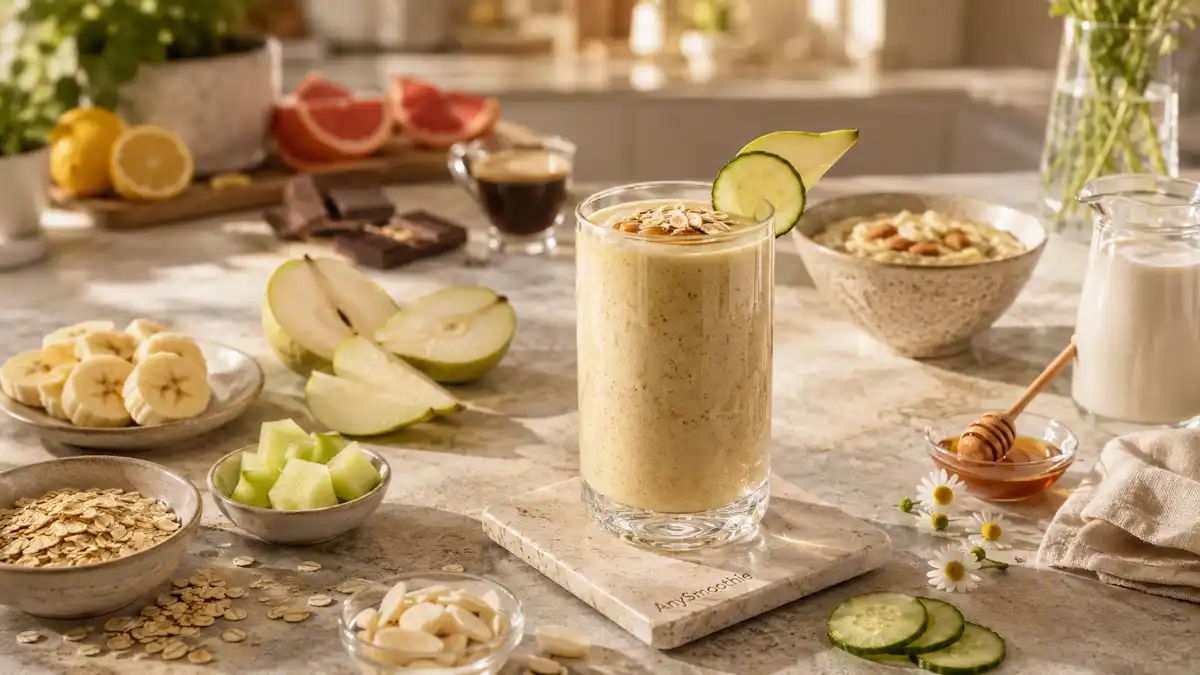
A smoothie can look healthy and still light up reflux symptoms. Acid, fat, sugar, caffeine, and a large portion can all change how the stomach handles the drink.
The list of foods to avoid in acid reflux smoothies is shorter than most people think, but it matters. Some blends look clean on paper and still feel rough in your chest and throat. If you know which ingredients tend to stir things up, you can build a blend that sits lighter and feels calmer, especially if you drink it on an empty stomach.
Why some smoothie ingredients can make reflux worse
The valve between the esophagus and stomach is supposed to stay closed after you swallow. When a smoothie is very acidic, very fatty, or loaded with sugar, the stomach may empty more slowly and build more pressure. That gives that valve a harder job, so reflux feels more likely. If you’re unsure which ingredients tend to work better, best ingredients for acid reflux smoothies provides a practical overview of lower-acid fruits, gentler liquids, and balanced add-ins that are often easier to tolerate.
A smoothie can still trigger reflux if it is too acidic, too rich, or too large.
Acid, fat, and sugar are the main troublemakers
Sharp acids can irritate an empty stomach, while fat keeps food sitting longer. Too much sugar adds more volume and sweetness without much balance. A fruit blend with citrus juice and sweet yogurt can feel very different from the same fruit mixed with water and oats. The body tends to handle one mild stress better than three at once.
Why smoothie texture can matter too
A thick smoothie can act like a heavy meal in a cup. Big servings and fast sipping raise stomach pressure, and that pressure can push reflux upward. Even a good ingredient list can backfire if the blend is dense or too large. That is why a smaller, slower sip often feels better than a giant glass.
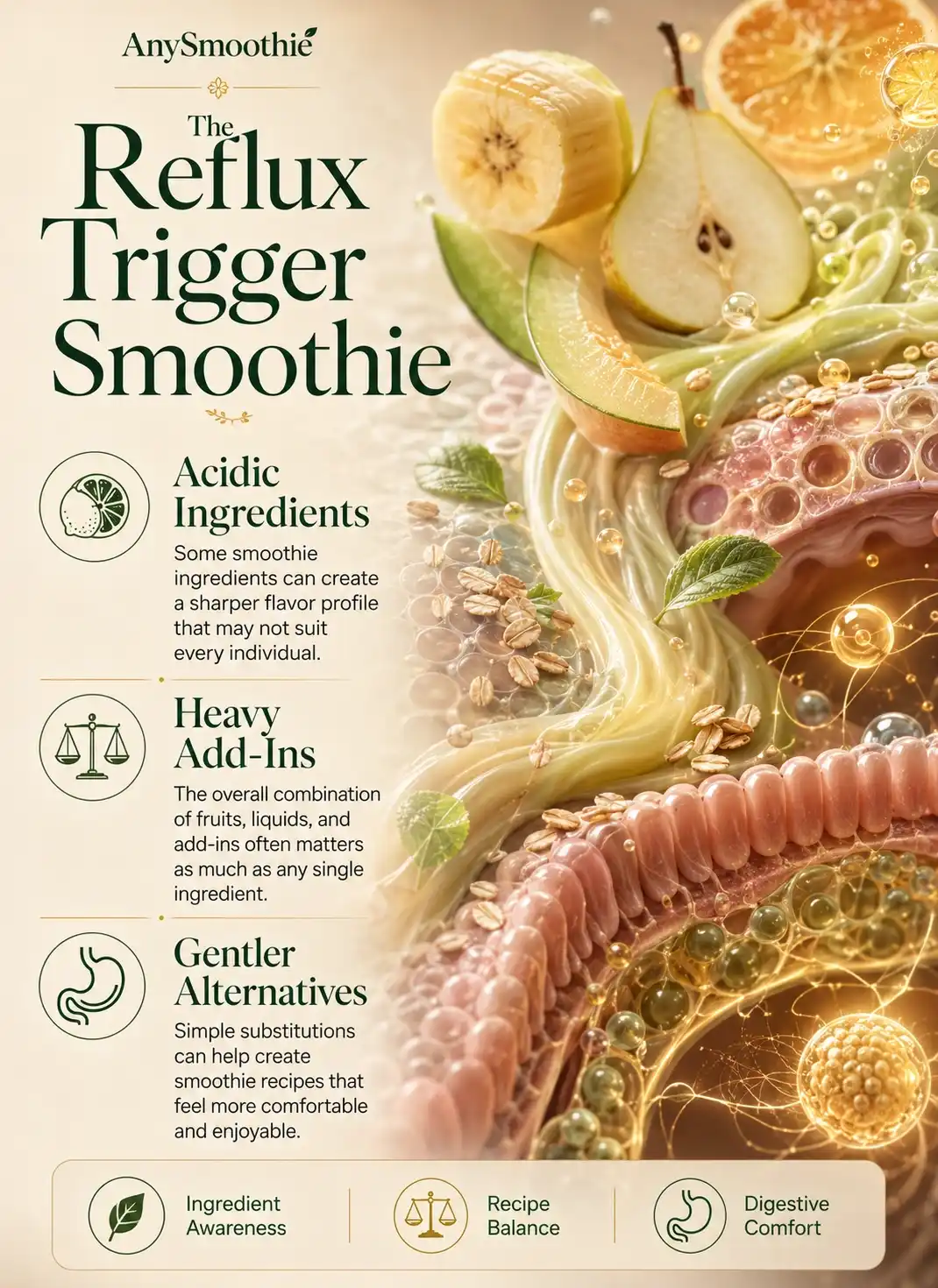
Foods to avoid in acid reflux smoothies if you want a calmer blend
Tolerance varies, but these are the foods to avoid in acid reflux smoothies most often. Harvard Health’s GERD foods to avoid page lists many of the same common culprits.
Citrus fruits and acidic juices
Oranges, lemons, limes, grapefruit, and pineapple bring a bright acid load. Bottled juices made from those fruits can do the same thing, sometimes even faster because they are easy to drink in a rush. On an empty stomach, that hit can feel stronger, especially if the smoothie has no buffer from oats or a milder fruit.
Chocolate, coffee, and green tea powders
Cocoa and caffeine can be rough for some people with reflux. Chocolate, coffee, matcha, and green tea powder all bring that pattern in different forms. A mocha smoothie can stack caffeine, cocoa, and sugar in one glass, which is a lot for a sensitive stomach.
Full-fat dairy, ice cream, and heavy protein add-ins
Whole milk, cream, full-fat yogurt, and rich protein blends all add fat. Fat slows digestion, so the smoothie can sit longer and feel heavier. Lower-fat yogurt, oat milk, or almond milk may sit better if your body already handles them well. If you use protein powder, keep the scoop modest and skip heavy flavor blends.
Mint, spicy add-ins, and strong flavor boosters
Peppermint and spearmint can relax the valve for some drinkers. Cayenne and too much ginger can also make the drink feel sharp. Even strong extracts, like peppermint or cinnamon, can be too much in a sensitive blend. A little flavor can help, but a loud flavor profile can take over fast.
Sugar-heavy ingredients and syrups
Large amounts of honey, agave, flavored syrups, sweetened yogurt, sherbet, and added sugar make the drink denser. They can also make it easier to gulp fast. That combination can leave you with more pressure and less comfort. Sweetness can hide the problem until you finish the glass.
3 Smoothies that can be difficult for acid reflux
The issue is often the combination, not one ingredient by itself. The same ingredients can feel fine in a small amount, then backfire in a bigger mix. If you want more gentle building blocks, fruit smoothies for acid reflux has a fuller ingredient guide.
| Smoothie combo | Typical ingredients | Why it can trigger reflux | Likely feel | Easier swap |
|---|---|---|---|---|
| Citrus protein blend | Orange juice, pineapple, yogurt, whey | Acid plus dairy can hit hard and sit heavy | Sharp and sloshy | Banana, pear, oat milk |
| Mocha banana smoothie | Banana, cocoa, coffee, sweetener | Caffeine, cocoa, and sugar stack up | Rich and stimulating | Banana, carob, almond milk |
| Tropical coconut smoothie | Pineapple, mango, coconut milk, syrup | Acid plus fat can feel rough | Heavy and bright | Melon, banana, water |
The common thread is stacking acidity with fat, caffeine, or sugar. That is where a smoothie can go from light to irritating very quickly.
What to use instead for a reflux-friendly smoothie
A calmer blend usually starts with low-acid fruit, a mild liquid, and only a few add-ins. If you want more recipe ideas, smoothies for heartburn support keeps the ingredient list simple and practical.
Better fruit choices and milder liquids
Banana, melon, pear, and a small amount of oats are easier starting points for many people. Pear and melon stay mild, and they do not need much sweetener. Almond milk, oat milk, and plain water keep the texture light without adding much acid. Smaller portions also help, because less volume means less pressure.
Add-ins that are usually easier on the stomach
Chia in small amounts, flax, cucumber, mild greens, and plain protein are common choices when they already sit well with you. Simple recipes usually beat crowded ones, because the stomach has less to sort through. One or two add-ins are often enough, and that keeps the blend easier to predict. If you want a simple example built around those principles, a banana smoothie for acid reflux uses mild ingredients and a lower-acid flavor profile that many people find easier to start with.
Conclusion
The best smoothie for reflux is often the plainest one. When you skip the common triggers, you still get flavor and texture without piling on acid, fat, and sugar.
That does not mean giving up smoothies. It means building them with more care, then paying attention to what your body handles well. Start with one change at a time, and let your own tolerance be the guide. That is usually where the best results show up.
🛡️ Safety Notes & Dietary Interactions
- Individual Tolerance: Acid reflux triggers vary widely. A food that causes symptoms for one person may be tolerated well by another, so test ingredient changes gradually.
- Portion Control: Even reflux-friendly smoothies can become uncomfortable when servings are very large. Smaller portions often reduce stomach pressure and improve comfort.
- Hidden Triggers: Protein powders, flavored yogurts, sweeteners, and supplements may contain ingredients that affect digestion. Check labels carefully when introducing new products.
- Persistent Symptoms: Frequent heartburn, swallowing difficulties, chest discomfort, or worsening reflux symptoms should be discussed with a qualified healthcare professional.
FAQ
Which fruits are most commonly avoided in acid reflux smoothies?
Citrus fruits such as oranges, lemons, limes, and grapefruits are often avoided because of their acidity. Pineapple can also be problematic for some people. Individual tolerance varies, but many reflux-prone individuals find lower-acid fruits like bananas, pears, and melons easier to handle.
Is chocolate a common smoothie trigger for heartburn?
Chocolate can be a trigger for some people because it contains compounds that may contribute to reflux symptoms. When combined with caffeine, sugar, or high-fat ingredients, the effect may become more noticeable. Testing small amounts separately can help identify personal tolerance levels.
Are dairy products always a problem for acid reflux?
Not necessarily. Some people tolerate plain low-fat yogurt or milk without issues, while others notice discomfort. Rich dairy products, heavy cream, and full-fat ingredients may feel heavier and slow digestion. Personal testing is usually the best way to determine what works for you.
Why do large smoothies sometimes cause reflux symptoms?
Large smoothies increase stomach volume and pressure. Even gentle ingredients can become uncomfortable when consumed in oversized portions. Drinking slowly and choosing moderate serving sizes often helps reduce the likelihood of reflux-related discomfort after a smoothie.
What is the easiest reflux-friendly smoothie formula?
A simple approach is using one low-acid fruit, one mild liquid, and one optional add-in. For example, banana, oat milk, and a small amount of oats create a gentle starting point. Keeping the ingredient list short makes it easier to identify which foods work best for your digestion.

Medical Disclaimer: AnySmoothie content is for educational purposes only and is not a substitute for professional medical advice. Consult a healthcare provider for personalized guidance. See our full Disclaimer & Terms of Use. AI Transparency: AnySmoothie may use AI to support content development. All content undergoes human editorial review for accuracy, clarity, and editorial quality. See our full AI Transparency.