

Waking up tired, hitting a wall by midmorning, and feeling brain fog after lunch can make even simple meals feel like a chore. Chronic fatigue nutrition smoothies offer a low-effort way to support energy production, hydration, and nutrient intake when your body wants less work, not more.
These blends are not a cure. They are a practical tool for days when chewing, cooking, or sitting down to a full meal feels like too much.
The best versions support blood sugar balance, deliver key nutrients, and stay easy on digestion. They also give you a simple way to build consistency, one blender at a time.
What chronic fatigue-friendly smoothies should do for your body
A good smoothie for low-energy days should leave you steadier, not wiped out. That means it needs more than fruit and ice.
Support stable blood sugar with protein, fiber, and healthy fats
Fruit alone can give you a fast lift, then a fast drop. That spike-and-crash pattern can feel sharper when you already feel drained.
Protein, fiber, and fat slow digestion and soften the blood sugar rise. A smoothie with yogurt, chia, nut butter, or hemp hearts tends to hold up better than juice-heavy blends.
Choose ingredients that support mitochondria and daily energy needs
Your cells use several nutrients for normal energy pathways. Magnesium, B vitamins, iron, potassium, and omega-3 fats all play a role in everyday function.
That does not mean a smoothie fixes fatigue. It does mean you can use one to help cover gaps when your intake has been thin or inconsistent.
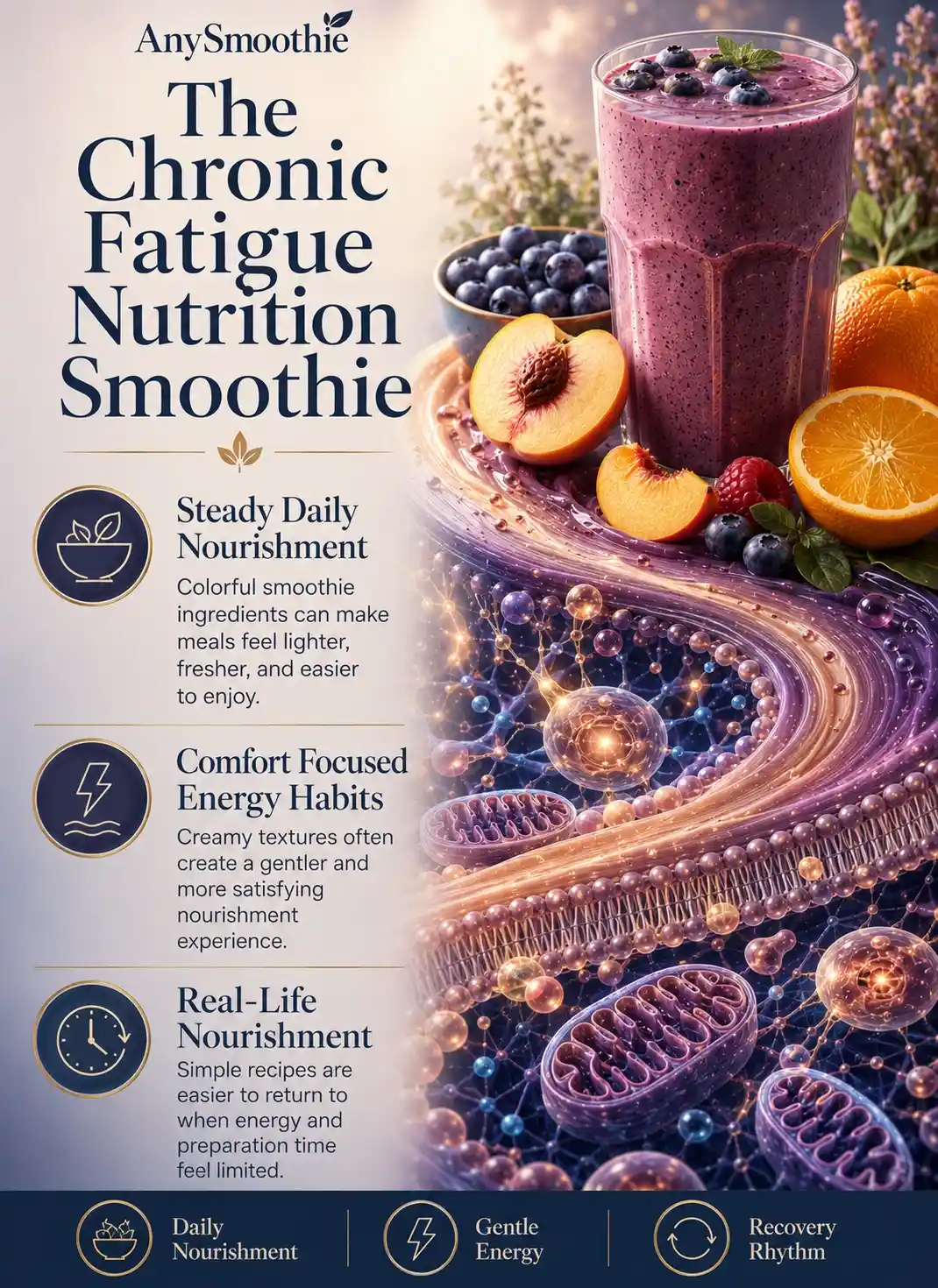
Keep hydration and digestion easy on low-energy days
Some days call for something you can sip instead of chew. A fluid-rich smoothie can help you get calories and fluids without a heavy meal.
Gentle ingredients matter here. Ripe banana, yogurt, oats, and soft greens usually feel easier than huge piles of raw fiber or very rich add-ins.
The best smoothie ingredients for chronic fatigue support
The most useful smoothie ingredients are simple, easy to find, and easy to mix and match. You do not need a long list.
For a wider view of nutrient-first blending, this chronic fatigue nutrition guide gives a plain-language overview that fits well with a food-first approach.
Start with a smart base: milk, kefir, yogurt, or fortified plant milk
Here’s a quick comparison of common bases.
| Base | Protein | Texture | Best for | Notes |
|---|---|---|---|---|
| Milk | Moderate | Creamy | Balanced daily smoothies | Easy to blend and mild in flavor |
| Kefir | Moderate | Thin and tangy | Sensitive stomachs, lighter blends | Adds a cultured taste |
| Greek yogurt | High | Thick and rich | More filling smoothies | Good when you want staying power |
| Fortified plant milk | Low to moderate | Light | Dairy-free smoothies | Often adds calcium and vitamin D |
Greek yogurt and kefir help raise protein without much effort. Fortified plant milks keep the blend lighter and still add useful nutrients.
Add protein, fiber, and fat so the smoothie lasts longer
A smoothie needs staying power. Protein and fat help with that, and fiber slows the rush of sugar.
Good options include Greek yogurt, chia seeds, ground flaxseed, nut butter, hemp hearts, avocado, and protein powder. You can use one or two of these, not all of them.
Use fruits and greens that bring nutrients without too much sugar
Berries are a smart default because they taste bright and bring fiber. Banana works well too, but one small banana is often enough.
Spinach and kale add micronutrients without making the smoothie taste overly sweet. Zucchini is another quiet option, especially when you want a smooth texture. Cooked oats can also add body and help the blend feel more complete.
3 Chronic fatigue nutrition smoothies
A simple morning protein drink can be easier to tolerate than a full plate of food, especially on low-appetite days. This overview of chronic fatigue syndrome symptoms also reflects that early-day support matters for some people.
How to make chronic fatigue smoothies work in real life
The best smoothie plan is the one you can repeat on tired days. Small systems matter more than perfect recipes.
Simple ways to meal prep without draining your energy
Freeze fruit in single portions. Keep spinach, chia, and protein powder in one spot. You can also make a short checklist on the fridge, so you do not have to think.
That cuts down decision fatigue. It also makes the blender feel like a quick tool, not another task.
Common smoothie mistakes that can leave you feeling worse
- Too much fruit can push the sugar too high and leave you hungry again soon.
- Too little protein often makes a smoothie feel like a snack, not a meal.
- Skipping liquids can make the texture too thick and hard to finish.
- Ingredients that upset digestion, such as too much raw kale or a heavy dose of supplements, can backfire.
Keep each blend simple at first. Then adjust the texture, sweetness, and protein until it feels easy on your body.
Conclusion
Chronic fatigue nutrition smoothies work best when they support steady energy, hydration, and easy digestion. A good base, enough protein, a little fiber, and a smart mix of fruit and greens can make a real difference in how the blend feels.
Start with one recipe that matches your day. Then notice whether it leaves you clearer, steadier, and less drained an hour later.
🛡️ Safety Notes & Dietary Interactions
- Blood Sugar Rhythm Support: Protein, fiber, and healthy fats help create a steadier digestive profile. Balancing these nutrients may support more consistent energy availability than relying on fruit-heavy smoothies alone.
- Mitochondrial Nutrient Coverage: Ingredients providing magnesium, B vitamins, iron, and potassium contribute to nutritional pathways involved in normal cellular energy production and everyday metabolic function.
- Digestive Comfort Prioritization: Low-energy days often call for simpler ingredients. Yogurt, kefir, oats, banana, and soft fruits may feel easier to tolerate than highly fibrous or heavily supplemented blends.
- Hydration and Recovery Balance: Fluid-rich smoothies can help support hydration and nutrient intake simultaneously, making them a practical option when preparing larger meals feels unnecessarily demanding.
FAQ
Why are smoothies often recommended for chronic fatigue nutrition routines?
The article emphasizes convenience and consistency. On days when energy is limited, preparing a full meal may feel overwhelming. Smoothies provide a practical way to combine fluids, protein, fiber, healthy fats, and micronutrient-rich ingredients into a format that requires minimal preparation while remaining easy to consume and digest.
Why is protein considered so important in chronic fatigue-friendly smoothies?
Protein helps improve satiety and slows the digestion of carbohydrates, which may support a steadier energy pattern throughout the day. Ingredients such as Greek yogurt, kefir, protein powder, hemp hearts, and fortified dairy alternatives are highlighted because they contribute structure and help transform a smoothie into a more complete meal.
Which fruits work best in smoothies designed for steadier energy?
The article frequently highlights berries and moderate portions of banana. Berries provide fiber and a bright flavor while keeping sweetness relatively controlled. Bananas contribute creaminess and potassium, but the recipes generally avoid excessive amounts of fruit to help maintain a more balanced nutritional profile and steadier energy experience.
How can someone make a smoothie more filling without making it heavy?
Adding ingredients such as chia seeds, flaxseed, nut butter, oats, hemp hearts, or Greek yogurt can improve satiety while maintaining a smooth texture. The article encourages combining protein, fiber, and healthy fats rather than simply increasing portion size, which often creates a more satisfying and sustainable result.
What is the biggest mistake people make with chronic fatigue smoothies?
According to the article, relying too heavily on fruit and not including enough protein is one of the most common problems. Excess sugar without adequate protein, fiber, or fat may lead to a quicker return of hunger and less stable energy. Keeping recipes simple and balanced is presented as the most effective long-term strategy.

Medical Disclaimer: AnySmoothie content is for educational purposes only and is not a substitute for professional medical advice. Consult a healthcare provider for personalized guidance. See our full Disclaimer & Terms of Use. AI Transparency: AnySmoothie may use AI to support content development. All content undergoes human editorial review for accuracy, clarity, and editorial quality. See our full AI Transparency.