
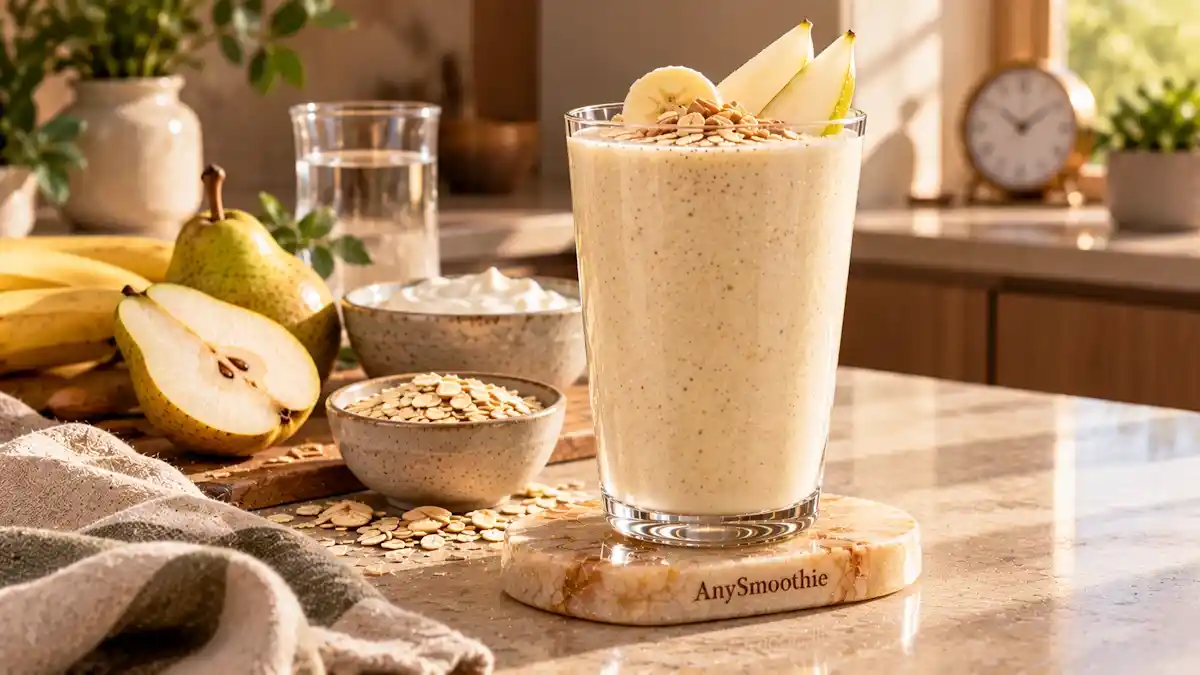
Managing heartburn during pregnancy can make even a quick snack feel like a gamble, especially when you’re hungry but uncomfortable. Smoothies for pregnancy heartburn may be easier for some people to tolerate, but ingredients and portion size matter, and no smoothie is a cure.
A familiar fruit blended into a small drink is a reasonable starting point, though personal triggers still count. Start with ingredient choices, then try one of three simple recipes and adjust the timing around your meals.
For a related morning-focused guide, see best morning foods and smoothies for gerd.
Choose smoothie ingredients that are less likely to trigger heartburn
Food triggers vary, so a recipe that feels comfortable for someone else may bother you. Start with foods you already tolerate rather than buying ingredients advertised as soothing or acid-balancing.
Start with mild fruit, a small portion, and a simple base
Banana, ripe pear, oats, and milk or an unsweetened fortified alternative are practical starting points. Choose one fruit and one base initially, so you can identify what agrees with you.
Citrus, other acidic fruits, chocolate, mint, and high-fat additions may trigger symptoms for some people. Even familiar ingredients can feel uncomfortable in a very large serving.
For a more detailed look at ingredient choices, see foods to avoid in acid reflux smoothies.
Change one ingredient at a time and note your response. There’s no reason to remove every possible trigger if it doesn’t bother you.
For a complementary explanation of why some blends can cause symptoms, see why do smoothies cause heartburn?
Build a filling smoothie without making it too rich
Plain yogurt adds protein, while oats add carbohydrate and fiber. A small amount of nut butter is another option if you tolerate it, but avoid stacking several rich additions.
Blend until smooth and keep the portion moderate. Thick doesn’t automatically mean gentle, and adding liquid shouldn’t turn a small snack into a large drink.
Use pasteurized milk and yogurt. The FDA warns that unpasteurized milk poses pregnancy risks. Also wash produce before cutting it, including melon rind, and use clean blender parts.
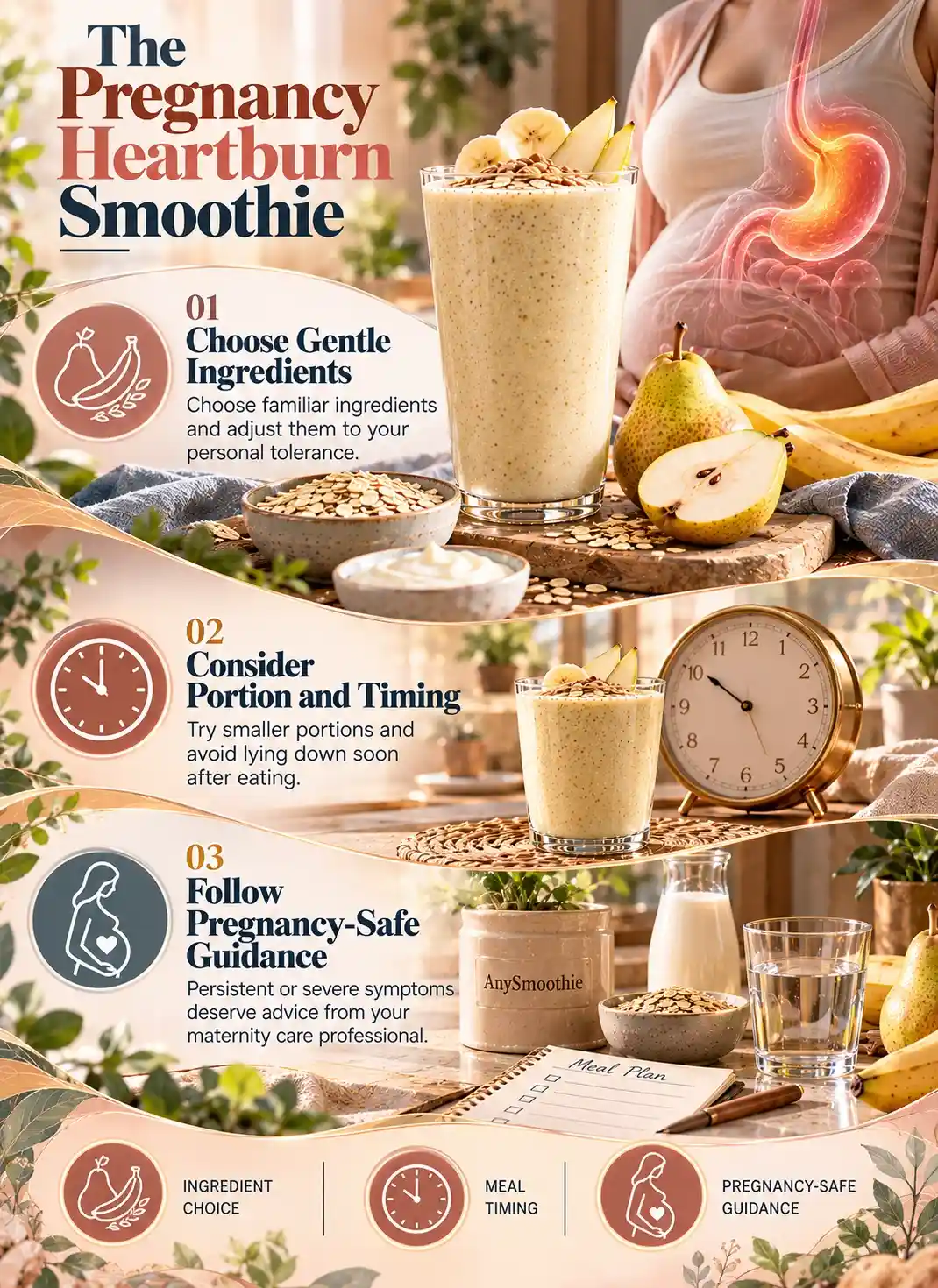
3 Smoothies for Pregnancy Heartburn
These small recipes offer starting points, not guaranteed symptom relief. Use familiar ingredients, and stop drinking if a smoothie makes you uncomfortable.
Banana and Oat Smoothie
Ingredients
1/2 small ripe banana
1 tablespoon rolled oats
1/2 cup tolerated milk or unsweetened fortified alternative
Instructions
Blend all ingredients until smooth. Let the oats soften briefly first if needed. If the smoothie is too thick, add liquid a tablespoon at a time. Avoid automatically doubling the recipe or adding several spoonfuls of nut butter.
Estimated Nutrition (per serving)
Calories: ~105 kcal
Protein: ~4 g
Carbohydrates: ~19 g
Fat: ~2 g
Fiber: ~2 g
Sugars: ~7 g
Pear and Yogurt Smoothie
Ingredients
1/2 ripe pear
1/4 cup plain pasteurized yogurt
2–4 tablespoons water or tolerated milk
Instructions
Remove the pear core and peel the fruit if you prefer a smoother texture. Blend with the yogurt and water or milk until smooth. For a dairy-free version, use a plain fortified yogurt alternative you already tolerate. Protein content varies between products.
Estimated Nutrition (per serving)
Calories: ~85 kcal
Protein: ~3 g
Carbohydrates: ~14 g
Fat: ~2 g
Fiber: ~3 g
Sugars: ~10 g
Melon and Mild Milk Smoothie
Ingredients
1/2 cup ripe cantaloupe or honeydew melon
1/3 cup tolerated milk or fortified alternative
Instructions
Blend the melon and milk until smooth. Use chilled ingredients rather than lots of ice. Keep this version simple initially. If melon is a personal trigger, choose another familiar fruit rather than assuming its mild flavor guarantees comfort.
Estimated Nutrition (per serving)
Calories: ~65 kcal
Protein: ~3 g
Carbohydrates: ~9 g
Fat: ~2 g
Fiber: ~1 g
Sugars: ~8 g
The comparison below highlights their differences.
| Smoothie | Ingredients | Flavor and texture | Why it may suit some people | Personalization note |
|---|---|---|---|---|
| Banana and oat | Banana, oats, milk | Mild and creamy | Simple, familiar ingredients | Thin gradually |
| Pear and yogurt | Ripe pear, plain yogurt, liquid | Lightly sweet and thick | Adjustable dairy content | Use a tolerated yogurt |
| Melon and mild milk | Melon, milk | Light and refreshing | Few ingredients, lighter texture | Swap personal trigger fruits |
Choose according to your own tolerance rather than treating any recipe as the safest option for everyone.
When to drink a smoothie to reduce the chance of discomfort
Try a small smoothie between meals instead of adding it to an already filling lunch or dinner. Sip slowly, pause as you go, and stop before you feel overly full.
Pregnancy-related hormonal changes can relax the lower esophageal sphincter, the muscle that helps keep stomach contents down. Blending food doesn’t change that mechanism, so texture alone won’t determine how you feel.
The American College of Obstetricians and Gynecologists recommends smaller meals and avoiding personal triggers for heartburn. It also advises against lying down right after eating.
Large drinks alongside meals or close to bedtime may feel uncomfortable. Stay upright afterward, and leave time between your evening snack and lying down.
For several days, record the ingredients, approximate portion, drinking time, and symptoms. Look for repeated patterns rather than judging an ingredient after one uncomfortable evening. Change either the recipe or timing first, rather than both together.
For a related but distinct digestive concern during pregnancy, see smoothies to ease nausea.
Adjust your routine and know when to ask your prenatal care team
Smoothies are food, not medical treatment. Discuss persistent or worsening heartburn with your prenatal clinician rather than relying on repeated recipe changes.
Seek prompt medical care for severe chest or upper abdominal pain, trouble swallowing, blood in vomit, or difficulty keeping fluids down. Don’t assume unfamiliar or severe symptoms are ordinary heartburn.
If you have gestational diabetes, ask how fruit, oats, and milk fit your carbohydrate targets. Your care team can also help with allergies, food restrictions, or nutrition concerns when discomfort limits what you eat. A small smoothie doesn’t need to replace a balanced meal.
Conclusion
Start with familiar, mild ingredients, keep servings modest, and pay attention to timing. Personal tolerance matters more than whether someone else calls a recipe soothing.
One smoothie won’t suit every pregnancy, and you don’t need to keep drinking something that causes discomfort. Bring ongoing concerns to your prenatal care team so food choices remain part of a broader care plan.
🛡️ Safety Notes & Dietary Interactions
- Pregnancy food safety: Use pasteurized milk and yogurt, wash produce thoroughly, and keep blender components clean. These precautions matter during pregnancy regardless of whether a smoothie feels comfortable.
- Personal triggers: Citrus, chocolate, mint, and rich high-fat additions may aggravate heartburn for some people. Avoid unnecessary restrictions and change one ingredient at a time when identifying individual triggers.
- Portion and timing: Large smoothies can increase fullness and discomfort. Keep servings modest, sip slowly, and avoid drinking a substantial smoothie immediately before lying down or alongside a large meal.
- Prenatal considerations: Gestational diabetes, food allergies, dietary restrictions, or persistent symptoms may require individualized guidance. Severe pain, trouble swallowing, blood in vomit, or difficulty keeping fluids down warrants prompt medical care.
FAQs
Which smoothie is the simplest starting point for pregnancy heartburn?
The banana and oat smoothie uses only half a small ripe banana, a tablespoon of oats, and a modest amount of tolerated milk or fortified alternative. Its simplicity makes it easier to observe your response to individual ingredients, although no recipe can be assumed to prevent heartburn during pregnancy.
When is the best time to drink a smoothie if I have pregnancy heartburn?
Try a small smoothie between meals rather than adding it to a large lunch or dinner. Sip slowly and remain upright afterward. The article also recommends leaving time between an evening snack and lying down, because large drinks close to bedtime may feel uncomfortable.
Should I avoid all acidic fruits during pregnancy?
No. The article recommends focusing on personal tolerance rather than automatically eliminating every possible trigger. Citrus and other acidic fruits may bother some people, but if a particular food doesn’t cause symptoms, there is no reason to remove it solely because it appears on a general trigger list.
Why can a smoothie still cause heartburn even when it is blended?
Blending changes texture but doesn’t remove the physiological factors involved in pregnancy-related heartburn. Hormonal changes can relax the lower esophageal sphincter, while large portions can increase fullness. A smooth drink therefore isn’t automatically gentler, and portion size, ingredients, and timing can all influence comfort.
What should I do if heartburn keeps getting worse during pregnancy?
Repeated recipe changes shouldn’t replace prenatal guidance. The article recommends discussing persistent or worsening heartburn with your prenatal care team. Seek prompt medical care for severe chest or upper abdominal pain, difficulty swallowing, blood in vomit, or difficulty keeping fluids down. Gestational diabetes also warrants individualized carbohydrate guidance.

Medical Disclaimer: AnySmoothie content is for educational purposes only and is not a substitute for professional medical advice. Consult a healthcare provider for personalized guidance. See our full Disclaimer & Terms of Use. AI Transparency: AnySmoothie may use AI to support content development. All content undergoes human editorial review for accuracy, clarity, and editorial quality. See our full AI Transparency.