
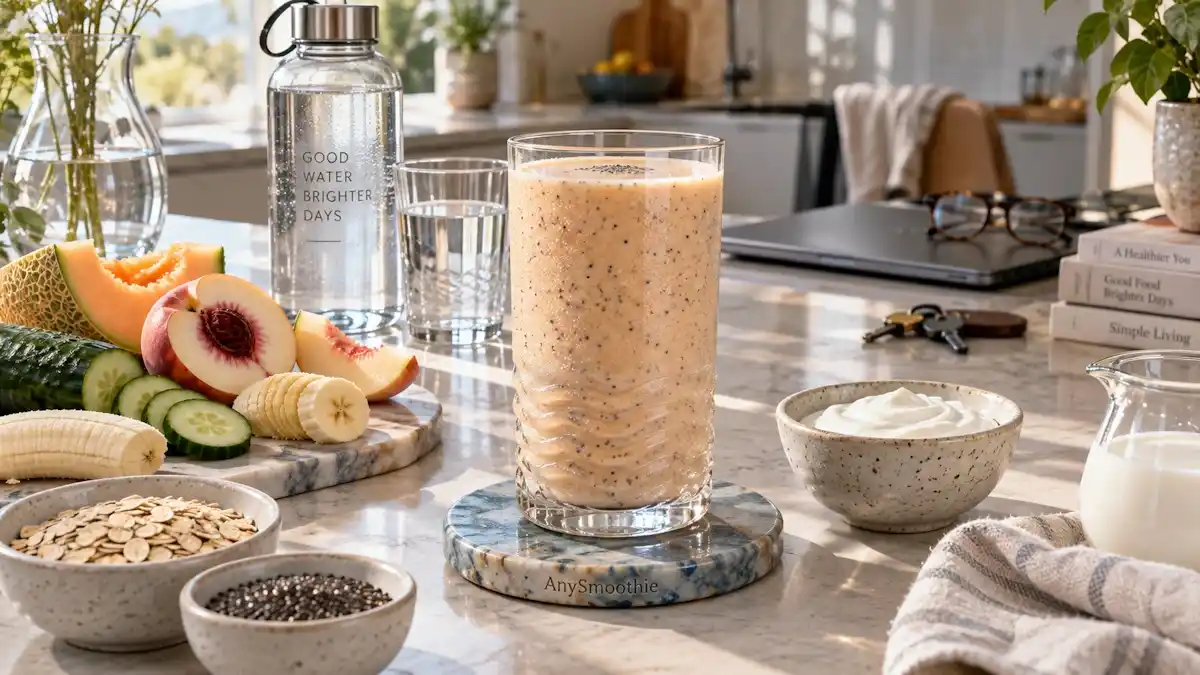
Realizing at 4 p.m. that you’ve barely had water is an uncomfortable feeling. Smoothies when you forgot to hydrate can add fluid, water-rich produce, carbohydrates, and minerals in one easy drink, although they don’t replace plain water in every situation.
A good smoothie can help you restart your usual drinking pattern without making hydration feel like another task. Start with a drinkable texture, then keep water within reach as you sip.
Why Smoothies Work After a Low-Hydration Day
Your body gets water from both beverages and foods. Watermelon, cucumber, strawberries, oranges, and yogurt all contribute fluid along with different combinations of carbohydrate, vitamins, and minerals.
Sodium and glucose transport in the small intestine is one of the physiological principles used in oral rehydration therapy, where carefully formulated concentrations help support water absorption. A homemade fruit smoothie is not the same thing as an oral rehydration solution and should not be treated as one.
For ordinary daily hydration, the simpler point matters most: water-rich foods and beverages contribute to total fluid intake, while regular drinking throughout the day remains more practical than relying on a late-day catch-up. The CDC’s guidance on water and healthier drinks notes that foods with high water content, including many fruits and vegetables, also contribute to daily water intake.
Bananas, citrus, dairy, and leafy greens also provide minerals such as potassium, calcium, and magnesium. These nutrients have many physiological roles, but blending them into a smoothie does not make hydration instant or automatically make the drink more hydrating than water.
Use this simple build:
- Start with water, milk, or unsweetened coconut water.
- Add water-rich produce, such as melon, cucumber, berries, or citrus.
- Include fruit or another carbohydrate-containing ingredient if it fits the recipe.
- Add yogurt, seeds, oats, or nut butter when you also want a more substantial snack.
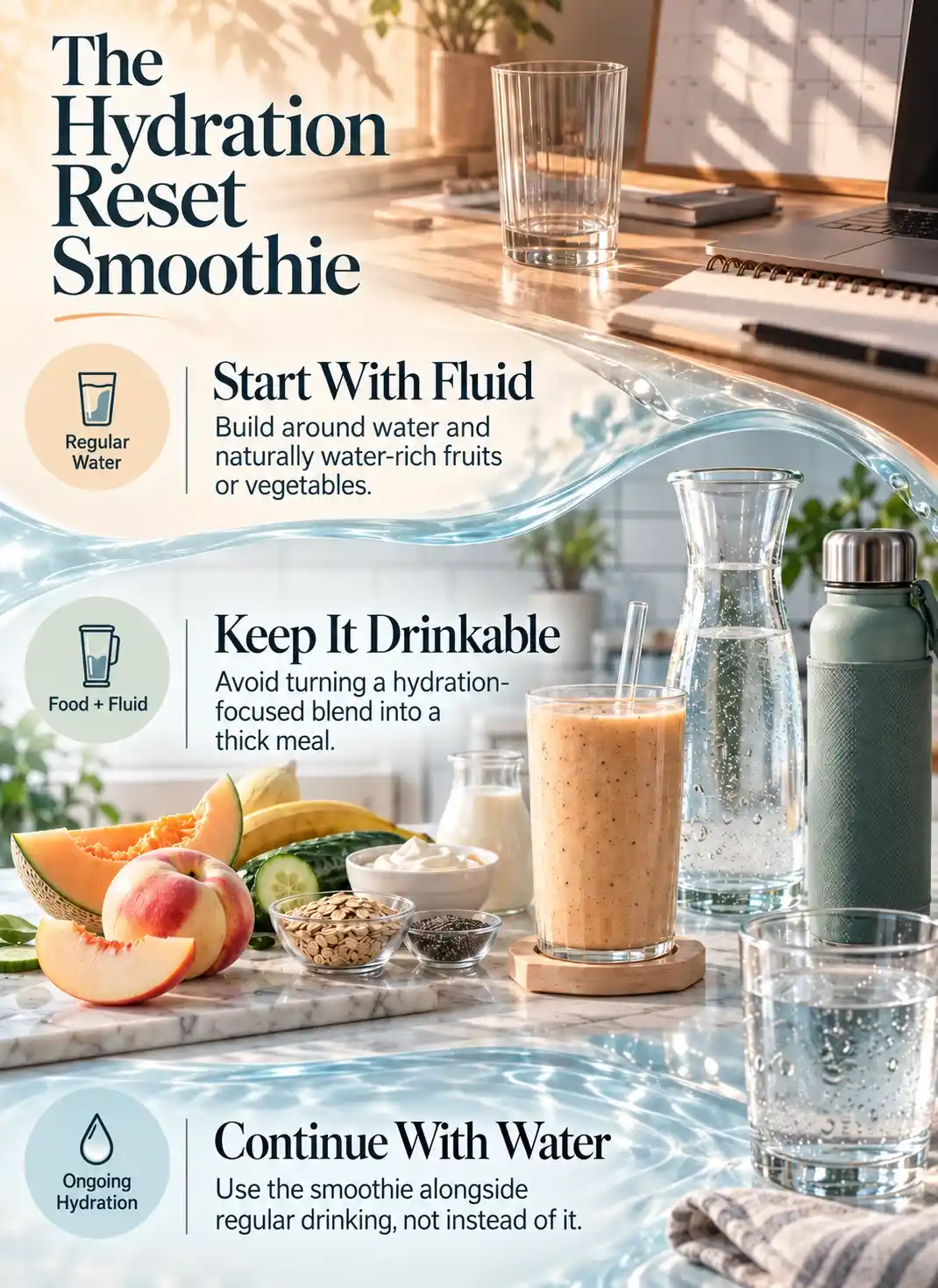
Very thick, heavily sweetened, or highly concentrated blends may feel less refreshing. Adjust the texture to your appetite and preference, then continue drinking plain water during the day.
For warmer days when fluid needs may be higher, hydration-focused smoothies for summer fatigue offers a related approach.
3 Smoothies When You Forgot to Hydrate
Keep these recipes lightly sweet and easy to sip. Each makes one generous serving and can be thinned further with cold water after blending.
The Lightest Option: Watermelon, Strawberry, and Lime
Ingredients
- 2 cups cubed watermelon
- 1 cup strawberries
- 1 tablespoon fresh lime juice
- 1/4 cup cold water
- Ice, optional
Steps
Add the water first, followed by the watermelon, strawberries, and lime juice.
Blend briefly until smooth. Add another splash of cold water if you prefer a thinner texture.
This smoothie is mostly water-rich produce, so it works well when you want a bright drink rather than a filling snack. Watermelon provides most of the volume, while strawberries and lime add flavor without added sugar.
Estimated Nutrition per Serving
- Calories: ~145 kcal
- Protein: ~3 g
- Carbohydrates: ~35 g
- Fat: ~1 g
- Fiber: ~4 g
- Sugars: ~26 g
If I mainly realized I had neglected fluids rather than food, I’d start with this recipe and keep a separate glass or bottle of water beside it.
A Refreshing Produce Blend: Cucumber, Pineapple, and Mint
Ingredients
- 1 cup peeled, chopped cucumber
- 1 cup pineapple chunks
- 1 cup unsweetened coconut water
- 4 to 6 mint leaves
Steps
Add the coconut water first, followed by the cucumber, pineapple, and mint.
Blend until smooth. Add up to 1/4 cup cold water if you want a lighter consistency.
Cucumber and coconut water contribute fluid, while pineapple provides carbohydrate and a tart-sweet flavor. Coconut water contains naturally occurring minerals, including potassium, but it is still an ordinary beverage rather than a personalized rehydration treatment.
Estimated Nutrition per Serving
- Calories: ~155 kcal
- Protein: ~2 g
- Carbohydrates: ~38 g
- Fat: ~1 g
- Fiber: ~3 g
- Sugars: ~29 g
Estimate uses unsweetened coconut water.
For a less sweet smoothie, reduce the pineapple and replace the volume with more cucumber or cold water.
A More Filling Choice: Banana, Orange, and Yogurt
Ingredients
- 1 medium banana
- 1 medium orange, peeled and segmented
- 1/2 cup plain nonfat Greek yogurt
- 1 cup cold water
Steps
Add the water and yogurt first, followed by the banana and orange.
Blend until completely smooth. Add more cold water if you prefer a thinner, more drinkable texture.
This option is more substantial because it combines fruit carbohydrate with protein from Greek yogurt. The fruit and yogurt also contribute naturally occurring minerals.
Estimated Nutrition per Serving
- Calories: ~235 kcal
- Protein: ~13 g
- Carbohydrates: ~45 g
- Fat: ~1 g
- Fiber: ~6 g
- Sugars: ~30 g
If I also needed a small snack, I’d choose this version but keep the full cup of water rather than thickening it with oats or extra fruit.
For situations where travel disrupts regular drinking habits, hydration smoothies for frequent travelers covers another practical hydration context.
How to Choose, Adjust, and Sip a Hydration-Supporting Smoothie
Choose a lighter fruit smoothie when you have little appetite or want something closer to a cold drink. Pick the yogurt version when you also want a more substantial snack.
There is no need to force a universal sipping schedule. Drink at a comfortable pace, use a texture you actually enjoy, and keep plain water available rather than trying to make one smoothie correct an entire day’s fluid intake.
| Smoothie | Main Liquid Source | Texture | Best Use | Easy Adjustment |
|---|---|---|---|---|
| Watermelon, Strawberry, and Lime | Water and watermelon | Light | Low appetite | Add water |
| Cucumber, Pineapple, and Mint | Coconut water | Refreshing | Cold, fruity option | Reduce pineapple |
| Banana, Orange, and Yogurt | Water | Creamy | More filling snack | Use extra water |
The main takeaway is simple: pick the texture you will actually drink. CDC guidance emphasizes making water a regular beverage choice while recognizing that other beverages and water-rich foods also contribute to total fluid intake.
For another situation where disrupted routines and fluid intake often overlap, smoothies for long-haul flight recovery provides a related example.
Avoid Common Thickening Mistakes
Fruit juice as the only liquid can make a smoothie sweeter than necessary. Large scoops of protein powder, several spoonfuls of nut butter, or generous amounts of oats and seeds can also turn a hydration-focused drink into a much heavier snack.
Skip syrups, sweetened yogurt, and extra honey when ripe fruit already provides enough sweetness.
If the blend feels too dense, add cold water a few tablespoons at a time and blend again.
Know When a Smoothie Is Not Enough
A smoothie is a food-and-drink option, not a replacement for urgent care or an individualized fluid plan. Stop normal activities and seek prompt professional help if you feel severely unwell, cannot keep fluids down, become confused, faint, or have other concerning symptoms.
People who need to limit certain fluids, minerals, or sugars should follow advice from their qualified health professional. For broader context on concerning fluid-loss symptoms, see the NIH overview of adult dehydration.
Conclusion: A Better Reset Starts With a Sip
Choose a water-rich recipe, keep it thin enough to drink comfortably, and limit unnecessary added sugar. A smoothie can help restart fluid intake after a day when water slipped your mind, but consistent drinking remains the better habit.
Start with the watermelon, strawberry, and lime version when you mainly want something light. Keep plain water beside it, and let the smoothie complement your usual fluid intake rather than become the whole plan.

Medical Disclaimer: AnySmoothie content is for educational purposes only and is not a substitute for professional medical advice. Consult a healthcare provider for personalized guidance. See our full Disclaimer & Terms of Use. AI Transparency: AnySmoothie may use AI to support content development. All content undergoes human editorial review for accuracy, clarity, and editorial quality. See our full AI Transparency.