
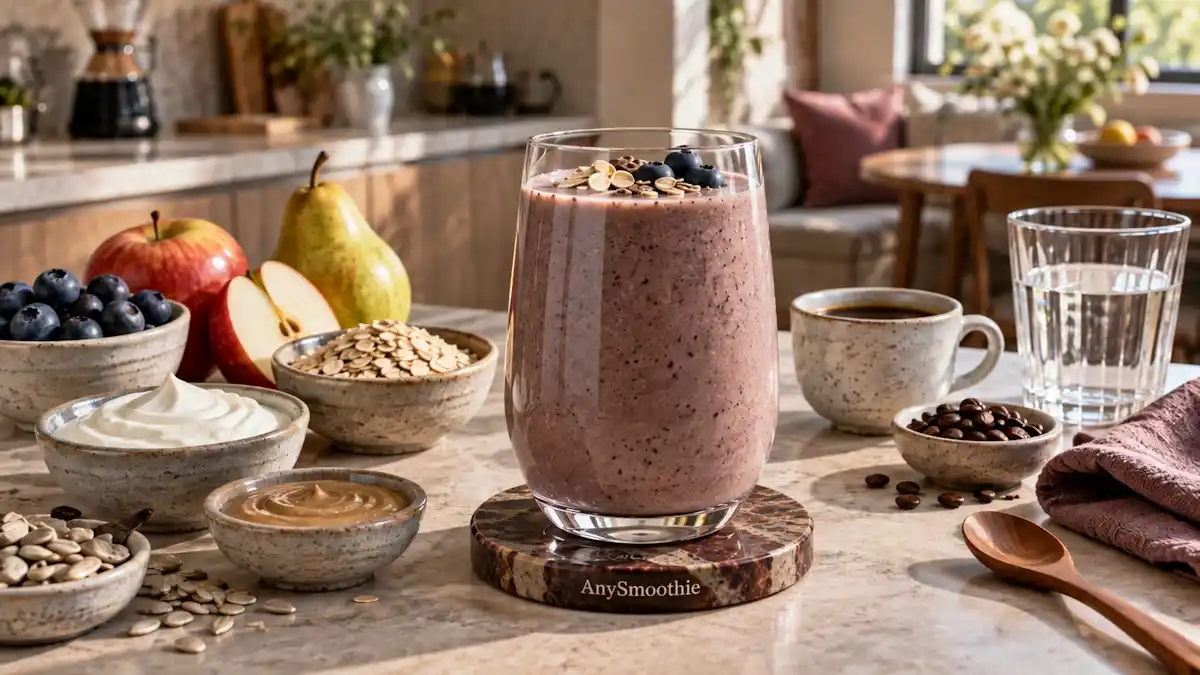
You’ll find whole-food sources, balanced recipes, and practical guidance on concentrated products. Start with ingredients you enjoy, then adjust for taste and personal tolerance.
What Is Chlorogenic Acid and Why Add It to a Smoothie?
Chlorogenic acids are a family of naturally occurring plant polyphenols found in foods and beverages including coffee, apples, pears, and other fruits and vegetables. Chemically, they include esters formed between hydroxycinnamic acids, such as caffeic acid, and quinic acid.
A comprehensive review of chlorogenic acids describes their dietary sources, processing effects, bioavailability, and the biological pathways researchers continue to investigate.
Researchers study these compounds for antioxidant activity and their interactions with carbohydrate and lipid metabolism and other physiological systems. A smoothie isn’t a treatment, and the presence of chlorogenic acids does not mean a homemade drink produces a specific health outcome.
Whole-food sources bring more than chlorogenic acids. Apples and pears contribute fiber, berries add flavor and other polyphenols, and greens supply vitamins and minerals. Coffee can be a particularly rich dietary source, although its chlorogenic acid content varies considerably.
For another fruit-focused polyphenol approach, apple polyphenol smoothies for microbiome balance explores apples from a different nutrition perspective.
How Food Sources May Support Natural Pathways
Chlorogenic acids are being studied for interactions with oxidative balance, cellular signaling, and metabolic processes. These are research areas rather than evidence that a particular smoothie can reliably alter one pathway in a meaningful way.
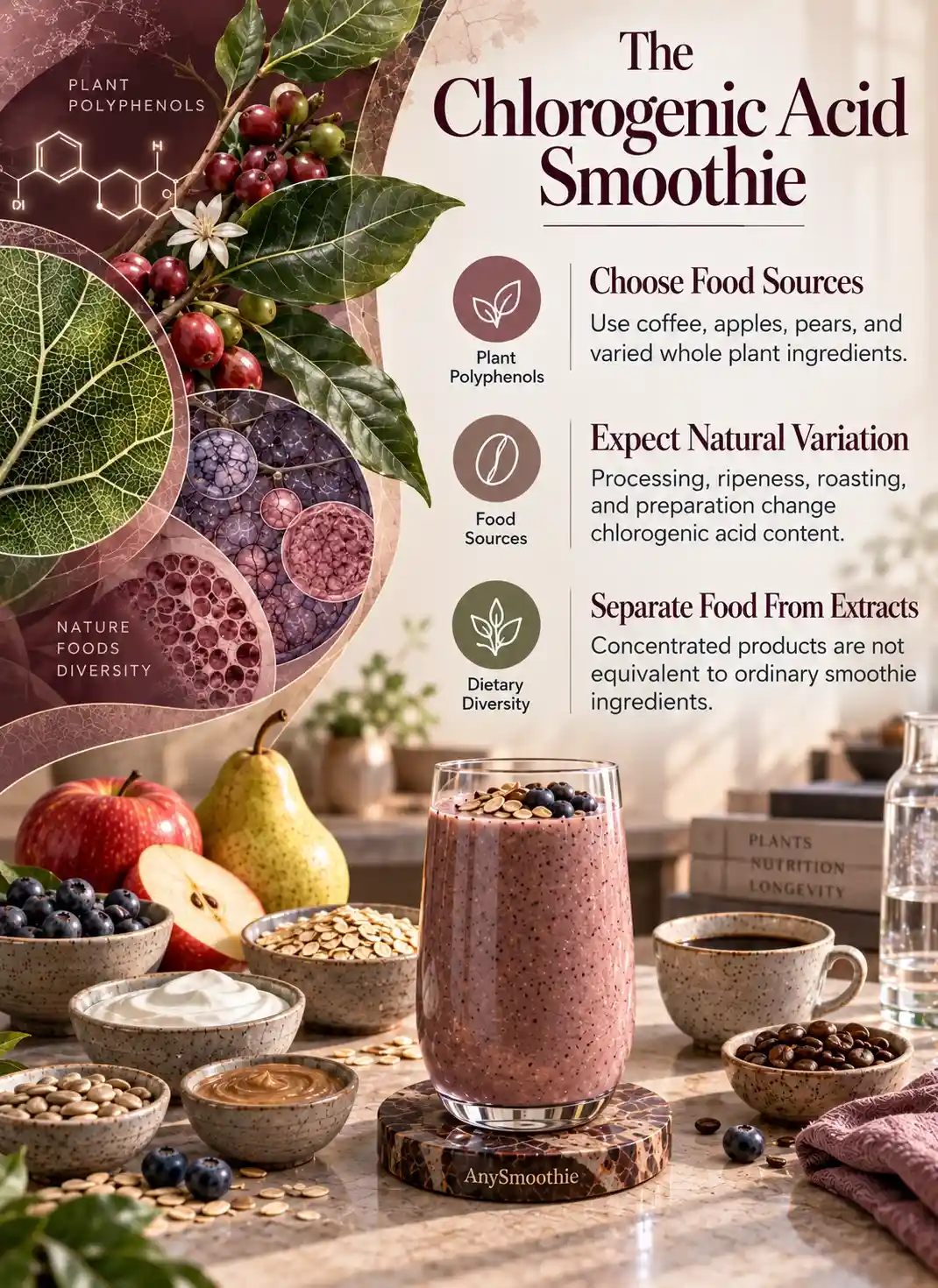
Plant variety, ripeness, storage, processing, roasting, and preparation can all change chlorogenic acid content. Coffee is a clear example: roasting generally reduces chlorogenic acids, while the amount in brewed coffee varies with the beans and preparation method.
Therefore, a homemade smoothie cannot provide a precise chlorogenic acid dose.
Coffee Has a Different Set of Considerations
Brewed coffee adds a roasted note that fruit alone cannot match. It also introduces caffeine unless you use decaffeinated coffee.
Caffeine tolerance varies. FDA notes that sensitivity can differ according to factors including medications, medical conditions, body weight, and individual response. For most adults, the FDA cites 400 mg of caffeine per day as an amount not generally associated with negative effects, but that figure is not a target everyone needs to reach. FDA caffeine guidance also notes that excess caffeine can interfere with sleep and cause symptoms such as jitters, palpitations, or stomach upset.
Use cooled regular coffee if it suits your routine, or decaf when you want the flavor direction with much less caffeine.
For another smoothie built specifically around coffee, nootropic coffee smoothie for focus and productivity offers a different use of the ingredient.
3 Chlorogenic Acid Smoothie Guide Recipes
These recipes make one generous serving. The nutrition estimates use the specific ingredients listed rather than interchangeable alternatives.
Berry Apple Smoothie With Fiber and Bright Flavor
Ingredients
- 1/2 cup blueberries
- 1 small apple with skin, cored and seeds removed
- 3/4 cup plain nonfat Greek yogurt
- 1 tablespoon chia seeds
- 3/4 cup cold water
Steps
Wash the fresh produce, core the apple, and remove the seeds.
Add the water and Greek yogurt first, followed by the apple, blueberries, and chia seeds.
Blend until completely smooth. Add a little more water if the chia makes the texture thicker than you prefer.
Apple is a familiar dietary chlorogenic acid source, while blueberries contribute other plant polyphenols. Greek yogurt and chia add protein, fiber, and texture, making the drink more substantial than fruit juice alone.
Estimated Nutrition per Serving
- Calories: ~275 kcal
- Protein: ~19 g
- Carbohydrates: ~44 g
- Fat: ~5 g
- Fiber: ~9 g
- Sugars: ~27 g
Estimate uses plain nonfat Greek yogurt and water.
If I wanted to keep the apple flavor noticeable, I’d leave the skin on and avoid adding banana or another strongly sweet fruit.
Pear Green Smoothie With a Mild Taste
Ingredients
- 1 ripe pear
- 1 packed cup baby spinach
- 1 tablespoon fresh lemon juice
- 1/2 cup silken tofu
- 1 tablespoon ground flaxseed
- 3/4 cup cold water
Steps
Add the water, tofu, spinach, and lemon juice first.
Add the pear and ground flaxseed, then blend until completely smooth.
Pear provides mild sweetness and is another documented food source of chlorogenic acids. Spinach contributes greens and micronutrients rather than serving as the primary chlorogenic acid ingredient in this recipe.
Estimated Nutrition per Serving
- Calories: ~210 kcal
- Protein: ~9 g
- Carbohydrates: ~34 g
- Fat: ~7 g
- Fiber: ~8 g
- Sugars: ~18 g
Estimate uses silken tofu and one medium ripe pear.
Coffee Cacao Smoothie for a Roasted Flavor
Ingredients
- 1/2 cup cooled brewed coffee or decaf coffee
- 1 small frozen banana
- 1 tablespoon unsweetened cocoa powder
- 1/4 cup rolled oats
- 1 tablespoon natural peanut butter
- 3/4 cup low-fat milk
Steps
Allow brewed coffee to cool before adding it to the blender.
Add the milk and coffee first, followed by the banana, oats, cocoa powder, and peanut butter.
Blend until creamy and completely smooth. Add a little cold water if you want a thinner texture.
Coffee is the primary chlorogenic acid source in this recipe. Cocoa, oats, banana, peanut butter, and milk contribute flavor, texture, and additional nutrients rather than being included as a chlorogenic acid dose.
Estimated Nutrition per Serving
- Calories: ~365 kcal
- Protein: ~16 g
- Carbohydrates: ~52 g
- Fat: ~13 g
- Fiber: ~7 g
- Sugars: ~20 g
Estimate uses low-fat dairy milk, natural peanut butter, and unsweetened cocoa powder.
If I planned to drink this later in the day, I’d choose decaf first rather than changing the rest of the recipe just to keep the roasted flavor.
For another cocoa-centered polyphenol article, cocoa flavanol smoothies explores cacao from a different perspective.
How to Choose Ingredients, Compare Sources, and Blend Safely
Use whole foods as the starting point because they provide a mixture of nutrients and plant compounds rather than a single concentrated constituent. The amount of chlorogenic acids in any homemade smoothie will vary, so avoid treating a recipe as a precise dose.
| Source | Typical Smoothie Amount | Main Nutrition Contribution | Flavor | Practical Considerations |
|---|---|---|---|---|
| Coffee | 1/2 cup brewed, cooled | Chlorogenic acids, minimal energy | Roasted, bitter | Contains caffeine unless decaf |
| Apple | 1 small apple | Fiber, carbohydrate | Crisp, sweet | Core and remove seeds |
| Pear | 1 ripe pear | Fiber, carbohydrate | Mild, floral | Ripeness changes sweetness and texture |
| Berries | 1/2 to 1 cup | Fiber and diverse polyphenols | Tart, bright | Frozen berries thicken drinks |
| Leafy greens | 1 packed cup | Folate, vitamin K, other micronutrients | Earthy, mild | Wash fresh leaves before use |
The table also shows why variety works well. Coffee can contribute substantial chlorogenic acids, while fruits, greens, protein foods, and seeds build the overall nutritional profile of the smoothie.
Build a Balanced Smoothie Without Overdoing Sugar
Follow a simple formula: fruit, vegetables if desired, a protein source, a fiber- or fat-containing ingredient, and an unsweetened liquid.
Greek yogurt, soy yogurt, tofu, chia, flaxseed, oats, and nut or seed butter can help make a smoothie more substantial. Taste the blend before adding honey, syrup, or juice.
Blending whole fruit changes its physical structure but does not automatically remove its fiber. Portion size still matters, particularly when several fruits, juice, sweetened dairy, and other sweeteners are combined in one drink.
Whole fruit, protein, and measured add-ins usually create a more balanced smoothie than juice and sweeteners alone.
Who Should Use Extra Caution With Coffee or Extracts
Ordinary food sources are not equivalent to concentrated chlorogenic acid or green coffee extracts.
If you use a dietary supplement, check its Supplement Facts panel, serving size, and listed dietary ingredients rather than assuming all chlorogenic acid products provide comparable amounts. FDA’s dietary supplement labeling guidance explains that supplement labels identify serving size and the names and quantities of dietary ingredients.
Concentrated extracts can also introduce considerations that do not apply in the same way to ordinary servings of fruit or coffee. Discuss supplement use with a qualified health professional when you are pregnant or breastfeeding, take medications, manage a health condition, or have been advised to limit caffeine.
Food-based smoothies remain the simpler starting point.
Key Takeaways
A useful chlorogenic acid smoothie guide begins with recognizable foods rather than chasing a precise homemade dose. Coffee is a particularly rich source, while apples, pears, and other plant foods can contribute chlorogenic acids alongside fiber and other nutrients.
Pair fruit with protein, fiber, and an unsweetened liquid. Then adjust sweetness, thickness, and caffeine according to your routine and tolerance.
Conclusion
The most practical approach is to use whole-food chlorogenic acid sources in smoothies you genuinely want to drink. Protein and fiber can help turn those ingredients into a more substantial meal or snack.
Choose coffee thoughtfully, and treat concentrated extracts differently from ordinary foods. Start with one recipe, adjust the texture and sweetness, and pay attention to how it fits your personal tolerance.
🛡️ Safety Notes & Dietary Interactions
- Caffeine Timing: Coffee-based smoothies can contribute meaningful caffeine, which may affect sleep, anxiety, heart rate, or digestive comfort in sensitive people. Choose decaf or move the recipe earlier in the day when caffeine regularly disrupts your routine.
- Pregnancy and Caffeine: Pregnancy may require closer attention to total daily caffeine from coffee, tea, chocolate, energy drinks, and other sources. Follow individualized clinical guidance rather than assuming a smoothie-sized coffee portion is automatically appropriate.
- Supplement Caution: Concentrated chlorogenic acid extracts are not equivalent to apples, pears, berries, or brewed coffee. Product strength varies, and high-dose supplements may interact differently with medications or health conditions than ordinary food-based sources.
- Digestive Tolerance: Coffee, cacao, chia, flax, oats, and acidic fruit can cause discomfort in some people. Adjust fiber, acidity, caffeine, or serving size if bloating, reflux, nausea, or stomach irritation develops after a particular recipe.
FAQs
Which smoothie is the best whole-food source of chlorogenic acid?
The coffee cacao smoothie includes brewed coffee, which is a notable dietary source of chlorogenic acids, while the apple and pear recipes rely on fruit-based sources. Exact amounts cannot be predicted from a homemade recipe because variety, ripeness, processing, brewing, and storage all influence chlorogenic acid content.
Does decaf coffee still contain chlorogenic acid?
Yes. Decaffeination reduces caffeine, not all of the coffee’s polyphenols. Decaf can therefore still contribute chlorogenic acids while offering a lower-caffeine option for people who are sensitive to regular coffee. The exact amount varies by bean, roast, processing method, and preparation, so it should not be treated as a standardized dose.
Does blending apples, pears, or berries destroy chlorogenic acid?
Normal home blending does not mean these plant compounds disappear. Blending changes the physical structure of the fruit but keeps the pulp and most of the food matrix in the drink. Storage, heat, oxidation, and processing can influence polyphenols over time, so drinking the smoothie reasonably soon after preparation is practical.
Should I use chlorogenic acid supplements instead of food sources?
Not automatically. Whole foods provide fiber, vitamins, minerals, and other plant compounds alongside chlorogenic acids, while supplements deliver a more concentrated and variable dose. If you are considering an extract for a specific health goal, discuss it with a qualified professional rather than assuming higher intake will produce greater benefit.
Can chlorogenic acid smoothies improve blood sugar or weight control?
These smoothies should not be presented as treatments for blood glucose management or weight loss. Chlorogenic acids are studied in relation to carbohydrate metabolism and other pathways, but a homemade smoothie cannot reproduce a controlled supplement trial. Overall diet, portions, activity, sleep, medical conditions, and medications remain more important.

Medical Disclaimer: AnySmoothie content is for educational purposes only and is not a substitute for professional medical advice. Consult a healthcare provider for personalized guidance. See our full Disclaimer & Terms of Use. AI Transparency: AnySmoothie may use AI to support content development. All content undergoes human editorial review for accuracy, clarity, and editorial quality. See our full AI Transparency.