
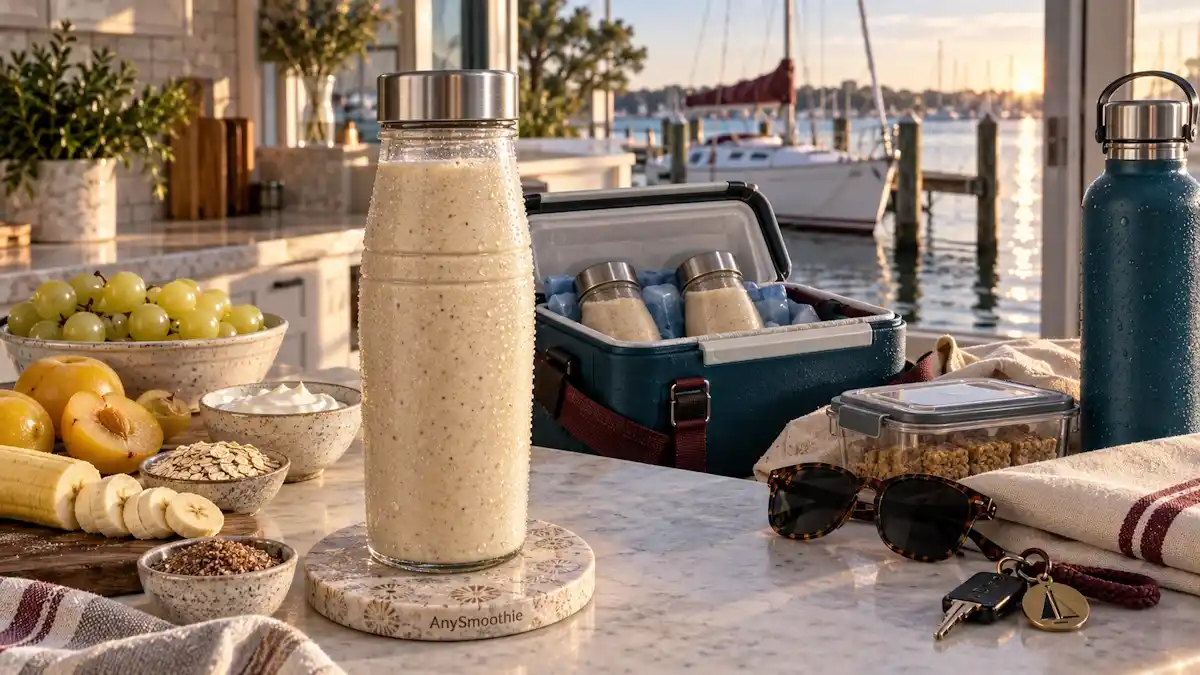
Eating well on a small sailboat takes planning. Storage is tight, the cabin gets warm, the deck moves, and nobody wants a pile of dishes in the galley.
Smoothies for weekend sailing trips solve part of that problem. Portion them before departure, keep them cold, and grab one when you need a quick breakfast or snack. These three recipes, storage steps, and packing ideas keep preparation simple for a two-day sail.
How to Prep and Store Smoothies Safely on a Sailboat
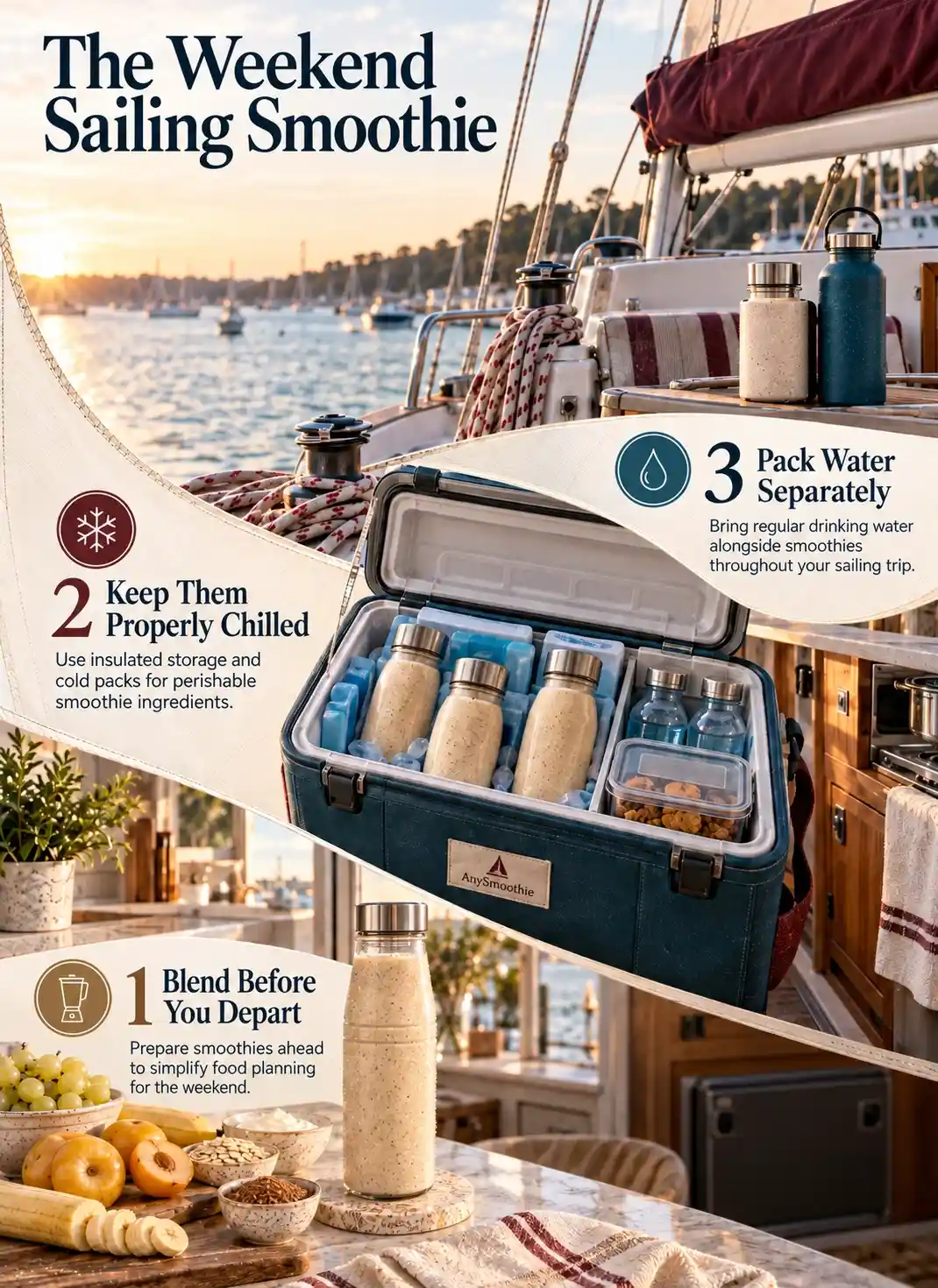
Shop, blend, portion, and freeze smoothies the day before you leave. Start with clean hands, a washed blender, and clean containers. Then load frozen bottles into a hard-sided cooler surrounded by ice packs.
Keep dairy-based smoothies and other perishable ingredients at 40°F or below. The FDA’s food storage guidance also notes that food containing ice crystals or held at 40°F or below remains safe to refreeze or cook.
Use frozen smoothie portions as extra cooling power, but don’t treat the cooler as a refrigerator without checking it. Discard a smoothie that has been warm too long, smells unusually sour, leaks, or shows other spoilage signs.
For additional make-ahead ideas, smoothie storage and micronutrient stability covers advance preparation and smoothie storage routines.
Choose Containers That Handle Freezing, Motion, and Salt Air
Leakproof reusable bottles are easy to drink from on deck and fit well upright in a cooler. Wide-mouth plastic jars are easier to fill and wash, although they take more room. Freezer-safe bags pack flat and save space, but you will need a cup for drinking.
Glass jars can break when the boat shifts or gear moves in the cooler. Durable plastic or silicone is usually the better choice onboard. Label every portion with the recipe name and date, leave expansion room, and store containers upright.
3 Make-Ahead Smoothies for Weekend Sailing Trips
Make two portions of each recipe, then choose the mix that fits your crew. Frozen fruit is practical because it keeps ingredients cold before blending and helps each drink stay thick after thawing.
Tropical Oat and Yogurt Smoothie for Breakfast
Ingredients
- 2 cups frozen mango
- 1 sliced banana
- 1 cup plain nonfat Greek yogurt
- 1/2 cup rolled oats
- 1 cup low-fat milk
- 1 tablespoon hemp hearts
- 1 tablespoon lime juice
Steps
Add the milk first, followed by the Greek yogurt, banana, mango, oats, hemp hearts, and lime juice. Blend until smooth, then divide evenly between two freezer-safe bottles.
Divide the smoothie into two freezer-safe bottles and freeze them the day before departure. Move one bottle to the cooler the night before you plan to drink it. The mango and lime taste bright, while oats and fruit provide carbohydrates. Yogurt adds protein and a creamy texture, and hemp hearts add healthy fats.
Estimated Nutrition per Serving
- Calories: ~360 kcal
- Protein: ~19 g
- Carbohydrates: ~63 g
- Fat: ~6 g
- Fiber: ~7 g
- Sugars: ~39 g
Berry Peanut Butter Smoothie for a Midday Break
Ingredients
- 2 cups frozen mixed berries
- 1 banana
- 3 tablespoons peanut butter
- 1 1/2 cups low-fat milk
- 1 tablespoon ground flaxseed
Steps
Add the milk first, followed by the berries, banana, peanut butter, and ground flaxseed. Blend until completely smooth, then divide evenly between two freezer-safe containers.
This makes two thick portions with a familiar berry-and-peanut-butter flavor. Carbohydrates provide readily available fuel, while protein and fats help create a satisfying texture between meals. Those nutrients also support normal energy metabolism.
Use sunflower seed butter for a nut-free option. Leave about 1 inch of empty space at the top of each container because frozen liquids expand.
Estimated Nutrition per Serving
- Calories: ~360 kcal
- Protein: ~14 g
- Carbohydrates: ~46 g
- Fat: ~15 g
- Fiber: ~9 g
- Sugars: ~27 g
If I wanted one bottle to stay more drinkable after several hours in the cooler, I’d add a small splash of water after thawing rather than increasing the milk before freezing.
Green Citrus Smoothie for a Light Sailing Snack
Ingredients
- 1 cup unsweetened coconut water
- 1 packed cup spinach
- 1 cup frozen pineapple
- 1 peeled orange
- 1/2 chopped cucumber
- 1 teaspoon grated fresh ginger
- 1 tablespoon lime juice
Steps
Add the coconut water and spinach first and blend until the greens are smooth. Add the pineapple, orange, cucumber, ginger, and lime juice, then blend again until smooth. Divide evenly between two portions.
This recipe makes two lighter portions with a fresh, tart finish. Pineapple and citrus bring acidity and brightness, while the greens add color and body without making the drink overly sweet. Add 1 tablespoon chia seeds shortly before drinking if you prefer a thinner smoothie during storage.
Estimated Nutrition per Serving
- Calories: ~110 kcal
- Protein: ~2 g
- Carbohydrates: ~26 g
- Fat: ~0.5 g
- Fiber: ~3 g
- Sugars: ~19 g
Frozen bottles cool the cooler best when they are packed tightly, with ice packs above and around them rather than only underneath.
Use This Five-Column Comparison Table Before You Pack
Use this quick reference when deciding what to thaw first.
| Smoothie | Best Time to Drink | Main Ingredients | Storage Guidance | Sailing-Friendly Benefit |
|---|---|---|---|---|
| Tropical Oat and Yogurt | Breakfast | Mango, yogurt, oats | Best frozen, thaw overnight | Filling first meal |
| Berry Peanut Butter | Midday break | Berries, peanut butter | Best partially thawed | Thick, satisfying snack |
| Green Citrus | Quick snack | Greens, pineapple, orange | Best chilled | Light, refreshing option |
The tropical blend suits breakfast, the berry blend fits a quick snack between tasks, and the green citrus option works when you want something lighter.
Build a Simple Smoothie Plan for a Two-Day Sailing Trip
For two people, prepare four to six portions rather than every possible meal. Smoothies are convenient, but plain water, sandwiches, fruit, crackers, and other easy foods still belong in the cooler.
A simple plan might look like this:
- Drink Tropical Oat and Yogurt smoothies on departure morning, after boarding and securing the boat.
- Have Berry Peanut Butter smoothies during the first afternoon, when lunch needs to be quick.
- Serve Green Citrus smoothies on the second morning, alongside other breakfast food.
- Keep one frozen berry or tropical portion for the return trip.
Place the next day’s smoothies near the top of the cooler. Keep later portions lower down, under ice packs. Open the cooler briefly, then close it firmly to protect the cold temperature.
The USDA explains its 40°F to 140°F danger zone, including the two-hour limit for unrefrigerated perishable food. In weather above 90°F, that limit drops to one hour.
For another outdoor setting where advance portions and cooler storage matter, make-ahead smoothies for fishing trips offers related packing ideas.
Balance Flavor, Texture, and Ingredients for Boat Conditions
Frozen fruit creates a cold, thick drink. However, a partially thawed smoothie can separate, so shake it well and add a small splash of water if needed. Avoid large ice cubes, fragile toppings, and recipes that depend on whipped ingredients.
For hot weather, freeze every portion solid and pack extra ice. Choose shelf-stable plant milk for dairy-free crews, and use sunflower seed butter when nut allergies matter. If you won’t have blender access onboard, blend greens thoroughly at home and skip ingredients that form hard clumps.
If your trip also involves limited kitchen access, no-kitchen smoothies for camping trips provides another useful approach to portable smoothie planning.
Reduce Cleanup and Waste at Sea
Bring reusable bottles with secure lids, a small trash bag, and a damp cloth for drips. Drink while seated or braced safely, not while handling lines or moving around the deck.
Pack only the servings you expect to use. The USDA’s leftover safety advice recommends discarding cold perishable food left at room temperature for more than two hours.
Conclusion: A Better Start to a Weekend Under Sail
Make-ahead smoothies save galley time, use compact ingredients, and give you ready-to-drink options when conditions make food prep awkward. Choose two or three recipes, label each portion, and pack the cooler with cold retention in mind.
Test every recipe at home before taking it offshore. The right texture, sweetness, and serving size will make each smoothie easier to enjoy when the boat is moving.

Medical Disclaimer: AnySmoothie content is for educational purposes only and is not a substitute for professional medical advice. Consult a healthcare provider for personalized guidance. See our full Disclaimer & Terms of Use. AI Transparency: AnySmoothie may use AI to support content development. All content undergoes human editorial review for accuracy, clarity, and editorial quality. See our full AI Transparency.