
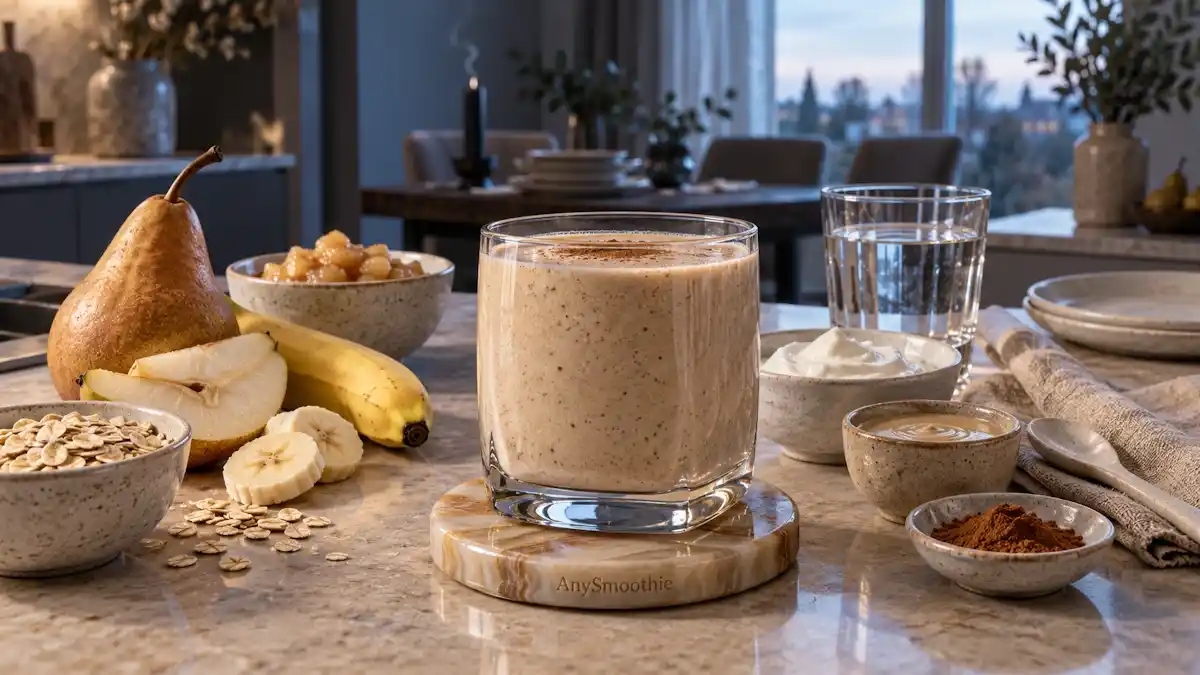
A small drink may feel better than more solid food, yet water is often the better choice when you are only thirsty. Portion size, fiber, fat, added sugar, protein, and the time before bed all affect how a smoothie feels.
Why a Late-Night Smoothie Needs a Different Recipe
After a heavy or extra-late meal, a smoothie should complement dinner instead of becoming a second dinner. A modest drink with a few ingredients is easier to judge than a large blend loaded with fruit, oats, nut butter, and protein powders.
Digestion continues overnight, but every additional ingredient still adds food volume and nutrients to process. Larger, richer smoothies can therefore feel very different from a small fruit-and-water blend when dinner was already substantial.
Keep sweetness and volume in check
Fruit contains naturally occurring sugar, which is different from added sugar. Still, several sweet fruits, juice, flavored yogurt, syrup, and sweetened protein powder can turn a small smoothie into a dessert-sized drink.
Check packaged ingredients before blending. The FDA’s guide to added sugars on nutrition facts labels can help you compare flavored yogurts, milks, and powders. Use water, ice, or unsweetened milk as the base rather than relying on fruit juice.
Fiber and fat can feel heavier at night
Fiber absorbs or holds water depending on the type and can add bulk to the diet. That is useful in an overall eating pattern, but a large amount of chia, flax, oats, or leafy greens may simply be more food than you want after a substantial dinner.
Likewise, generous amounts of avocado, coconut cream, seeds, or nut butter can make a small smoothie considerably richer.
A smoothie can be nutritious and still be more food than you want before sleep.
Use higher-fiber and higher-fat ingredients modestly when dinner was already substantial. If dinner provided plenty of protein, you may not need to add a full scoop of protein powder.
For people whose stomach feels especially sensitive late at night, non-acidic fruit smoothies for sensitive stomachs offers another approach to ingredient selection.
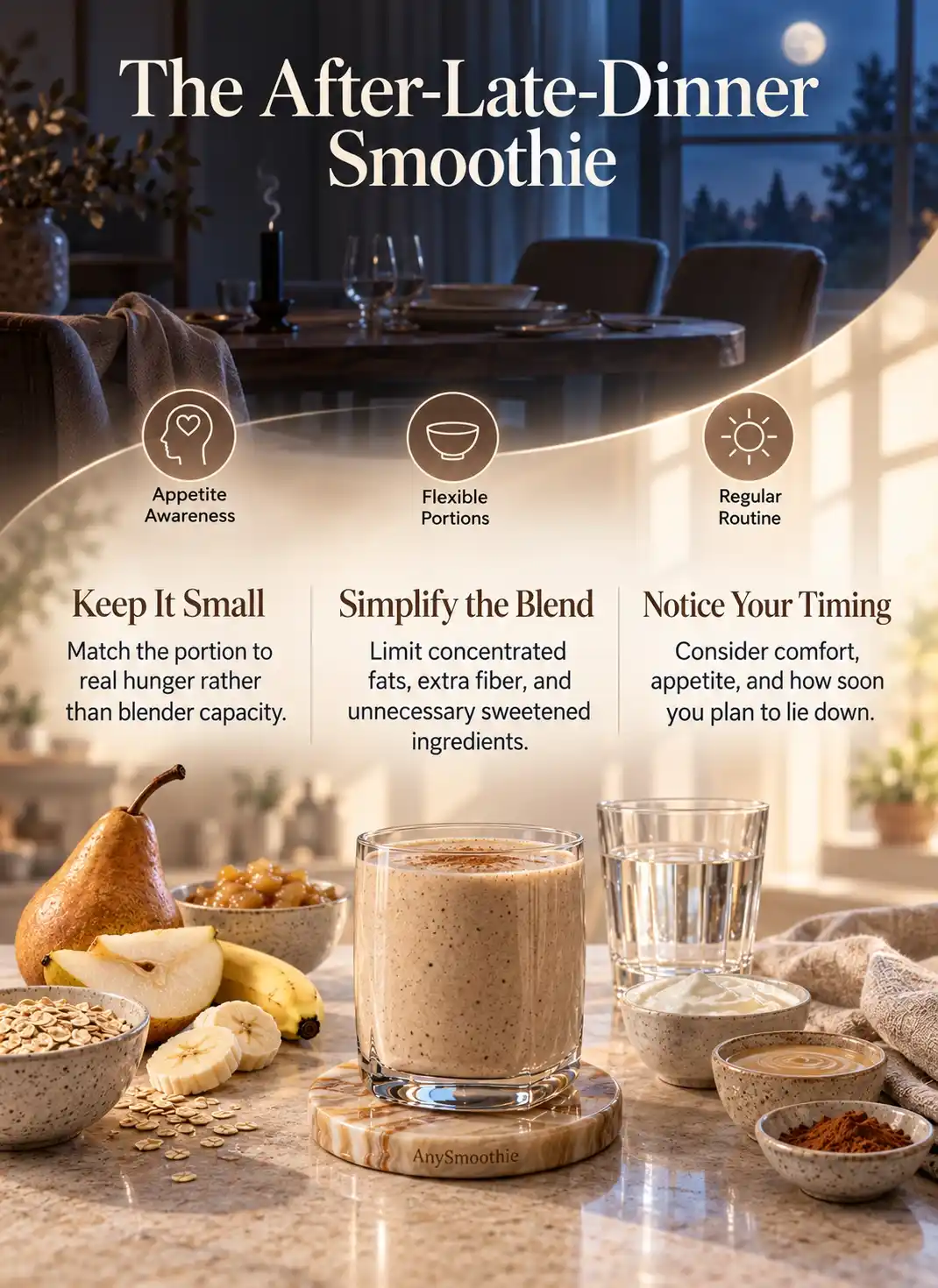
3 Smoothies After an Extra-Late Dinner
Each recipe makes a modest serving. Nutrition estimates use the specific ingredients listed below.
Cucumber Pineapple Cooler
Ingredients
- 1/2 cup chopped cucumber
- 1/2 cup pineapple chunks
- 3/4 cup cold water
- 1 tablespoon fresh lime juice
- 4 mint leaves
- Ice as needed
Steps
Add the water first, followed by the cucumber, pineapple, lime juice, mint, and ice.
Blend until completely smooth. Add a little more water if you want an even lighter texture.
Choose this when you mainly want a cool, fruit-forward drink rather than another substantial snack. Reduce the pineapple if you prefer less sweetness.
Estimated Nutrition per Serving
- Calories: ~55 kcal
- Protein: ~1 g
- Carbohydrates: ~14 g
- Fat: ~0 g
- Fiber: ~1.5 g
- Sugars: ~9 g
Strawberry Greek Yogurt Sip
Ingredients
- 1/2 cup frozen strawberries
- 1/3 cup plain nonfat Greek yogurt
- 1/2 cup cold water
- A pinch of cinnamon
- Ice as needed
Steps
Add the water and Greek yogurt first, followed by the strawberries, cinnamon, and ice.
Blend until smooth. Add another splash of water if you prefer a thinner drink.
This option suits mild hunger after a lighter dinner. The yogurt contributes protein without requiring a large serving.
Estimated Nutrition per Serving
- Calories: ~75 kcal
- Protein: ~9 g
- Carbohydrates: ~10 g
- Fat: ~0 g
- Fiber: ~2 g
- Sugars: ~7 g
If I had already eaten a fairly complete dinner but still felt genuinely hungry, I’d choose this one before automatically reaching for a larger oat or nut-butter smoothie.
Banana Kefir Mini Smoothie
Ingredients
- 1/3 medium banana
- 1/4 cup plain low-fat kefir
- 1/2 cup unsweetened almond milk
- 1 teaspoon rolled oats
- Ice as needed
Steps
Add the almond milk and kefir first, followed by the banana, oats, and ice.
Blend until the oats disappear into the texture. Skip the oats if dinner already included plenty of fiber or if you simply prefer a thinner drink.
Estimated Nutrition per Serving
- Calories: ~85 kcal
- Protein: ~3 g
- Carbohydrates: ~14 g
- Fat: ~2 g
- Fiber: ~2 g
- Sugars: ~8 g
Estimate uses plain low-fat kefir and unsweetened almond milk.
| Smoothie | Key Ingredients | Approximate Calories | Best Fit After Dinner | What to Adjust |
|---|---|---|---|---|
| Cucumber Pineapple Cooler | Cucumber, pineapple, lime, mint | ~55 | Thirst or a warm, salty meal | Use less pineapple |
| Strawberry Greek Yogurt Sip | Strawberries, Greek yogurt, water | ~75 | Mild hunger after a light meal | Add water for a thinner drink |
| Banana Kefir Mini Smoothie | Banana, kefir, almond milk, oats | ~85 | A small creamy snack | Omit oats for less fiber |
The first recipe is the lightest, while the banana blend is slightly more substantial because of its kefir and oat content.
How to Time and Customize Smoothies After an Extra-Late Dinner
Start with a smaller serving and sip it slowly before deciding whether you actually want more. This can help keep a late-night smoothie proportional to your appetite rather than to however much the blender happened to make.
When possible, avoid turning the smoothie into another large meal immediately before lying down. If you experience nighttime reflux or GERD symptoms, NIDDK notes that eating at least three hours before lying down or going to bed may improve symptoms. NIDDK’s GERD nutrition guidance applies specifically to people dealing with reflux symptoms rather than as a universal rule for everyone.
For a broader nighttime smoothie context, night smoothies for circadian recovery looks at evening food choices from a different perspective.
Match the smoothie to your dinner
If dinner was rich, fried, or creamy, a smaller and simpler smoothie may make more sense than adding nut butter, coconut products, several seeds, or a large scoop of protein powder.
After a very carbohydrate-heavy meal, you may prefer a less sweet smoothie built around berries, cucumber, plain yogurt, or an unsweetened liquid instead of stacking banana, mango, juice, dates, and sweetened ingredients.
Plain dairy and unsweetened liquids also make it easier to control added sugar. FDA labeling distinguishes naturally occurring sugars in foods such as fruit and milk from sugars added during processing.
Adjust one variable at a time
Lower fiber by skipping oats, seeds, or large handfuls of greens. Lower fat by choosing nonfat Greek yogurt or water instead of full-fat dairy, avocado, coconut cream, or nut butter.
For a thinner smoothie, add water rather than extra fruit. If you need a little more substance, add a small amount of plain yogurt first. Multiple powders, syrups, and add-ins can make a modest drink unexpectedly substantial.
Blend ahead without making it complicated
You can blend a smoothie earlier and store it in a covered container in the refrigerator. Stir or shake it before drinking because separation during storage is normal.
Keep dairy- or kefir-based smoothies refrigerated and do not leave them sitting at room temperature for extended periods. USDA advises refrigerating perishable foods promptly and discarding foods left at room temperature for more than two hours. USDA food-safety guidance provides the general storage standard.
For more detailed prep and storage ideas, smoothie storage and micronutrient stability covers make-ahead smoothie routines.
Conclusion: A Modest Smoothie Is Often Enough
The right smoothie after an extra-late dinner depends on how much you ate, how hungry you are, which ingredients you tolerate, and how soon you plan to sleep. A modest serving with limited added sugar and heavy add-ins is usually the practical choice.
If you are not hungry, drink water instead. Start with one of these three small recipes, then adjust sweetness, fiber, fat, or volume based on how you feel afterward.
🛡️ Safety Notes & Dietary Interactions
- Reflux and Lying Down: Even a small smoothie can worsen fullness or reflux when consumed immediately before bed. Finish it while remaining upright, and choose water instead if dinner already left you comfortably full.
- Acidic Ingredients: Pineapple, lime, strawberries, and kefir may feel irritating for people prone to reflux or sensitive digestion late at night. Reduce acidic ingredients or choose a milder blend if they consistently trigger burning, nausea, or discomfort.
- Fluid Volume at Night: Large drinks close to bedtime may increase nighttime bathroom trips or uncomfortable stomach fullness. Keep portions modest and avoid treating a smoothie as extra hydration when plain water or no additional drink would better match your needs.
- Dairy and Fermented Foods: Greek yogurt and kefir can be useful in small amounts but may not suit lactose intolerance or individual sensitivity. Choose lactose-free or tolerated alternatives rather than assuming fermented dairy is automatically easier to digest at night.
FAQs
Which smoothie is the lightest after a very heavy dinner?
The Cucumber Pineapple Cooler is the lightest option because it contains mostly water, cucumber, a modest amount of fruit, lime, and mint. If dinner was especially rich or you are mainly thirsty, reduce the pineapple further or skip the smoothie entirely and choose water instead. Hunger should guide the decision more than routine.
How long should I wait before lying down after a late-night smoothie?
There is no single ideal interval for everyone, but lying down immediately after eating or drinking can feel uncomfortable for people prone to reflux or fullness. If possible, finish the smoothie while you are still upright and give your digestion some time before bed. Smaller portions are usually easier to tolerate than large drinks.
Which recipe is best if I am slightly hungry but do not want a full snack?
The Strawberry Greek Yogurt Sip is the most balanced middle option. It provides a small amount of fruit and protein without the oats and larger dairy component of the banana kefir blend. Keep the serving close to the suggested eight ounces and thin it with water if you want something even lighter.
Should I avoid fruit in a smoothie after a late dinner?
Not necessarily. A small amount of fruit can fit perfectly well, but stacking several fruits, juice, sweetened yogurt, dates, and syrup can make the drink much sweeter and larger than needed. Use one modest fruit portion, unsweetened liquid, and only enough additional ingredients to match genuine hunger.
Can a late-night smoothie help me sleep better?
These recipes should not be treated as sleep aids. Their purpose is simply to provide a small, manageable drink when you are genuinely hungry after a late dinner. Sleep quality depends much more on factors such as schedule, light exposure, caffeine timing, comfort, and overall sleep habits than on any particular smoothie ingredient.

Medical Disclaimer: AnySmoothie content is for educational purposes only and is not a substitute for professional medical advice. Consult a healthcare provider for personalized guidance. See our full Disclaimer & Terms of Use. AI Transparency: AnySmoothie may use AI to support content development. All content undergoes human editorial review for accuracy, clarity, and editorial quality. See our full AI Transparency.