
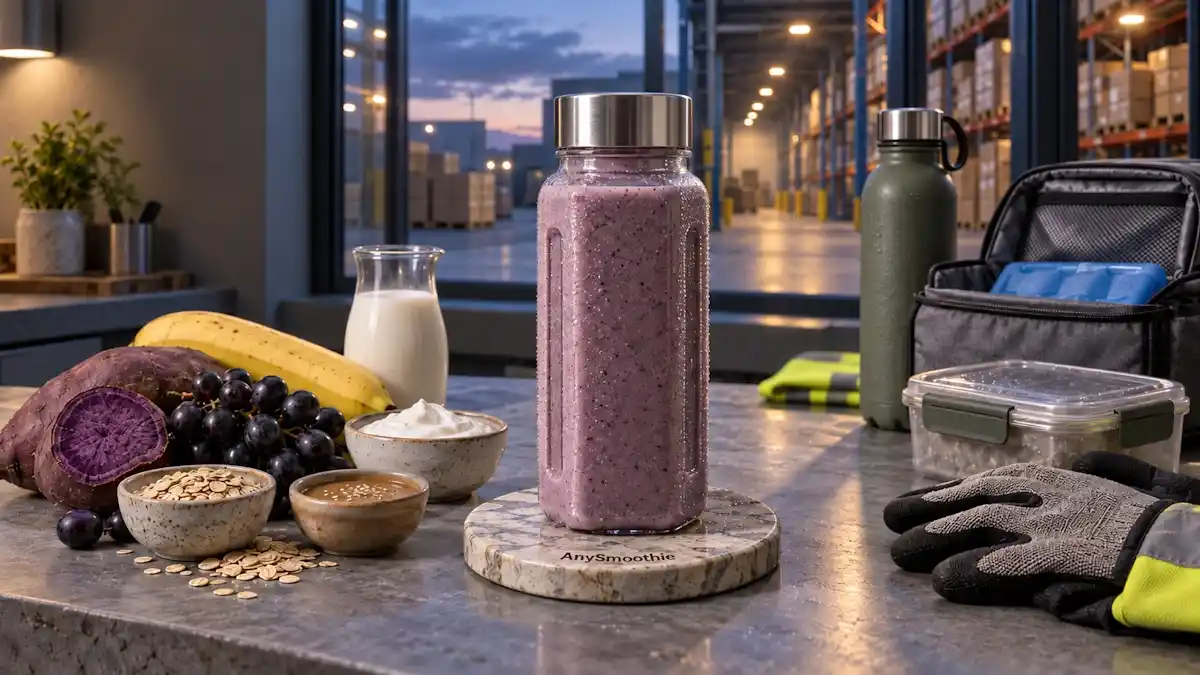
Warehouse work asks a lot of your body before most people finish breakfast. Long walks, lifting, standing, heat, and early shifts can make a portable meal feel less like a convenience and more like a plan.
Workday smoothies for warehouse workers can combine fluids, carbohydrates, protein, fiber, and key nutrients in one bottle. They support normal energy metabolism and contribute to fluid intake, but they don’t replace regular meals, water, rest, or safe workplace practices.
What Warehouse Workers Need From a Workday Smoothie
A smoothie works best when it has more than fruit and juice. Carbohydrates provide glucose that working muscles can use for fuel. Protein supplies amino acids used in normal tissue maintenance and repair. Fat and fiber can slow digestion, which may help the drink feel more satisfying.
Start with mostly whole ingredients and limit sweetened yogurt, syrups, and large amounts of juice. The current Dietary Guidelines for Americans prioritize eating patterns built around whole, nutrient-dense foods including fruits, vegetables, protein foods, dairy, healthy fats, and whole grains.
Calorie needs vary with body size, shift length, job intensity, heat, and personal goals. Before strenuous work, avoid a huge, ultra-thick smoothie that sits heavily in your stomach.
Build a Smoothie With Carbs, Protein, and Fluids
Use fruit or oats for carbohydrates, Greek yogurt, milk, soy milk, or protein powder for protein, and water or milk for fluid. For a meal-sized blend, include a meaningful protein source and enough carbohydrate to match your appetite, activity level, and the time until your next meal.
There isn’t one gram target that fits every warehouse worker. Portion size, tolerance, shift demands, and the rest of your daily food intake matter more than forcing every smoothie into the same macro range.
Choose Ingredients That Work for Early Shifts and Break Rooms
Keep frozen fruit, bananas, oats, plain yogurt, shelf-stable milk, spinach, nut or seed butter, and a shaker bottle on hand. Add more liquid for a thinner drink, or use less liquid and frozen fruit for a thicker one.
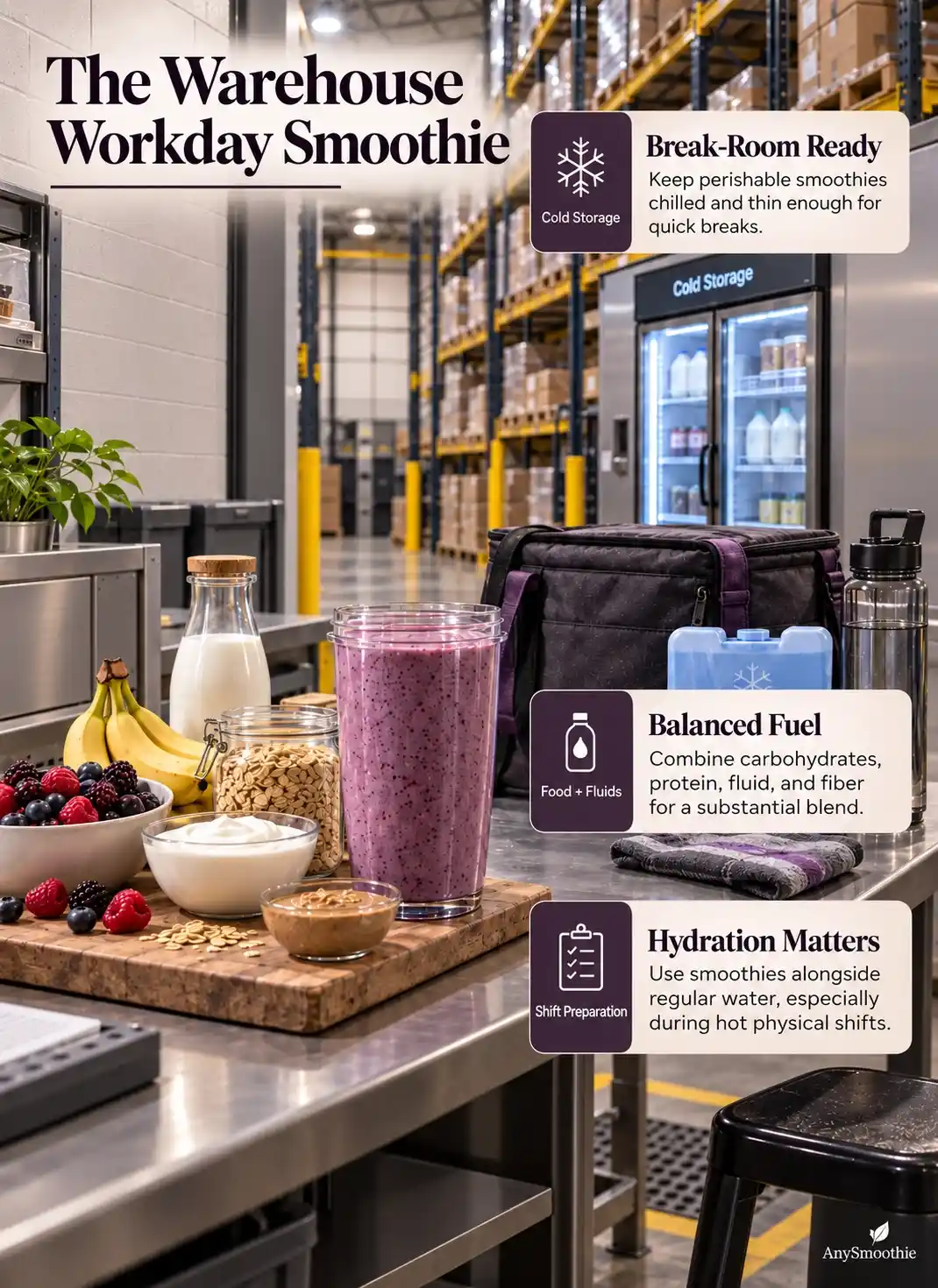
Store dairy, prepared smoothies, and other perishable ingredients in an insulated lunch bag with ice packs. Don’t leave a yogurt-based smoothie at room temperature for an extended break or a hot car ride.
3 Workday Smoothies for Warehouse Workers
These recipes make one generous serving. Nutrition estimates vary by brand, milk choice, and portion size, so check labels if you track nutrients closely.
| Smoothie | Key Ingredients | Approximate Protein | Best Use | Storage Note |
|---|---|---|---|---|
| Banana Oat Protein | Banana, oats, milk, Greek yogurt | ~30 g | Breakfast or pre-shift | Keep cold |
| Berry Yogurt | Frozen berries, yogurt, milk | ~22 g | Mid-shift break | Add ice pack |
| Peanut Butter Chocolate | Banana, cocoa, yogurt, peanut butter | ~29 g | Meal-sized option | Keep cold |
Banana Oat Protein Smoothie for Long, Active Shifts
Ingredients
- 1 medium banana
- 1/3 cup rolled oats
- 1 cup unsweetened fortified soy milk
- 3/4 cup plain Greek yogurt
- 1 tablespoon natural peanut butter
- Pinch of cinnamon
- 1/2 cup ice
Steps
Add the soy milk first, followed by the Greek yogurt, banana, oats, peanut butter, cinnamon, and ice.
Blend until the oats disappear completely. Add a small splash of water if the smoothie is too thick for your bottle.
Oats and banana bring carbohydrates and fiber, while the soy milk and yogurt add protein. Drink it before a longer shift if a lighter breakfast leaves you hungry. For a nut-free workplace, use sunflower seed butter.
A banana milk and yogurt smoothie is another easy variation.
Estimated Nutrition per Serving
- Calories: ~480 kcal
- Protein: ~30 g
- Carbohydrates: ~63 g
- Fat: ~15 g
- Fiber: ~8 g
- Sugars: ~25 g
Estimate uses unsweetened fortified soy milk, plain nonfat Greek yogurt, and natural peanut butter.
If I knew the first proper meal break was several hours away, I’d keep the oats and peanut butter rather than thinning this down into a lighter fruit drink.
Berry Yogurt Smoothie for a Light, Refreshing Break
Ingredients
- 1 cup frozen mixed berries
- 3/4 cup plain Greek yogurt
- 1/2 cup low-fat milk
- 1 teaspoon chia seeds, optional
- Extra water as needed
Steps
Add the milk first, followed by the Greek yogurt, frozen berries, and optional chia.
Blend until smooth. Add another splash of milk or water if you need a thinner texture that is easier to finish during a short break.
Berries bring bright flavor and carbohydrates without needing much added sugar. Yogurt gives the smoothie its protein base. Choose frozen strawberries or a store-brand berry blend when cost matters.
This Greek yogurt smoothie recipe offers another simple berry option.
Estimated Nutrition per Serving
- Calories: ~245 kcal
- Protein: ~22 g
- Carbohydrates: ~30 g
- Fat: ~5 g
- Fiber: ~6 g
- Sugars: ~20 g
Estimate uses plain nonfat Greek yogurt, low-fat dairy milk, and the optional teaspoon of chia.
Peanut Butter Chocolate Smoothie for Extra Staying Power
Ingredients
- 1 medium banana
- 1 cup unsweetened fortified soy milk
- 3/4 cup plain Greek yogurt
- 1 tablespoon natural peanut butter
- 1 tablespoon unsweetened cocoa powder
- 1/2 cup ice
Steps
Add the soy milk first, followed by the Greek yogurt, banana, peanut butter, cocoa powder, and ice.
Blend until smooth and creamy. Add a splash of water if you want an easier-to-drink consistency.
This portable meal combines carbohydrates, protein, and fat. Cocoa powder and peanut butter create a familiar chocolate flavor without loading the bottle with syrup. Use sunflower seed butter if peanuts aren’t an option.
Estimated Nutrition per Serving
- Calories: ~395 kcal
- Protein: ~29 g
- Carbohydrates: ~43 g
- Fat: ~14 g
- Fiber: ~7 g
- Sugars: ~22 g
Estimate uses unsweetened fortified soy milk, plain nonfat Greek yogurt, natural peanut butter, and unsweetened cocoa.
If I wanted this during a scheduled break rather than before clocking in, I’d add a little more water so it stays easy to drink instead of becoming a thick meal in a bottle.
How to Prep, Pack, and Time Smoothies Around a Warehouse Shift
Portion frozen fruit, oats, and add-ins into containers on your day off. Refrigerate the liquid ingredients, blend the night before or that morning, then label the bottle if several people share a fridge.
Some workers prefer a full smoothie before clocking in. Others split it between breakfast and a scheduled break. If active work makes a full bottle uncomfortable, reduce the portion or thin it with water.
A smoothie contributes fluid, but it shouldn’t be your only drink during a physically active shift. Keep water available throughout the day.
For work involving substantial heat and sweating, hydration needs deserve their own plan rather than relying on a smoothie. A scientific review of occupational heat-safety recommendations emphasizes ready access to drinking water, hydration breaks, and additional electrolyte-containing fluids during prolonged heavy sweating in hot conditions.
Adjust the recipe if you feel overly full, get hungry soon after drinking it, or struggle to finish it while working. More oats or yogurt can make it more substantial. Less nut butter, chia, or fiber may make it easier to tolerate before lifting.
Avoid Common Smoothie Mistakes on the Job
Too much juice or sweetener can crowd out protein and add sugar quickly. Skipping protein may leave a fruit-only blend feeling more like a snack. Heavy amounts of bran, chia, or greens can also be uncomfortable right before strenuous activity.
Keep portions realistic and cold. Workers with similarly short or structured break periods may also find useful ideas in quick-break smoothies for factory workers, where portability and easy preparation matter for many of the same reasons.
If you manage food allergies, diabetes, digestive concerns, or dietary restrictions, adapt ingredients with guidance from a qualified health professional.
Conclusion: A Better Bottle for a Demanding Shift
The most useful workday smoothie combines a carbohydrate source, protein, fluid, and an optional amount of fat or fiber. Match the portion to your shift, your appetite, and how your body feels during active work.
Test new recipes on ordinary workdays, prep ingredients ahead, and keep water close by. The best smoothie is one that tastes good, travels safely, and fits your schedule.
🛡️ Safety Notes & Dietary Interactions
- Heat and Hydration: Physically demanding warehouse work can increase fluid needs, especially in warm or poorly ventilated areas. Smoothies contribute fluid but should not replace regular water intake or workplace heat-safety and hydration procedures.
- Cold Storage: Milk, yogurt, and prepared smoothies need reliable refrigeration. Keep bottles in a refrigerator or insulated lunch bag with adequate ice packs, and avoid leaving dairy-based blends in lockers, vehicles, or warm break rooms for extended periods.
- Allergens and Shared Spaces: Dairy, soy, peanuts, chia, and sunflower seeds may require attention in shared workplace areas. Label bottles clearly, follow site allergy policies, and prevent cross-contact when refrigerators, counters, or utensils are used by multiple workers.
- Pre-Shift Digestion: Large amounts of oats, chia, nut butter, or protein powder can make a smoothie heavy before lifting or fast-paced work. Test portions on normal shifts and reduce thickness, fiber, or fat if fullness or discomfort develops.
FAQs
Which smoothie is best before a long warehouse shift?
The banana oat protein smoothie is the most substantial pre-shift option because it combines banana, oats, milk, Greek yogurt, and peanut butter. That provides carbohydrate, protein, fat, and fiber in one bottle. If active lifting begins soon after clocking in, use a smaller serving or more liquid if a dense smoothie feels uncomfortable.
Which smoothie is easiest to drink during a short break?
The berry yogurt smoothie is the lightest of the three and can be thinned easily with water or milk. It provides fruit and protein without the larger oat and peanut-butter portions found in the other recipes. Keep chia optional if you need a smoother texture that is easier to finish during a brief break.
Can a smoothie replace lunch during a physically demanding shift?
A meal-sized smoothie can cover part of a meal, but it may not meet all of your energy needs during long or strenuous warehouse work. Shift length, workload, body size, heat, and other meals all matter. Pair the smoothie with familiar solid foods when necessary, especially if your next full meal may be delayed.
How should I store a smoothie if the warehouse has no refrigerator?
Use a well-insulated lunch bag or cooler with sufficient frozen gel packs and keep it closed until your break. Do not assume an insulated bottle alone will safely chill a dairy-based smoothie for an entire shift. If dependable cold storage is unavailable, choose shelf-stable food and drinks instead of carrying a perishable blend.
Are the listed protein amounts exact for these recipes?
No. Protein can vary substantially depending on the brand and type of milk, yogurt, soy beverage, protein powder, and serving size used. Treat the estimates as approximations rather than fixed values. If protein intake matters to you, check the nutrition labels of your actual ingredients and calculate the serving you prepare.

Medical Disclaimer: AnySmoothie content is for educational purposes only and is not a substitute for professional medical advice. Consult a healthcare provider for personalized guidance. See our full Disclaimer & Terms of Use. AI Transparency: AnySmoothie may use AI to support content development. All content undergoes human editorial review for accuracy, clarity, and editorial quality. See our full AI Transparency.