
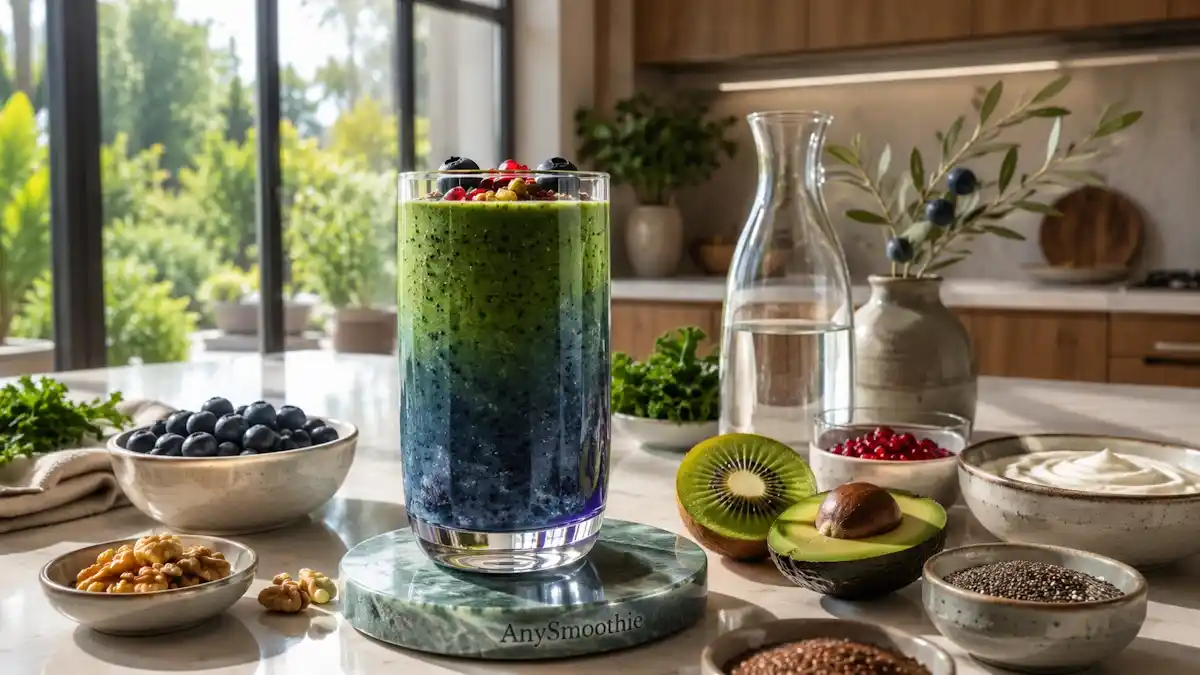
Interest in klotho smoothies for cellular resilience is growing alongside research on healthy aging and the body’s natural stress-response systems. Klotho is a protein linked to mineral balance, oxidative stress, inflammation signaling, and other biological pathways.
No smoothie has been proven to directly raise Klotho levels or prevent disease. Still, nutrient-dense blends can support normal antioxidant defenses, energy production, blood vessel function, and steady Blood sugar. These three recipes offer a practical place to start.
What Klotho Does and How Nutrition May Support Cellular Resilience
Klotho is a protein produced mainly in the kidneys, although other tissues also make it. Researchers continue to study its relationship with fibroblast growth factor 23, phosphate regulation, calcium balance, and signaling pathways involved in aging. Laboratory and observational research also connects Klotho with oxidative stress and inflammation-related processes.
Klotho is an active area of research because of its role in mineral metabolism and multiple physiological pathways. The National Institute on Aging provides reliable information about healthy aging research and current scientific understanding.
That research doesn’t mean a particular food activates Klotho in people. Human evidence on specific ingredients and Klotho remains limited. A smoothie can provide nutrients that support related systems, but it can’t predictably change one protein or override genetic, metabolic, and lifestyle factors.
For example, plant polyphenols help supply compounds involved in the body’s antioxidant network. Magnesium and folate support normal cellular metabolism. Fiber slows digestion, while protein provides Amino acids needed for tissue maintenance and helps a drink keep you full. Unsaturated fats support Cell membranes and add staying power.
A broader food-first approach may also include Smoothies that protect cellular DNA integrity, although the same evidence-aware limits apply. Food can support normal physiology without guaranteeing a specific cellular outcome.
The nutrients that make a resilience-focused smoothie
Colorful berries, cherries, citrus, and leafy greens provide polyphenols, vitamin C, folate, and other micronutrients. Spinach and kale also contribute magnesium, which the body uses in energy metabolism and nerve function.
Chia and flax add soluble and insoluble fiber, along with alpha-linolenic acid, a plant-based omega-3 fat. Plain Greek yogurt, kefir, tofu, or an unsweetened protein powder adds protein and improves texture. A small amount of cocoa, ginger, or cinnamon can add flavor and plant compounds without relying on sugar.
Building meals around fruits, vegetables, legumes, whole grains, and quality protein sources remains one of the most evidence-based nutrition strategies for long-term health. The Dietary guidelines for americans offer practical recommendations for creating balanced eating patterns.
Whole ingredients work better than juice for everyday smoothies because they retain more fiber and physical structure.
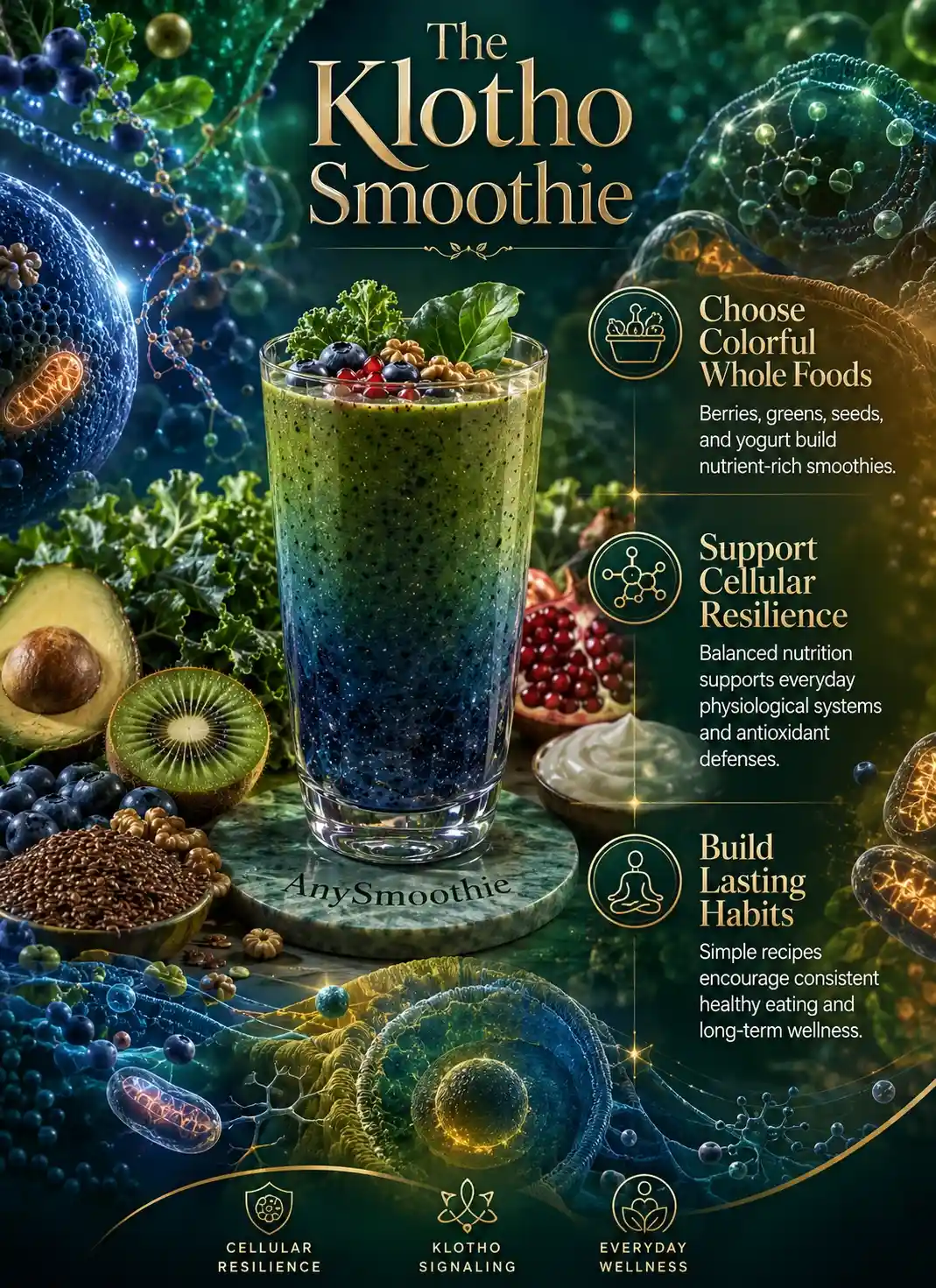
What Klotho smoothies cannot do
A smoothie can’t replace Sleep, regular movement, resistance training, hydration, or a varied diet. Current research doesn’t support claims that any recipe can raise Klotho levels in a predictable way.
If you have kidney disease, diabetes, food allergies, or medication-related dietary restrictions, ask a qualified health professional before making major diet changes. Potassium, phosphorus, carbohydrate, and vitamin K content may matter for some people.
3 Klotho Smoothies for Cellular Resilience
These klotho smoothies for cellular resilience focus on fiber, protein, colorful produce, and unsaturated fats. Use unsweetened liquids and adjust the texture with water or ice. Nutrition values vary by brand, recipe size, and portion.
Berry, Greens, and Chia Smoothie
Ingredients
- 1 cup unsweetened milk or kefir
- 1 cup frozen mixed berries
- 1 handful spinach
- 1 tablespoon chia seeds
- 1/2 cup plain Greek yogurt
- For a dairy-free option: unsweetened soy milk and a plant-based protein serving
Blend everything until smooth. Add water if the mixture feels too thick. Berries provide polyphenols and fiber, while spinach adds folate and magnesium. Chia contributes fiber and plant omega-3 fats. Greek yogurt makes the drink more filling and adds roughly 20 grams of protein, depending on the products you choose. With unsweetened ingredients, added sugar stays near zero.
Estimated Nutrition per Serving
Estimated with unsweetened soy milk, frozen mixed berries, spinach, chia seeds, and plain nonfat Greek yogurt.
- Calories: ~340 kcal
- Protein: ~25 g
- Carbohydrates: ~40 g
- Fat: ~10 g
- Fiber: ~13 g
- Sugars: ~19 g
Chia continues absorbing liquid after blending, especially alongside thick Greek yogurt. If you plan to drink this smoothie later rather than immediately, leave it slightly looser at first; the texture usually becomes noticeably fuller after refrigeration.
Cocoa, Cherry, and Walnut Smoothie
Ingredients
- 1 cup unsweetened milk
- 1 cup frozen tart cherries
- 1 tablespoon unsweetened cocoa powder
- 1 tablespoon walnut butter or a small portion of walnuts
- 1/2 cup plain yogurt
- Silken tofu, optional as a dairy-free protein source
Blend until creamy. Cocoa and cherries add plant compounds and a rich flavor, while walnuts contribute unsaturated fats, fiber, and minerals. Choose plain cocoa rather than a sweetened drink mix. Nut butter can raise calories quickly, so measure the portion instead of pouring freely. Plain yogurt can bring the protein total to about 18 to 22 grams, with no added sugar when labels confirm it.
Estimated Nutrition per Serving
Estimated with unsweetened soy milk, frozen tart cherries, unsweetened cocoa powder, one tablespoon walnut butter, and plain nonfat Greek yogurt.
- Calories: ~365 kcal
- Protein: ~23 g
- Carbohydrates: ~47 g
- Fat: ~12 g
- Fiber: ~8 g
- Sugars: ~29 g
Green Citrus and Avocado Smoothie
Ingredients
- 1 cup water or unsweetened milk
- 1 handful spinach or kale
- 1/2 avocado
- 1/2 cucumber
- Juice of 1/2 lemon or lime
- 1 small piece fresh ginger
- Greek yogurt, tofu, or unflavored protein powder
Blend until smooth.
The avocado supplies fiber and unsaturated fat, which can help the drink feel satisfying. Citrus brightens the flavor and adds vitamin C. Ginger provides a sharp, warming note without sweeteners. A protein addition can bring the smoothie into the 15 to 25 gram range, depending on the choice. People managing potassium intake should check whether avocado and other ingredients fit their dietary needs.
Estimated Nutrition per Serving
Estimated with unsweetened soy milk, spinach, half a medium avocado, cucumber, lime juice, fresh ginger, and 1/2 cup plain nonfat Greek yogurt.
- Calories: ~320 kcal
- Protein: ~20 g
- Carbohydrates: ~24 g
- Fat: ~18 g
- Fiber: ~10 g
- Sugars: ~8 g
Half an avocado makes this substantially creamier than many green smoothies, so blend the greens, cucumber, and liquid first before adding it. This helps break down leafy pieces while keeping the final texture smooth without needing unnecessary extra liquid.
How to Choose Ingredients and Build a Balanced Smoothie
A reliable formula uses one protein source, one or two cups of produce, a fiber-rich addition, a source of unsaturated fat, and a low-sugar liquid. This combination supports fullness and may provide steadier energy than fruit and juice alone.
Frozen whole fruit usually works better than juice because it adds texture and fiber. Large amounts of honey, dates, sweetened milk, or flavored yogurt can turn a nutrient-dense drink into a high-sugar dessert. Read labels for added sugar, and check third-party testing when you use protein or specialty powders.
The table below compares common smoothie ingredients by their practical role.
A quick comparison of smoothie ingredient choices
| Ingredient group | Examples | Main nutrients | Best role in a smoothie | Watch-outs |
|---|---|---|---|---|
| Berries | Blueberries, strawberries, raspberries | Fiber, polyphenols, vitamin C | Color, flavor, and whole-fruit texture | Dried or sweetened versions add concentrated sugar |
| Leafy greens | Spinach, kale | Folate, magnesium, vitamin K | Micronutrients with few calories | Vitamin K may matter with some medications |
| Fermented dairy or unsweetened alternatives | Greek yogurt, kefir, soy yogurt | Protein, calcium, probiotics in some products | Creaminess and satiety | Check added sugar and allergy concerns |
| Seeds and nuts | Chia, flax, walnuts | Fiber, unsaturated fats, minerals | Texture and staying power | Portions can raise calories quickly |
| Juice or added sweeteners | Orange juice, honey, dates | Carbohydrate, little fiber in juice | Occasional flavor adjustment | Easy to increase total sugar |
Drink a smoothie with breakfast or after activity, then continue eating varied whole foods. Consistency, digestion, budget, and taste matter more than finding a perfect ingredient.
Common mistakes that weaken a resilience-focused recipe
- Using juice as the main liquid can remove much of the fiber and raise the drink’s sugar load.
- Skipping protein often leaves a smoothie less satisfying, especially when fruit makes up most of the volume.
- Adding avocado, nut butter, seeds, coconut, and oats together can create more calories than you intended. Choose one or two calorie-dense additions.
- Relying on supplements with unclear evidence can distract from basic nutrition. If you use a powder, check the ingredient panel, added sugar, allergen statement, and third-party testing.
- Treating one smoothie as a substitute for a full diet limits the range of nutrients and textures you eat. Rotate produce and include meals built from whole foods.
Conclusion
These smoothies provide fiber, plant compounds, protein, and healthy fats that support normal physiological systems related to cellular resilience. They are not proven to increase Klotho levels or act as medical treatments, and no recipe can replace sleep, movement, stress management, hydration, or a varied diet.
Choose one blend, adjust it to your needs, and make it easy to repeat. If you have a medical condition or follow a restricted diet, seek personalized guidance before changing your usual nutrition routine.
🛡️ Safety Notes & Dietary Interactions
- Support Cellular Wellness, Not Klotho Levels: These smoothies provide fiber, protein, healthy fats, vitamins, and plant compounds that support normal physiological functions. They are not proven to increase Klotho levels, slow aging, or prevent age-related diseases.
- Adjust Recipes for Individual Health Needs: People with kidney disease, diabetes, food allergies, digestive disorders, or medically prescribed diets should personalize ingredients such as dairy, soy, leafy greens, avocado, seeds, and fruit with guidance from a qualified healthcare professional.
- Choose Supplements Carefully: If you add protein powders or specialty products, select reputable brands that undergo third-party quality testing. Read ingredient labels for added sugars, stimulants, allergens, and unnecessary herbal blends that may not fit your nutritional needs.
- Build Long-Term Healthy Habits: Cellular resilience depends on many lifestyle factors, including regular physical activity, adequate sleep, stress management, hydration, and a varied diet. Smoothies can complement these habits but cannot replace them or substitute for individualized medical care.
FAQs
Can smoothies increase Klotho levels?
Current research does not show that any smoothie or individual food can reliably increase Klotho levels in humans. Nutrient-rich smoothies may support normal physiological systems associated with healthy aging, but they should not be viewed as Klotho-boosting treatments.
Which ingredients fit a Klotho-focused smoothie?
Whole berries, leafy greens, avocado, chia seeds, flaxseed, walnuts, Greek yogurt, kefir, tofu, unsweetened soy milk, cocoa, and ginger provide combinations of protein, fiber, healthy fats, vitamins, minerals, and plant compounds that support overall nutritional quality.
Why are protein and fiber important in these smoothies?
Protein provides amino acids needed for normal tissue maintenance, while fiber supports digestive health and helps create a more satisfying smoothie. Together with healthy fats, they often promote steadier energy and make nutrient-dense smoothies more balanced than fruit-only blends.
Should I use juice or whole fruit?
Whole fruit is generally the better everyday choice because it retains naturally occurring fiber and creates a more satisfying texture. Fruit juice contains many of the fruit’s natural sugars but much less fiber, making it easier to consume larger amounts of carbohydrates quickly.
Can I drink these smoothies every day?
Yes. These smoothies can be included regularly as part of a varied, balanced diet. Rotating fruits, vegetables, protein sources, and healthy fats helps broaden nutrient intake while supporting long-term dietary variety rather than relying on a single recipe every day.

Medical Disclaimer: AnySmoothie content is for educational purposes only and is not a substitute for professional medical advice. Consult a healthcare provider for personalized guidance. See our full Disclaimer & Terms of Use. AI Transparency: AnySmoothie may use AI to support content development. All content undergoes human editorial review for accuracy, clarity, and editorial quality. See our full AI Transparency.