

Cells burn through fuel all day. Cellular respiration is the process that turns food and oxygen into usable energy, mostly ATP. Smoothies can support that process by delivering carbs, protein, minerals, and antioxidant-rich plants in a form your body can use fast. The goal here is simple support for natural energy pathways, not medical claims.
The best blends stay balanced. Too much fruit can make a smoothie feel sharp and short-lived, while too little protein or fiber can leave you hungry soon after. When you get the mix right, a smoothie works more like a practical mini-meal than a sweet drink.
What nutrients support cellular respiration?
Cellular respiration uses fuel in stages, and Khan Academy’s steps of cellular respiration lays them out clearly: glycolysis, the Krebs cycle, and oxidative phosphorylation. Smoothie ingredients don’t power those steps by magic, but they can supply the raw materials that help them run smoothly.
Carbs, fiber, and steady glucose for usable fuel
Glucose is the main starting fuel for this process, so carbs matter. Fruit, oats, and even a little carrot or beet can give cells easy-to-use fuel, while fiber slows the rush. That means banana, berries, mango, oats, and spinach all pull weight here. A smoothie built on whole ingredients gives you energy without the spike-and-crash feel of juice.
Minerals and vitamins that help energy enzymes work
Magnesium, potassium, iron, folate, riboflavin, and thiamine all play support roles in energy metabolism. Magnesium shows up in nuts, seeds, oats, and leafy greens. Potassium is strong in banana and yogurt. Iron and folate live in spinach, while riboflavin and thiamine come through dairy, fortified foods, and whole grains. These nutrients help the enzymes that move food through energy pathways do their jobs.
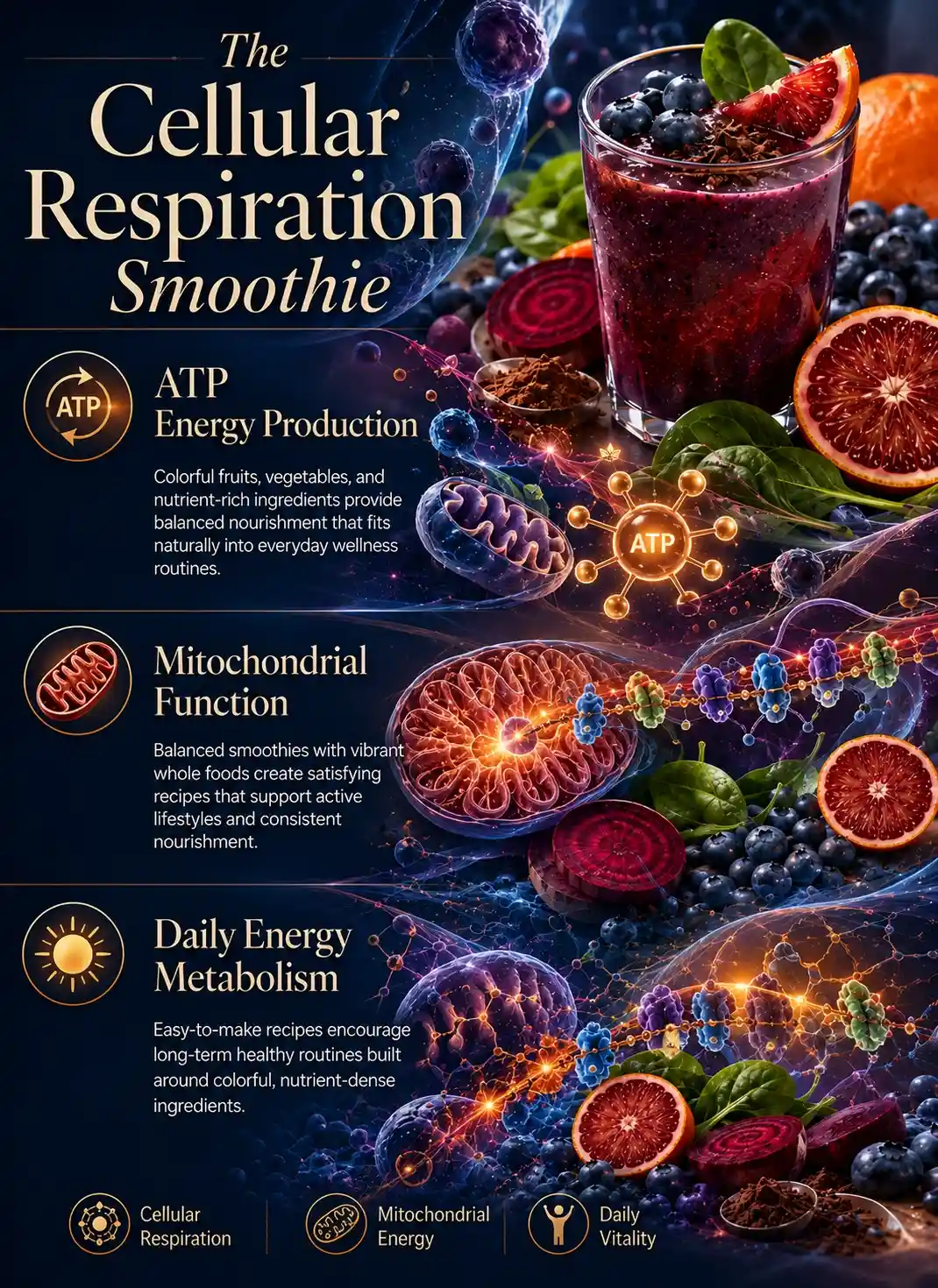
Antioxidants that help cells handle stress
Berries, cocoa, and dark leafy greens bring polyphenols, vitamin C, and other plant compounds. Those don’t replace fuel, but they help cells deal with normal oxidative stress, especially on busy days or after hard training. Blueberries, cacao, kale, and parsley all fit that role well. The color in your glass matters more than it gets credit for.
Cellular respiration also depends on healthy mitochondrial function. If you’d like a broader look at nutrition that supports the cell’s energy-producing structures, explore our guide to mitochondrial health smoothies ingredients that boost energy.
How to build smoothies for cellular respiration support
A useful formula keeps the drink balanced instead of sugary. Start with liquid, add fruit or oats for carbs, then include protein, fiber, and a small fat source. If you want a ready-made example, smoothies for quick fuel and steady power shows that balance in practice.
| Style | Best time | Core ingredients | Main focus | When to choose |
|---|---|---|---|---|
| Quick fuel | Morning | Banana, yogurt, berries | Fast carbs with protein | You need energy fast |
| Steady energy | Midday | Oats, greens, nut butter | Slower release and fullness | You want a longer run |
| Recovery blend | After training | Kefir, beet, citrus, berries | Fluids, carbs, and protein | You just worked out |
| Antioxidant-rich | Any time | Cacao, berries, spinach | Plant compounds and micronutrients | You want a lighter mix |
That template keeps the smoothie useful. It gives cells fuel, but it also gives them the minerals and amino acids that support the rest of the process.
A simple smoothie formula that keeps energy balanced
Use 1 to 1.5 cups of liquid, 1 cup of fruit or a mix of fruit and oats, 1 source of protein, 1 small fat source, and 1 handful of greens if you want more minerals. Add ice or frozen fruit for texture. If the smoothie tastes like a milkshake, pull back on the sweet fruit and add greens or chia.
Best ingredients to rotate in and out
Banana, berries, spinach, avocado, Greek yogurt, kefir, chia seeds, flaxseed, oats, cacao, beet, and nut butter all bring something useful. Rotate them so you don’t get stuck with the same nutrient pattern every day. For more green-friendly combinations, easy green smoothie recipes for energy give you a simple place to start.
3 Smoothies for cellular respiration support
Each of these blends uses a different balance of carbs, protein, and plant compounds. Pick the one that matches your morning, your workout, or the kind of energy you want to feel.
Common mistakes that can limit cellular energy
A smoothie can work against your goal when it turns into a dessert in disguise. Added sugar, huge fruit portions, oversized servings, and too little protein all make the drink burn fast. Skipping fiber has the same effect, because the sugar hits harder and fades sooner.
Simple fixes help a lot. Add spinach, chia, flaxseed, Greek yogurt, or oats before you add another sweet ingredient. Keep portions reasonable, and use frozen fruit for texture instead of extra juice.
When a smoothie turns into a sugar-heavy drink
If the smoothie tastes more like juice than food, it probably needs more structure. Look for a quick crash, a hungry feeling an hour later, or a drink that disappears too easily. A spoonful of nut butter, a scoop of yogurt, or a handful of greens usually brings it back in line.
Conclusion
The best smoothies for cellular respiration support are balanced, colorful, and built from real foods. They give cells carbs for fuel, protein for repair, and minerals and antioxidants that help normal energy pathways do their work.
Start with one simple formula, then adjust it to your schedule and activity level. Small daily choices add up, and a well-made smoothie can be one of the easiest ones to repeat.
🛡️ Safety Notes & Dietary Interactions
- Balanced Nutrition: Smoothies support cellular respiration best when they provide balanced carbohydrates, protein, healthy fats, and fiber. Extremely high-sugar recipes may produce rapid energy followed by increased hunger, making them less suitable as a balanced meal.
- Medical Considerations: If you have diabetes, kidney disease, or another condition requiring specific nutrient restrictions, work with your healthcare provider or registered dietitian before making significant changes to your smoothie ingredients or meal patterns.
- Digestive Comfort: Increase fiber-rich ingredients such as oats, chia, flaxseed, or leafy greens gradually. Introducing large amounts all at once may cause digestive discomfort, especially if your usual diet contains relatively little fiber.
- Ingredient Quality: Choose whole fruits, unsweetened dairy or plant-based products, and minimally processed ingredients whenever possible. Limiting added sugars and highly processed smoothie mixes helps create a more nutrient-dense recipe that better fits everyday wellness habits.
FAQ
What is cellular respiration, and how do smoothies support it?
Cellular respiration is the natural process cells use to convert nutrients and oxygen into ATP, the body’s primary energy source. A balanced smoothie supports this process by supplying carbohydrates for fuel, protein for tissue maintenance, vitamins and minerals that assist energy metabolism, and antioxidant-rich plant foods that complement normal cellular function.
Which smoothie ingredients best support cellular respiration?
Ingredients such as berries, bananas, spinach, oats, Greek yogurt, kefir, chia seeds, flaxseed, cocoa, nuts, and seeds provide a combination of carbohydrates, protein, healthy fats, fiber, vitamins, and minerals. Rotating these foods throughout the week helps create nutritional variety while supporting overall energy metabolism through a balanced dietary pattern.
Should I drink a smoothie before or after exercise?
Both options can work depending on your goals. Before exercise, a lighter smoothie with moderate carbohydrates is often easier to digest. After activity, adding more protein and fluids helps create a balanced recovery meal. Matching the smoothie to your schedule and workout intensity is generally more important than perfect timing.
Can a smoothie improve my energy without added sugar?
Yes. Whole fruits naturally provide carbohydrates while ingredients such as Greek yogurt, oats, chia seeds, flaxseed, avocado, and nut butter help slow digestion and create steadier energy. Building the smoothie around whole foods instead of fruit juice or added sweeteners often produces a more satisfying and balanced result.
Is it okay to drink the same energy smoothie every morning?
Using one favorite smoothie regularly is perfectly reasonable if it contains balanced ingredients. However, rotating fruits, vegetables, protein sources, seeds, and healthy fats over time helps broaden your intake of vitamins, minerals, and plant compounds. Small variations also keep breakfast enjoyable and support a more diverse overall dietary pattern.

Medical Disclaimer: AnySmoothie content is for educational purposes only and is not a substitute for professional medical advice. Consult a healthcare provider for personalized guidance. See our full Disclaimer & Terms of Use. AI Transparency: AnySmoothie may use AI to support content development. All content undergoes human editorial review for accuracy, clarity, and editorial quality. See our full AI Transparency.