
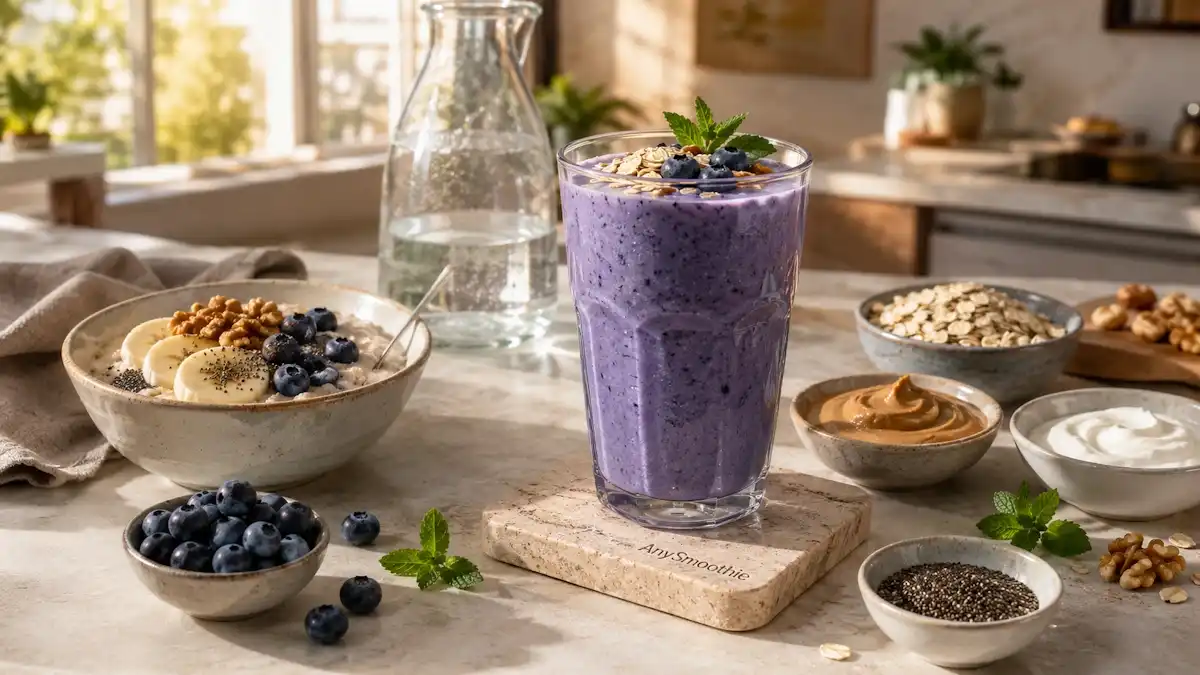
After 50, protein matters in a very practical way. It helps preserve muscle, supports recovery after activity, and makes breakfast easier on hectic mornings.
Protein-rich smoothies for healthy aging habits can pull a lot into one glass. When the blend includes fiber, healthy fats, and enough liquid, it feels useful instead of heavy. This guide shows how to build simple smoothies with balanced macros and easy prep.
What makes a smoothie truly supportive for healthy aging?
A good smoothie should do more than taste sweet. It should bring protein for muscle maintenance, fiber for steadier digestion, fats for satiety, and water or milk for hydration. Fruit and greens add vitamins and minerals, which help round out the mix.
The goal is steady energy, better fullness, and easier recovery after walks or workouts. That matters when appetite is lower or when cooking feels like too much work.
How protein supports muscle, fullness, and daily energy
Protein breaks into amino acids, which the body uses to repair tissue and maintain lean mass. That matters more as you age, because muscle is easier to lose than many people expect.
Older adults often benefit from putting more protein into breakfast or a snack. A smoothie makes that easier, because it doesn’t demand much prep and it travels well.
For more on protein needs later in life, see the National Institute on Protein and Aging.
The best smoothie formula: protein, fiber, fat, and liquid
Start with one protein base, one fruit or vegetable, one fiber source, one fat source, and one liquid. That mix helps the drink feel balanced and keeps sugar swings gentler.
Texture matters too. A smoothie should feel smooth, thick enough to satisfy, and easy to drink without extra sugar. If it feels thin, add ice or yogurt instead of juice.
If a smoothie leaves you hungry an hour later, it probably needs more protein, fiber, or both.
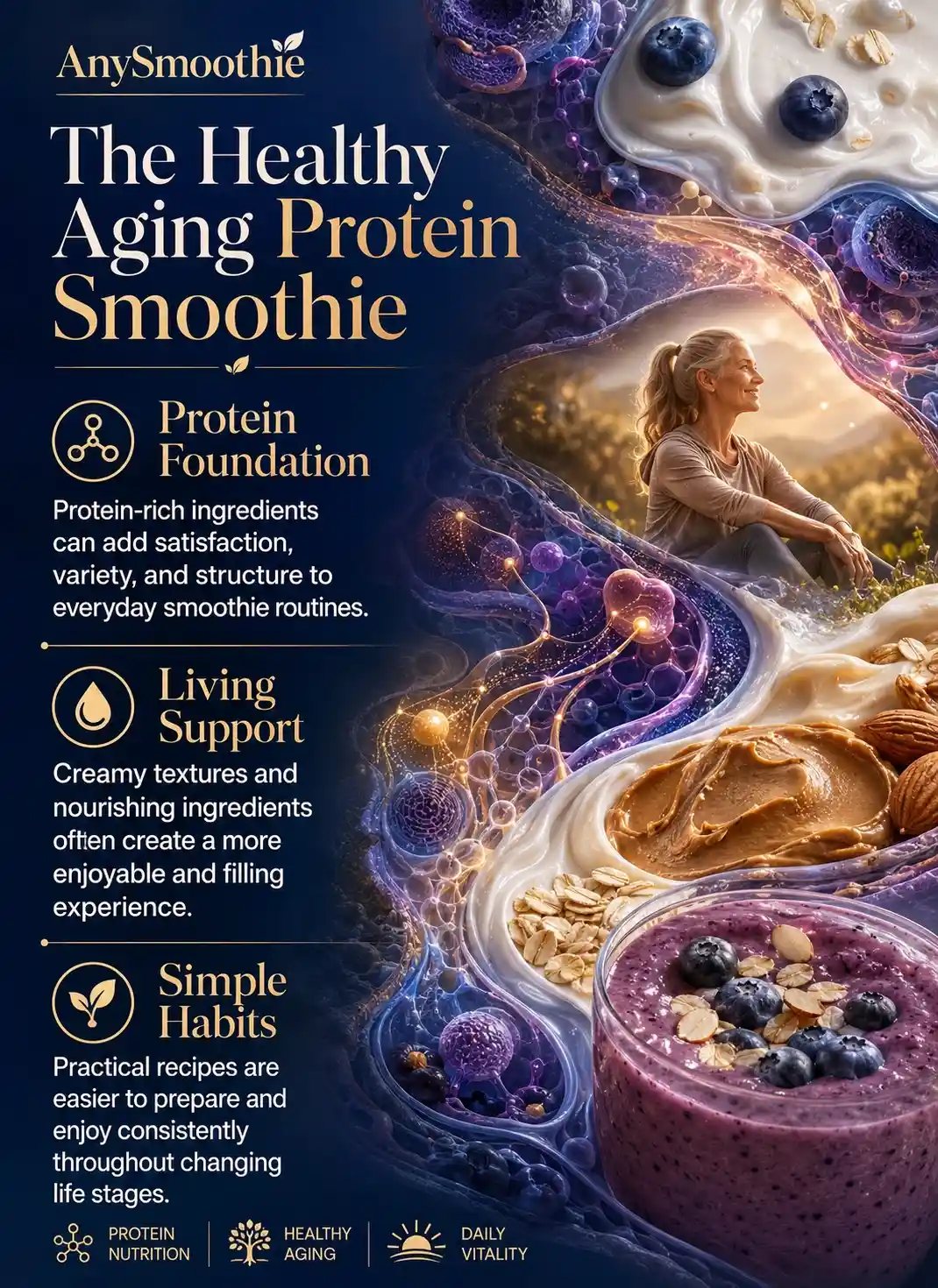
Ingredients that add value without making smoothies too sugary
A few smart ingredients do most of the work:
- Greek yogurt or skyr adds thick protein and a creamy feel.
- Cottage cheese and silken tofu make blends rich without much sweetness.
- Soy milk and pea protein help dairy-free drinkers build a stronger base.
- Chia seeds, flaxseed, and oats add fiber and body.
- Berries, spinach, cucumber, and cauliflower rice add volume with little sugar.
- Nut butter and avocado bring fat and a richer finish.
If you want more on how fiber changes the feel of a blend, fiber-rich recipes for gut health is a helpful reference.
How to build protein-rich smoothies for healthy aging habits
A repeatable formula makes the habit stick. You do not need a huge ingredient list, and you do not need a powder for everything.
| Protein option | Typical protein punch | Texture | Prep time | Best use |
|---|---|---|---|---|
| Greek yogurt | High | Thick and creamy | Fast | Breakfast or snack drinks |
| Whey protein | High | Smooth and light | Fastest | After a walk or workout |
| Soy milk | Moderate | Thin to medium | Fast | Dairy-free daily smoothies |
| Cottage cheese | High | Very creamy | Fast with a strong blender | Filling evening blends |
| Silken tofu | Moderate to high | Silky and mild | Fast | Soft dairy-free smoothies |
The best option is the one you can use often. Taste, cost, and texture matter as much as nutrition.
Choose a protein source that fits your taste and routine
Greek yogurt and skyr are easy picks if you want thickness and a tangy taste. Whey blends fast and stays smooth, which works well when time is short.
Soy milk and pea protein fit dairy-free routines. Cottage cheese gives a dense, rich feel, while silken tofu keeps the flavor mild. For a richer finish without making the drink greasy, heart-healthy smoothie ingredients can help you choose better fats.
Use fruit and vegetables for color, fiber, and antioxidants
Berries add tartness and color. Banana softens sharper flavors, and mango brings a rounder sweetness. Spinach blends in easily, while kale needs a stronger fruit base.
Cucumber and cauliflower rice add volume with little sugar. That helps if you want a bigger glass without turning it into dessert. Variety also keeps the routine from getting boring.
Make it easier on digestion and more filling
Blend long enough to remove grit. Add fiber slowly if your body is not used to it. Keep portions reasonable, because a giant smoothie can crowd out other meals.
Drink it slowly, too. A thick, cold smoothie usually feels more satisfying than a thin one. Texture can change how full you feel more than people expect.
3 Protein-Rich smoothies for healthy aging habits
Small habits that make smoothies work in real life
Healthy aging habits stick when they feel easy. A smoothie routine works best when the ingredients are ready and the recipe list stays short.
Prep ahead so healthy choices feel effortless
Freeze berries, greens, and oats in small packs. Keep yogurt, soy milk, or protein powder on hand. Then rotate two or three recipes instead of chasing new ideas every day.
That lowers decision fatigue. It also makes the healthy choice feel automatic on busy mornings.
Common mistakes that make smoothies less helpful
Too much fruit can push a smoothie toward dessert. Skipping protein leaves you hungry again too soon. Leaving out fiber makes the drink less filling and less balanced.
Oversized portions can crowd out lunch or dinner. Smoothies work best as one supportive habit, not the whole plan.
Conclusion
Protein-rich smoothies can make healthy aging feel easier without adding much work. They support muscle maintenance, steady energy, and more reliable nutrition on busy days.
Start with one recipe you actually like, then repeat it until it feels natural. Consistency does more than perfection ever will.
🛡️ Safety Notes & Dietary Interactions
- Protein Distribution: Protein needs vary by age, activity level, and overall diet. A smoothie can help support intake, but it works best as part of a balanced eating pattern across the entire day.
- Fiber Adjustment: Digestive Comfort: Ingredients like chia, flax, oats, and large amounts of greens can increase fiber quickly. If your usual intake is low, increase portions gradually and maintain adequate hydration.
- Dairy Awareness: Individual Tolerance: Greek yogurt, skyr, cottage cheese, and whey protein work well for many people, but some individuals may prefer soy, pea protein, or silken tofu alternatives instead.
- Balanced Nutrition: Meal Variety: Protein-rich smoothies can be convenient, but they should complement whole foods rather than replace most meals. Fruits, vegetables, legumes, grains, and proteins all contribute to healthy aging habits.
FAQ
How much protein should a healthy aging smoothie contain?
The ideal amount depends on individual needs, activity levels, and overall diet. Many people aim to include a meaningful protein source such as Greek yogurt, cottage cheese, soy milk, tofu, or protein powder to help support fullness and muscle maintenance throughout the day.
Are protein powders necessary for healthy aging smoothies?
No. Many protein-rich smoothies can be built entirely from whole foods such as Greek yogurt, skyr, cottage cheese, soy milk, kefir, tofu, seeds, and nuts. Protein powders are simply a convenient option when you want extra protein without adding much volume.
Which fruits work best in protein-rich smoothies?
Berries, bananas, mangoes, peaches, and cherries are popular choices because they blend easily and pair well with protein sources. Berries provide color and fiber, while bananas create a naturally creamy texture that helps smoothies feel more satisfying.
Can protein-rich smoothies help with fullness between meals?
Yes. Combining protein with fiber and healthy fats can make a smoothie more satisfying than fruit alone. Ingredients such as chia seeds, oats, flaxseed, avocado, nut butter, and yogurt help create a balanced drink that may support steadier energy and appetite control.
What is the easiest protein-rich smoothie for beginners?
A simple combination of Greek yogurt, frozen berries, and milk is often the easiest place to start. It requires only a few ingredients, blends quickly, tastes familiar, and provides protein, fluid, and fruit in a convenient breakfast or snack option.

Medical Disclaimer: AnySmoothie content is for educational purposes only and is not a substitute for professional medical advice. Consult a healthcare provider for personalized guidance. See our full Disclaimer & Terms of Use. AI Transparency: AnySmoothie may use AI to support content development. All content undergoes human editorial review for accuracy, clarity, and editorial quality. See our full AI Transparency.