
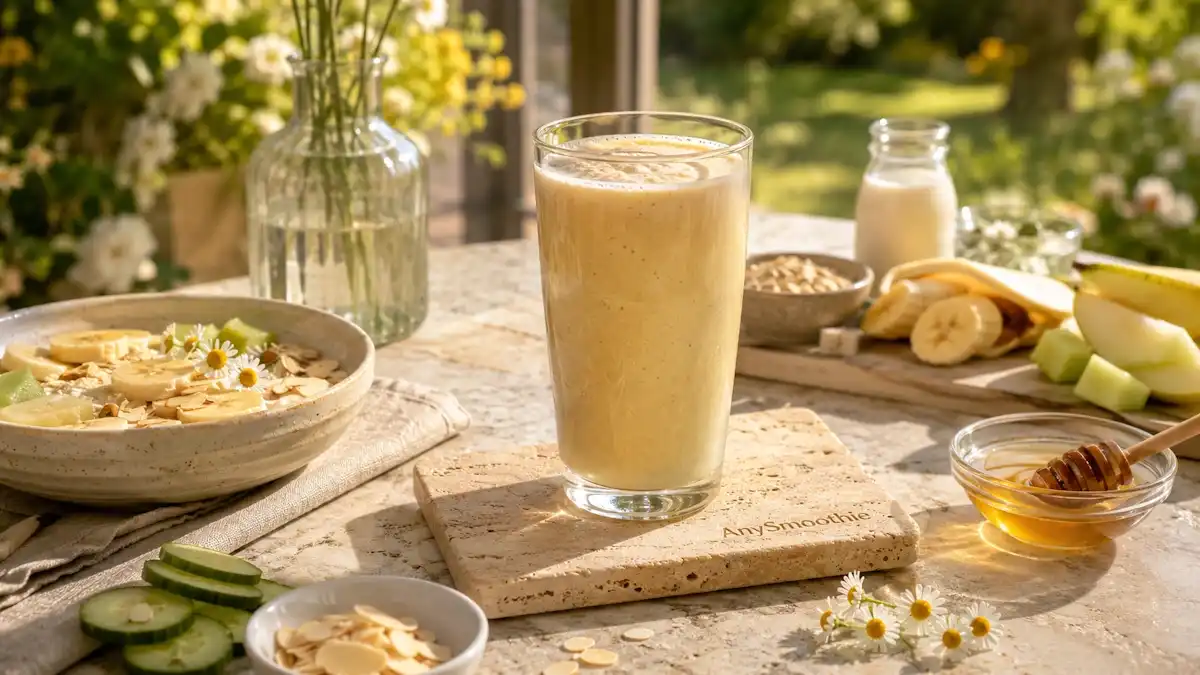
GERD can turn a normal smoothie into a test of patience. One blend feels soft and easy, another brings on that heavy, burning feeling fast.
What makes a smoothie GERD-friendly comes down to a few details, especially acid level, fat content, fiber, temperature, portion size, and ingredient choice. The goal is a drink that tastes good, feels light, and asks less from your stomach.
The best place to start is with simple ingredients and a balanced build. Then you can adjust one variable at a time without turning every breakfast into a guess.
What makes a smoothie GERD-friendly in the first place?
The short answer is balance. A reflux-aware smoothie keeps acid low, avoids heavy add-ins, and stays easy to sip. The same rule set shows up in gentle smoothie ingredient tips, where texture and portion size matter as much as fruit choice.
Keep acidity low to reduce reflux risk
High-acid fruit, citrus juice, and sharp add-ins can feel rough for some people. Milder choices, like banana, pear, and melon, are usually a better starting point.
If a smoothie tastes bright before you even sip it, it may be too aggressive for sensitive digestion.
Use the right balance of fiber, protein, and healthy fats
Fiber, protein, and fat help slow digestion and make a smoothie more filling. Still, balance matters more than loading the cup.
A tablespoon of chia or a small spoon of nut butter can add staying power. A heavy pour can make the blend feel thick and sit too long. Think steady fuel, not a milkshake that weighs everything down.
For a simple guide to fiber-rich foods, see the Mayo Clinic dietary fiber. Keep the mix steady and filling, not thick like a milkshake.
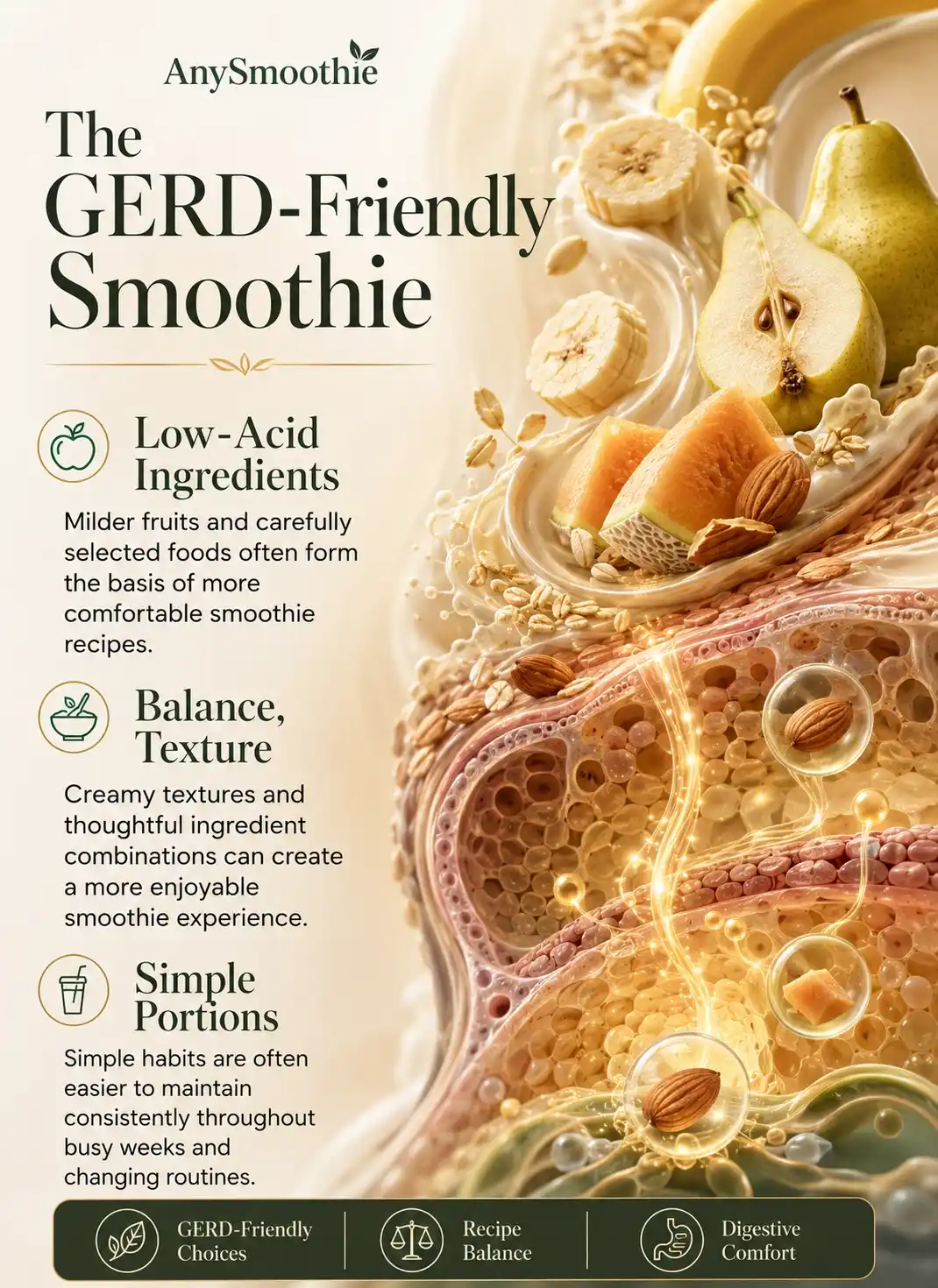
Choose a texture that is smooth, not heavy
A well-blended smoothie is easier to sip and easier on the throat. Seed-heavy blends, gritty powders, or too much ice can make the drink feel rough.
A lighter, creamier texture usually works better, especially if very cold drinks bother you. Let the blender run long enough to make the mix look even and soft.
Which ingredients usually work best in a GERD-friendly smoothie?
Once you know the rules, ingredient choice gets easier. Start with low-acid fruit, a mild liquid, and one modest source of protein or fiber. If you want a tighter fruit map, building a low acid smoothie breaks down the usual fruit choices.
The mix below is a practical starting point, not a rulebook.
| Ingredient | GERD fit | Why it helps | What to limit | Best use |
|---|---|---|---|---|
| Banana | Usually easy | Low acid and naturally creamy | Very large portions | Base fruit |
| Pear | Usually easy | Mild sweetness, light flavor | Pear juice concentrates | Fresh fruit layer |
| Oats | Usually easy | Soluble fiber adds body | Too much if you want a thin drink | Breakfast-style blends |
| Oat milk | Usually easy | Neutral and light | Sweetened versions | Liquid base |
| Chia seeds | Mixed | Adds fiber and a gel-like texture | More than 1 tbsp if you are sensitive | Small satiety boost |
| Silken tofu | Usually easy | Smooth protein without much fat | Extra-rich add-ins alongside it | Creamy protein base |
The pattern is simple, choose soft, mild ingredients first, then add only enough texture to make the smoothie filling.
Best fruits, liquids, and bases to start with
Bananas, pears, melons, and papaya are common starting points because they keep acid low and the texture soft. Oat milk, almond milk, and water also keep the blend light.
Plain yogurt can work for some people, but low-fat and unsweetened versions are easier to test than rich, flavored ones. If dairy feels uncertain, start with a plant-based liquid and build from there.
Add-ins that support satiety without making the drink too rich
Small amounts of oats, chia, plain protein powder, or silken tofu can help a smoothie hold you over. Keep the portion modest so the drink stays light.
A teaspoon of nut butter can add flavor, but a big scoop can tilt the blend toward heaviness. With reflux, a little often works better than a lot.
Ingredients to limit or test carefully
Citrus, chocolate, mint, caffeine, chili, and high-fat extras can be rough for many reflux-prone people. That does not mean they are banned forever.
It means they deserve separate testing, one at a time, when the rest of the smoothie is calm and simple. Personal tolerance matters more than any fixed list.
3 GERD-Friendly smoothie recipes
Banana Oat Calm
Ingredients
- 1 medium banana
- 1 cup oat milk
- 1/4 cup rolled oats
- 1 teaspoon chia seeds
Blend until smooth.
This stays mild because the fruit is soft, the liquid is neutral, and the fiber is modest.
Estimated Nutrition per Serving
Estimated with unsweetened oat milk.
- Calories: ~315 kcal
- Protein: ~7 g
- Carbohydrates: ~59 g
- Fat: ~7 g
- Fiber: ~8 g
- Sugars: ~20 g
Banana ripeness makes a noticeable difference in such a simple blend. A ripe, spotted banana gives a softer texture and fuller sweetness without needing to add anything else.
Pear Silk Blend
Ingredients
- 1 ripe pear
- 1 cup unsweetened almond milk
- 1/2 cup silken tofu
- A few ice cubes
Blend until smooth.
The pear keeps the flavor gentle, while the tofu adds creaminess without a heavy fat load.
Estimated Nutrition per Serving
Estimated with unsweetened almond milk and plain silken tofu.
- Calories: ~235 kcal
- Protein: ~10 g
- Carbohydrates: ~35 g
- Fat: ~8 g
- Fiber: ~7 g
- Sugars: ~20 g
Melon Oat Cream
Ingredients
- 1 cup cantaloupe
- 1/2 medium banana
- 3/4 cup water or oat milk
- 2 tablespoons rolled oats
- Small piece fresh ginger, optional
Blend until smooth.
This blend is light, slightly sweet, and easy to adjust.
If you want more flavor, a small piece of fresh ginger can work for some people, but test it carefully. Keep the first version simple so you know what your body likes.
Estimated Nutrition per Serving
Estimated with unsweetened oat milk and without optional ginger.
- Calories: ~230 kcal
- Protein: ~5 g
- Carbohydrates: ~45 g
- Fat: ~4 g
- Fiber: ~5 g
- Sugars: ~21 g
Cantaloupe can be surprisingly juicy, so blend before adding any extra liquid. Starting with slightly less oat milk helps preserve the creamy texture instead of turning the smoothie watery.
How to build a GERD-friendly smoothie that still tastes great
A good template is simple, one mild liquid, one to two cups of low-acid fruit, one small protein or fiber source, and one optional flavor boost. Keep the total around a single serving, then blend until it looks smooth and even.
A smoothie can feel gentle and still miss the mark if the cup gets too large.
If cold drinks bother you, let the smoothie sit for a few minutes before drinking. Earlier in the day is usually easier for reflux-prone readers, while late-night smoothies can feel heavy when the stomach should be winding down.
A simple formula for better balance
Use this as a repeatable base: 1 cup liquid, 1 cup fruit, 1 small add-in, then blend and taste. If it feels too thin, add a spoon of oats. If it feels too rich, pull back on the fat and keep the flavor simple.
When to drink it and how much to make
Smaller servings usually work better than oversized cups. A 10 to 12 ounce smoothie is often easier to manage than a large blender bottle.
Timing matters too. A smoothie that feels fine at breakfast may feel less comfortable close to bed, especially if it is thick or rich.
Conclusion
A GERD-friendly smoothie is usually lower in acid, moderate in fat, and easy to digest. It also respects portion size, which matters more than most people think.
The simplest move is to start with one safe base, then test one new ingredient at a time. That way, you learn what works for your body instead of guessing after a long ingredient list.
If you want a practical example, a banana smoothie for acid reflux can be a useful starting point because it combines mild ingredients, a naturally creamy texture, and a lower-acid flavor profile. Once you find a base that feels comfortable, it becomes much easier to experiment with other GERD-friendly ingredients.

Medical Disclaimer: AnySmoothie content is for educational purposes only and is not a substitute for professional medical advice. Consult a healthcare provider for personalized guidance. See our full Disclaimer & Terms of Use. AI Transparency: AnySmoothie may use AI to support content development. All content undergoes human editorial review for accuracy, clarity, and editorial quality. See our full AI Transparency.