
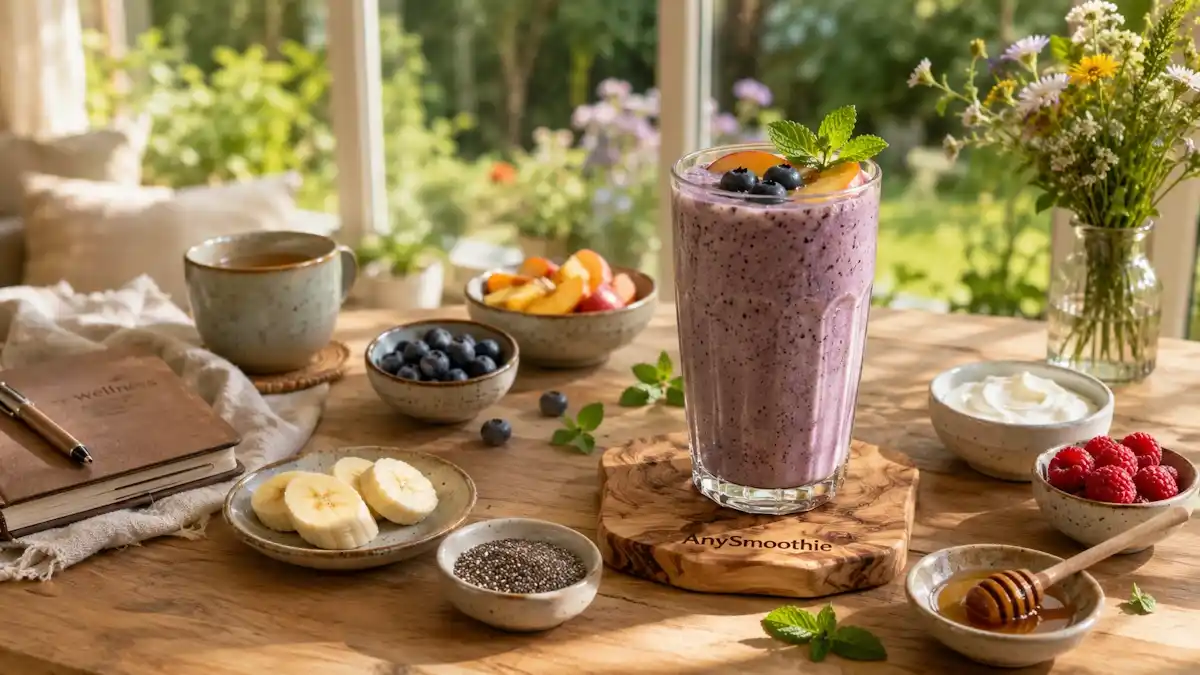
On flare days, low-energy mornings, and the hours after activity, cooking can feel like too much. Recovery smoothies for fibromyalgia give you a low-effort way to get fluids, calories, and nutrients when chewing, chopping, or standing at the stove feels rough.
They do not fix fibromyalgia. They can support hydration, steady energy, and nutrient intake when appetite drops or food feels hard to tolerate. The best blends are simple, gentle, and easy to change based on how your body feels that day.
What makes a smoothie a good recovery choice when you have fibromyalgia?
A good recovery smoothie does a few jobs at once. It brings liquid, which helps with hydration. It also gives protein, healthy fat, and easy-to-digest carbs, so the drink feels more complete than juice or a sweet snack.
That matters when fibromyalgia affects appetite, fatigue, or food tolerance. On those days, a full meal may feel too large, but a smoothie can still be manageable.
The Fibromyalgia Fund’s diet and nutrition guidance points in the same direction, with an emphasis on foods that are easier to live with on hard days. A smoothie fits that pattern because it asks less of your body and less of your time.
The best building blocks for steady energy and less crash
Protein helps slow digestion, so you do not hit a fast hunger wave an hour later. Greek yogurt, kefir, protein powder, and silken tofu all work well.
Fiber, healthy fats, and low-glycemic carbs add more staying power. Chia seeds, oats, nut butter, berries, and avocado can soften the blood sugar rise that often comes with sweeter drinks.
A short ingredient list often works better than a fancy one.
Ingredients that may be easier on a sensitive system
Many people do well with soft, mild ingredients. Bananas bring creaminess, berries add flavor, and spinach blends in without much texture.
Cucumber, oat milk, and kefir are also common choices because they keep the drink smooth. Tolerance is personal, though, so comfort matters more than any rule.
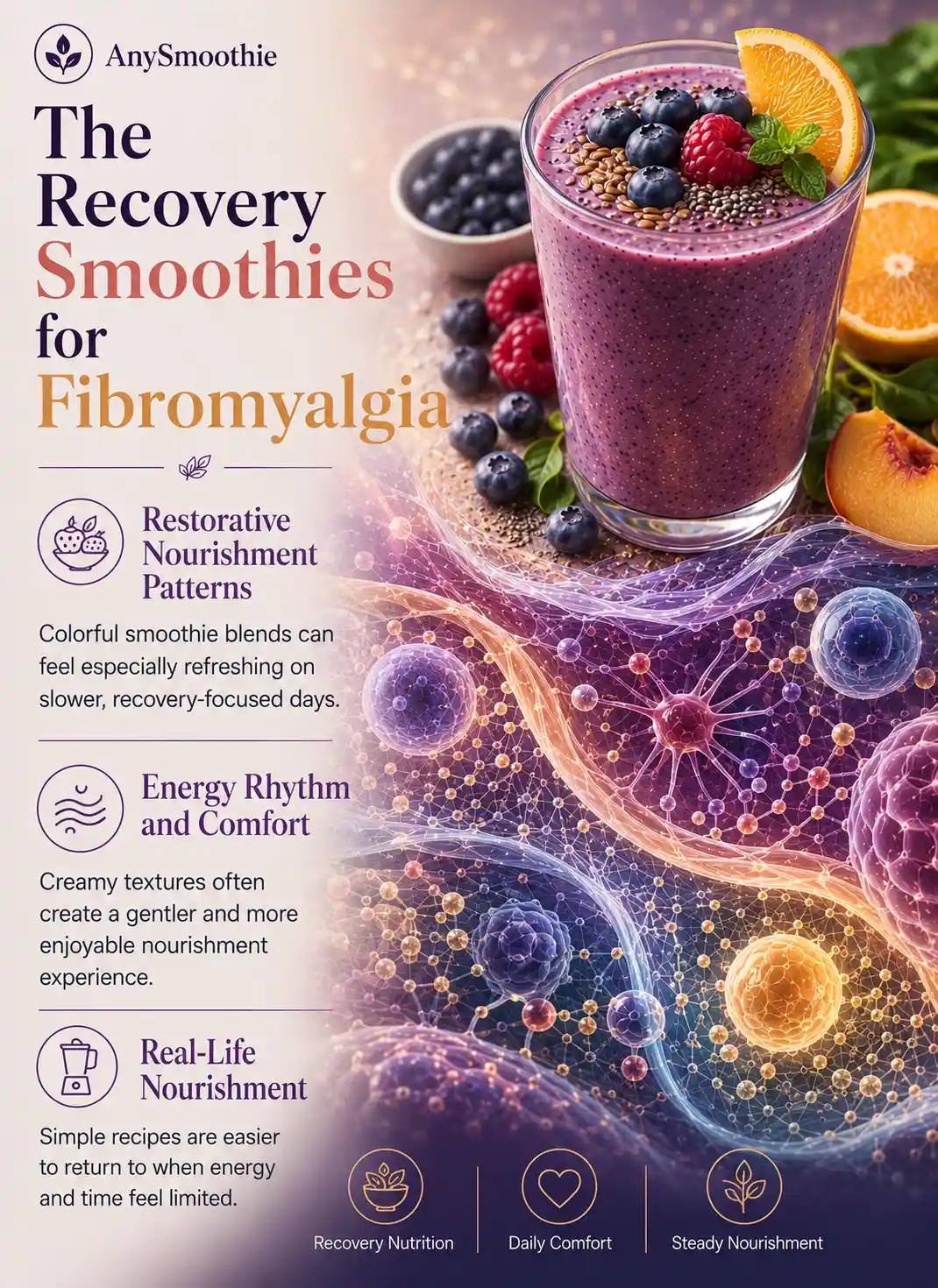
How to build a fibromyalgia-friendly smoothie without making symptoms worse
Start with liquid first, then add soft fruit, protein, fat, and any extras. That order helps the blender work faster and keeps the texture smoother.
A few common mistakes can backfire. Too much sugar can leave the drink tasting heavy. Too many ingredients can muddy the flavor. Very cold blends can bother people who are sensitive to temperature, so let frozen fruit sit for a minute if needed.
A review in nutritional interventions in fibromyalgia also points to a simple idea, food choices work best when they are repeatable and easy to tolerate. That is why small, steady adjustments matter more than perfect recipes.
A simple formula you can use every time
Use 1 liquid, 1 fruit, 1 protein, 1 fat, and 1 support ingredient. That structure keeps prep simple on low-energy days and makes portions easier to balance.
It also keeps you from tossing random extras into the blender. A smoothie with a clear base usually tastes better and sits better.
What to avoid if your body reacts badly to certain foods
Some people feel worse with excess added sugar, sugar alcohols, caffeine-heavy powders, dairy, or high-FODMAP fruit. That does not mean these ingredients are off-limits forever.
It means small tests help. Keep track of what you used, how much, and how you felt later.
3 Recovery smoothies for fibromyalgia
These three blends keep the ingredient list short and the prep simple.
| Recipe | Key ingredients | Main support goal | Texture or taste | Best time to use it |
|---|---|---|---|---|
| Berry Protein | mixed berries, Greek yogurt, chia, almond milk | balanced energy and easier mornings | creamy, lightly tart | after waking or before a busy day |
| Banana Oat | banana, oats, nut butter, protein source, oat milk | longer-lasting fullness | thick, mild, and comforting | midday slump or after activity |
| Green Recovery | spinach, cucumber, pear, kefir or protein base | hydration and a lighter sip | fresh, smooth, and mellow | when appetite is low |
The point is simple, each recipe gives you a different texture and energy profile without a long prep list.
Make smoothies work for your symptoms, budget, and energy level
Frozen fruit often costs less than fresh fruit, and it blends well. Store-brand yogurt, oat milk, and peanut butter also keep costs down.
Freezer packs help on rough mornings. Pre-portion fruit, greens, oats, and seeds into small bags, then keep protein powder or yogurt ready. That cuts decision fatigue before it starts.
Easy prep ideas for low-energy days
Keep a few shelf-stable items nearby, like oats, chia, nut butter, and powdered milk or protein. When energy is low, a short ingredient list makes the job easier.
A second blender cup or jar can also help. Less cleanup means fewer reasons to skip breakfast.
How to adjust a smoothie when your body feels off
If nausea shows up, make the blend thinner and lighter. If bloating is the problem, use less fiber and fewer add-ins.
On days with low appetite, choose milder flavors and smaller portions. You can always save the rest for later.
Conclusion
Smoothies work best as support, not a fix. They make it easier to get hydration, protein, and calories on days when fibromyalgia drains your energy.
Start with one simple recipe, then adjust the fruit, thickness, and protein until it fits your body. The best blend is the one you can use again when the next hard day shows up.
🛡️ Safety Notes & Dietary Interactions
- Hydration Support and Recovery Rhythm Balance: Recovery-oriented smoothies can provide fluids alongside calories and nutrients when appetite feels low or meal preparation feels overwhelming. Ingredients such as oat milk, cucumber, kefir, berries, and mild fruits help support hydration while keeping the smoothie easy to drink during lower-energy periods.
- Protein Stability and Energy Pacing Dynamics: Greek yogurt, kefir, silken tofu, and protein powders help create a more balanced recovery smoothie by slowing digestion and improving satiety. Pairing protein with fiber and healthy fats may support steadier energy availability compared to relying on fruit-heavy blends that digest quickly and often leave hunger returning sooner.
- Ingredient Simplicity and Sensory Tolerance Considerations: The article repeatedly emphasizes short ingredient lists because overly complex smoothies can become harder to tolerate and less practical to prepare. A simple combination of one liquid, one fruit, one protein source, one fat source, and one supportive ingredient often creates a smoother experience than layering multiple powders, supplements, and sweeteners together.
- Personal Food Triggers and Individual Adaptation: Fibromyalgia nutrition routines are highly individual. Some people may prefer limiting added sugars, sugar alcohols, highly caffeinated powders, dairy, or specific fruits depending on personal tolerance. Tracking ingredients and symptoms over time may help identify patterns that make future smoothie choices easier and more predictable.
FAQ
Why can smoothies be helpful on difficult fibromyalgia days?
On low-energy days, preparing and eating a full meal may feel exhausting. Smoothies offer a practical way to combine fluids, protein, carbohydrates, and healthy fats into a format that requires less chewing, preparation, and cleanup. The article presents them as supportive nutrition tools that help maintain hydration and nutrient intake when regular meals feel less manageable.
What makes a recovery smoothie more balanced and satisfying?
The article recommends combining a liquid base, fruit, protein source, healthy fat, and a supportive ingredient such as chia, oats, or spinach. This structure helps create a more complete nutritional profile and may support steadier energy patterns than smoothies built primarily around fruit or sweetened ingredients. Balance is emphasized more than any specific superfood.
Why are berries, bananas, oats, and chia used so often in recovery smoothies?
These ingredients provide texture, fiber, and flavor while remaining relatively easy to blend and adjust. Berries contribute color and taste, bananas improve creaminess, oats increase fullness, and chia adds fiber and thickness. Together they help create smoothies that feel more substantial without requiring long ingredient lists or complicated preparation steps.
How can someone adjust a smoothie when symptoms change from day to day?
The article encourages making small adjustments instead of completely rebuilding the recipe. On days with nausea, a thinner and lighter smoothie may feel better. When appetite is low, smaller portions and milder flavors can be useful. If bloating becomes an issue, reducing fiber and limiting extra add-ins may help create a gentler blend.
Why does the article focus so heavily on repeatability and convenience?
Consistency is presented as more important than perfection. Freezer packs, shelf-stable ingredients, short recipes, and simple preparation routines reduce decision fatigue and make it easier to maintain nutrition habits during difficult periods. The most valuable smoothie is usually the one that remains realistic to prepare when energy and motivation are limited.

Medical Disclaimer: AnySmoothie content is for educational purposes only and is not a substitute for professional medical advice. Consult a healthcare provider for personalized guidance. See our full Disclaimer & Terms of Use. AI Transparency: AnySmoothie may use AI to support content development. All content undergoes human editorial review for accuracy, clarity, and editorial quality. See our full AI Transparency.