
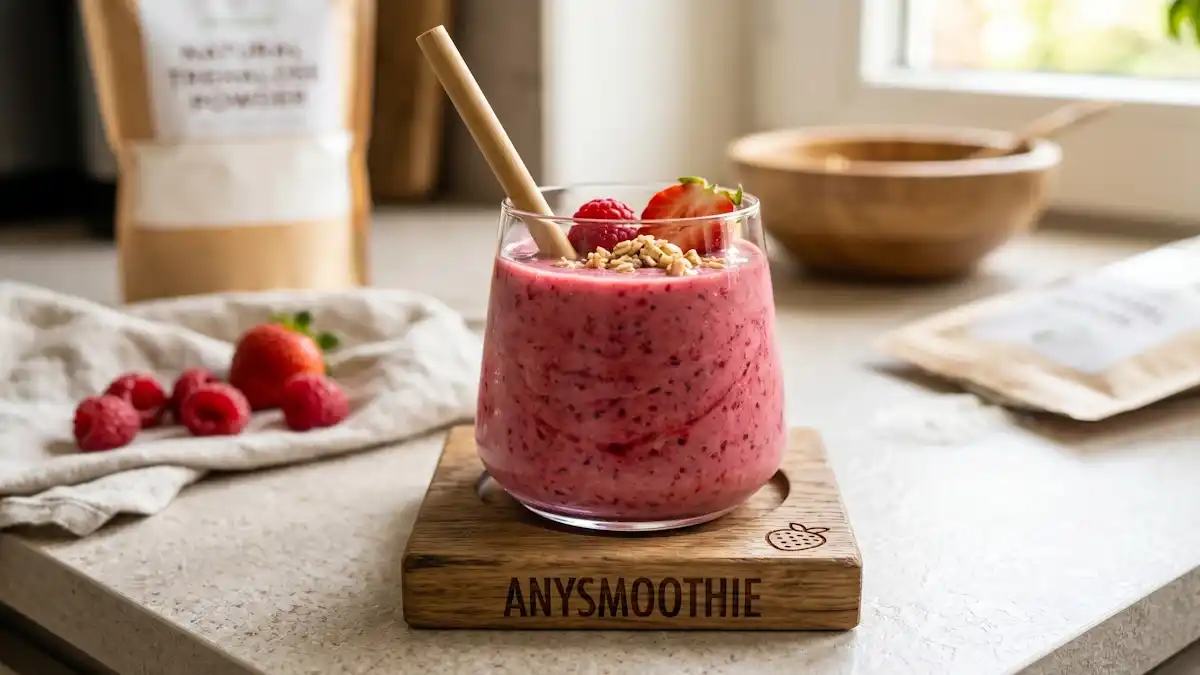
Protein folding is how a protein takes on the shape it needs to do its job. When that shape slips, cells can lose efficiency and build extra stress.
Trehalose gets attention because scientists study it for its links to protein stability and stress response. A trehalose smoothie for protein folding is a food-first way to explore that idea without making big claims. This article is educational, not medical advice, and the goal is practical, simple support through everyday ingredients.
A smoothie will not rewrite biology overnight. It can, however, make a trehalose-based routine easy to repeat.
What trehalose does in a smoothie and why it matters for protein folding
Trehalose is a disaccharide, which means it is made of two sugar units. It shows up in nature, and researchers study it because it can help proteins stay in better shape during stress. In lab settings, that matters when heat or drying pushes proteins toward unfolding.
A smoothie does not act like a switch. Still, it can be a useful delivery method for a trehalose-based nutrition habit. Trehalose is also discussed differently than table sugar, because the focus is less on sweetness and more on structure, stability, and how cells respond to stress. For a clear research example, see this study on trehalose and protein folding.
A smoothie won’t refold proteins on command, but it can make a steady routine easier to keep.
Protein folding, misfolding, and cellular stress in simple terms
Proteins are tiny tools. Each one needs the right shape to work well. If folding goes off, the cell may spend more energy fixing the problem or clearing out the damage.
Heat, oxidation, and poor metabolic balance come up often in research because they can strain that system. Trehalose gets interest because it may help support the cell’s own protein maintenance paths. The idea is support, not cure.
Why trehalose gets attention in biohacking and cell-support circles
Trehalose appeals to people who want simple ingredients with a real research trail. It mixes easily, tastes mild, and works in drinks without adding a heavy sweet note.
The more careful discussions focus on cellular resilience and natural stress response. A useful background piece from the NIH is this review on trehalose and protein structure. Evidence is still evolving, so it makes sense to keep expectations grounded.
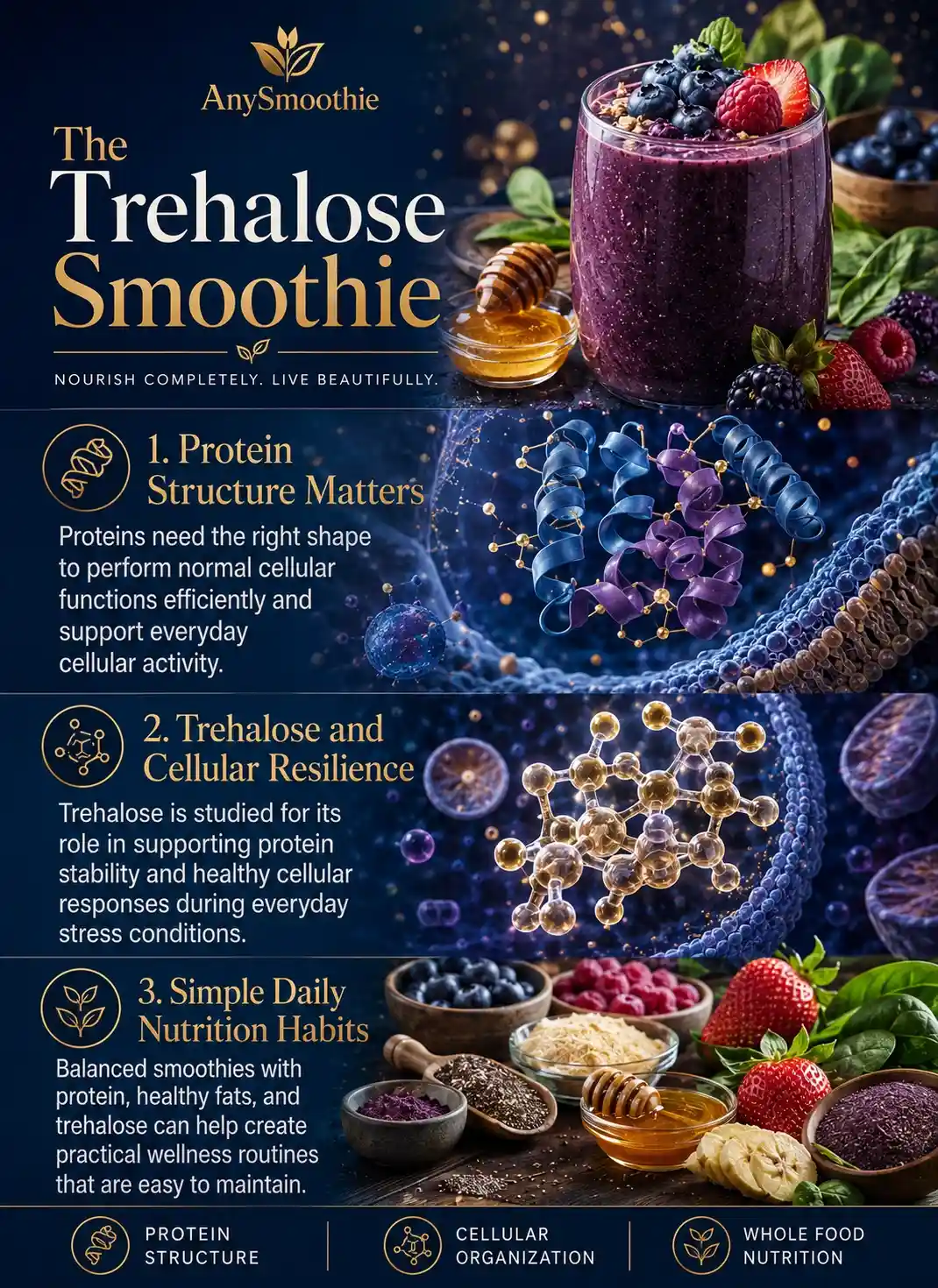
3 Trehalose smoothie recipes for protein folding
These three ideas keep the ingredient list short and the flavor easy to drink. The table below compares the best use for each blend.
| Smoothie name | Main ingredients | Trehalose amount | Best time to use | Key support goal |
|---|---|---|---|---|
| Morning steady blend | Protein powder, almond milk, banana, almond butter, cinnamon | 1 tsp | Breakfast | Balanced energy and gentle sweetness |
| Recovery citrus blend | Protein powder, coconut water, pineapple, ice, pinch of salt | 1 tsp to 2 tsp | After training | Hydration support and easy carb delivery |
| Low-sugar green blend | Spinach, avocado, plain protein, cucumber, lime, unsweetened milk | 1/2 tsp | Anytime | Light texture with less sugar load |
Use that table as a starting point, then adjust sweetness and texture to fit your taste. If you want more research context, the Journal of Biological Chemistry has a helpful piece on why trehalose is an exceptional protein stabilizer.
How to build a trehalose smoothie that supports protein stability
A good formula starts with balance. Trehalose gives the drink a mild sweet edge, protein gives it structure, and fiber or fat slows the pace of the blend. Frozen fruit makes the smoothie thicker, while fresh fruit keeps the flavor brighter.
Temperature matters too. Cold ingredients taste cleaner, and too much blending can thin the texture. If digestion is sensitive, keep the add-ins modest and avoid piling on too many fibers at once. The goal is a drink that fits daily nutrition, not a miracle fix.
Choosing the right protein, fruit, and fat balance
Protein powder, Greek yogurt, nut butter, avocado, and chia seeds all change the mouthfeel. Protein powder keeps the texture light, while yogurt or avocado makes it creamier.
Fruit should support the flavor, not hide it. Banana smooths sharp edges, berries add tartness, and citrus can wake up a bland mix.
Trehalose amount, sweetness level, and taste adjustments
Start small and taste as you go. Some people like a subtle sweet note, while others want the fruit to lead.
If the smoothie tastes flat, add more fruit before adding more trehalose. That usually gives a better balance and keeps the drink easy to finish.
Who may want to be careful with trehalose and smoothie add-ins
People with blood sugar concerns, digestive sensitivity, or special dietary needs should check labels and think about personal tolerance. Trehalose is only one part of the formula, and the other ingredients matter too.
Protein powders, gums, and sweeteners can change both taste and digestion. If you use a packaged powder, read the full label and watch for extra sugars or sugar alcohols. When a product list feels crowded, a simpler blend is often the better choice.
Conclusion
Trehalose in a smoothie is a practical way to explore support for protein folding and cellular resilience with food you can make at home. The best blends stay simple, use balanced ingredients, and keep expectations realistic.
Start with one recipe, notice the taste and texture, then adjust it to fit your routine. A small, steady habit often works better than a complicated one.
🛡️ Safety Notes & Dietary Interactions
- Trehalose Is Only One Part of the Picture: Protein folding and cellular maintenance depend on overall nutrition, sleep quality, physical activity, and stress management. A smoothie can support daily habits but should not be viewed as a standalone solution.
- Start With Modest Amounts: Trehalose has a mild taste, and small servings are usually enough for smoothie recipes. Gradual adjustments make it easier to assess flavor, texture, and personal tolerance.
- Watch Added Sugars Carefully: Many commercial protein powders, flavored yogurts, and smoothie ingredients already contain sweeteners. Keeping the ingredient list simple helps prevent unnecessary sugar accumulation within the blend.
- Choose Protein Sources That Fit Your Needs: Greek yogurt, kefir, whey protein, pea protein, soy protein, and nut-based ingredients each affect texture, digestion, and satiety differently. Selecting familiar ingredients often improves long-term consistency.
FAQ
What is trehalose and why is it connected to protein folding?
Trehalose is a naturally occurring sugar made of two glucose molecules. Researchers study it because of its ability to interact with proteins and cellular structures under stress conditions. Much of the interest comes from laboratory research examining protein stability, cellular resilience, and normal stress-response mechanisms.
Why do people add trehalose to smoothies instead of taking it alone?
Smoothies provide an easy way to combine trehalose with protein, fiber, healthy fats, and nutrient-dense foods. This creates a more balanced meal or snack while making the routine easier to repeat. The smoothie also helps distribute flavor and improve overall texture.
Does trehalose make smoothies taste very sweet?
Not usually. Trehalose has a milder sweetness compared with common table sugar. Most of the flavor in these recipes comes from ingredients such as berries, banana, pineapple, cocoa, cinnamon, citrus, or protein bases rather than the trehalose itself.
What ingredients pair best with trehalose in a smoothie?
The article highlights protein powders, Greek yogurt, kefir, almond milk, avocado, berries, banana, spinach, chia seeds, almond butter, pineapple, and citrus fruits. These ingredients help create balanced smoothies that provide texture, flavor, satiety, and broader nutritional value.
What is the most important takeaway about trehalose smoothies?
The article emphasizes realistic expectations. Trehalose is discussed as part of a broader nutrition pattern rather than a quick fix. A balanced smoothie that includes protein, fiber, healthy fats, hydration, and whole-food ingredients is likely more valuable than focusing on a single compound alone.

Medical Disclaimer: AnySmoothie content is for educational purposes only and is not a substitute for professional medical advice. Consult a healthcare provider for personalized guidance. See our full Disclaimer & Terms of Use. AI Transparency: AnySmoothie may use AI to support content development. All content undergoes human editorial review for accuracy, clarity, and editorial quality. See our full AI Transparency.