
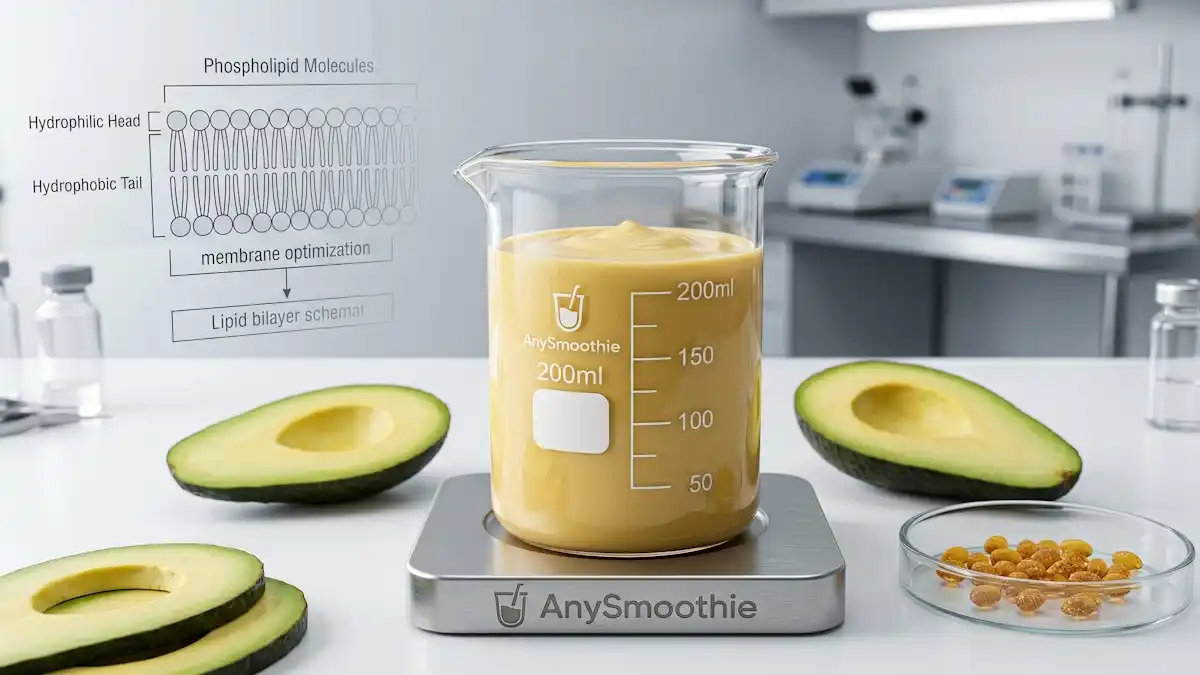
Cells pass messages in seconds, and they use small chemical signals to do it. Second messenger signaling is the chain that carries a message from the cell surface to the cell’s inner work. Membrane fats matter because they shape the surface where those signals begin.
That is where phospholipid smoothies for second messenger signaling come in. The idea is simple: use foods that support membrane building, steady fuel, and a clean mix of fats and cofactors. The goal is practical, not flashy. It is about giving your body raw materials it already uses.
How phospholipids help cells send faster signals
Phospholipids are the main building blocks of cell membranes. They form a flexible layer that holds the cell together and still lets receptors move and work. When the membrane has a good fat mix, signal proteins can interact more easily.
For a plain-English look at the topic, the NIH’s overview of second messengers is a solid reference. It shows how signals from the outside become action on the inside.
What second messenger signaling actually does
Second messengers are the cell’s internal text messages. A signal lands on a receptor, then small molecules like calcium, IP3, DAG, and cAMP carry that message deeper into the cell. Those messages help guide energy use, enzyme activity, and normal communication between cell parts.
That makes them part of everyday physiology, not a niche idea. When the signal is clear, the cell can respond with less friction.
Why membrane quality changes the signal
Membrane quality matters because lipids affect fluidity, receptor activity, and signal speed. A membrane with the right mix of fats moves well. A membrane that is too stiff can make signaling less smooth.
Phospholipids are part of that structure, and some lipids even act in signaling themselves. This lipid signaling to membrane proteins review shows how membrane lipids can interact with channels and transporters.
Membranes are not static walls. They are active surfaces that shape how signals travel.
Food choices can support healthy membrane building. That is the practical link between what you blend and what your cells can use.
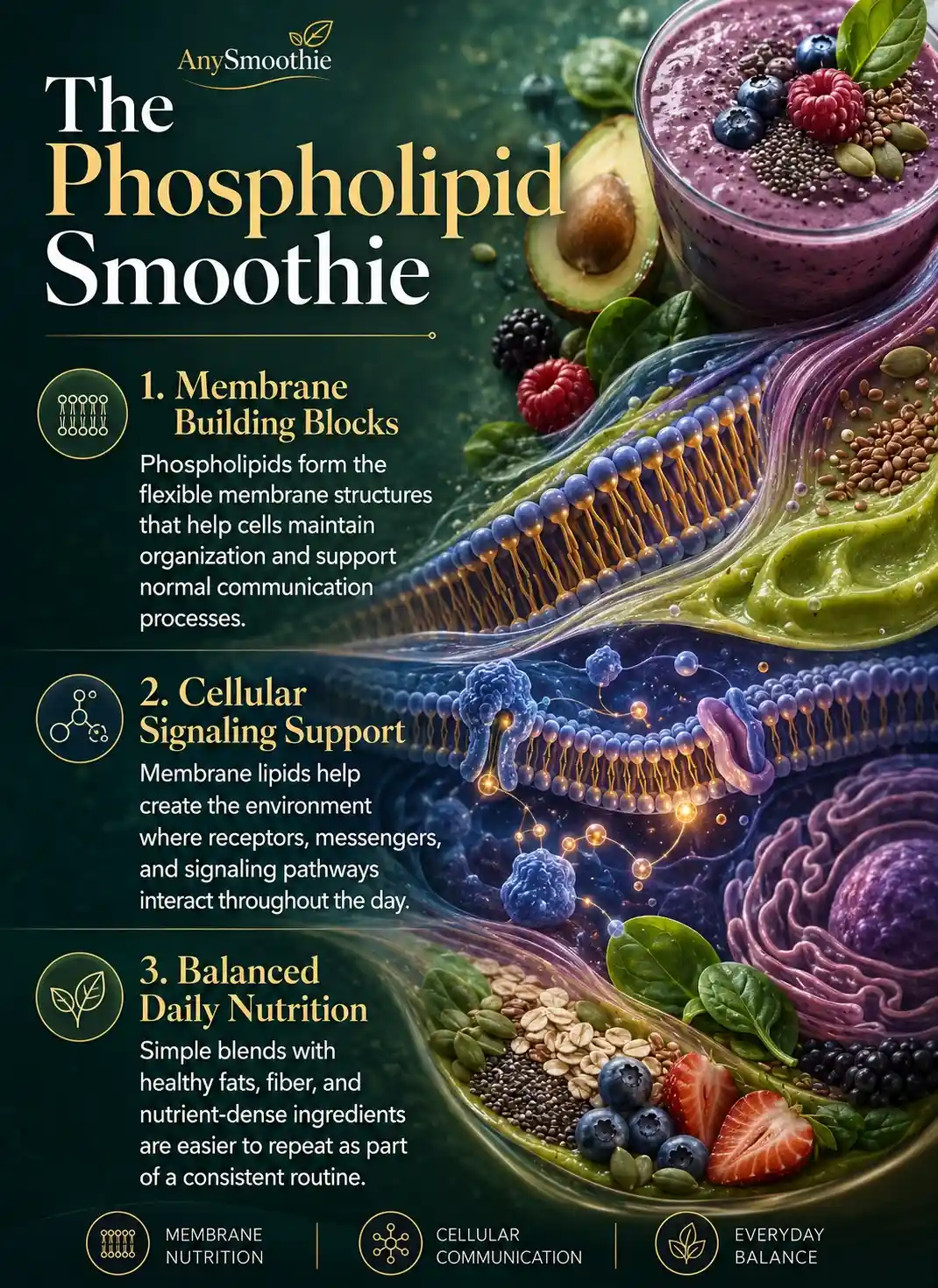
What goes into phospholipid smoothies for second messenger signaling
The best blends use foods that bring phospholipids, choline, omega-3s, and antioxidant support. A smoothie does not need to be complex. It only needs the right mix of fat, fiber, and flavor.
A broader ScienceDirect overview of membrane phospholipids is helpful if you want more background on why these fats matter in cell structure.
| Ingredient | Phospholipid support | Main nutrients | Taste | Prep notes |
|---|---|---|---|---|
| Sunflower lecithin | Direct phospholipid source | Phospholipids, choline support | Neutral | Start small, then adjust |
| Avocado | Supports a fat-rich base | Monounsaturated fat, fiber | Creamy, mild | Use half for most blends |
| Chia seeds | Fat and texture support | Fiber, omega-3 ALA | Lightly nutty | Soak if you want less grit |
| Kefir or yogurt | Helps round out the base | Protein, fat, live cultures if tolerated | Tangy, smooth | Works well with berries |
| Ground flax | Adds lipid support | Omega-3 ALA, fiber | Nutty | Grind for easier blending |
The takeaway is simple. Lecithin gives the most direct phospholipid support, while the other foods help the smoothie feel balanced and usable.
Best food sources to blend into the base
Sunflower lecithin is the easiest add-in if you want a direct phospholipid source. Egg-yolk lecithin can also fit if that matches your diet. Avocado gives a creamy base, and it blends well with greens or citrus.
Yogurt or kefir adds body and protein if you tolerate dairy. Chia and flax bring fiber plus omega-3 fats, so they help the smoothie feel complete. Hemp hearts, walnuts, and a little nut butter also fit well when you want more richness.
How to keep the recipe balanced and easy to digest
Keep the fat level moderate, because too much can make the smoothie heavy. Keep the fiber moderate too, because a very thick blend can feel rough on the stomach. Fruit should add taste, not take over the whole recipe.
A simple structure works best: one fat source, one fiber source, one protein source if you want more staying power, and fruit only where it helps the flavor. Choose ingredients based on tolerance and preference, because a recipe you can repeat matters more than a perfect formula.
3 Phospholipid smoothies for second messenger signaling
These three blends keep the idea simple. Each one has a different flavor, so you can match it to your routine.
When a phospholipid smoothie makes sense and when it does not
These smoothies fit best when you want a higher-fat breakfast, a more structured snack, or an easy way to work in seeds and lecithin. They also make sense if you prefer a drink that feels more like a small meal than a juice.
They may not fit if you already eat a rich breakfast, if you want a very light morning, or if thick blends bother your digestion. Some people also prefer their fats and protein in solid meals, and that works too.
Simple swaps for different diets
Dairy-free blends can use soy milk, almond milk, or coconut yogurt. Egg-free versions can skip egg lecithin and use sunflower lecithin instead. Higher-protein blends can add Greek yogurt, skyr, soy yogurt, or silken tofu. Lower-sugar blends can lean harder on greens, berries, and lemon.
Signs your smoothie is too much or too little
If you feel too full, bloated, or sluggish after drinking it, the blend is probably too dense. If you get hungry again very fast, it may need more protein, fat, or fiber. Texture matters too, because a smoothie you enjoy is more likely to stay in your routine.
Conclusion
Phospholipid smoothies for second messenger signaling fit a simple biohacker-style routine because they support the materials cells already use. They bring membrane fats, choline-rich ingredients, and steady fuel into one glass.
Start with one recipe, keep the parts you like, and adjust the fat, fruit, and texture to match your day. Small, repeatable choices often work better than complicated rules.

Medical Disclaimer: AnySmoothie content is for educational purposes only and is not a substitute for professional medical advice. Consult a healthcare provider for personalized guidance. See our full Disclaimer & Terms of Use. AI Transparency: AnySmoothie may use AI to support content development. All content undergoes human editorial review for accuracy, clarity, and editorial quality. See our full AI Transparency.