
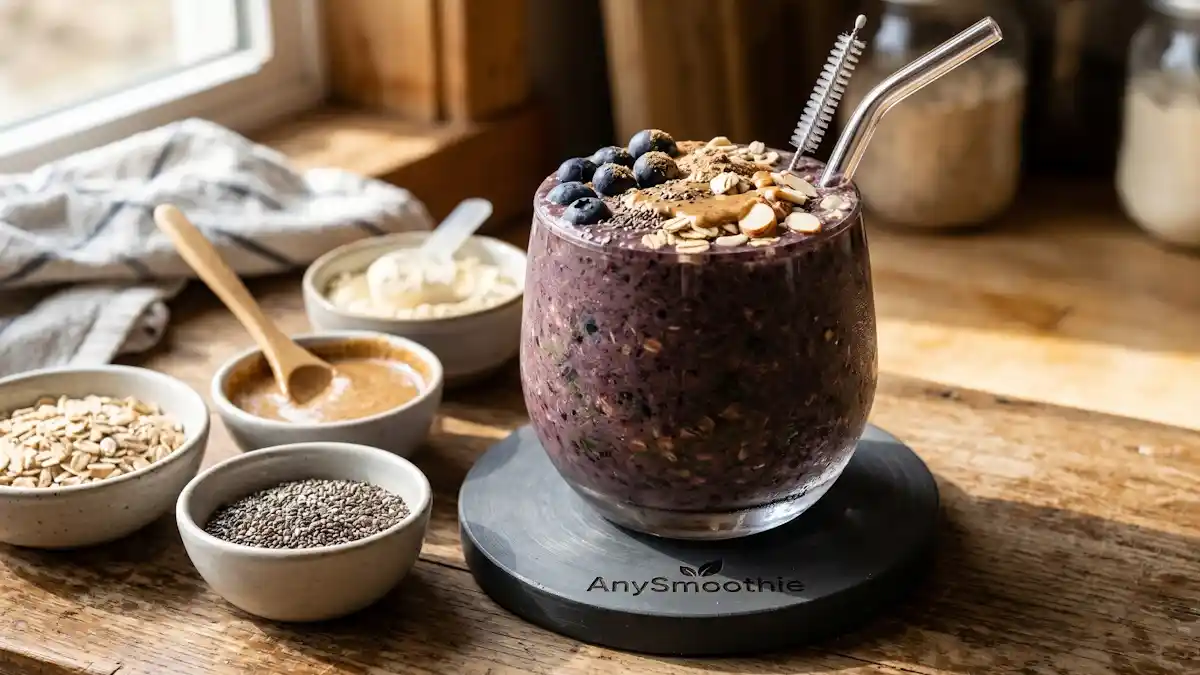
Ever finish a smoothie and feel hungry again an hour later? That usually happens because the “smoothie” was really just fruit and liquid. It tastes great, but it doesn’t act like a meal.
This guide is for making filling meal replacement smoothies that keep you satisfied for 3 to 5 hours. You’ll learn a simple formula (protein, fiber, fat, and enough calories), plus an easy build-your-own system and flexible templates.
It’s meant for busy mornings, post-workout refueling, or a light lunch when you still want balanced nutrition. It can also work for weight loss goals or for weight gain smoothies, depending on portions and add-ins.
What makes meal replacement smoothies actually filling? The simple formula
A meal replacement smoothie should do what a plate of food does. It should quiet hunger, support energy, and hold you over until the next meal. To get there, you need more than fruit.
Think of fullness like a chair with four legs. If one leg is missing, you wobble.
1) Protein (the “stay full” anchor)
Protein triggers fullness signals and helps prevent that quick crash. It’s also key if you’re using smoothies as healthy shake meals after workouts, because it supports muscle repair.
2) Fiber (the slow-down)
Fiber adds bulk and slows digestion. It also helps make smoothies thicker and more “food-like,” especially when you use oats, chia, or berries.
3) Healthy fats (the long burn)
Fat slows stomach emptying. In other words, it helps the smoothie “stick” with you. A tablespoon of nut butter or a quarter avocado changes everything.
4) Enough total calories (the part people skip)
If your smoothie only has 200 calories, your body treats it like a snack. A meal replacement usually lands higher, even for weight loss, because it needs to replace food, not tease your appetite.
Here are simple targets that work for many adults (adjust for your body size and goals):
- Protein: 25 to 35 g
- Fiber: 8 to 12 g
- Fat: 10 to 20 g
- Calories: 400 to 700 (lower for weight loss, higher for weight gain or active days)
So what’s the difference between a snack smoothie and a meal replacement? A snack smoothie might be fruit plus water or juice. A meal replacement adds protein and at least one fiber source and one fat source. For more examples of what turns a smoothie into a full meal, see this practical breakdown on making a smoothie a complete meal.
Texture matters too. Thicker smoothies slow you down, which helps satisfaction. Toppings can help as well, for example a spoon of granola or chopped nuts. That adds light chewing, which makes your brain register “I ate.”
A good rule: if you can drink it in 60 seconds, it probably won’t feel like lunch.
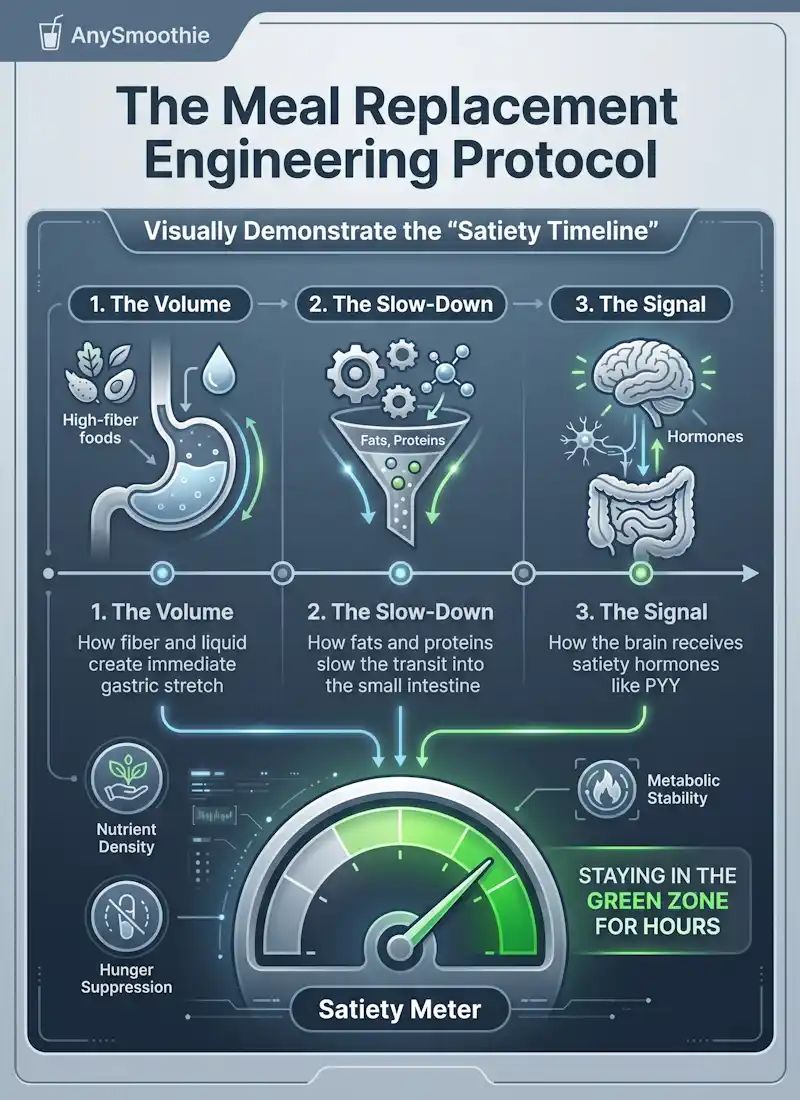
Protein first: how much you need, plus easy ways to hit it
If you only change one thing, raise protein. Higher protein almost always improves fullness.
Easy protein options (pick what you tolerate and enjoy):
- Greek yogurt (plain works best)
- Cottage cheese (blends creamier than most people expect)
- Milk (dairy milk adds protein and calories)
- Soy milk (one of the best high-protein non-dairy picks)
- Whey or casein protein powder
- Pea protein (common plant option)
- Silken tofu (neutral taste, smooth texture)
A quick way to estimate: most protein powders add about 20 to 25 g per scoop, Greek yogurt adds roughly 15 to 20 g per cup, and soy milk adds about 7 to 9 g per cup (varies by brand). Combine two sources and you usually hit the “meal” range.
When choosing a protein powder, focus on three things: taste you’ll actually drink, digestion (some people do better with whey isolate or plant blends), and third-party testing if you want extra quality checks. If you want more ideas for structuring a protein-forward smoothie, this guide on how to create a meal replacement smoothie lays out a helpful framework.
Fiber plus fat: the combo that slows digestion and keeps hunger away
Fiber and fat are the difference between “yum” and “I’m still thinking about snacks.”
Fiber sources that blend well:
- Berries (especially raspberries and blackberries)
- Oats (quick or rolled)
- Chia seeds (thickens fast)
- Ground flaxseed (mild, nutty taste)
- Leafy greens (spinach disappears in a strong flavor base)
- White beans (cannellini or great northern, mild and creamy)
Healthy fats that don’t wreck the flavor:
- Nut butter (peanut, almond, cashew)
- Avocado (small amount adds creaminess)
- Hemp, chia, or flax seeds
- Olive oil (a teaspoon can help in savory or chocolate smoothies)
A few simple swap ideas make a big difference:
Banana-only sweetness becomes more filling when you do banana plus oats plus chia. Juice becomes a better base when you use milk or soy milk. Sweetened yogurt becomes more balanced when you use plain yogurt and sweeten with fruit instead.
If you want even more ingredient ideas for weight loss-friendly shakes, this list of meal replacement shake add-ins for weight loss is a useful reference.
Build your own smoothie step by step (with a “choose one” list)
Once you memorize the build, you stop hunting for recipes. You can open the fridge and make a protein rich smoothie that still tastes like something you’d order.
Start with this simple structure, then adjust portions based on hunger, activity, and goals. If you’re aiming for weight loss, keep fats and add-ins measured. If you’re aiming for high calorie smoothies, double down on calorie-dense ingredients like nut butter and full-fat dairy.
Choose one item from each bucket (or combine where it makes sense):
- Liquid (1 to 1.5 cups): milk, soy milk, kefir, water (with yogurt), or an unsweetened non-dairy milk
- Protein (aim 25 to 35 g): 1 scoop protein powder, or 1 cup Greek yogurt, or 3/4 cup cottage cheese, or 6 to 10 oz silken tofu
- Fiber carb (choose 1 to 2): 1/2 cup berries, or 1/2 banana, or 1/3 cup oats, or 1 to 2 tablespoons chia, or a big handful of spinach
- Healthy fat (1 to 2 tablespoons): nut butter, seeds, or 1/4 avocado
- Flavor boosters (to taste): cocoa, cinnamon, vanilla, coffee, citrus zest, or a pinch of salt
That pinch of salt sounds odd, yet it can make fruit taste sweeter and chocolate taste richer. Use a tiny amount, not a “salted rim” situation.
For texture, blend in this order: liquid first, then greens (if using), then frozen fruit and powders, and ice last. Blending greens with liquid first helps avoid leafy bits. Adding ice last keeps it from floating and grinding the blender.
You’ll know you built a real meal when it pours slowly, looks creamy, and doesn’t separate fast.
The base picks: liquids that make it creamy, not watery
The liquid sets the tone. It affects protein, calories, and how “milky” the smoothie feels.
Dairy milk makes it naturally creamy and bumps protein and calories. That’s helpful for weight gain smoothies or for anyone who gets hungry fast. Soy milk is the closest non-dairy match for protein, so it’s a strong pick for balanced nutrition smoothies. Kefir adds tang and probiotics, and it pairs well with berries and honey.
Water can work, but it needs support. Use water plus Greek yogurt or cottage cheese to keep it from tasting thin. On the other hand, fruit juice often leads to quicker hunger because it’s easy calories without much fiber. If your goal is longer-lasting fullness, skip juice most days.
If you want a recipe-style example of a classic meal replacement build, this meal replacement smoothie recipe shows how a few smart ingredients can turn into a true lunch.
Add-ins that make it a real meal (without making it taste weird)
Some of the most effective add-ins sound “too healthy” until you try them.
Oats blend into a mild, creamy base, especially with vanilla and cinnamon. Chia thickens fast, so start with 1 tablespoon and scale up. Ground flax adds a nutty note that works in berry, banana, and chocolate smoothies. Nut butter tastes like dessert and raises calories quickly. Avocado disappears behind cocoa or berries if you keep it to about 1/4 fruit.
Two “secret” thickness tools: frozen cauliflower and white beans. Frozen cauliflower adds body with almost no taste, while white beans add creaminess and fiber. Rinse canned beans well, then start with 1/4 cup.
For sweetness, use fruit first. If it still tastes flat, add half a date or a small drizzle of honey. Also, try vanilla extract or cinnamon before adding more sugar.
Recipes and variations for common goals (weight loss, weight gain, and active days)
These templates are meant to be mixed and matched. Each one uses the same fullness logic: protein plus fiber plus fat plus enough calories. Calories and protein are rough estimates, because brands and portions vary.
5 filling meal replacement smoothie templates you can mix and match
1) High-Protein Berry Oats (Balanced Lunch)
Ingredients
- 1 cup unsweetened soy milk
- 1 cup frozen mixed berries
- ⅓ cup rolled oats
- 1 scoop vanilla protein powder
- 1 tablespoon chia seeds
- Pinch of salt
- Squeeze of fresh lemon juice, optional
Pour the soy milk into the blender first. Add the oats, protein powder, frozen berries, chia seeds, salt, and lemon juice if using. Blend until thick and completely smooth.
Why it keeps you full: oats, berries, and chia provide substantial fiber, while soy milk and protein powder contribute protein. Together they create a filling, nutrient-dense smoothie that works well as a more substantial lunch option.
Estimated Nutrition per Serving
- Calories: ~500 kcal
- Protein: ~38 g
- Carbohydrates: ~63 g
- Fat: ~13 g
- Fiber: ~16 g
- Sugars: ~18 g
2) Peanut Butter Banana “High Calorie” (Weight Gain)
Ingredients
- 1½ cups whole milk
- 1 medium banana
- 2 tablespoons peanut butter
- 1 scoop whey protein
- 1 tablespoon ground flaxseed
- 1 tablespoon honey, optional
- ½ cup ice, optional
Pour the milk into the blender first. Add the banana, peanut butter, whey protein, ground flaxseed, honey if using, and ice. Blend until creamy and completely smooth.
Why it keeps you full: whole milk, peanut butter, and whey provide a substantial combination of protein, fat, and energy, while banana and optional honey increase the carbohydrate content. This calorie-dense smoothie can make it easier to increase total energy intake when weight gain is the goal.
Estimated Nutrition per Serving
- Calories: ~680 kcal
- Protein: ~45 g
- Carbohydrates: ~64 g
- Fat: ~30 g
- Fiber: ~7 g
- Sugars: ~43 g
If I were trying to increase calories gradually, I’d make the smoothie without the honey first. The milk, peanut butter, banana, and protein already create a substantial drink, and the honey can always be added later if more energy is needed.
3) Chocolate Cherry Recovery (Active Days)
Ingredients
- 1 cup low-fat milk
- 1 cup frozen cherries
- 1 scoop chocolate protein powder
- ¾ cup plain Greek yogurt
- 1 tablespoon almond butter
- 1 teaspoon unsweetened cocoa powder
- ½ cup ice, optional
Pour the milk into the blender first. Add the Greek yogurt, frozen cherries, protein powder, almond butter, cocoa, and ice if using. Blend until thick and completely smooth.
Why it keeps you full: milk, Greek yogurt, and protein powder provide high-quality protein, while cherries contribute carbohydrates that can help replenish glycogen after exercise. Almond butter adds unsaturated fat and additional energy, making this a substantial option for active days.
Estimated Nutrition per Serving
- Calories: ~590 kcal
- Protein: ~50 g
- Carbohydrates: ~61 g
- Fat: ~18 g
- Fiber: ~7 g
- Sugars: ~43 g
For another high-protein example with additional fiber ideas, see this high protein smoothie recipe.
4) Green Apple Cinnamon (Lighter, Higher Fiber)
Ingredients
- 1 cup cold water
- ¾ cup plain Greek yogurt
- 1 small apple, cored and chopped
- 1 packed cup spinach
- ⅓ cup rolled oats
- 1 tablespoon chia seeds
- ½ teaspoon ground cinnamon
- 1 tablespoon fresh lemon juice
Pour the water into the blender first. Add the Greek yogurt and spinach, followed by the apple, oats, chia seeds, cinnamon, and lemon juice. Blend until completely smooth.
Why it keeps you full: apple, oats, chia, and spinach contribute fiber and volume, while Greek yogurt provides protein. This combination makes the smoothie relatively substantial without relying on large amounts of added fat or sweeteners.
Estimated Nutrition per Serving
- Calories: ~375 kcal
- Protein: ~21 g
- Carbohydrates: ~59 g
- Fat: ~8 g
- Fiber: ~13 g
- Sugars: ~25 g
5) Coffee Breakfast Smoothie (Morning Meal)
Ingredients
- ¾ cup cold brew coffee
- ¾ cup unsweetened soy milk
- 1 medium frozen banana
- 1 scoop vanilla protein powder
- 1 tablespoon peanut butter
- 1 tablespoon unsweetened cocoa powder
- ¼ cup rolled oats, optional
Pour the cold brew and soy milk into the blender first. Add the frozen banana, protein powder, peanut butter, cocoa, and oats if using. Blend until creamy and completely smooth.
Why it keeps you full: soy milk, protein powder, and peanut butter provide protein, while banana and optional oats contribute carbohydrates and fiber. Cold brew adds caffeine, which can support alertness, although individual responses vary and caffeine itself should not be relied upon for satiety.
Estimated Nutrition per Serving
- Calories: ~495 kcal
- Protein: ~39 g
- Carbohydrates: ~59 g
- Fat: ~15 g
- Fiber: ~10 g
- Sugars: ~22 g
If a smoothie tastes “healthy” in a bad way, it usually needs salt, acid (lemon), or a stronger flavor (cocoa, coffee, vanilla).
Make it part of your week: prep tips, storage, and a simple smoothie diet plan idea
Consistency beats perfection. If you want filling meal replacement smoothies to become a habit, remove friction.
Freezer packs help. Add frozen fruit, spinach, and dry items like oats or chia to a freezer bag. In the morning, dump the pack into the blender, add liquid and protein, then blend. Some people freeze yogurt in cubes, but texture can get grainy after thawing. Instead, keep yogurt in the fridge and add it fresh.
For storage, smoothies taste best right away. If you must store one, keep it in the fridge in a sealed jar and drink within 24 hours. Expect some separation, so shake it hard.
If you want a simple smoothie diet plan idea that still includes real food, try this 3-day pattern:
Day 1: smoothie for breakfast, normal lunch, normal dinner.
Day 2: normal breakfast, smoothie for lunch, normal dinner.
Day 3: smoothie for breakfast, normal lunch, normal dinner.
Keep the other meals solid and satisfying. Add crunchy foods sometimes, because chewing helps your brain feel fed. Also, drink water. Thicker smoothies plus higher fiber can leave you feeling “off” if you’re dehydrated.
Conclusion
The best filling meal replacement smoothies aren’t complicated. They follow the same meal logic every time: protein, fiber, healthy fat, and enough calories to match your goal. Start with one template you like, then adjust thickness and portions until it keeps you full for 3 to 5 hours.
If you want a quick screenshot-friendly reminder, use this checklist:
- 25 to 35 g protein (powder, yogurt, tofu, or cottage cheese)
- 8 to 12 g fiber (berries, oats, chia, greens, or beans)
- 10 to 20 g fat (nut butter, seeds, avocado)
- 400 to 700 calories based on weight loss or weight gain needs
- Thick texture, drink slowly, add a topping if you rush meals
If you have diabetes, kidney disease, you’re pregnant, or you’re replacing most meals with smoothies, talk with a clinician or dietitian first. Your best smoothie is the one that fits your body and your day.
🛡️ Safety Notes & Contraindications: Meal replacement smoothies
Kidney Function: high-protein smoothies (exceeding 40-50g per serving) can place extra strain on the kidneys; if you have pre-existing renal issues, consult your doctor before using these as daily meal replacements.
Rapid Fiber Increase: jumping from 0g to 12g of fiber via chia or oats in one smoothie can cause significant bloating and abdominal cramps; scale up the fiber content over 7-10 days.
Dehydration Risk: fiber absorbs large amounts of water; if you do not increase your daily water intake alongside these smoothies, you may experience constipation.
Caloric Underestimation: for weight loss, be careful with “healthy” fats; two tablespoons of peanut butter can add 190 calories without significantly increasing the volume of the drink.
Diabetes Management: meal replacement smoothies containing dates, bananas, or honey can cause rapid glucose spikes; prioritize low-glycemic berries and high protein/fiber ratios to stabilize blood sugar.
FAQ
How does “Protein Anchoring” regulate the physiological signals of hunger?
Protein is the most thermogenic macronutrient and a primary driver of satiety. Biochemically, the intake of 25–35g of protein (from whey, soy, or Greek yogurt) stimulates the release of peptide YY (PYY) and glucagon-like peptide-1 (GLP-1), which signal to the brain that the body is nourished. Supporting this physiological system through protein anchoring optimizes the natural pathways of appetite control, ensuring the biochemical mechanics of satiety are active long after the smoothie is consumed.
Why is “Lipid-Induced Gastric Delay” essential for long-term fullness?
Healthy fats, such as those found in nut butters or avocado, act as a metabolic brake. Biochemically, lipids trigger the secretion of cholecystokinin (CCK), a hormone that slows down the rate at which the stomach empties into the small intestine. Supporting this physiological system through the inclusion of 10–20g of healthy fats optimizes the natural pathways of digestion, ensuring the biochemical mechanics of the meal provide a “slow-burn” energy source rather than a quick spike.
How does “Fiber Viscosity” contribute to the rheology of satiety?
Fiber adds structural bulk and changes the viscosity (thickness) of the smoothie. Biochemically, soluble fibers like beta-glucans in oats or mucilage in chia seeds form a gel-like matrix that slows the absorption of glucose. Supporting this physiological system through high-fiber add-ins optimizes the natural pathways of nutrient partitioning, facilitating the biochemical mechanics of steady blood sugar and sustained energy levels throughout the morning or afternoon.
What is the role of “Mitochondrial Priming” in a high-calorie weight gain smoothie?
For those seeking weight gain, the goal is to provide a dense caloric load that the body can efficiently partition into muscle or energy stores. Biochemically, combining complex carbohydrates (oats) with clean fats (hemp seeds) provides the mitochondria with a steady supply of substrates for ATP production. Supporting this physiological system through calorie-dense ingredients facilitates the biochemical mechanics of “energy surplus,” ensuring the body has the fuel required for growth and recovery without metabolic drag.
Why does “Oral Processing Time” affect the brain’s perception of a meal?
Drinking a smoothie too quickly can bypass the cephalic phase of digestion, where the brain registers food intake. Biochemically, a thicker texture or the addition of a crunchy topping (like nuts or cacao nibs) increases oral processing time and sensory feedback. Supporting this physiological system optimizes the natural pathways of the “satiety cascade,” ensuring the biochemical mechanics of the brain and gut are synchronized to recognize the smoothie as a substantial meal.

Medical Disclaimer: AnySmoothie content is for educational purposes only and is not a substitute for professional medical advice. Consult a healthcare provider for personalized guidance. See our full Disclaimer & Terms of Use. AI Transparency: AnySmoothie may use AI to support content development. All content undergoes human editorial review for accuracy, clarity, and editorial quality. See our full AI Transparency.