
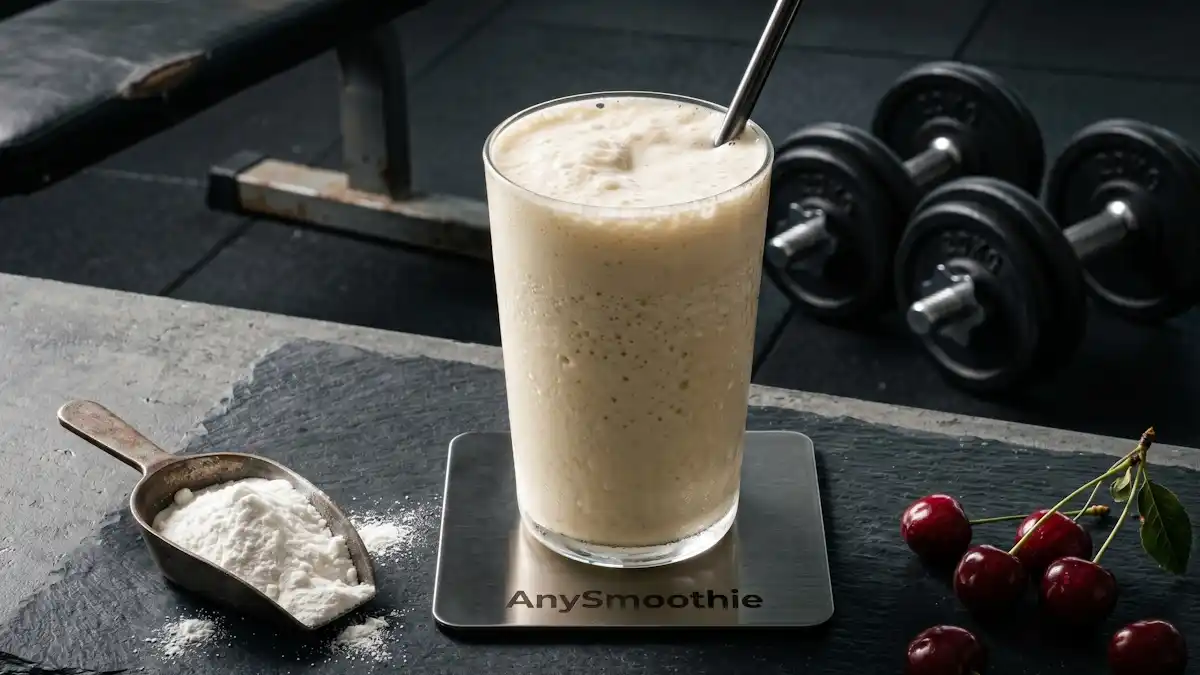
Myofibrillar synthesis is the process that builds the contractile proteins inside muscle fibers. When you want a simple protein strategy, a smoothie can do a lot of the heavy lifting, but only if the timing and ingredients fit the training window.
The best smoothie protocols for myofibrillar synthesis are built around three things, enough protein to hit the leucine threshold, enough carbs when fuel matters, and enough digestibility to get amino acids where they need to go. That is how you support nutrient partitioning, recovery, and repeatable results without overcomplicating your day.
The mTORC1 Pathway: The Master Switch for Muscle Growth
mTORC1 is a signal inside the muscle cell that helps start the building phase after training. It does not create muscle on its own, but it tells the cell that amino acids are available and that repair can begin. A smoothie helps most when it delivers a fast amino acid rise, because the signal is strongest when protein quality and total dose line up.
Training increases the demand for amino acids, while a well-built shake helps meet that demand quickly. That is why a thin, fast-digesting smoothie often works better than a heavy meal around training. It gives the muscle a clean signal, then enough raw material to act on it.
Leucine Threshold: Triggering the Molecular Signal for MPS
Leucine is the amino acid that does most of the signaling work. Most people need about 2.5 to 3 grams of leucine in a meal or shake to get a strong muscle protein synthesis response. Whey isolate is the gold standard here because it reaches that threshold fast and brings a dense amino acid load with little extra bulk.
A shake works best when it clears the leucine threshold and stays easy to digest.
Why Smoothie Timing Changes the Anabolic Response
Pre-workout, a light smoothie can give you amino acids without slowing training. Post-workout, the same speed helps deliver protein when muscles are primed for repair. Between meals, a shake can fill protein gaps and keep daily intake high enough to support repeated muscle-building pulses.
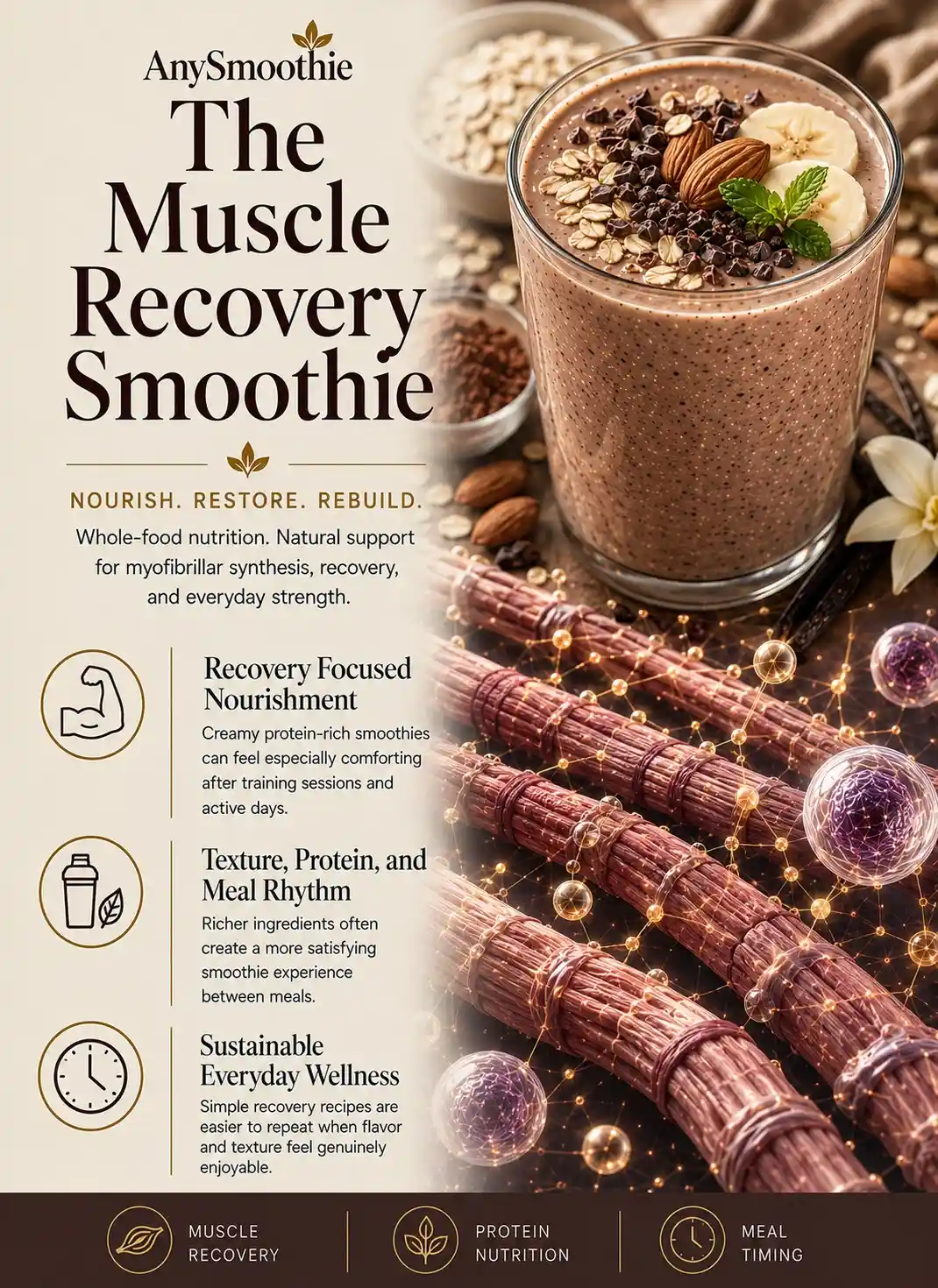
Sarcomere Architecture: Fueling Myofibrillar Density
Sarcomeres are the contractile units that give muscle its force. Building them takes more than one strong shake, because the whole day matters. Muscles respond to repeated protein doses and steady amino acid availability, so the goal is simple, useful consistency.
A practical build starts with 25 to 40 grams of protein. Then add carbs based on timing, use a low-fiber liquid base for speed, and keep extras tied to the training window. Fruit or honey makes sense after hard sessions. Oats fit better when you need longer energy. Creatine works well at 3 to 5 grams, tart cherry fits recovery-focused days, and salt helps when sweat loss is high.
For a quick comparison, this table shows how the main protein options behave in a smoothie.
| Protein source | Physiological mechanism | Leucine content per 30 g | Best smoothie timing | Target outcome |
|---|---|---|---|---|
| Whey isolate | Rapid leucine spike, fast amino acid delivery | About 3.0 to 3.3 g | Post-workout, pre-workout, or intra-workout | Acute MPS spike |
| Micellar casein | Sustained aminoacidemia, slower release | About 2.2 to 2.5 g | Pre-bed or long gaps between meals | Overnight recovery |
| Pea and rice blend | Balanced amino acid profile, moderate digestion | About 2.0 to 2.4 g | Any time, especially busy days | Daily protein floor |
Whey isolate is the gold standard for hitting the leucine threshold quickly. Casein is better when you want amino acids to drip-feed across the night. Plant blends work well when your goal is consistent daily intake, not the fastest spike.
Amino Acid Kinetics: The Advantage of Rapid-Absorbing Isolates
Rapid-absorbing isolates work because they raise blood amino acids quickly. That helps nutrient partitioning after training, when muscle tissue is more ready to use those building blocks. If your stomach is sensitive, keep the blend simple and keep fiber low. Save heavier add-ins for later in the day. If you want a deeper look at amino acids and protein use, this NIH page is a solid reference.
3 ‘Anabolic-Prime’ Protein Synthesis Smoothie Recipes
These templates keep the guesswork low. Use them as written, then adjust flavor and liquid volume.
The “Myo-Build” Whey Isolate, Tart Cherry, and Creatine Blend
Ingredients
- 35 g whey isolate
- ½ cup tart cherry juice
- Creatine monohydrate according to the product’s labeled serving or clinician guidance
- ½ cup cold water
- ½ cup ice
Pour the water and tart cherry juice into the blender first. Add the whey isolate, creatine, and ice. Blend until completely smooth.
Whey isolate provides rapidly digested, high-quality protein rich in essential amino acids, including leucine, and can support muscle protein synthesis after resistance training. Tart cherry provides carbohydrates, anthocyanins, and other polyphenols and has been studied in exercise-recovery contexts. Creatine supplementation can support repeated high-intensity exercise performance and training adaptations when used consistently, rather than acting only within the immediate post-workout window.
Estimated Nutrition per Serving
- Calories: ~215 kcal
- Protein: ~30 g
- Carbohydrates: ~24 g
- Fat: ~1 g
- Fiber: ~0 g
- Sugars: ~19 g
If I were using this immediately after training, I’d keep the water and tart cherry juice refrigerated beforehand. The cold liquid minimizes the amount of ice needed and keeps the finished shake concentrated rather than watery.
The Slow-Release Casein Smoothie for Overnight Recovery
Ingredients
- 35 g micellar casein
- ¾ cup frozen berries
- 1 tablespoon almond butter
- 1 cup low-fat milk
- ½ cup cold water, as needed
Pour the milk and water into the blender first. Add the micellar casein, frozen berries, and almond butter. Blend until thick and completely smooth.
Micellar casein digests more slowly than whey and provides essential amino acids over a longer period. Pre-sleep protein has been studied in relation to overnight muscle protein synthesis, particularly alongside resistance training. Almond butter adds unsaturated fat and flavor, while berries contribute carbohydrates, fiber, and polyphenols.
Estimated Nutrition per Serving
- Calories: ~420 kcal
- Protein: ~39 g
- Carbohydrates: ~38 g
- Fat: ~14 g
- Fiber: ~6 g
- Sugars: ~26 g
The Plant-Protein Blend for a High-Protein Day
Ingredients
- 1 scoop pea-and-rice protein blend
- 1 medium banana
- ⅓ cup rolled oats
- 1 cup unsweetened soy milk
- ½ teaspoon cinnamon
- Pinch of salt
- ½ cup ice, optional
Pour the soy milk into the blender first. Add the banana, oats, pea-and-rice protein blend, cinnamon, salt, and ice if using. Blend thoroughly until creamy and completely smooth.
A pea-and-rice protein blend can provide a complementary mixture of essential amino acids, while soy milk contributes additional high-quality plant protein. Banana and oats supply carbohydrates and fiber. This more substantial smoothie can be a practical way to increase daily protein intake when it fits overall dietary needs.
Estimated Nutrition per Serving
- Calories: ~445 kcal
- Protein: ~37 g
- Carbohydrates: ~62 g
- Fat: ~8 g
- Fiber: ~9 g
- Sugars: ~20 g
Biohacking the Recovery Window: Supporting Ribosomal Biogenesis
The recovery window is wider than one shake. After training, muscles need amino acids, energy, and hydration to keep building. Over time, that supports the machinery behind protein assembly, including the ribosomes that make new proteins.
Mitochondrial Priming: Fueling the ATP-Dependent Process of Protein Assembly
Protein assembly costs ATP, so low energy and poor hydration slow the process. Carbs help refill glycogen and spare amino acids, while fluid and sodium keep the shake useful instead of just filling the stomach. That is why a little honey or fruit can matter after harder sessions.
Simple Habits That Improve Smoothie Results
Keep protein high across the whole day. Use the smoothie right after training or between meals when food is delayed. Keep fiber moderate if your goal is speed. Sleep, training quality, and total calories still decide how far the signal goes.
Conclusion
The best smoothie protocols for myofibrillar synthesis are simple. Hit the leucine threshold, match timing to the training window, and pick a protein that digests the way you need it to.
Use whey isolate for fast post-workout support, casein for overnight coverage, and plant blends for consistent daily intake. Build the shake for the job, and muscle repair has a cleaner path forward.
🛡️ Safety Notes & Contraindications
Renal Load Awareness: While high protein intake is safe for healthy individuals, those with pre-existing chronic kidney disease (CKD) must monitor their total protein intake. Excessive protein spikes can increase glomerular filtration pressure.
Lactose Intolerance: Even “isolate” whey can contain trace amounts of lactose. If you are highly sensitive, use a hydrolyzed whey or a high-leucine plant-based blend (Pea/Rice) to avoid GI distress, which can impair nutrient absorption.
Creatine and Hydration: Creatine monohydrate is highly effective but osmotically active. To prevent dehydration or muscle cramping, increase your water intake by at least 500ml when including creatine in your recovery smoothie.
Insulin Response and Fasting: If you are managing blood glucose or follow a strict ketogenic protocol, be aware that whey protein and leucine themselves trigger an insulin response, which will temporarily break a physiological fast.
Oxidative Stress and Tart Cherry: High doses of antioxidants (like those in tart cherry concentrate) immediately post-workout are debated, as some oxidative stress is a necessary signal for adaptation. Use tart cherry primarily after high-volume sessions where recovery speed is prioritized over pure hypertrophy adaptation.
FAQ
How does “Leucine” act as the molecular trigger for the mTORC1 pathway?
Leucine is the primary amino acid responsible for signaling muscle protein synthesis. Biochemically, when leucine concentrations reach a specific “threshold” (typically 2.5 to 3 grams), they activate mTORC1, the master switch that tells the cell to begin the building phase. Supporting this physiological system through leucine-dense smoothies ensures a rapid rise in blood amino acids, optimizing the natural pathways of “anabolic signaling”.
Why is “Whey Isolate” considered the gold standard for acute MPS spikes?
Whey isolate is a rapid-absorbing protein that reaches the leucine threshold quickly. Biochemically, it provides approximately 3.0 to 3.3 grams of leucine per 30-gram serving. Supporting this physiological system post-training facilitates the biochemical mechanics of “rapid amino acid delivery,” providing a clean signal and raw material for muscle repair when the tissue is most receptive.
What is the role of “Micellar Casein” in supporting overnight recovery?
Unlike whey, micellar casein is a slower-release protein that provides sustained aminoacidemia. Biochemically, it delivers approximately 2.2 to 2.5 grams of leucine per 30-gram serving over an extended period. Supporting this physiological system through a pre-bed smoothie facilitates the biochemical mechanics of “overnight recovery,” ensuring sarcomeres have steady amino acid availability during long gaps between meals.
How does “Nutrient Partitioning” improve the efficiency of post-workout smoothies?
After resistance training, muscle tissue is more sensitive to nutrient uptake. Biochemically, consuming a smoothie in this window allows the body to prioritize incoming building blocks for repair rather than fuel. Supporting this physiological system through a protein-rich smoothie—often paired with moderate carbs to refill glycogen—optimizes the natural pathways of “substrate allocation”.
Why is “Mitochondrial Priming” essential for the energetic cost of protein assembly?
Protein assembly is an energy-intensive process that costs ATP. Biochemically, mitochondria must provide the cellular energy needed to fuel the ribosomes that assemble new proteins. Supporting this physiological system with a mix of protein, hydration, and carbs (such as fruit or honey) facilitates the biochemical mechanics of “metabolic priming,” ensuring the system has the energy budget required for tissue construction.

Medical Disclaimer: AnySmoothie content is for educational purposes only and is not a substitute for professional medical advice. Consult a healthcare provider for personalized guidance. See our full Disclaimer & Terms of Use. AI Transparency: AnySmoothie may use AI to support content development. All content undergoes human editorial review for accuracy, clarity, and editorial quality. See our full AI Transparency.