
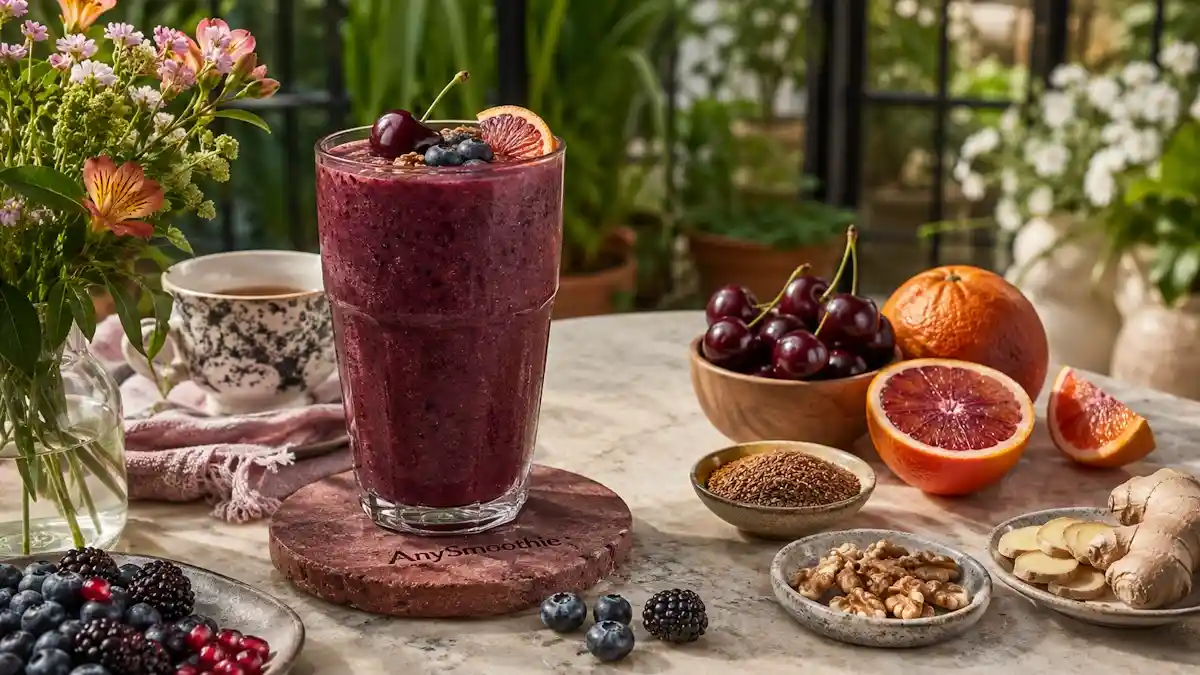
Some smoothies feel like dessert in a cup. Others act more like a balanced meal, with fiber, protein, and plant compounds that fit into arthritis-friendly eating.
That difference matters when you want food choices that support normal inflammation balance without causing a blood sugar spike. A well-built smoothie can be quick, cold, and easy to drink on low-energy days, which makes it useful when stiff joints make cooking feel slow.
The goal is simple, use ingredients that bring color, texture, and steady fuel.
What makes a smoothie arthritis-friendly?
An arthritis-friendly smoothie is balanced, not oversized or candy-sweet. It usually has fruit or vegetables for antioxidants, a protein source for staying power, a little fat for flavor and absorption, and fiber to slow down how fast the sugar hits your system.
That mix supports steadier energy, which matters when you want a snack that feels useful, not empty. Harvard Health notes that an anti-inflammatory eating pattern may be good for your joints, and smoothies can fit that pattern when the ingredients are chosen with care. See Harvard Health on anti-inflammatory diets.
Choose ingredients that support normal inflammation balance
The best ingredient choices are simple. Berries, leafy greens, cherries, turmeric, ginger, flax, chia, walnuts, and unsweetened yogurt or fortified plant milk all bring something useful to the glass.
Berries and cherries add color and plant compounds called anthocyanins. Leafy greens bring folate and vitamin K. Flax, chia, and walnuts add fiber and omega-3 fats. Turmeric and ginger add flavor plus natural plant compounds that fit well into anti-inflammatory eating.
A smoothie does not need a long ingredient list. It needs a clear job and a good mix of nutrients.
Avoid common smoothie mistakes that can work against your goals
Too much added sugar is the biggest problem. Juice, sweetened yogurt, flavored protein drinks, and honey can push a smoothie away from balance fast. Fruit-heavy blends without protein can also leave you hungry soon after.
Oversized servings can do the same thing. A 20-ounce smoothie may look healthy, but it can act like a large meal when you only needed a snack.
If a smoothie tastes more like juice than breakfast, it probably needs protein or fiber.
Frozen fruit helps with texture, plain liquids keep sugar lower, and unsweetened add-ins keep the blend steady. Those small swaps matter more than fancy extras.
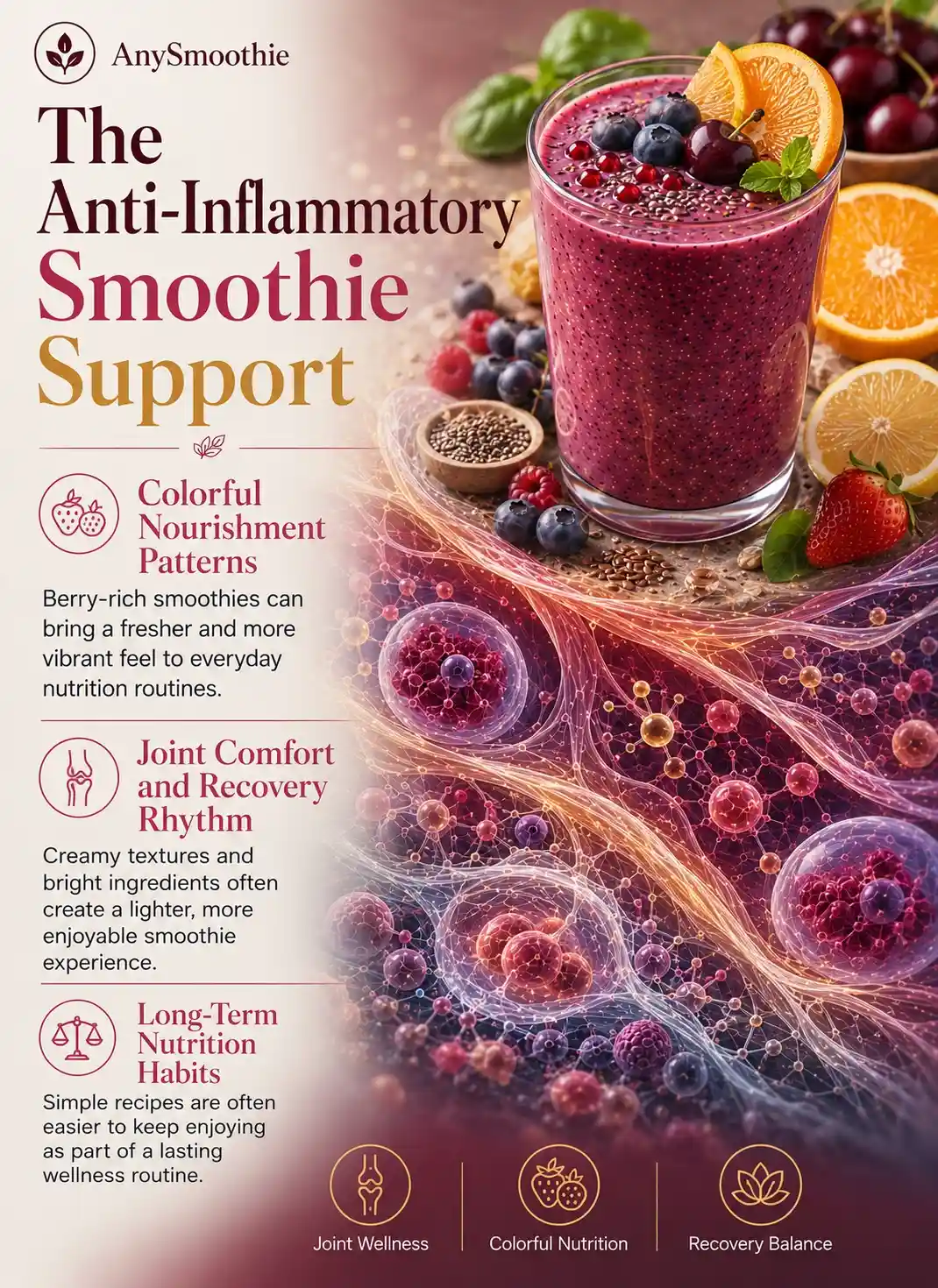
3 Anti-Inflammatory smoothie recipes for arthritis nutrition support
The easiest recipes are the ones you can repeat. A good rotation gives you variety without a lot of planning.
| Smoothie | Key ingredients | Why it helps | Best time | Taste or texture |
|---|---|---|---|---|
| Berry flax | Mixed berries, ground flax, plain Greek yogurt, unsweetened milk | Fiber, protein, color, and omega-3 fats | Breakfast or mid-morning | Thick, tart-sweet, creamy |
| Green ginger | Spinach, cucumber, ginger, avocado, kefir or soy milk | Greens, hydration, healthy fats, and a light spice note | Afternoon snack | Cool, fresh, light |
| Cherry turmeric | Tart cherries, turmeric, black pepper, yogurt or fortified plant milk, chia | Anthocyanins, protein, fiber, and warm spice flavor | Evening or after dinner | Smooth, earthy, mildly tart |
A quick comparison like this makes it easier to match the smoothie to your day.
Berry flax smoothie for a simple antioxidant boost
Ingredients
- 1 cup mixed berries
- 1 tablespoon ground flaxseed
- 3/4 cup plain Greek yogurt
- 3/4 cup unsweetened milk
Blend until smooth. Frozen berries give it a thicker feel, while flax adds fiber and a light nutty taste.
This one works well when you want something bright and familiar. The flavor is tart-sweet, and the yogurt keeps it from tasting thin.
Estimated Nutrition per Serving
Estimated with nonfat plain Greek yogurt and unsweetened almond milk.
- Calories: ~300 kcal
- Protein: ~22 g
- Carbohydrates: ~38 g
- Fat: ~8 g
- Fiber: ~11 g
- Sugars: ~21 g
Green ginger smoothie for a fresh, lighter option
Ingredients
- 1 cup spinach
- 1/2 cucumber
- 1/4 avocado
- 1 small piece fresh ginger
- 1 cup plain kefir or unsweetened soy milk
Blend until smooth.
The avocado gives body, so the drink does not feel watery. Ginger adds a clean bite that wakes up the flavor without much sweetness.
Estimated Nutrition per Serving
Estimated with plain low-fat kefir and approximately 1 teaspoon fresh ginger.
- Calories: ~250 kcal
- Protein: ~12 g
- Carbohydrates: ~25 g
- Fat: ~13 g
- Fiber: ~8 g
- Sugars: ~13 g
Fresh ginger can dominate this otherwise mild combination quickly. I’d start with a thin slice, blend, and add more only if you want a sharper finish.
Cherry turmeric smoothie for an evening-friendly blend
Ingredients
- 1 cup tart cherries
- 1/2 teaspoon turmeric
- Pinch of black pepper
- 3/4 cup plain yogurt or fortified plant milk
- 1 tablespoon chia seeds
Blend until smooth.
This blend tastes a little richer and a little more earthy. The cherries bring sharpness, and the chia thickens the mix as it sits.
Estimated Nutrition per Serving
Estimated with nonfat plain Greek yogurt and chia seeds.
- Calories: ~325 kcal
- Protein: ~20 g
- Carbohydrates: ~48 g
- Fat: ~7 g
- Fiber: ~9 g
- Sugars: ~28 g
If this is blended ahead for later in the evening, chia will continue absorbing liquid. I’d leave it slightly looser than your preferred drinking consistency rather than thinning it immediately.
How to build your own smoothie without overthinking it
A repeatable formula keeps smoothie choices simple. Mass General Brigham has a helpful overview of anti-inflammatory foods for arthritis and joint pain, and smoothies fit neatly into that kind of eating pattern.
- Start with produce, like berries, spinach, kale, cucumber, cherries, or mango.
- Add protein, such as Greek yogurt, kefir, soy milk, or an unsweetened protein powder.
- Add fat and fiber, such as flax, chia, walnuts, oats, or avocado.
- Add liquid, then blend until smooth.
A berry-spinach-yogurt blend gives color and staying power. A cherry-kefir smoothie with chia feels more filling. A mango-cucumber mix works too, as long as protein and fiber stay in the mix.
Adjust texture and taste so the smoothie is easy to drink regularly
Frozen fruit makes a smoothie thicker. Ice makes it colder and lighter. Yogurt and kefir add body. Nut butter gives a richer feel.
If you want it thinner, add more milk or water. If you want it sweeter, use riper fruit before reaching for honey. If you want more tartness, add lemon juice or extra berries. Cinnamon, vanilla, and ginger also help without piling on sugar.
The best times and habits for using smoothies in an arthritis routine
Smoothies fit well at breakfast, as a snack after a walk or physical therapy, or on days when chewing feels tiring. A smaller smoothie with protein can bridge the gap between meals. A fuller one can replace a rushed breakfast.
Consistency matters more than perfection. The most useful smoothie is the one you can make often, with ingredients you already keep around.
A simple routine works best, frozen fruit in the freezer, greens in the fridge, and one or two protein options ready to go. That makes the habit easier to repeat.
Conclusion
Anti-inflammatory smoothies can be a smart tool for arthritis nutrition support, but they are only one part of the picture. The best blends are balanced, low in added sugar, and built around fiber, protein, healthy fats, and colorful produce.
Once you keep that formula in mind, the options get easier. Berry flax, green ginger, and cherry turmeric blends all offer a practical way to support normal inflammation balance and steady energy.
Small daily food choices add up. A few nutrient-dense smoothies each week can fit into a joint-friendly routine and make healthy eating feel more doable.

Medical Disclaimer: AnySmoothie content is for educational purposes only and is not a substitute for professional medical advice. Consult a healthcare provider for personalized guidance. See our full Disclaimer & Terms of Use. AI Transparency: AnySmoothie may use AI to support content development. All content undergoes human editorial review for accuracy, clarity, and editorial quality. See our full AI Transparency.