

A smoothie for immunomodulation is built to support balance, not to push immune activity higher. The goal is steadier signaling, calmer inflammation, healthier gut input, and better cellular readiness.
That matters because food can shape the terrain your immune system works in. Beta-glucans, EGCG, and lactoferrin each affect different parts of that system, and a smart blend can bring them together in one glass. For a plain-language overview of the term, see Cleveland Clinic’s guide to immunomodulators.
What immunomodulation means in everyday language
Immunomodulation means changing immune activity so it fits the need. In simple terms, the immune system should respond when it has to, then stand down when the job is done. That is balance.
The word shows up in medicine too. Healthline’s immunomodulators guide explains the idea as either raising or lowering immune response, depending on the goal. Food works more gently than a drug, but the same principle applies. The right smoothie can influence inflammation, gut signaling, and nutrient flow without forcing anything.
The immunological seesaw: Th1, Th2, and Treg dynamics
Th1 and Th2 are two major arms of adaptive immunity. One leans toward cell-based defense, and the other leans toward antibody-style response. A healthy system shifts between them as needed.
That balance matters because either side can dominate if the signal stays off. Think of it as a seesaw that should move, but not slam down on one side. Treg cells help keep that motion controlled.
Tolerogenic signaling: How Treg cells prevent allostatic hyper-reactivity
Treg cells are the body’s built-in brake system. They support tolerogenic signaling, which helps the immune system stay calm around harmless inputs. That matters for allostatic balance, because constant over-alertness burns energy and adds noise.
A smoothie cannot command Treg cells, but it can support the conditions that help them do their job. Fiber, polyphenols, fermented foods, and stable blood sugar all play a part.
The best smoothie ingredients for immune modulation
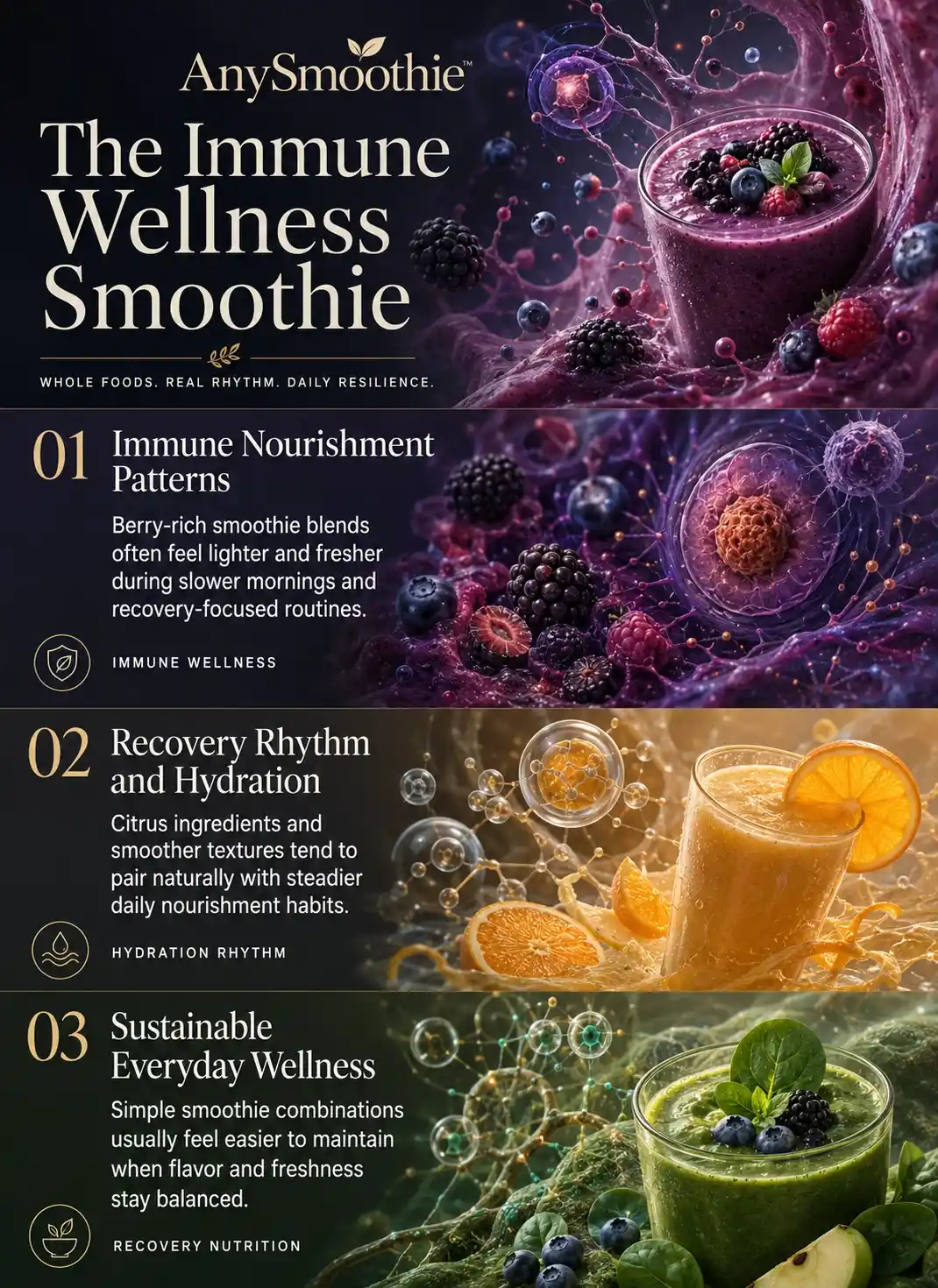
The best immune-supportive smoothies are not overloaded. They are built with ingredients that each do one job well. That usually means a protein base, a source of antioxidants, a mineral anchor, and one or two functional compounds.
Beta-glucans from reishi and shiitake mushrooms
Beta-glucans are one of the most useful functional compounds you can add. They are a biological response modifier, which means they help immune signaling stay responsive without pushing it too hard.
These compounds interact with receptors like Dectin-1 on macrophages and dendritic cells. That changes how those cells communicate with the rest of the immune system. Reishi and shiitake are common sources, and they fit best in earthy blends where the flavor can be balanced with cocoa, berries, or tea.
EGCG from green tea
EGCG is a catechin found in green tea. It supports antioxidant defense and helps keep inflammatory signaling from running hot. That makes it a strong fit for a smoothie, especially when you pair it with berries, citrus, or a little plant fat.
A splash of lemon or orange works well here. Chia, flax, or almond butter can round out the texture and help the drink feel complete. When the flavor is balanced, the routine is easier to keep.
Lactoferrin and mineral balance
Lactoferrin binds free iron. That matters because iron availability shapes microbial growth and immune signaling. It can also support a more balanced internal environment when the rest of the formula is clean.
Lactoferrin works well with a creamy base like kefir or plain yogurt. Those foods soften the taste and make the blend easy to drink. If you use a powder, keep the fruit simple so the flavor stays clean.
This quick comparison keeps the roles straight.
| Compound | Physiological mechanism | Primary target cell | Best smoothie pairing | Synergistic nutrient |
|---|---|---|---|---|
| Beta-glucans | Bind Dectin-1 and related innate receptors, guiding macrophage and dendritic cell signaling. Acts as a biological response modifier. | Macrophage | Reishi, shiitake, cacao, or cooled green tea | Zinc |
| EGCG | Supports antioxidant defense and helps temper pro-inflammatory signaling. | Dendritic cell | Berries, citrus, spinach, or matcha | Vitamin C |
| Lactoferrin | Binds free iron, which can shape microbial balance and immune signaling. | Monocyte/macrophage | Kefir, yogurt, or a vanilla plant milk base | Vitamin C |
The takeaway is simple. Beta-glucans shape immune response dynamically, EGCG supports redox balance, and lactoferrin helps with iron handling and microbial balance.
How to build a smoothie that supports immune resilience
A good formula is balanced, creamy, and easy to repeat. Start with a protein-rich base, then add polyphenols, fiber, and a small amount of fat. That mix supports leukocyte membrane integrity and helps with metabolic efficiency.
Use a smart base, then layer in functional ingredients
Pick one base and keep the rest simple:
- Unsweetened kefir or plain Greek yogurt gives protein and a fermented base.
- Unsweetened soy, almond, or macadamia milk keeps the blend lighter.
- Cooled green tea works well when you want EGCG in the base itself.
After that, add frozen berries, a handful of greens, mushroom extract, and a seed or nut fat. This helps with stable blood sugar, better nutrient delivery, and better taste.
Mitochondrial priming: Fueling the metabolic demands of immune vigilance
Immune cells need energy when they respond. A smoothie can help if it supports that energy demand instead of spiking and crashing it.
Protein gives amino acids. Polyphenols support redox balance. Healthy fats slow digestion and improve mouthfeel. Together, they support mitochondrial priming and keep the day’s energy steadier.
3 immune-balance smoothie recipes to try
These are templates, not rules. Adjust sweetness, thickness, and protein to fit your routine.
The “Equilibrium-Flow” Medicinal Mushroom, Green Tea, and Zinc Chelate Blend
Ingredients
- 1 cup cooled green tea
- ½ cup frozen blueberries
- 1 cup plain kefir
- Reishi extract according to the product’s labeled serving or clinician guidance
- 1 packed cup spinach
- 1 tablespoon chia seeds
- 1 tablespoon fresh lemon juice
- Zinc chelate according to the product’s labeled serving or clinician guidance, taken separately if already part of your routine
Pour the cooled green tea and kefir into the blender first. Add the spinach, blueberries, reishi extract, chia seeds, and lemon juice. Blend until completely smooth.
Reishi contains polysaccharides including beta-glucans and has been studied in immune-related contexts, while green tea provides catechins including EGCG. Blueberries contribute anthocyanins, and kefir provides protein and may contain live cultures. Reishi should not be described as directly strengthening immune defenses, and both mushroom extracts and supplemental zinc can interact with medications or be inappropriate in some circumstances.
Estimated Nutrition per Serving
- Calories: ~260 kcal
- Protein: ~13 g
- Carbohydrates: ~32 g
- Fat: ~9 g
- Fiber: ~8 g
- Sugars: ~19 g
Berry-Citrus Smoothie for Antioxidant Support
Ingredients
- ¾ cup plain Greek yogurt
- 1 cup frozen strawberries
- 1 small orange, peeled
- 1 cup spinach
- 1 teaspoon ground flaxseed
- ½ cup cold water
Pour the water and Greek yogurt into the blender first. Add the spinach, strawberries, orange, and ground flaxseed. Blend until completely smooth.
Strawberries and orange provide vitamin C and other plant compounds, while spinach contributes folate and carotenoids. Greek yogurt adds high-quality protein, and ground flax provides fiber, lignans, and ALA omega-3 fatty acids.
Estimated Nutrition per Serving
- Calories: ~300 kcal
- Protein: ~21 g
- Carbohydrates: ~45 g
- Fat: ~7 g
- Fiber: ~9 g
- Sugars: ~29 g
Creamy Cacao and Seed Smoothie for Recovery Days
Ingredients
- 1 cup plain kefir
- ¾ cup frozen cherries
- 1 tablespoon unsweetened cacao powder
- 1 tablespoon hemp seeds
- 1 tablespoon pumpkin seeds
- ¼ avocado
- ½ teaspoon cinnamon
Pour the kefir into the blender first. Add the avocado, frozen cherries, cacao, hemp seeds, pumpkin seeds, and cinnamon. Blend until thick and completely smooth.
Kefir provides protein and may contain live cultures, while hemp and pumpkin seeds contribute protein, minerals, and unsaturated fats. Cherries and cacao provide polyphenols, and avocado adds fiber and unsaturated fat. This nutrient-dense combination can contribute to a balanced recovery meal, but it should not be expected to prevent a glucose spike, guarantee steady energy, or directly increase immune readiness.
Estimated Nutrition per Serving
- Calories: ~425 kcal
- Protein: ~19 g
- Carbohydrates: ~42 g
- Fat: ~23 g
- Fiber: ~10 g
- Sugars: ~27 g
If I were making this after a demanding workout, I’d blend the seeds with the kefir for 15–20 seconds before adding the remaining ingredients. It breaks them down more thoroughly and gives the finished smoothie a noticeably smoother texture.
Conclusion
The best smoothie for immunomodulation supports balance, not overactivation. That comes from the right mix of beta-glucans, EGCG, lactoferrin, protein, fiber, and healthy fat.
Start with one base recipe and make it fit your day. A good blend should support the immune system, not overwhelm it, and the simplest version is often the one you’ll keep using.
🛡️ Safety Notes & Contraindications
Active Autoimmune Diseases Caution: CRITICAL: Because beta-glucans and medicinal mushroom extracts are potent immunomodulators that interact directly with Dectin-1 and Toll-Like Receptors (TLRs), individuals managing active, severe autoimmune conditions (e.g., Systemic Lupus Erythematosus, Multiple Sclerosis, Crohn’s Disease) must implement this protocol with extreme caution. While targeted for balance, any biological modifier can theoretically trigger localized shifts in volatile immune landscapes.
Immunosuppressant Medication Interdiction: If you are under clinical therapy utilizing prescription immunosuppressants (e.g., Cyclosporine, Tacrolimus, Azathioprine) following organ transplantation or for severe clinical syndromes, the daily consumption of highly bioavailable beta-glucans and EGCG is strictly contraindicated, as it may directly counteract the therapeutic efficacy of the medication.
EGCG Hepatic Saturation: Epigallocatechina gallato (EGCG) is a magnificent antioxidant, but concentrated, isolated extracts consumed in high doses on an empty stomach have been flagged for potential hepatotoxicity. Ensure the green tea input within the smoothie comes from traditional whole-leaf infusions (matcha) or cooled teas rather than high-potency synthetic pills, maintaining safe biological thresholds.
Dairy Allergies and Lactoferrin Sourcing: Lactoferrin is inherently a whey-derived glycoprotein. Individuals with diagnosed Type 1 IgE-mediated dairy allergies (allergia alle proteine del latte) cannot consume kefir or bovine-derived lactoferrin powders. They must substitute the base with plant proteins (pea/hemp) and omit the lactoferrin block entirely.
Zinc Overload and Copper Depletion: Stacking zinc chelate alongside immunomodulatory smoothies is common. However, chronic unmonitored intake of zinc exceeding $40\text{mg/day}$ competes with copper absorption at the intestinal transporter level, leading to potential copper deficiency and paradoxical immune suppression. Ensure zinc intake aligns with recommended clinical targets.
FAQ
How do “Beta-Glucans” act as biological response modifiers via the Dectin-1 pathway?
Beta-glucans are complex fungal polysaccharides that serve as structural ligands for the innate immune interface. Biochemically, they bind directly to Dectin-1 receptors expressed on the surface of macrophages and dendritic cells. Supporting this physiological system through reishi or shiitake mushroom extract infusions optimizes the natural pathways of “immune training,” prompting a state of cellular readiness and precise signaling coordination without inducing pro-inflammatory hyper-reactivity.
Why does “EGCG” support the stabilization of the Th1/Th2 adaptive balance?
Epigallocatechin gallate (EGCG) is a highly bioactive polyphenol found in green tea. Biochemically, EGCG modulates intracellular signaling cascades to temper the excessive transcription of pro-inflammatory cytokines, helping to prevent either the cell-mediated (Th1) or antibody-mediated (Th2) pathways from dominating the system. Supporting this physiological system through EGCG-dense bases optimizes the natural pathways of “adaptive equilibrium,” keeping the immunological seesaw balanced.
What is the role of “Lactoferrin” in modulating mucosal iron flux and cell defense?
Lactoferrin is a multifunctional glycoprotein with an exceptionally high affinity for free ferric ($Fe^{3+}$) ions. Biochemically, by sequestering free luminal iron, it alters the environmental terrain to limit the proliferation of opportunistic iron-dependent microbes while simultaneously interfacing with macrophage receptors. Supporting this physiological system through raw kefir or targeted lactoferrin infusions facilitates the biochemical mechanics of “iron handling,” reinforcing mucosal defense dynamics in the gut.
How do “Treg Cells” protect the systemic matrix from allostatic hyper-reactivity?
Regulatory T (Treg) cells act as the principal inhibitory feedback brake of the adaptive immune system. Biochemically, they produce suppressive cytokines to downregulate over-active immune cell responses, fostering tolerogenic signaling toward benign environmental inputs. Supporting this physiological system with a whole-food matrix rich in fermentable fibers and low-glycemic inputs reduces overall allostatic load, allowing Treg cells to maintain systemic homeostasis instead of constantly reacting to metabolic glucose spikes.
Why does “Leukocyte Membrane Integrity” require a lipid-anchored nutrient matrix?
Immune cells must rapidly alter their membrane architectures to facilitate receptor clustering, antigen presentation, and cytokine secretion, which are highly energy-dependent processes. Biochemically, an unstable blood sugar curve or a lack of lipid substrates deprives these cells of necessary structural materials. Supporting this physiological system with monounsaturated fats (avocado/nut butter) and zinc cofactors facilitates the biochemical mechanics of “mitochondrial priming,” providing the stable fuel and membrane fluidity required for efficient leukocyte surveillance.

Medical Disclaimer: AnySmoothie content is for educational purposes only and is not a substitute for professional medical advice. Consult a healthcare provider for personalized guidance. See our full Disclaimer & Terms of Use. AI Transparency: AnySmoothie may use AI to support content development. All content undergoes human editorial review for accuracy, clarity, and editorial quality. See our full AI Transparency.