
Telomeres are protective caps at the ends of chromosomes, and their length can change with age and cellular stress. Sleep quality, chronic inflammation, physical activity, nutrition, and long-term stress all relate to telomere biology, but the relationship is complex.
No smoothie has been proven to lengthen telomeres on its own. A better goal is to use whole-food blends that provide antioxidants, fiber, healthy fats, protein, and plant compounds that support normal cellular systems. These three recipes fit that approach, especially when paired with regular movement, adequate sleep, stress support, and a varied diet.
How Nutrition May Support Telomere Health
Telomeres help protect chromosome ends during cell division. Over time, they may shorten or change as part of normal aging. Oxidative stress and chronic inflammation may also affect cellular aging processes, although telomere biology involves many factors beyond food.
Research on individual foods and telomere length is still developing. A study linking a nutrient-rich diet with healthier telomere measures doesn’t prove that one ingredient caused the result. However, many smoothie ingredients supply nutrients involved in normal antioxidant defenses, immune function, and metabolic pathways. Comprehensive reviews suggest that overall dietary patterns and lifestyle habits appear more relevant to telomere health than any single food or nutrient, although current evidence remains largely observational.
Berries and leafy greens provide polyphenols and carotenoids. Citrus and kiwi supply vitamin C, which supports collagen formation and antioxidant systems. Seeds add fiber and, in the case of flax and chia, plant-based omega-3 fats. Plain Greek yogurt and kefir provide protein, while fortified soy beverages can offer protein and calcium.
Choose whole fruit instead of juice, syrups, or sweetened yogurt. Whole fruit keeps its fiber, which slows digestion and makes the drink more filling. A smoothie should complement balanced meals, not replace vegetables, legumes, whole grains, quality proteins, sleep, movement, stress management, or routine health care.
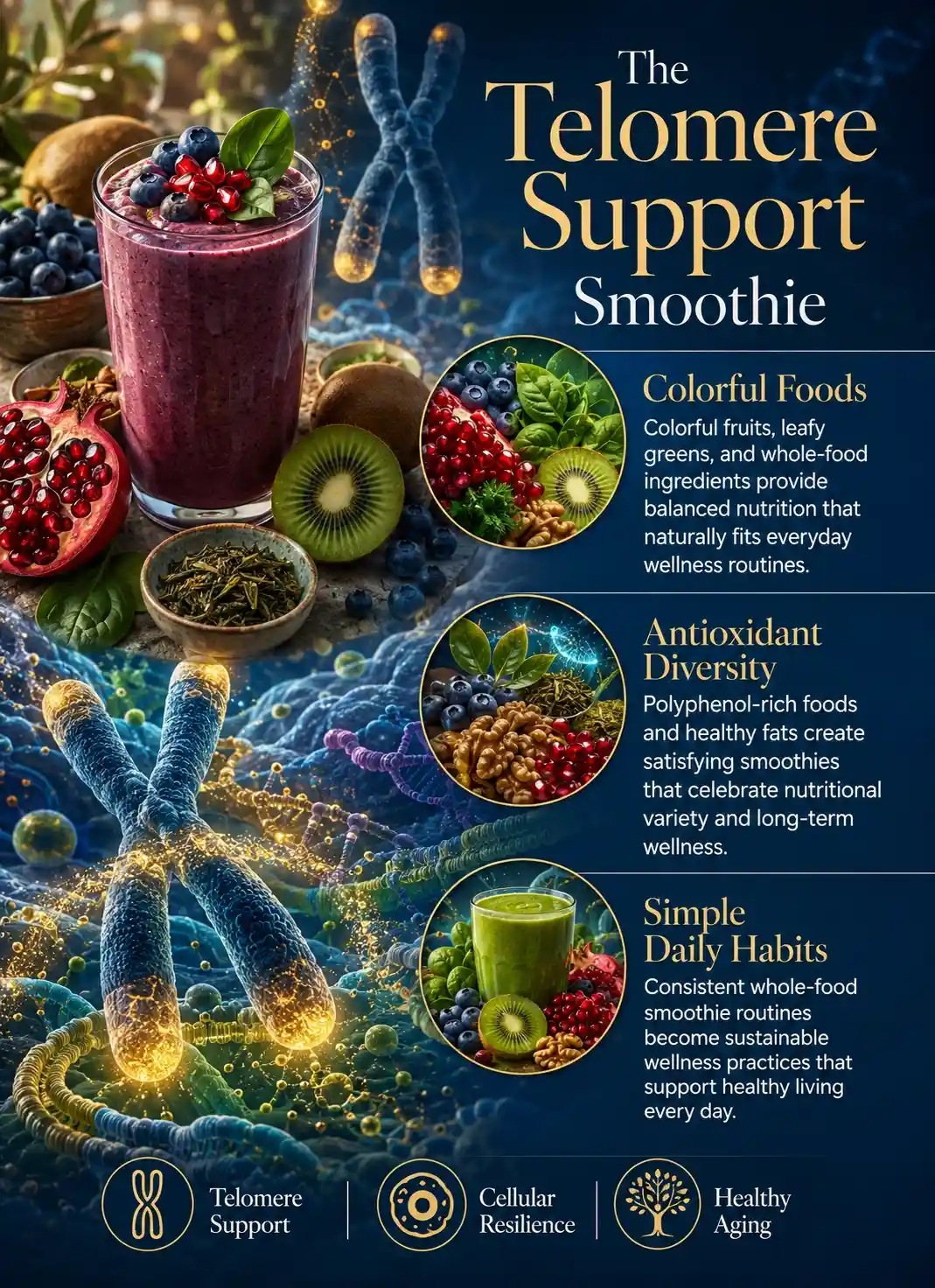
3 Smoothies for Telomere Support
Each recipe makes about one 12- to 16-ounce serving. Blend until smooth, then adjust the texture with more water or unsweetened milk.
| Smoothie | Key ingredients | Main nutrients | Best time to enjoy | Simple modification |
|---|---|---|---|---|
| Berry, Spinach, and Flax | Berries, spinach, yogurt, flax | Polyphenols, carotenoids, protein, fiber, ALA omega-3 | Breakfast or snack | Use kefir and ginger |
| Citrus, Kiwi, and Green Tea | Kiwi, orange, avocado, green tea, greens | Vitamin C, fiber, polyphenols, healthy fats | Morning or midday | Use lemon-free green tea and banana |
| Cherry, Cocoa, and Walnut | Tart cherries, cocoa, yogurt, walnuts | Polyphenols, fiber, protein, unsaturated fats | Breakfast or evening snack | Add oats for extra fiber |
Berry, Spinach, and Flax Smoothie
Ingredients
- 1 cup frozen blueberries or mixed berries
- 1 packed cup baby spinach
- 3/4 cup plain Greek yogurt or unsweetened kefir
- 1 tablespoon ground flaxseed
- 1/2 to 1 cup water or unsweetened milk
- Cinnamon or a small piece of fresh ginger, optional
Berries add polyphenols, while spinach contributes carotenoids and folate. Ground flax adds fiber and alpha-linolenic acid, a plant-based omega-3 fat. Its ground form is easier to digest and use than whole flaxseed. Add cinnamon or a small piece of fresh ginger for flavor without added sugar.
Estimated Nutrition per Serving
- Calories: ~250 kcal
- Protein: ~20 g
- Carbohydrates: ~32 g
- Fat: ~7 g
- Fiber: ~8 g
- Sugars: ~19 g
Citrus, Kiwi, and Green Tea Smoothie
Ingredients
- 3/4 cup unsweetened green tea, cooled
- 1 kiwi, peeled
- 1 small orange, peeled and segmented
- 1/4 avocado
- 1/2 cup baby spinach or other mild greens
- Ice, as needed
Kiwi and orange provide vitamin C and fiber. Green tea contributes polyphenols, while avocado supplies unsaturated fat that helps make the blend more satisfying. The combination also adds texture without relying on juice or sweeteners.
Grapefruit can replace the orange, but it may interact with some prescription medicines. If you take medication, ask a pharmacist or clinician whether grapefruit is appropriate for you.
Estimated Nutrition per Serving
- Calories: ~190 kcal
- Protein: ~4 g
- Carbohydrates: ~31 g
- Fat: ~8 g
- Fiber: ~9 g
- Sugars: ~18 g
I’d make the green tea ahead and chill it completely before blending. Using it cold keeps the smoothie fresh-tasting and prevents the avocado and greens from warming up unnecessarily.
Cherry, Cocoa, and Walnut Smoothie
Ingredients
- 1 cup frozen tart cherries
- 1 tablespoon unsweetened cocoa powder
- 3/4 cup plain yogurt
- 1 tablespoon chopped walnuts
- 1/2 cup water or unsweetened milk
- Optional: 2 tablespoons oats for a thicker breakfast blend
Tart cherries and cocoa contain plant polyphenols. Walnuts add fiber and unsaturated fats, while yogurt or fortified soy provides protein. Use unsweetened cocoa rather than chocolate syrup, which adds sugar without the same nutritional profile. For a thicker breakfast blend, add 2 tablespoons of oats.
Estimated Nutrition per Serving
- Calories: ~275 kcal
- Protein: ~15 g
- Carbohydrates: ~39 g
- Fat: ~9 g
- Fiber: ~7 g
- Sugars: ~25 g
How to Build a Better Telomere-Friendly Smoothie
A balanced smoothie can follow a simple formula: one serving of fruit, one serving of vegetables or leafy greens, a protein source, a fiber-rich seed or oat, and an unsweetened liquid. This structure keeps the drink nutrient-dense without turning it into a dessert.
Whole fruit is usually a better choice than fruit juice because blending preserves fiber. Straining removes much of that fiber and can make the drink less filling. Protein from yogurt, kefir, soy beverage, or another whole-food source helps support fullness, while a small amount of fat from avocado, flax, chia, or walnuts adds texture and helps carry fat-soluble nutrients.
Keep portions moderate, especially if you drink smoothies alongside a full meal. Avoid sweetened milks, flavored yogurt, honey, agave, and fruit concentrates. Rotating berries, cherries, kiwi, greens, seeds, and nuts gives you a wider range of nutrients. For more practical ideas, use these tips for making balanced nutrient-dense smoothies.
Food allergies, diabetes, kidney disease, digestive sensitivity, and pregnancy can change which ingredients are suitable. Some greens and seeds may also affect medication routines or digestion. Telomere supplements aren’t required for a nutrient-dense smoothie, and concentrated products should be discussed with a qualified health professional.
Reviews also report that dietary patterns rich in fruits, vegetables, legumes, nuts, whole grains, and healthy fats are more consistently associated with healthier telomere measures than isolated foods alone. Read more in Diet, physical activity and telomere length in adults.
Conclusion
Berries, greens, citrus, kiwi, seeds, nuts, cocoa, and unsweetened cultured dairy or fortified alternatives can create flavorful smoothies that support overall nutrition and normal cellular defenses. They can’t guarantee longer telomeres or stop biological aging.
Choose one recipe, limit added sugar, and pair the habit with regular movement, adequate sleep, stress support, and a varied whole-food diet. Adjust the ingredients to suit your taste, allergies, medication needs, and dietary preferences.
🛡️ Safety Notes & Dietary Interactions
- Keep Expectations Realistic: Telomere biology is influenced by many factors, including age, genetics, physical activity, sleep, stress, and overall diet. No smoothie or single ingredient has been proven to lengthen telomeres or slow biological aging on its own.
- Personalize Ingredients When Needed: People with diabetes, kidney disease, food allergies, digestive disorders, or prescribed dietary restrictions should adapt fruit, greens, seeds, and dairy or plant-based ingredients to meet their individual nutritional needs with guidance from a qualified healthcare professional.
- Be Aware of Medication Interactions: Grapefruit may interact with certain prescription medications, and large amounts of leafy greens can affect some anticoagulant regimens. If you take regular medications, ask your pharmacist or healthcare provider whether any ingredients require adjustment.
- Think Beyond the Blender: Nutrient-dense smoothies work best as part of a broader healthy lifestyle that includes regular physical activity, quality sleep, stress management, hydration, and a varied whole-food diet. These habits collectively support normal cellular function over time.
FAQ
Can smoothies increase telomere length?
There is currently no evidence that any smoothie can directly increase telomere length in humans. While nutrient-rich diets are associated with markers of healthy aging, telomere biology is influenced by many interacting lifestyle, environmental, and genetic factors rather than one specific food or recipe.
Which smoothie ingredients are commonly associated with healthy aging?
Berries, leafy greens, citrus fruits, kiwi, cocoa, walnuts, chia seeds, flaxseed, avocado, plain yogurt, kefir, and fortified soy products are commonly included because they provide fiber, protein, healthy fats, vitamins, minerals, and diverse plant compounds that support overall nutrition and normal physiological function.
Should I choose whole fruit instead of fruit juice?
Yes. Whole fruit retains its natural fiber, which helps slow digestion, supports fullness, and creates a more balanced smoothie. Fruit juice removes much of the fiber while concentrating natural sugars, making it less satisfying as the primary ingredient in a nutrient-dense smoothie.
Are telomere supplements better than food-based smoothies?
Whole-food smoothies and telomere-related supplements are not equivalent. Smoothies provide a broad range of naturally occurring nutrients, whereas supplements often contain isolated compounds with limited long-term human evidence. If you are considering supplements, discuss them with a qualified healthcare professional before adding them to your routine.
What lifestyle habits support healthy telomere biology?
Current research suggests that consistent physical activity, adequate sleep, stress management, avoiding tobacco, maintaining a balanced diet rich in whole foods, and managing overall metabolic health all contribute to healthy aging. These long-term lifestyle habits are likely to have a much greater impact than any individual food or smoothie recipe.

Medical Disclaimer: AnySmoothie content is for educational purposes only and is not a substitute for professional medical advice. Consult a healthcare provider for personalized guidance. See our full Disclaimer & Terms of Use. AI Transparency: AnySmoothie may use AI to support content development. All content undergoes human editorial review for accuracy, clarity, and editorial quality. See our full AI Transparency.