
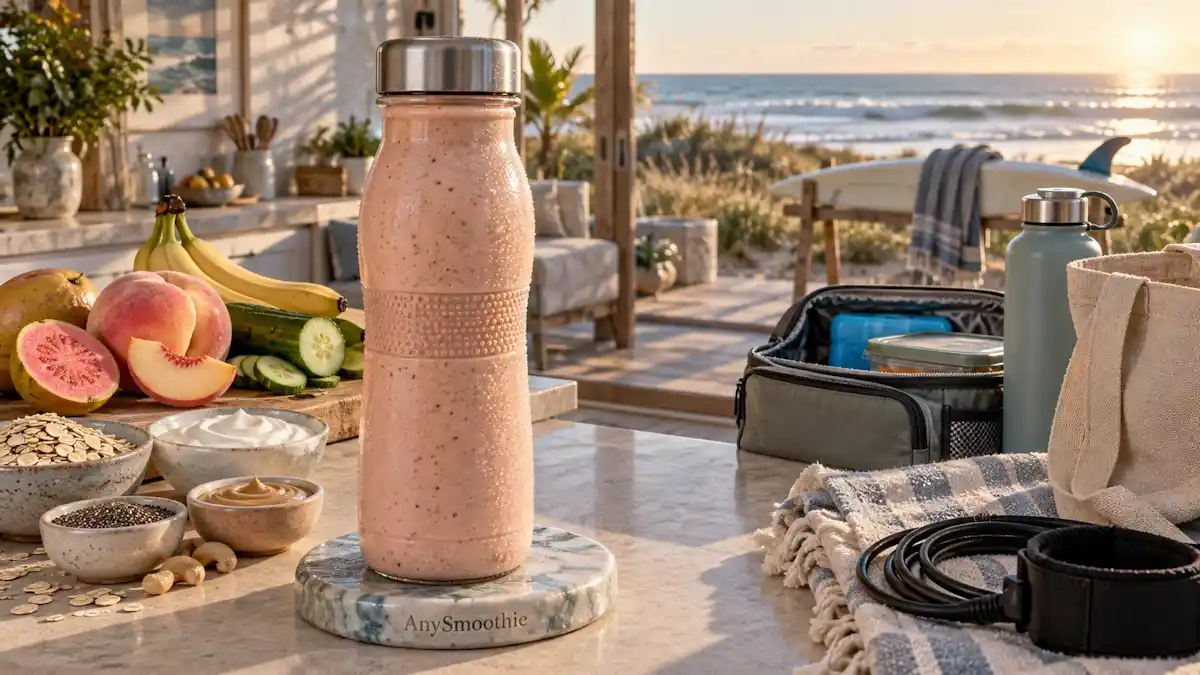
Paddling out, waiting between sets, and staying sharp in the water all demand steady energy. Yet a heavy meal before surfing can sit badly when you’re prone on a board.
Well-planned smoothies for surfing sessions combine fluids, carbohydrates, protein, and minerals in a form that’s often easy to drink. The right recipe depends on when you surf, how long you expect to stay out, and what your stomach handles well.
How Smoothies Support Energy and Hydration Before Surfing
Carbohydrates give your body usable fuel during repeated paddling and pop-ups. Fruit, oats, and milk provide carbohydrates that your body breaks down into glucose, which muscles can use during activity.
Fluids matter too, especially in hot weather or during long sessions. Sodium and potassium help support normal fluid balance, nerve signaling, and muscle function. Scientific guidance on exercise hydration also emphasizes individualized fluid replacement before, during, and after activity.
Protein fits best into a post-surf smoothie, or a larger pre-surf drink consumed well before the paddle-out. It supplies amino acids that support normal muscle repair processes after exercise.
For another outdoor activity where session length and fluid planning matter, portable smoothies for long cycling days offers a related approach.
Choose Ingredients That Feel Light in the Water
Bananas, berries, mango, and rolled oats add carbohydrates without requiring a large meal. Milk, fortified non-dairy milk, and Greek yogurt contribute fluid and protein. Coconut water adds liquid plus naturally occurring electrolytes, while a small spoonful of nut butter adds flavor and some fat.
Keep a close-to-surf smoothie modest. Large portions, heavy amounts of nut butter, and lots of high-fiber ingredients may feel uncomfortable while paddling. Your ideal mix will vary with surf duration, heat, effort, and personal tolerance.
Time Your Smoothie Around the Surf Session
For a short session, try a small smoothie about 30 to 60 minutes before entering the water. Allow more time for a larger serving with oats, yogurt, or nut butter.
After surfing, a balanced smoothie is useful when a full meal isn’t convenient. Test new recipes on easier days rather than before an important swell. In warm conditions, sip water alongside the smoothie instead of treating it as your only drink.
For additional warm-weather food and fluid ideas, smoothies for summer fatigue covers another heat-focused context.
3 Smoothies for Surfing Sessions
These smoothies for surfing sessions use ordinary ingredients and a home blender. Blend each until smooth, adding a splash more liquid if needed.
| Smoothie | Key ingredients | Best timing | Main fuel focus | Approximate serving size |
|---|---|---|---|---|
| Banana oat | Banana, oats, milk | 30 to 90 minutes before | Carbohydrates and fluids | 12 to 16 ounces |
| Mango coconut water | Mango, coconut water, lime | Before warm-weather surfing | Fluids and carbohydrates | 14 to 16 ounces |
| Berry yogurt | Berries, Greek yogurt, nut butter | After surfing | Carbohydrates and protein | 16 to 20 ounces |
The table makes the choice simple: keep pre-surf drinks lighter, then add more protein after your session.
Banana Oat Smoothie for Quick Pre-Surf Fuel
Ingredients
- 1 small banana
- 1/4 cup rolled oats
- 3/4 cup low-fat milk
- A pinch of cinnamon
Steps
Add the milk first, followed by the banana, oats, and cinnamon. Blend until smooth.
This makes about 14 ounces.
The banana and oats provide carbohydrates, while the liquid base supports fluid intake. Oats also make the drink more substantial than fruit alone. If you’re drinking within an hour of paddling, use half the oats or split the smoothie with a friend to keep the portion lighter.
Estimated Nutrition per Serving
- Calories: ~255 kcal
- Protein: ~10 g
- Carbohydrates: ~45 g
- Fat: ~5 g
- Fiber: ~5 g
- Sugars: ~20 g
If I wanted this closer to paddle-out, I’d follow the original lighter suggestion rather than adding more oats or making the serving larger.
Mango Coconut Water Smoothie for Hot Surf Days
Ingredients
- 1 cup frozen mango
- 1 cup coconut water
- 1 teaspoon fresh lime juice
- 1/4 cup plain yogurt
- 1 teaspoon chia seeds, optional
Steps
Add the coconut water first, followed by the mango, lime juice, and yogurt. Blend until smooth. Add the chia seeds if you want a thicker version.
For a thicker version, add 1 teaspoon chia seeds, not a large scoop.
Mango supplies carbohydrates, while coconut water contributes fluid and naturally occurring electrolytes. Still, coconut water isn’t a complete replacement for food or a full hydration plan during long, demanding sessions. For longer activity, sodium-containing fluids may be useful, as research on exercise beverage composition explains.
Estimated Nutrition per Serving
- Calories: ~180 kcal
- Protein: ~5 g
- Carbohydrates: ~39 g
- Fat: ~2 g
- Fiber: ~3 g
- Sugars: ~31 g
Estimate uses plain low-fat yogurt and does not include optional chia seeds.
Berry Yogurt Smoothie for After Surfing
Ingredients
- 1 cup mixed berries
- 3/4 cup Greek yogurt
- 1/2 cup low-fat milk
- 1 tablespoon peanut butter
- A few ice cubes
Steps
Add the milk and Greek yogurt first, followed by the berries, peanut butter, and ice. Blend until smooth.
The recipe makes roughly 18 ounces.
Berries and milk provide carbohydrates, while Greek yogurt supplies protein. Together, those nutrients support normal muscle repair after paddling, duck dives, and pop-ups. For a dairy-free version, use unsweetened soy yogurt, fortified soy milk, and your preferred nut or seed butter.
Estimated Nutrition per Serving
- Calories: ~325 kcal
- Protein: ~23 g
- Carbohydrates: ~30 g
- Fat: ~14 g
- Fiber: ~6 g
- Sugars: ~19 g
A post-surf smoothie should leave room for a regular meal later, especially after a long day at the beach.
Build a Surf Smoothie That Fits Your Session
Match the portion to the day ahead. Before a short early-morning surf, choose a smaller fruit-based drink with milk or a non-dairy alternative. For a longer session, or when you have more time before paddling, add oats or yogurt for extra carbohydrates and protein.
Adjust Portions for Session Length and Weather
Cool weather may make a smaller smoothie feel more appealing, while heat calls for extra attention to fluids. A larger smoothie works better after a long session or when you won’t eat soon afterward. Avoid rigid performance promises, because conditions and digestion vary widely.
Smoothies complement water and regular meals. They don’t replace a balanced diet or individualized professional guidance for people with specific dietary needs.
Pack and Store Smoothies Safely at the Beach
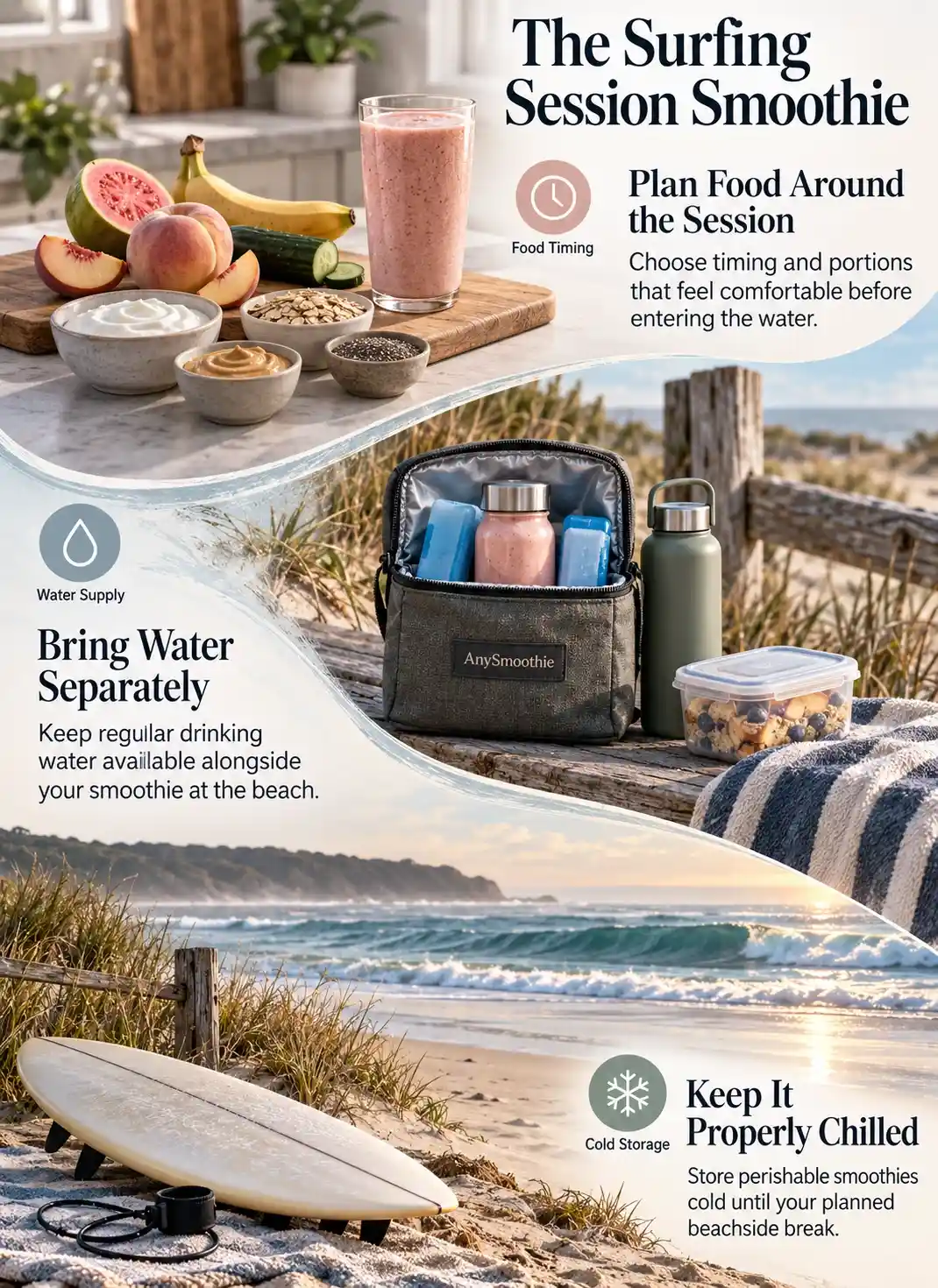
Use a sealed bottle, an ice pack, and an insulated cooler for any smoothie containing milk or yogurt. Blend close to departure when possible, keep the bottle out of direct sun, and shake it before drinking.
The USDA advises discarding perishable foods left out for more than two hours, as described in its safe handling guidance. Bring water and a simple shelf-stable snack for longer beach days.
Beach-day preparation has many of the same cold-storage considerations as other outdoor activities, so portable smoothies for day hikers may also be useful for packing ideas.
Conclusion: A Better Pre- or Post-Surf Routine
The best smoothies for surfing sessions match your timing, weather, session length, and digestion. Start with fluids, easy-to-digest carbohydrates, and an appropriate amount of protein.
Try one recipe during a lower-stakes session, then adjust the portion or ingredients based on how you feel in the water. Bring water, keep your smoothie cold, and enjoy the surf.
🛡️ Safety Notes & Dietary Interactions
- Water Safety Comes First: Never eat or drink while paddling through breaking waves, currents, crowded lineups, or other conditions that demand full attention. Have the smoothie on shore or during a safe break rather than compromising board control.
- Pre-Surf Digestion: Oats, yogurt, nut butter, chia, and larger smoothie portions may feel uncomfortable when lying prone and paddling. Test timing and serving size on easier sessions and reduce fiber, fat, or volume if nausea or fullness develops.
- Hydration Beyond Smoothies: Coconut water and fruit contribute fluid and minerals, but they should not replace plain water. Long, hot, or physically demanding surf sessions may require additional fluids and electrolytes depending on weather and individual sweat losses.
- Beach Cold Storage: Milk, yogurt, soy products, and prepared smoothies require dependable chilling. Keep bottles in an insulated cooler with adequate ice packs and out of direct sun, especially when the beach day extends well beyond the surf session.
FAQs
Which smoothie is best before an early surf session?
The Banana Oat Smoothie is the most practical pre-surf option when you want a small amount of fuel before paddling. It combines banana, oats, and milk for carbohydrate and fluid. If you plan to enter the water within an hour, reduce the oats or serving size so the drink feels lighter.
Which smoothie is best for a hot-weather surf?
The Mango Coconut Water Smoothie is the lightest and most fluid-forward option. Mango supplies carbohydrate, while coconut water contributes fluid and naturally occurring electrolytes. Keep plain water available too, especially when the session is long, the weather is hot, or you are spending additional time at the beach.
Which smoothie is best after surfing?
The Berry Yogurt Smoothie is the most suitable post-surf option because berries and milk provide carbohydrate while Greek yogurt contributes protein. Nut butter adds extra calories and fat, which may be useful when a regular meal will be delayed. Keep the serving moderate so you still have room for normal food later.
How long should I wait after a smoothie before paddling out?
There is no single ideal interval for everyone. A small, lighter smoothie may feel comfortable 30–60 minutes beforehand, while a larger blend containing oats, yogurt, or nut butter may need more time. Your own digestion, session intensity, and portion size are more useful guides than a rigid timing rule.
Can coconut water replace an electrolyte drink during a long surf session?
Not always. Coconut water provides potassium and fluid, but its sodium content may not match what is needed after substantial sweating. For long, hot, or demanding sessions, hydration needs depend on duration, conditions, and individual sweat losses. Treat coconut water as one beverage option rather than a complete rehydration strategy.

Medical Disclaimer: AnySmoothie content is for educational purposes only and is not a substitute for professional medical advice. Consult a healthcare provider for personalized guidance. See our full Disclaimer & Terms of Use. AI Transparency: AnySmoothie may use AI to support content development. All content undergoes human editorial review for accuracy, clarity, and editorial quality. See our full AI Transparency.