

Your blender can’t switch aryl hydrocarbon receptor activity on or off. However, the right ingredients can provide plant compounds, fiber, and amino acid metabolites that interact with this cellular pathway.
The aryl hydrocarbon receptor, or AhR, is a protein that helps cells respond to compounds from food and the gut microbiome. Smoothies may support normal physiological signaling, but they don’t treat disease or guarantee a specific biological effect. These three recipes focus on cruciferous vegetables, colorful plants, fiber, protein, and fermented foods.
How the Aryl Hydrocarbon Receptor Connects Food, Immunity, and the Gut
AhR acts as a molecular sensor inside many types of cells. It responds to certain compounds produced when plants are digested, foods break down, and gut microbes process Amino acids such as tryptophan.
When these compounds bind to AhR, the receptor can influence gene activity. Those signals help coordinate natural barrier function, immune communication, and some detoxification processes. The gut lining, immune cells, and liver all have connections to AhR-related signaling.
The response depends on the compound, dose, timing, and tissue involved. More receptor activation isn’t automatically better. A plant compound that interacts with AhR in one setting may have a different effect elsewhere, while some compounds may influence the pathway indirectly through the microbiome.
Cruciferous vegetables are among the better-studied food sources in this area. Their glucosinolates can break down into compounds such as indole-3-carbinol. Meanwhile, gut bacteria can convert tryptophan into indole derivatives that interact with host receptors. Evidence for many individual fruits, herbs, and polyphenols remains early or indirect.
Researchers continue to study how dietary compounds, the gut microbiome, and the aryl hydrocarbon receptor interact within normal physiology. The National Institute of Environmental Health Sciences overview of the aryl hydrocarbon receptor provides additional background on this complex signaling pathway.
A varied eating pattern is likely to matter far more than any single smoothie or individual ingredient. Fiber, adequate protein, hydration, sleep, and regular intake of minimally processed foods create a stronger foundation than chasing a single AhR-related ingredient. A Fiber-rich smoothie for gut microbiome support can fit that broader pattern.
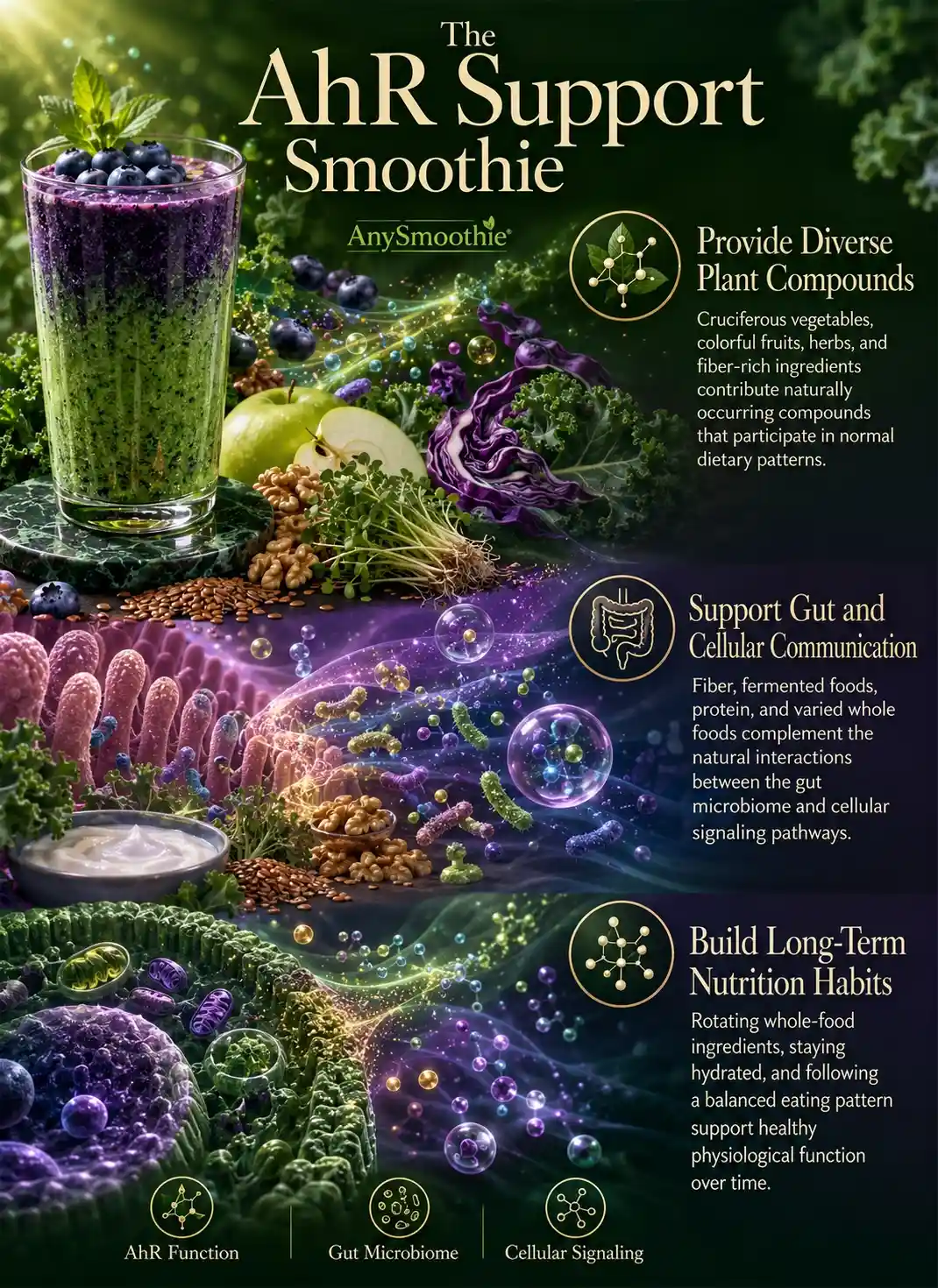
3 Smoothies Supporting Aryl Hydrocarbon Receptor Function
Each recipe makes one moderate serving, about 12 to 16 ounces. Blend until smooth, then adjust the texture with water or ice.
| Smoothie | Key ingredients | Potential AhR-related compounds | Flavor and texture | Practical notes |
|---|---|---|---|---|
| Cruciferous green | Broccoli sprouts, blueberries, orange | Glucosinolate breakdown products, polyphenols, fiber | Peppery, bright, smooth | Start with 1/4 cup sprouts |
| Fermented green | Greens, raspberries, parsley, kefir, chia | Fiber, microbial metabolites, plant compounds | Tart, creamy, lightly herbal | Use plain yogurt or kefir |
| Cocoa cherry pear | Cocoa, cherries, pear, yogurt, flax | Polyphenols, fiber, tryptophan from protein foods | Rich, creamy, mildly sweet | Choose unsweetened cocoa |
How to Use AhR-Supportive Smoothies Wisely
Smoothies that include cruciferous vegetables, fiber-rich foods, quality protein, and minimally processed ingredients work best as part of a balanced eating pattern. Rather than focusing on a single compound or receptor, aim for dietary variety, moderate portions, and consistent habits. The following practical tips can help you build recipes that fit comfortably into your everyday routine.
Simple Serving Rules That Keep the Recipes Balanced
Keep one smoothie to roughly 12 to 16 ounces. A smaller serving makes it easier to include the drink alongside a meal instead of turning it into a large liquid dessert.
Use whole fruit, vegetables, seeds, and plain dairy rather than juice or sweetened yogurt. A clear protein source, such as plain yogurt, kefir, or protein-rich milk, can make the drink more filling. Chia and flax also add fiber, but increase them gradually if your usual diet contains little fiber.
Drink water throughout the day, because concentrated fiber works better with adequate fluid. Also, chew some of your meals. Smoothies can be convenient, yet an eating pattern made entirely of blended foods may provide less chewing and may feel less satisfying.
These blends work best as part of a varied diet. Rotate berries, leafy greens, herbs, and protein sources instead of drinking the same recipe every day. That approach provides a broader range of plant compounds and supports dietary variety.
When to Adjust Ingredients or Get Professional Guidance
Modify a recipe if you have a food allergy, lactose intolerance, sensitivity to high-fiber foods, or trouble digesting raw cruciferous vegetables. Cooked kale can replace raw greens, and water or a suitable milk alternative can replace yogurt or kefir.
Blood sugar goals also affect ingredient choices. Use less fruit, keep the pear portion modest, and include protein or seeds when that fits your eating plan. People taking medicines affected by vitamin K intake should discuss consistent portions of leafy greens with a qualified clinician rather than making sudden, large changes.
Food-based smoothies are different from concentrated supplements, extracts, or isolated compounds. A large dose of a plant extract shouldn’t be treated as equivalent to a serving of kale or berries. If you have a chronic condition, take several medicines, or plan a major dietary change, personalized guidance is appropriate.
Whole foods provide complex mixtures of nutrients and naturally occurring compounds that differ from concentrated botanical extracts or isolated supplements. The Nutrient recommendations and databases encourage varied dietary patterns built around minimally processed foods.
Conclusion: A Practical Way to Support AhR-Related Nutrition
The most sensible smoothies supporting aryl hydrocarbon receptor function combine modest portions of cruciferous vegetables or colorful plants with fiber, protein, and fermented foods. AhR is a complex sensing pathway, so no recipe can guarantee a particular cellular response.
Choose one blend, keep added sugar low, and rotate the ingredients over time. Judge the smoothie by how well it fits your overall eating pattern, not by a promise of controlling one receptor.
🛡️ Safety Notes & Dietary Interactions
- Keep Expectations Realistic: These smoothies provide whole-food nutrients that may support normal physiology within a balanced diet. They do not directly activate or regulate the aryl hydrocarbon receptor, treat disease, or guarantee specific cellular responses.
- Adjust Fiber and Greens Gradually: Cruciferous vegetables, chia seeds, flaxseed, and leafy greens are naturally high in fiber. Increase portions gradually, drink adequate fluids, and modify recipes if you have digestive sensitivities or conditions affecting fiber tolerance.
- Consider Individual Medical Needs: People with inflammatory bowel disease, kidney disease, diabetes, food allergies, pregnancy, lactose intolerance, or medication-related dietary restrictions should personalize ingredients with guidance from a qualified healthcare professional.
- Maintain Dietary Variety: Rotating cruciferous vegetables, colorful fruits, fermented foods, and protein sources provides a wider range of nutrients and plant compounds than relying on a single smoothie or one specific ingredient every day.
FAQs
What is the aryl hydrocarbon receptor (AhR)?
The aryl hydrocarbon receptor, or AhR, is a cellular protein that responds to certain compounds produced from foods, the gut microbiome, and normal metabolism. It participates in physiological processes involving immune communication, barrier function, and cellular signaling throughout the body.
Can smoothies activate the aryl hydrocarbon receptor?
No. A smoothie cannot directly activate or control AhR in a predictable way. Whole foods provide nutrients and plant compounds that may interact with normal physiological pathways after digestion, but the body’s responses are complex and influenced by many biological factors.
Why are cruciferous vegetables included in these smoothies?
Broccoli sprouts, kale, and other cruciferous vegetables contain glucosinolates that can be converted into compounds such as indole-3-carbinol during digestion. These naturally occurring compounds have been widely studied for their interactions with normal cellular signaling pathways, including AhR-related biology.
Why include fermented foods and fiber?
Fermented foods such as yogurt and kefir, together with fiber-rich fruits, vegetables, and seeds, help support a diverse gut microbiome. Gut microbes produce metabolites from dietary components, and some of these naturally occurring compounds may participate in normal host signaling pathways.
Can I drink these smoothies every day?
Yes. These smoothies can be included as part of a balanced eating pattern. Rotating different fruits, cruciferous vegetables, leafy greens, fermented foods, and protein sources helps increase dietary variety and provides a broader spectrum of nutrients and plant compounds over time.

Medical Disclaimer: AnySmoothie content is for educational purposes only and is not a substitute for professional medical advice. Consult a healthcare provider for personalized guidance. See our full Disclaimer & Terms of Use. AI Transparency: AnySmoothie may use AI to support content development. All content undergoes human editorial review for accuracy, clarity, and editorial quality. See our full AI Transparency.