
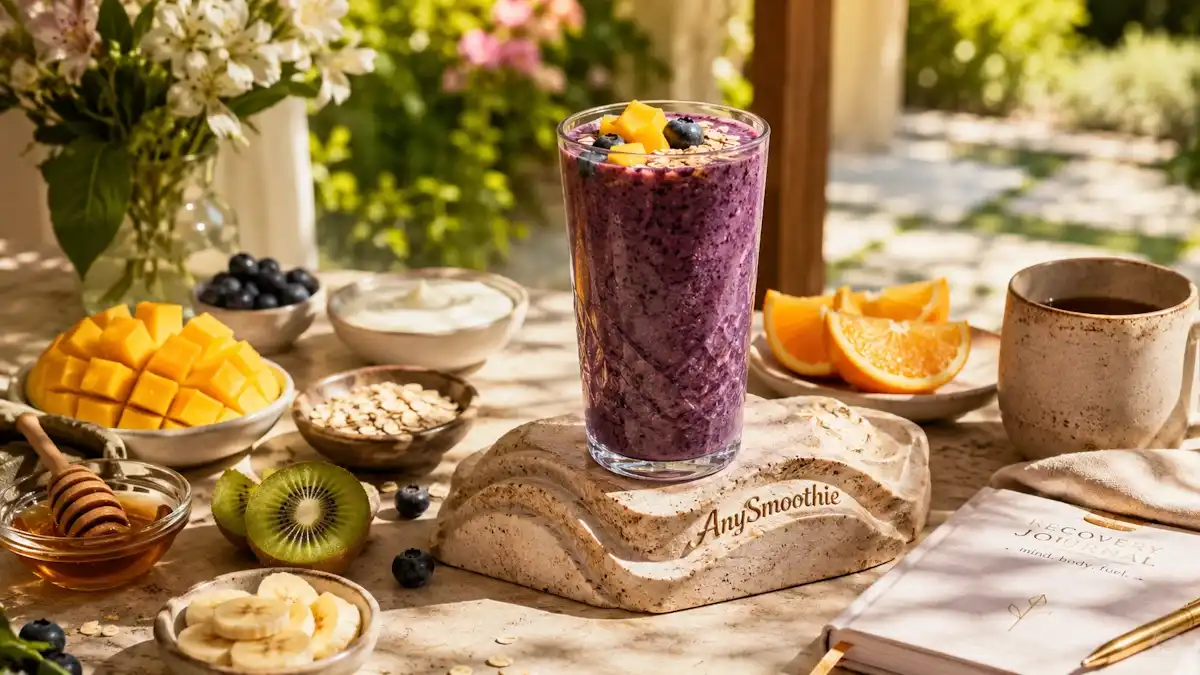
After a stretch of illness, chewing a full meal can feel like too much work. Appetite may be low, energy may be flat, and even strong smells can turn you off food. Smoothies for recovery after illness can make that phase easier because they’re simple to sip, easy to adjust, and useful when you want hydration plus a little fuel.
The goal is modest. You want fluids, steady calories, and nutrients your body can use without much effort. The sections below cover simple formula ideas, safe ingredient choices, and a few easy recipes you can make when your energy is low.
Why smoothies can support recovery after illness
Smoothies work well during recovery because they can deliver water, carbs, protein, and micronutrients in one glass. They also reduce the work of chewing and make it easier to keep taking in calories when solid food feels heavy.
If you’re dealing with ongoing vomiting, dehydration, or trouble swallowing, smoothies should sit beside medical care, not replace it.
Why they are easier to tolerate than heavy meals
Blended textures often feel gentler on a sore throat and a sensitive stomach. Small sips are easier than a big plate of food, and that matters when appetite is low. They also help when taste and smell are off, because cold or mildly sweet blends can go down more easily.
The nutrients that matter most when you are getting better
During recovery, a few nutrients matter more than others. Protein supports normal tissue repair, carbs help refill energy, and fluids support fluid balance. Vitamin C, zinc, potassium, and healthy fats also help with nutrient intake and routine body functions. The point is not to pack in everything at once, but to give your body a steady, easy mix.
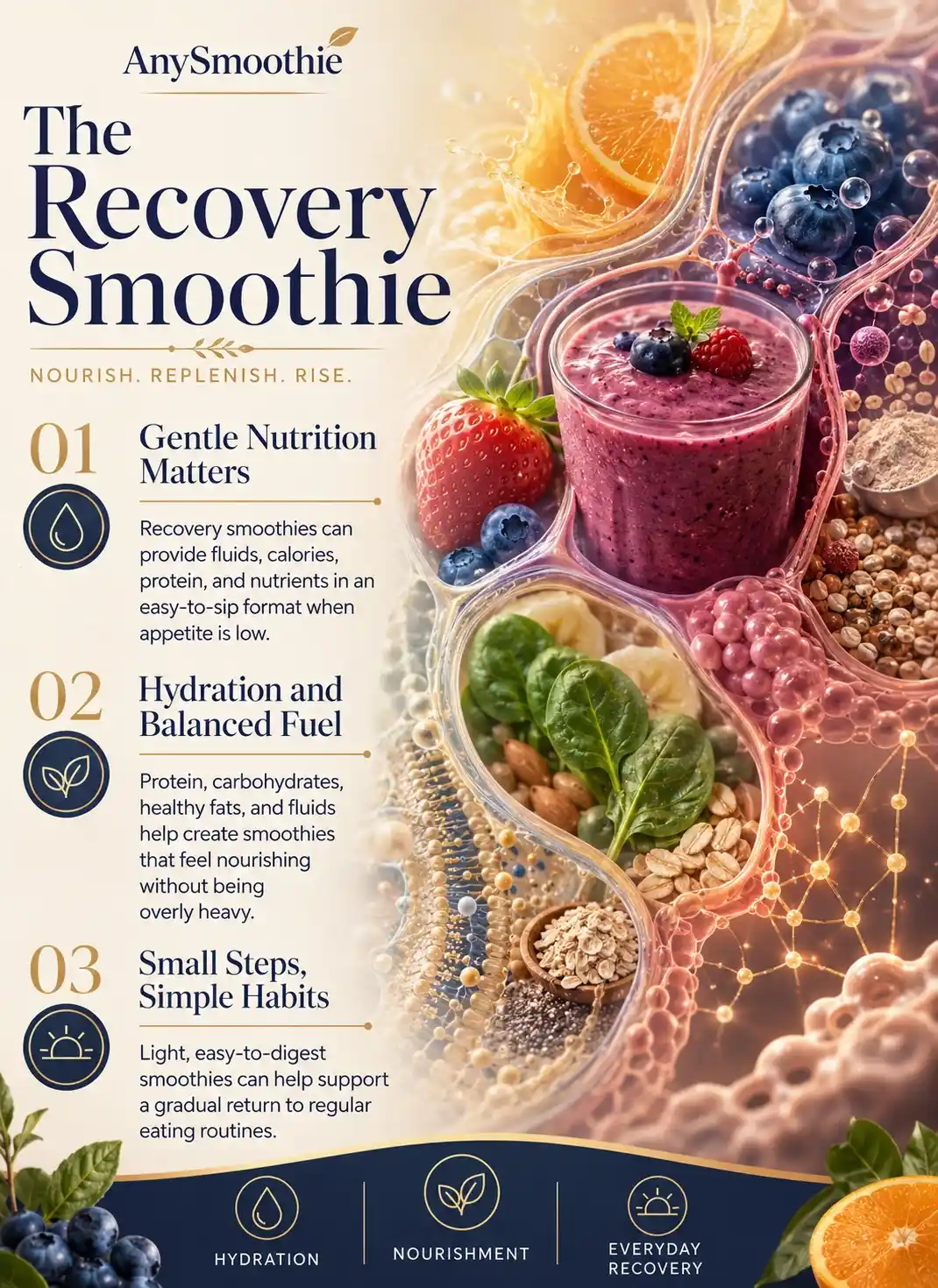
How to build smoothies for recovery after illness without upsetting your stomach
Build recovery smoothies with a soft base, a modest amount of protein, and a texture you can sip without effort. Start small, about 8 to 12 ounces, then adjust if it sits well. A recovery blend should feel smooth, not thick like frosting.
Start with a small glass. If it feels easy to drink, you can make the next one richer.
Start with a gentle base that adds fluids
Water keeps things light. Coconut water adds fluid plus potassium. Milk, kefir, and lactose-free milk add more calories and protein, while unsweetened plant milks work when you want a gentler taste. The best base depends on what your stomach accepts and whether you need hydration or more fuel.
Add protein, carbs, and healthy fats in the right amount
Greek yogurt, silken tofu, nut butter, oats, banana, and avocado all help, but keep the first version modest. If your stomach is touchy, use half a banana, a few spoonfuls of yogurt, or a teaspoon of nut butter. You can always add more later. A balanced post-illness smoothie often needs more than fruit alone, since fruit-heavy blends can fade fast.
Use flavor boosters that help when taste is off
Use ginger, cinnamon, cocoa, vanilla, berries, or a small squeeze of citrus when taste feels dull. These ingredients add interest without forcing a lot of sugar. Keep the acid low if your throat is sore, and keep ginger light if your stomach is sensitive.
What to avoid when you are making a recovery smoothie
Some choices make a recovery smoothie harder to tolerate. Very large servings can feel like a chore. So can too much fiber, a heavy pour of nut butter, or a pile of raw greens. If dairy bothers you, skip regular milk and start with lactose-free or plant-based options. People with medical conditions, food restrictions, or swallowing issues may need more specific guidance.
Ingredients that may feel too heavy at first
Big green smoothies often look healthy but can be too much at first. Large amounts of spinach, kale, chia, or oats can thicken the blend and slow digestion. Heavy dairy can also sit poorly if your gut is still calm. A soft, simple mix is easier to finish.
Added sugar and too much acidity can backfire
Fruit juice, syrup, and sweetened yogurt can push sugar up fast. That can make the blend feel flat soon after and may be rough on energy swings. Very tart blends can also sting a sore throat or sensitive stomach, so keep citrus modest until you feel better. After oral procedures, texture matters even more, and smooth recovery after dental surgery makes that clear.
Comparison table: best smoothie ingredients for common recovery needs
Use this table when you want a quick match between the ingredient and the need.
| Ingredient | Main benefit | Best for | Texture or taste notes | Caution or limit |
|---|---|---|---|---|
| Banana | Easy carbs, creamy texture | Low appetite, sore throat | Mild, sweet, thickens blends | Use half first if your stomach is sensitive |
| Berries | Vitamin C and flavor | Light fruit-based smoothies | Tart-sweet, cold and bright | Too much can make the blend too sour |
| Greek yogurt | Protein and creaminess | Recovery with low appetite | Thick and tangy | Skip if dairy bothers you |
| Kefir | Protein plus fluids | Gentle sipping | Thin, tangy, easy to drink | Can taste sharp for some people |
| Oats | Extra carbs and body | Need more staying power | Makes smoothies thicker | Keep the amount small at first |
| Spinach | Mild micronutrient boost | When you want greens | Light flavor in small amounts | Large handfuls can feel heavy |
| Nut butter | Fat and calories | Low appetite, more energy | Rich and dense | Use 1 teaspoon to 1 tablespoon |
| Coconut water | Fluids and potassium | Hydration focus | Light, slightly sweet | Not enough protein on its own |
| Ginger | Flavor and warmth | Nausea-prone moments | Sharp in large amounts | Use a small piece only |
The best choice depends on how you feel that day. Hydration days call for lighter blends, while low-appetite days need more protein and calories.
3 Smoothies for recovery after illness
These three blends keep the work low and the ingredients familiar.
Conclusion
The best smoothies for recovery after illness are simple, gentle, and balanced. Match the blend to how you feel, then keep it easy to digest and easy to drink.
On weak days, light and thin works. On low-appetite days, add protein and a little fat. When your throat or stomach feels off, keep acid and fiber low.
Pick one small recipe, see how it sits, then adjust the next glass. That’s often the easiest way back to steady eating.
🛡️ Safety Notes & Dietary Interactions
- Recovery Nutrition Should Stay Flexible: Appetite, digestion, taste, and energy can vary during recovery. Adjusting smoothie size, texture, and ingredients based on daily tolerance is often more practical than following a rigid plan.
- Hydration Remains a Priority: Smoothies can contribute fluids, but they should complement regular hydration. Water, electrolyte-containing beverages, and nutrient-rich foods all play important roles during recovery periods.
- Introduce Rich Ingredients Gradually: Nut butters, large amounts of fiber, protein powders, and concentrated supplements may feel heavy during early recovery. Starting with simpler blends often improves comfort and tolerance.
- Medical Conditions May Need Individual Guidance: People recovering from surgery, serious illness, swallowing difficulties, digestive disorders, or medically restricted diets should follow guidance from their healthcare team when choosing foods and beverages.
FAQ
Why are smoothies often recommended during recovery after illness?
Smoothies can combine fluids, carbohydrates, protein, and micronutrients in a format that requires little chewing. This makes them easier to consume when appetite is low, energy is limited, or solid foods feel overwhelming. They also allow portion sizes and ingredients to be adjusted based on how someone feels each day.
What nutrients are most important in recovery smoothies?
The article highlights protein, carbohydrates, fluids, healthy fats, potassium, vitamin C, and other micronutrients. Protein helps support normal tissue maintenance, carbohydrates provide energy, and fluids support hydration. The overall goal is to create a balanced blend that is easy to tolerate rather than focusing on a single nutrient.
Why should recovery smoothies stay simple at first?
During recovery, digestion and appetite can be unpredictable. Large amounts of fiber, heavy fats, strong flavors, or oversized portions may feel uncomfortable. Starting with a gentle base and a few familiar ingredients makes it easier to identify what works well and what may need adjustment.
Which ingredients tend to work well in recovery smoothies?
Bananas, berries, peaches, Greek yogurt, kefir, coconut water, lactose-free milk, almond milk, silken tofu, small amounts of nut butter, and modest portions of oats are commonly used. These ingredients help create smoothies that are soft, easy to drink, and adaptable to different recovery needs.
What is the most important takeaway from the article?
The article emphasizes matching the smoothie to your current stage of recovery. On days when hydration is the priority, lighter blends may work best. When appetite improves, adding more protein, calories, and healthy fats can make the smoothie more satisfying. Consistency, comfort, and gradual progression are more important than creating a perfect recipe.

Medical Disclaimer: AnySmoothie content is for educational purposes only and is not a substitute for professional medical advice. Consult a healthcare provider for personalized guidance. See our full Disclaimer & Terms of Use. AI Transparency: AnySmoothie may use AI to support content development. All content undergoes human editorial review for accuracy, clarity, and editorial quality. See our full AI Transparency.