
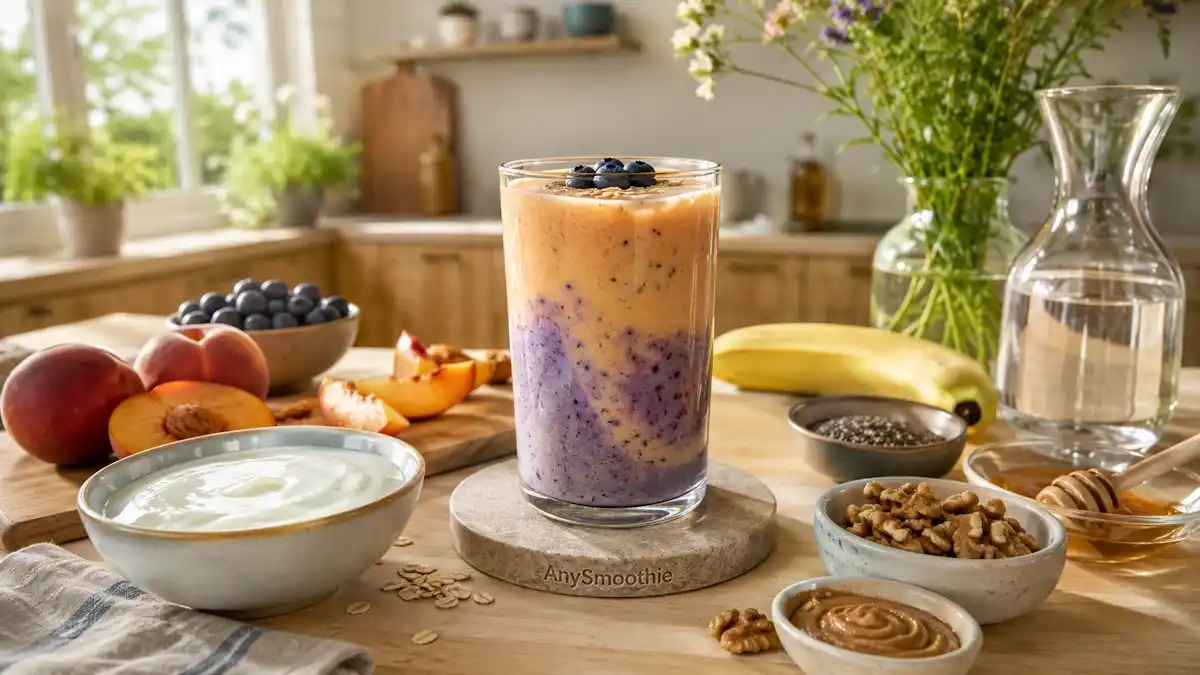
When a full plate feels like too much, a smoothie can do a lot with very little effort. For older adults who are eating less, the goal is simple: easy calories, enough protein, steady hydration, and gentle nutrition in a form that’s easier to sip than chew.
The National Council on Aging has a helpful overview of common nutrition challenges in older adults, including appetite changes and taste shifts. The right blend can fit around those changes instead of fighting them.
Why smoothies work well for older adults with reduced appetite
Reduced appetite can make ordinary meals feel bigger than they are. A smoothie compresses nutrition into a smaller volume, so it’s easier to finish without sitting through a long, tiring meal.
That matters when chewing takes work, dry mouth shows up, or food starts tasting bland. A good smoothie can also support hydration, which helps keep the whole system moving.
For a closer look at gentler blends, how to make gut-friendly smoothies is a useful companion. Liquid meals can be easier on the stomach when solids feel heavy or slow.
When eating feels tiring, a sip can be easier than a meal
Fatigue changes the way people eat. So do dental issues, dry mouth, and smaller hunger cues.
A smoothie lowers the effort. There’s less chewing, less time at the table, and less pressure to get through a large portion. That makes it easier to keep up with normal energy intake, even on low-appetite days.
What a good smoothie should provide, beyond fruit
Fruit gives flavor, color, and quick carbs, but fruit alone usually fades fast. A better smoothie also includes protein, healthy fat, fiber, and enough fluid to stay easy to drink.
That mix helps the smoothie feel more complete. It also keeps the glass from turning into dessert with a blender attached.
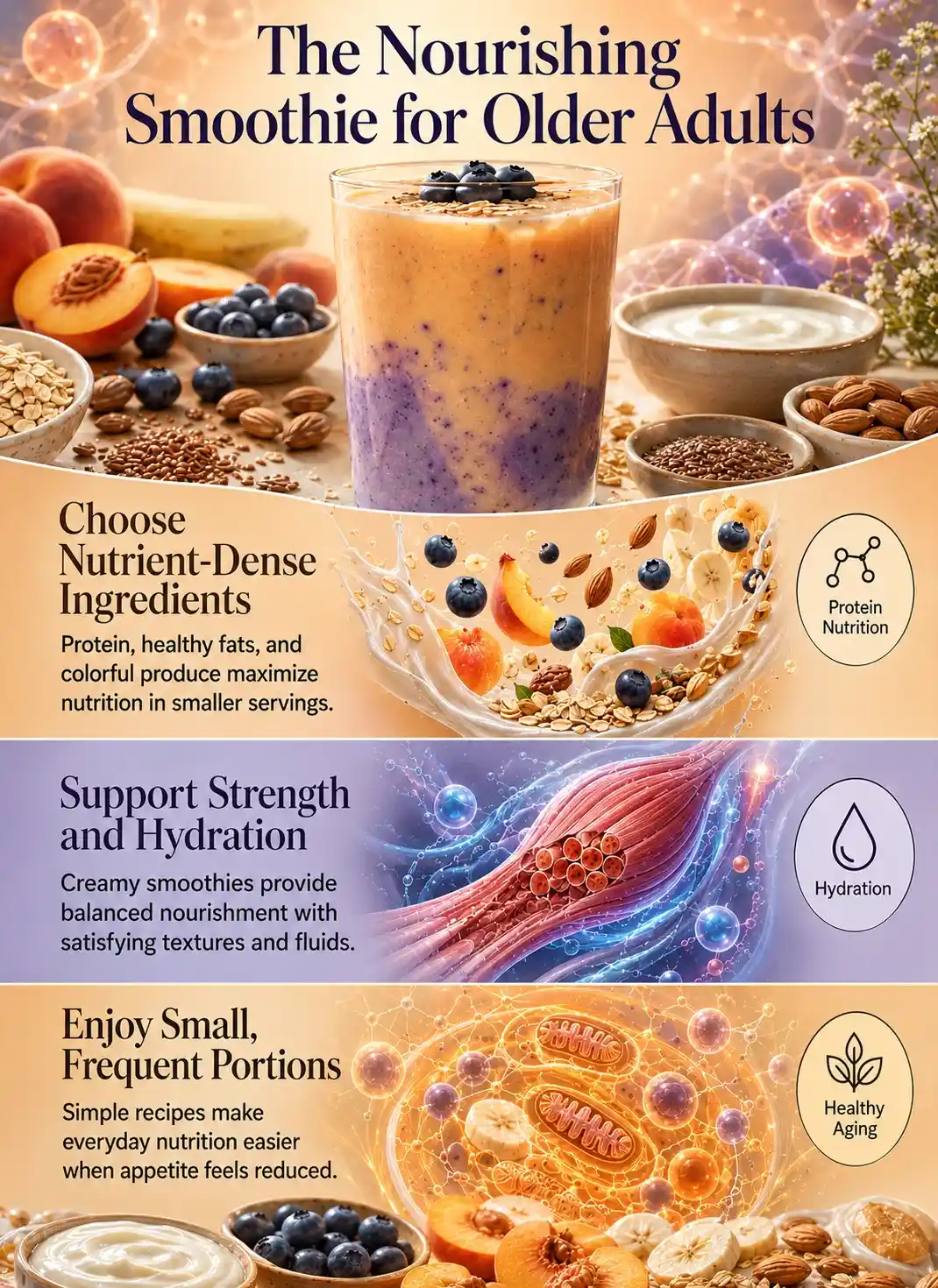
How to build smoothies for older adults with reduced appetite
The best smoothies for this situation stay balanced. They should be filling without feeling heavy, and simple without being bland.
Recipes built for steadier fuel often resemble smoothies for natural energy, because they pair carbs with protein and fiber. Start with a base that fits the person’s taste, then add one or two upgrades.
Choose a protein base that fits the person’s needs
Greek yogurt, milk, kefir, soy milk, silken tofu, nut butter, and protein powder all work. The right pick depends on taste, digestion, and chewing or swallowing comfort.
If dairy feels fine, yogurt and milk are easy wins. If not, fortified soy milk or silken tofu can still give a smooth texture with decent protein.
Add calories and healthy fats without making it hard to drink
Avocado, oats, chia seeds, ground flax, and nut butters can make a smoothie more satisfying. A small drizzle of olive oil also works in some blends, though it’s best used sparingly.
These ingredients help raise nutrition density without requiring a larger serving. That can matter when appetite is low and every ounce counts.
Keep the texture smooth, the flavor familiar, and the sugar balanced
Ripe fruit blends better and tastes sweeter without extra sugar. Frozen fruit can help with thickness, but too much ice can make a smoothie thin and watery after a few minutes.
Simple flavors often work best. Berry, banana, peach, and mango are easy starting points, especially when taste buds feel sensitive.
3 Smoothies for older adults with reduced appetite
Each of these ideas has a different job. One leans on protein, one gives more staying power, and one feels lighter and more refreshing.
| Smoothie | Ingredients | Protein support | Calorie density | Best time to use | Texture or taste profile |
|---|---|---|---|---|---|
| Creamy berry protein smoothie | Berries, Greek yogurt or soy yogurt, milk, chia | High | Moderate | Breakfast or between meals | Cool, mild, not too sweet |
| Banana peanut butter smoothie | Banana, peanut butter, oats, milk, cinnamon | Moderate to high | Higher | When a full meal feels too big | Thick, filling, familiar |
| Tropical yogurt smoothie | Pineapple or mango, yogurt, fortified milk, optional silken tofu | Moderate | Moderate | Afternoon or after activity | Light, bright, easy to sip |
The best choice depends on what the person can finish comfortably. Texture matters as much as nutrition.
What to watch for before making smoothies a daily habit
A smoothie routine works best when it fits the person, not a rulebook. Food allergies, lactose intolerance, diabetes-friendly adjustments, and swallowing comfort all matter.
The NIH overview of appetite decline in older people is a good reminder that low appetite can have several causes. If the change feels new or persistent, a clinician or dietitian can help tailor the plan.
Simple swaps for common food restrictions
Lactose-free milk and yogurt keep dairy-based recipes workable for more people. Fortified soy milk is another solid option, especially when protein matters.
For nut-free smoothies, use soy yogurt, seed butters, or silken tofu. If sugar needs to stay lower, choose unsweetened milk and fruit like berries instead of juice-heavy blends.
Signs a smoothie plan needs adjusting
Watch for poor appetite that keeps getting worse, unexpected weight loss, nausea, or trouble swallowing. Those are signs the issue needs more than a new recipe.
If a smoothie causes fullness too fast, start smaller and build slowly. If it still feels hard to eat, check in with a healthcare professional.
Conclusion
Smoothies can make nourishment easier when appetite is low. They work best when they include protein, a little fat, some fiber, and enough fluid to stay easy to sip.
Keep the texture smooth, keep the flavor familiar, and choose recipes the person will actually enjoy. When eating feels like a chore, a well-made smoothie can turn one small glass into a more workable meal.

Medical Disclaimer: AnySmoothie content is for educational purposes only and is not a substitute for professional medical advice. Consult a healthcare provider for personalized guidance. See our full Disclaimer & Terms of Use. AI Transparency: AnySmoothie may use AI to support content development. All content undergoes human editorial review for accuracy, clarity, and editorial quality. See our full AI Transparency.