
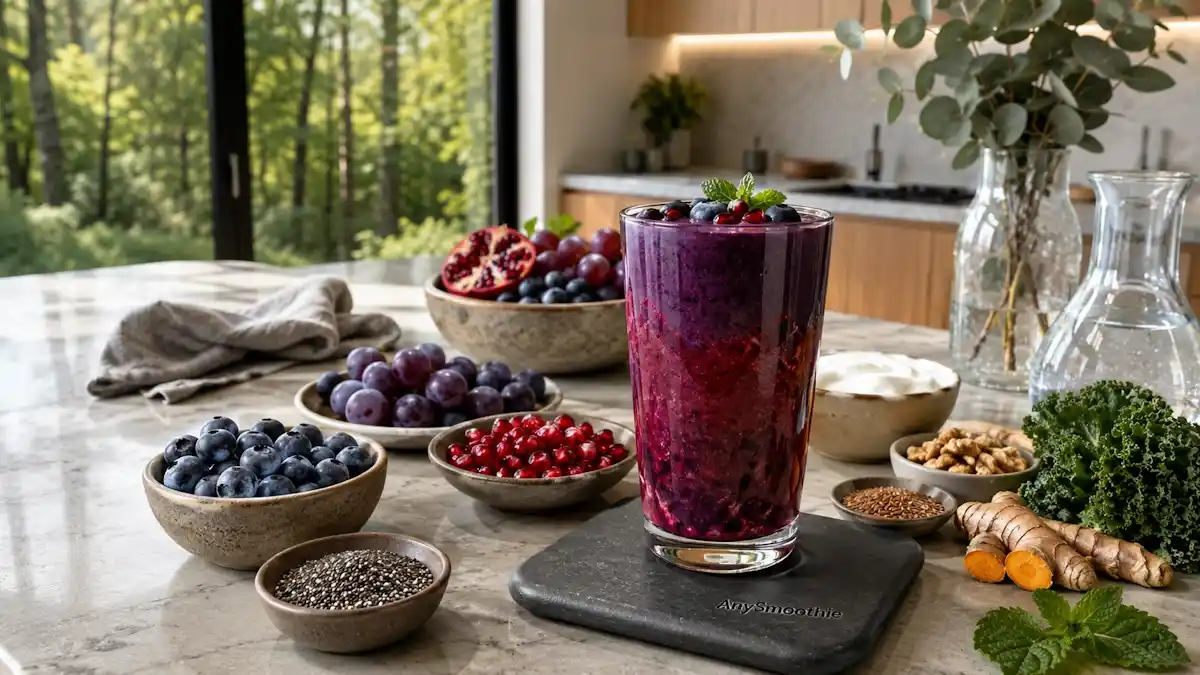
Cells live in constant chemical traffic. They use oxidation and reduction to make energy, clear byproducts, and stay responsive under stress. When that balance gets strained, the body leans harder on its own antioxidant systems, including glutathione, vitamin C recycling, and mitochondrial defenses.
That’s where smoothies for intracellular redox balance can fit well. A smart blend can bring fiber, minerals, polyphenols, protein, and fats into one glass without pushing sugar too high.
The goal is simple, use food to support the systems your cells already rely on. The next sections show what belongs in the blender, what to avoid, and how to build three versions that work for different goals.
Why smoothies can support intracellular redox balance
A smoothie works best when it’s built for nutrient density, not just taste. Whole foods supply the raw materials the body uses to manage oxidative load, and that matters because redox balance is a network, not a single switch. A PubMed Central review on diet and oxidative stress describes this idea clearly in its redox systems biology overview.
Inside that network, vitamin C helps recycle other antioxidants, carotenoids and flavonoids add plant compounds the body can use, and minerals such as selenium, zinc, and magnesium support the enzymes that keep defenses running. A recent update on cellular redox systems also notes that antioxidant enzymes help restore balance inside the cell, which is why food quality matters more than a flashy ingredient list. See the cellular redox systems review (ScienceDirect) for further reading.
A smoothie can look healthy and still push sugar too hard. Balance is what keeps it useful.
The cell-level roles of antioxidants, polyphenols, and minerals
Think of these nutrients as helpers for your own defense system. Vitamin C supports recycling, polyphenols add plant-based stress buffering, and minerals help enzymes do their work. None of them act like a quick fix. They give your body better tools.
Why blood sugar swings can work against redox balance
A smoothie that is heavy on fruit juice or sweet fruit can spike glucose fast. That can leave you hungry again soon and make energy feel uneven. A better blend includes fiber, protein, and fat, which slow digestion and keep the release of sugar steadier. That matters because steadier fuel places less demand on the body’s normal metabolic regulatory systems.
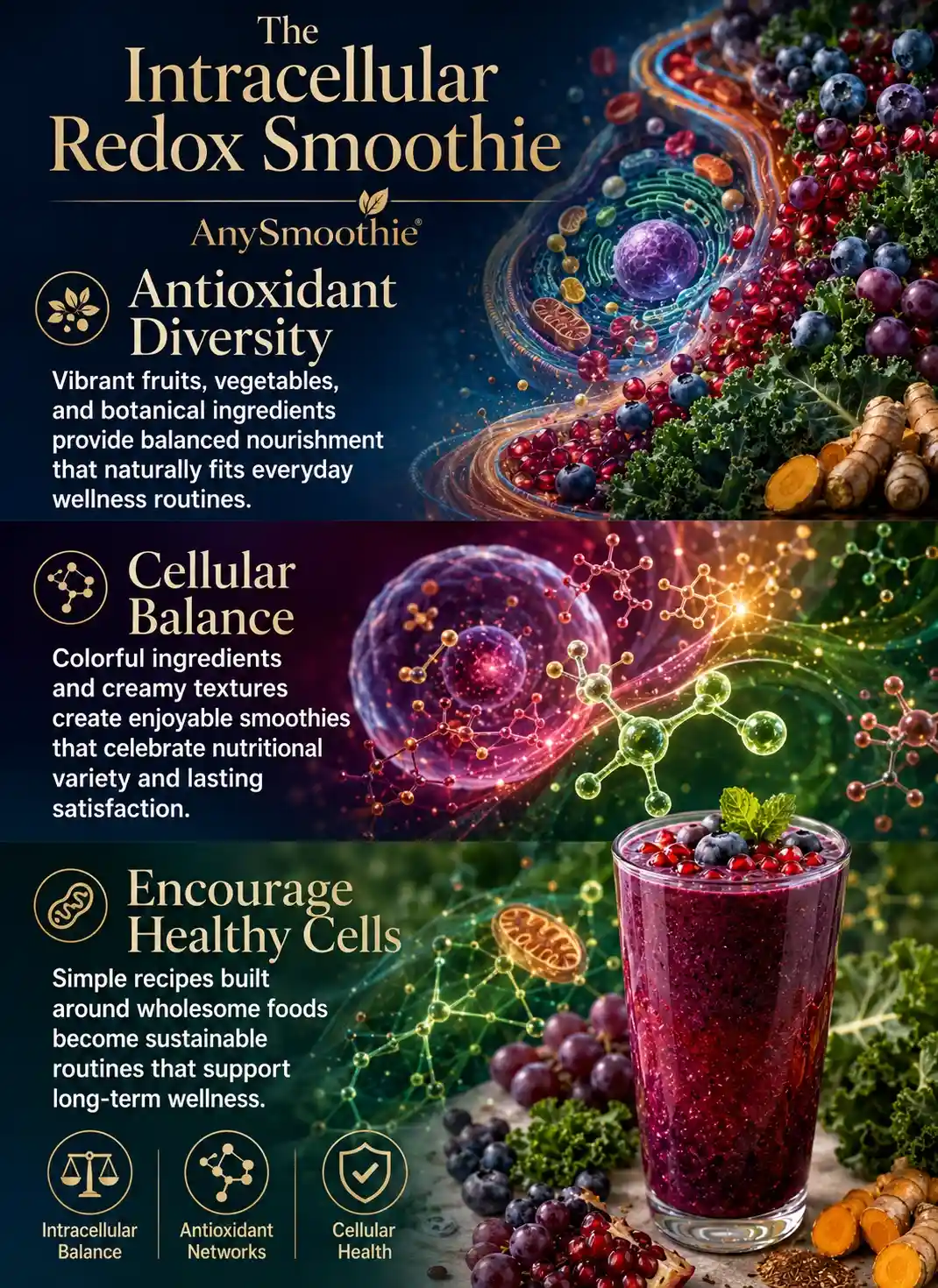
The best ingredients for smoothies for intracellular redox balance
The strongest blends start with greens and a modest amount of fruit, then add protein and fat for structure. In other words, the blender should make a balanced meal, not a dessert in disguise. If you want a broader template for that style of build, a simple high-efficiency smoothie guide lays out a clean fat-protein-phytochemical base.
Leafy greens, herbs, and low sugar bases
Spinach, kale, romaine, parsley, cilantro, cucumber, and celery all add volume and micronutrients without much sugar. Unsweetened almond milk, water, or a little coconut water work well as bases. They keep the texture smooth while leaving room for the more active ingredients.
Fruit choices that add antioxidants without overloading sugar
Berries are the easiest win here. Blueberries, raspberries, and cherries bring color and polyphenols. Kiwi, lemon, lime, and a small piece of green apple add brightness and vitamin C without turning the smoothie into a sugar load.
Protein, fats, and add-ins that make the smoothie work harder
Chia, flax, hemp, Greek yogurt, avocado, nut butter, cacao, ginger, turmeric, and cinnamon all pull extra weight. Protein supports satiety, fats improve mouthfeel, and seed oils from chia or flax add texture plus useful fatty acids. Cacao, ginger, and turmeric bring strong flavor, so you need less sweetener. A spoonful of these add-ins often does more than a long list of powders.
3 Smoothies for intracellular redox balance
Here are three simple blends with different textures and flavor profiles.
| Smoothie | Best for | Key ingredients | Redox-supportive features | Sweetness level |
|---|---|---|---|---|
| Green citrus recovery blend | Lower sugar mornings | Spinach, cucumber, lemon, kiwi, chia, almond milk | Vitamin C, hydration, fiber, mineral support | Low |
| Berry cacao antioxidant blend | Post-workout or afternoon | Blueberries, raspberries, cacao, flax, Greek yogurt, water or milk | Polyphenols, protein, steady energy | Medium |
| Golden ginger turmeric blend | A richer, calming option | Turmeric, ginger, mango, avocado, yogurt, black pepper, creamy base | Plant compounds, fats for absorption, balanced texture | Medium |
The pattern is easy to see. Keep fruit in check, then let greens, protein, and fats carry the blend.
Green Citrus Recovery Blend
Ingredients
- 1 cup spinach or kale
- 1/2 cup cucumber
- 1 tablespoon lemon or lime juice
- 1/2 kiwi or 1 small green apple
- 1 tablespoon chia seeds
- 1 cup unsweetened almond milk
Blend until completely smooth.
It tastes fresh and light. It also keeps sugar lower while still bringing vitamin C, minerals, and fiber.
Estimated Nutrition per Serving
Estimated with spinach, cucumber, lime juice, half a kiwi, chia seeds, and unsweetened almond milk.
- Calories: ~150 kcal
- Protein: ~6 g
- Carbohydrates: ~17 g
- Fat: ~8 g
- Fiber: ~8 g
- Sugars: ~5 g
Kiwi keeps this blend brighter and softer than green apple, while chia gradually changes the texture after blending. For a light recovery drink, blend it slightly thinner than you think you need if you won’t drink it immediately.
Berry Cacao Antioxidant Blend
Ingredients
- 3/4 cup blueberries
- 1/2 cup raspberries
- 1 tablespoon unsweetened cacao powder
- 1 tablespoon ground flaxseed or hemp hearts
- 3/4 cup plain Greek yogurt or 1 serving plant protein
- 3/4 cup unsweetened milk or water
Blend until creamy, adding more liquid if needed.
Berries bring a strong polyphenol profile, while cacao adds depth and a deeper, more bitter note that balances the fruit.
Estimated Nutrition per Serving
Estimated with blueberries, raspberries, unsweetened cacao, ground flaxseed, plain nonfat Greek yogurt, and unsweetened soy milk.
- Calories: ~365 kcal
- Protein: ~28 g
- Carbohydrates: ~47 g
- Fat: ~10 g
- Fiber: ~16 g
- Sugars: ~25 g
Golden Ginger Turmeric Blend
Ingredients
- 1/2 teaspoon ground turmeric
- 1/2 teaspoon freshly grated ginger
- 1/2 cup mango or pineapple
- 1/4 avocado or 1/2 cup plain yogurt
- 1 small pinch black pepper
- 1 cup unsweetened milk or plant milk
Blend until smooth and creamy.
This one tastes richer and more soothing. The small fruit portion gives flavor without letting sugar run the show.
Estimated Nutrition per Serving
Estimated with ground turmeric, fresh ginger, mango, one-quarter avocado, black pepper, and unsweetened soy milk.
- Calories: ~250 kcal
- Protein: ~10 g
- Carbohydrates: ~29 g
- Fat: ~12 g
- Fiber: ~7 g
- Sugars: ~18 g
Fresh ginger and black pepper can quickly overpower the relatively small mango portion. Blend the turmeric and ginger with the creamy base first, then taste before increasing either spice; the goal is to keep the tropical flavor noticeable rather than burying it.
How to build a better smoothie without spiking sugar
A dependable rule is simple, use one greens base, one fruit, one protein source, one healthy fat, and one redox-supportive add-in. That keeps the drink closer to a meal and farther from juice. It also makes the texture better.
For a larger, more filling version, the filling meal replacement smoothies guide shows how to raise protein and calories without losing balance.
A simple formula for balance in every glass
Start with two handfuls of greens, then add one cup or less of fruit. Next, choose a protein source, such as yogurt, protein powder, or hemp. Finish with chia, flax, avocado, or nut butter, plus one flavor add-in like cacao, ginger, or cinnamon. If you use supplements, keep them targeted and modest.
Common smoothie mistakes that reduce the benefit
Too much fruit turns a smoothie into a sugar hit. Too little protein leaves you hungry. Skipping fiber makes the drink easier to absorb too fast. Juice weakens the whole-food structure. Extra sweeteners, even natural ones, can crowd out the balance you want.
Conclusion
Smoothies can be a smart, food-based way to support intracellular redox balance when they’re built with greens, low-sugar fruit, protein, fats, and antioxidant-rich add-ins. That mix gives your cells more of the raw material they need to manage daily stress and energy demand.
Start with one of the three blends, then adjust for taste, energy, and consistency. The best version is the one you can repeat and actually enjoy.
🛡️ Safety Notes & Dietary Interactions
- Avoid High-Sugar Blends: Supporting intracellular redox balance starts with a balanced recipe, not excessive fruit. Rely on leafy greens, berries, healthy fats, and protein to moderate the smoothie’s overall sugar load while providing a broader range of nutrients.
- Supplement Awareness: Ingredients such as turmeric, ginger, green tea extracts, selenium, or concentrated antioxidant supplements may interact with medications or certain health conditions. If you use supplements regularly or take prescription medicines, review them with a qualified healthcare professional before combining them routinely.
- Increase Fiber Progressively: Greens, chia, flax, hemp seeds, and berries contribute valuable fiber, but adding large amounts suddenly may cause digestive discomfort. Increase fiber gradually while maintaining adequate fluid intake to support comfortable digestion.
- Whole-Food Strategy: Cellular redox balance depends on overall nutrition, regular physical activity, restorative sleep, stress management, and avoiding smoking. A nutrient-rich smoothie supports these natural systems, but it works best as one consistent part of a healthy lifestyle rather than a stand-alone solution.
FAQ
What does intracellular redox balance actually mean?
Intracellular redox balance refers to the ongoing balance between oxidation and reduction reactions occurring inside cells. These reactions allow cells to produce energy, respond to normal metabolic stress, recycle antioxidants, and maintain healthy cellular function. Rather than eliminating oxidation entirely, the body constantly works to keep these opposing processes in appropriate balance through its own protective systems.
Which smoothie ingredients best support intracellular redox balance?
Leafy greens, berries, citrus fruits, cocoa, chia seeds, flaxseed, avocado, Greek yogurt, nuts, and colorful vegetables provide a wide range of vitamins, minerals, healthy fats, fiber, and polyphenols. Combining these ingredients creates a more complete nutritional profile than relying on a single antioxidant-rich food or supplement alone.
Why should I limit added sugar in these smoothies?
Large amounts of fruit juice, syrups, sweetened yogurt, or excessive fruit can rapidly increase the smoothie’s sugar content. Building the recipe around protein, healthy fats, fiber, and modest portions of whole fruit creates a steadier source of energy while preserving the nutrient density that makes the smoothie beneficial in the first place.
Can I drink a redox-support smoothie every day?
Yes. Most healthy adults can enjoy a balanced smoothie daily when it contains a variety of whole-food ingredients. Rotating different fruits, vegetables, seeds, herbs, and protein sources throughout the week increases dietary diversity and helps provide a broader spectrum of nutrients that contribute to overall cellular health.
Are antioxidant supplements better than antioxidant-rich foods?
Whole foods generally provide antioxidants together with fiber, vitamins, minerals, and thousands of naturally occurring plant compounds that work together within a balanced diet. Supplements may have a role for specific medical situations, but for most people, regularly eating a wide variety of colorful fruits, vegetables, nuts, seeds, and legumes remains the strongest nutritional foundation.

Medical Disclaimer: AnySmoothie content is for educational purposes only and is not a substitute for professional medical advice. Consult a healthcare provider for personalized guidance. See our full Disclaimer & Terms of Use. AI Transparency: AnySmoothie may use AI to support content development. All content undergoes human editorial review for accuracy, clarity, and editorial quality. See our full AI Transparency.