
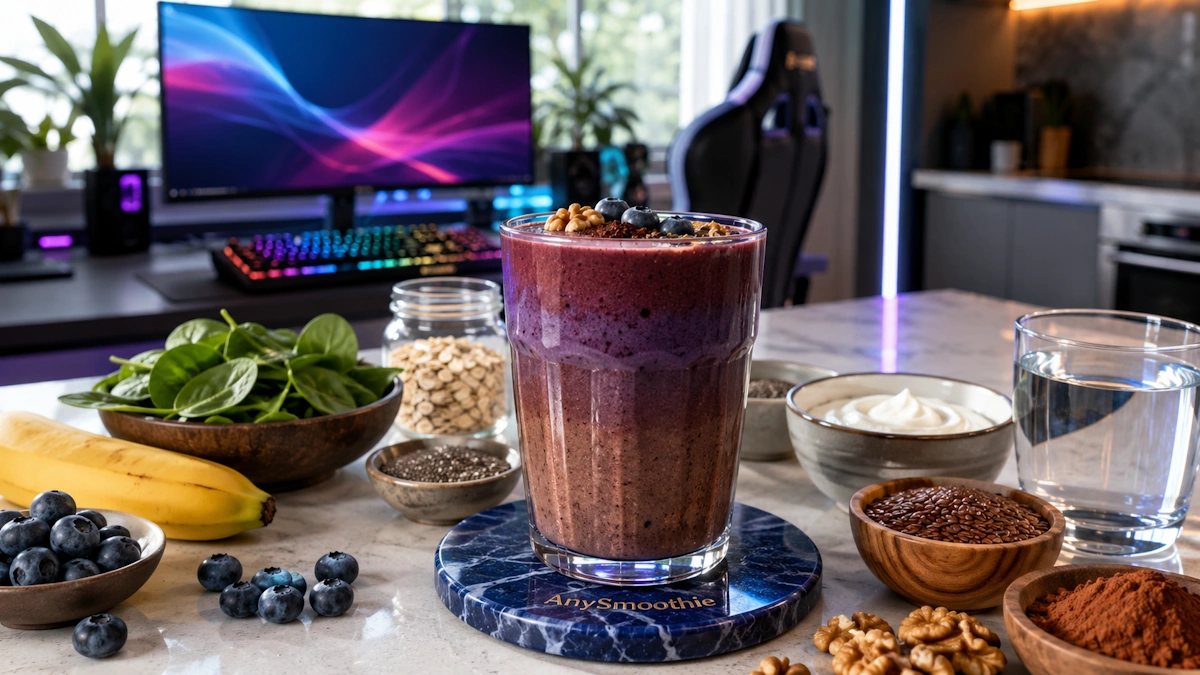
A long gaming session can demand hours of steady attention, quick decisions, and consistent energy. Heavy meals may leave you sluggish, while snack foods often create a cycle of hunger and sugar crashes.
A well-built smoothie combines carbohydrates, protein, fluids, fiber, and useful micronutrients in one drink. It can support steady fueling and hydration, but it can’t replace sleep, movement breaks, or a balanced daily diet. The right recipe also depends on when you drink it, so timing matters as much as the ingredients.
What Makes a Smoothie Useful During Long Gaming Sessions?
Carbohydrates provide glucose, a primary fuel source for the brain and working muscles. Fruit, oats, and dates can supply carbohydrates in different amounts and textures. Protein adds Amino acids and helps a smoothie feel more filling, which may reduce the urge to graze between matches.
Fluids support normal hydration and help create a drinkable texture. Milk, fortified plant milk, and water all work, although they change the smoothie’s calorie content, protein level, and thickness. Fiber from berries, oats, chia seeds, and leafy greens can slow digestion, but too much may feel uncomfortable while you’re playing.
Healthy fats also slow digestion when you use them in moderate amounts. A spoonful of nut butter or chia seeds can make a pre-game smoothie more satisfying, while a large amount may feel heavy during an intense match.
Start with a 12 to 16 ounce serving. Adjust the portion according to your hunger, body size, and session length. Too much added sugar may make the drink overly sweet, while very large servings can feel uncomfortable during play.
Balanced meals and healthy snacks help provide steady energy throughout the day. Learn more about Essentials of healthy eating and how balanced nutrition supports everyday performance.
Build Each Drink Around Carbs, Protein, Fluids, and Fiber
A simple smoothie formula uses one fruit or measured carbohydrate source, one protein source, and a liquid base. Add fiber or fat when the timing and your digestion support it.
Bananas, oats, and dates add carbohydrates. Greek yogurt, cottage cheese, milk, soy milk, or protein powder can increase protein. Water keeps the drink lighter, while milk and fortified plant milk add creaminess and may provide extra nutrients.
Spinach and berries bring flavor, color, and variety without requiring a long ingredient list. For more ideas on balancing texture and ingredients, use this Guide to making a smoothie at home.
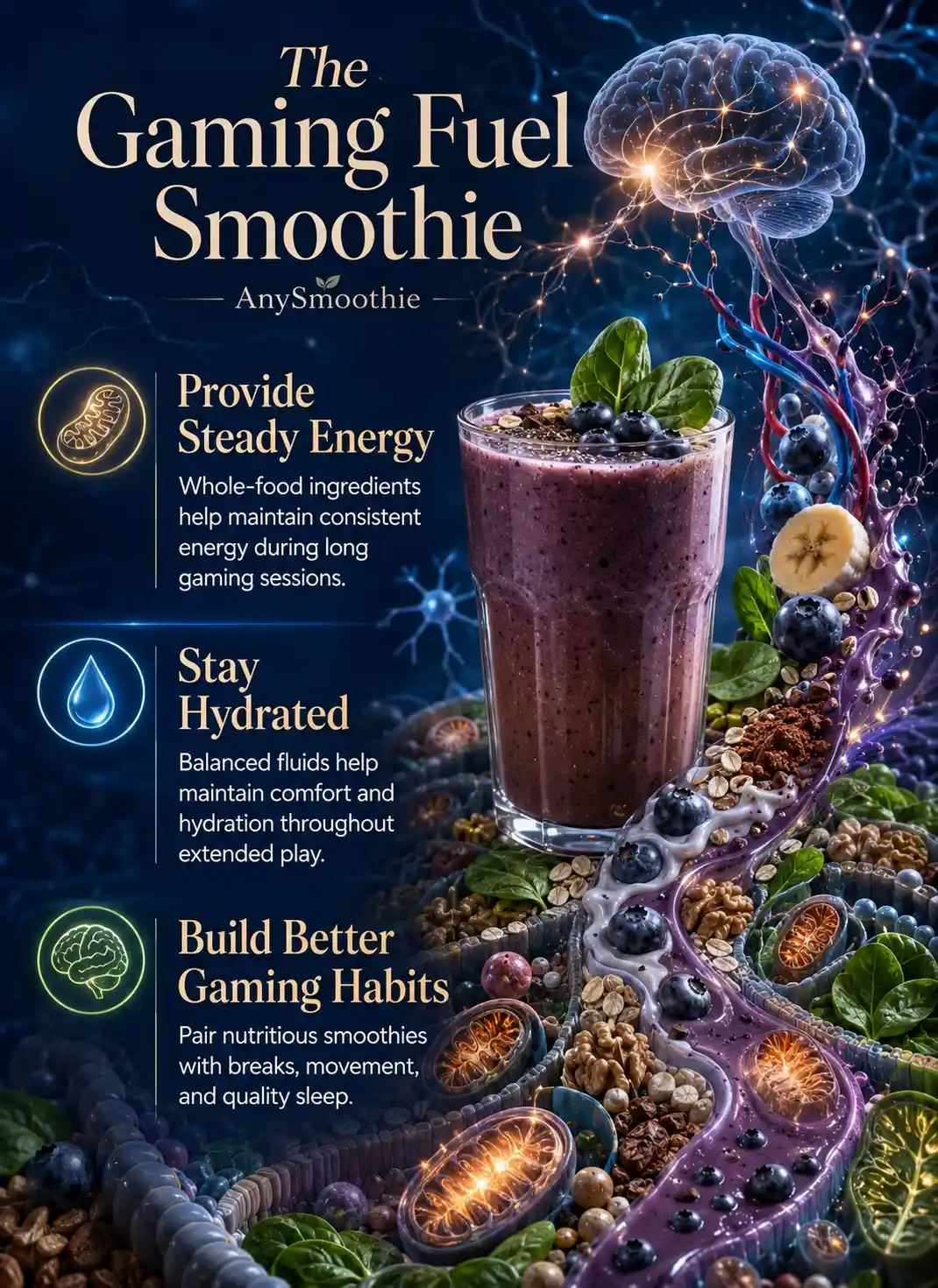
Choose Ingredients That Match Your Play Schedule
A pre-session smoothie can be thicker and more filling because you have time to digest it. Oats, yogurt, and nut butter fit well 60 to 90 minutes before gaming.
During a session, a lighter smoothie may be easier to sip during a scheduled break. Use more liquid, less fiber, and a smaller portion if you need something between matches. Test every recipe during casual play before using it during ranked matches or a tournament.
Food allergies and lactose intolerance also affect your choices. Soy milk, lactose-free yogurt, and seed butter are practical swaps. Check labels for cross-contact warnings if you have a serious allergy.
3 Smoothies for Long Competitive Gaming Sessions
These recipes use common grocery store ingredients and make approximately one 12 to 16 ounce serving.
| Smoothie | Main Ingredients | Best Timing | What It Provides | Best For |
|---|---|---|---|---|
| Banana oat | Banana, oats, yogurt, milk | 60 to 90 minutes before play | Carbs, protein, fluids, fiber | A filling pre-game drink |
| Berry yogurt | Berries, yogurt, milk, chia | Between matches | Carbs, protein, fluids | A lighter mid-session option |
| Chocolate cherry | Cherries, cocoa, milk, yogurt | After a long block | Fluids, carbs, protein | Longer tournament days |
How to Time, Store, and Customize Gaming Smoothies
Drink a fuller smoothie 60 to 90 minutes before gaming. During play, choose a smaller, lighter blend during a scheduled break rather than trying to drink while concentrating on a match. Keep water beside your gaming setup and sip it alongside either option.
Refrigerate a prepared smoothie promptly. An insulated container can keep it cold for a short period, but dairy-based drinks shouldn’t sit at room temperature for extended periods. Shake or stir the drink before serving if the ingredients separate.
Portion changes can match the demands of your session:
- Add oats, banana, or dates when you need more carbohydrates.
- Add yogurt or soy milk when you want more protein.
- Use water or ice to reduce thickness.
- Reduce nut butter, sweeteners, or dried fruit when the drink feels too heavy or sweet.
Change one ingredient at a time. That approach makes it easier to identify what fits your digestion and schedule. Common mistakes include relying on smoothies alone, adding several sweeteners, skipping water, and testing unfamiliar ingredients during competition.
Fueling works best beside regular breaks, eye rest, light stretching, and adequate sleep. A smoothie can fill a practical nutrition gap, but it can’t compensate for hours of missed rest. Long periods of sitting also benefit from regular movement and screen breaks. The Physical activity guidelines encourage breaking up prolonged sitting whenever possible.
Conclusion
The best smoothies for long competitive gaming sessions are balanced, easy to digest, and matched to the timing of play. Choose the banana oat blend before a session, the berry yogurt blend during a break, and the chocolate cherry blend later in a long gaming day.
Pair each drink with water, balanced meals, movement breaks, and enough sleep. Test one recipe during a regular gaming session before using it for tournaments or marathon play.

Medical Disclaimer: AnySmoothie content is for educational purposes only and is not a substitute for professional medical advice. Consult a healthcare provider for personalized guidance. See our full Disclaimer & Terms of Use. AI Transparency: AnySmoothie may use AI to support content development. All content undergoes human editorial review for accuracy, clarity, and editorial quality. See our full AI Transparency.