
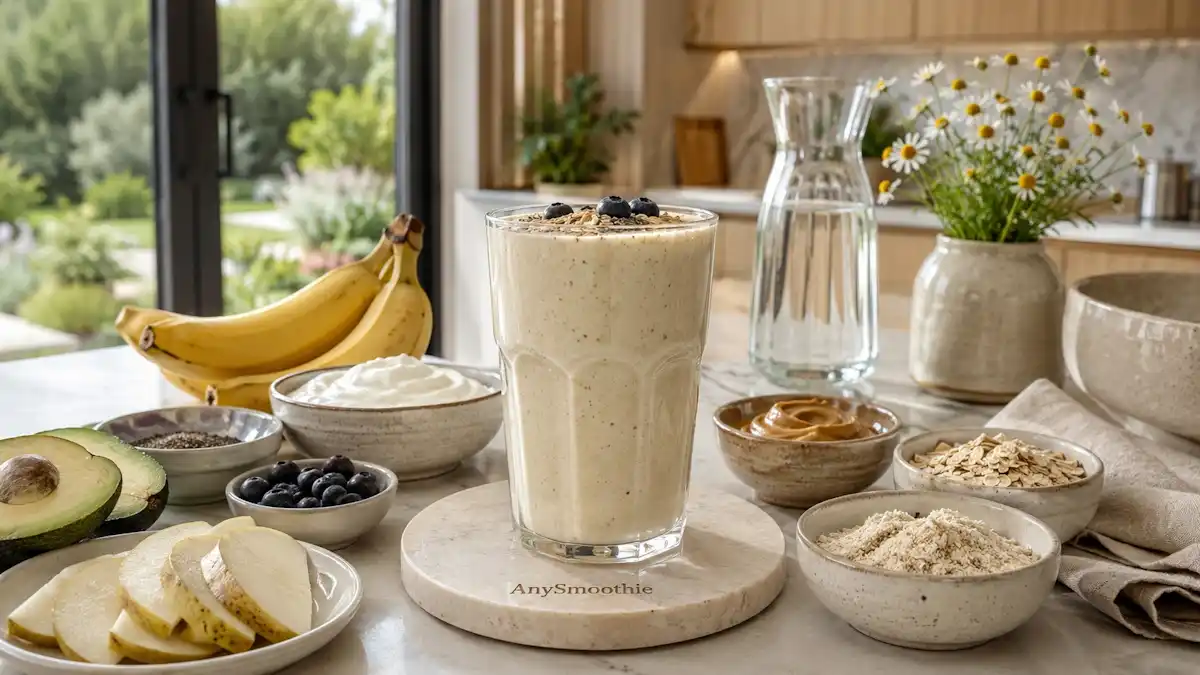
A fresh extraction site can make even a simple meal feel difficult. Smoothies after tooth extraction can provide fluids, calories, protein, and nutrients while chewing is uncomfortable, but the texture and drinking method matter as much as the ingredients.
Your dentist’s instructions come first, especially after wisdom tooth removal or oral surgery. Start with cool, smooth drinks, skip the straw, and choose mild ingredients that won’t leave particles near the socket. These three recipes offer soft options for the first days of recovery.
How to Drink Smoothies After Tooth Extraction Safely
The dentist or oral surgeon who treated you sets the timeline for eating and drinking. Procedure details, stitches, bleeding risk, and medications can change what is appropriate on a given day.
Choose a cool or lukewarm smoothie, rather than a hot drink or one packed with ice. Take small sips from a cup, or use a spoon if that feels easier. Swallow gently and avoid swishing liquid around your mouth.
Forceful suction can disturb the blood clot that protects the extraction socket. Avoid straws until your dental provider says they are safe.
Make a small serving first, about 8 ounces, and pause if your jaw gets tired. Wash the blender, cup, and utensils before preparing food, since clean equipment matters when your mouth is recovering. Return to more solid foods only as comfort improves and your provider advises. Following your dentist’s aftercare instructions helps protect the healing socket and supports a smoother recovery. Learn more about Tooth extraction aftercare.
Ingredients to Choose and Ingredients to Skip
Mild, smooth ingredients are usually easier during early recovery. Good options include ripe bananas, plain yogurt, Avocado, applesauce, cooked oats, peeled soft peaches, and milk or a tolerated milk alternative.
Avoid items that can lodge near the extraction site or sting the tissue:
- Berries with seeds, chia, flax, granola, and raw leafy greens
- Nuts, chunky nut butter, coconut flakes, and rough protein powders
- Citrus juice, pineapple, hot spices, alcohol, and highly acidic add-ins
- Thick frozen blends that require hard sucking or repeated chewing
A smoothie should feel smooth, not gritty or sticky. Keep added sugar modest so the smoothie remains pleasant without becoming overly sweet. Heavy syrups can make a drink cloying when you’re already dealing with mouth discomfort.
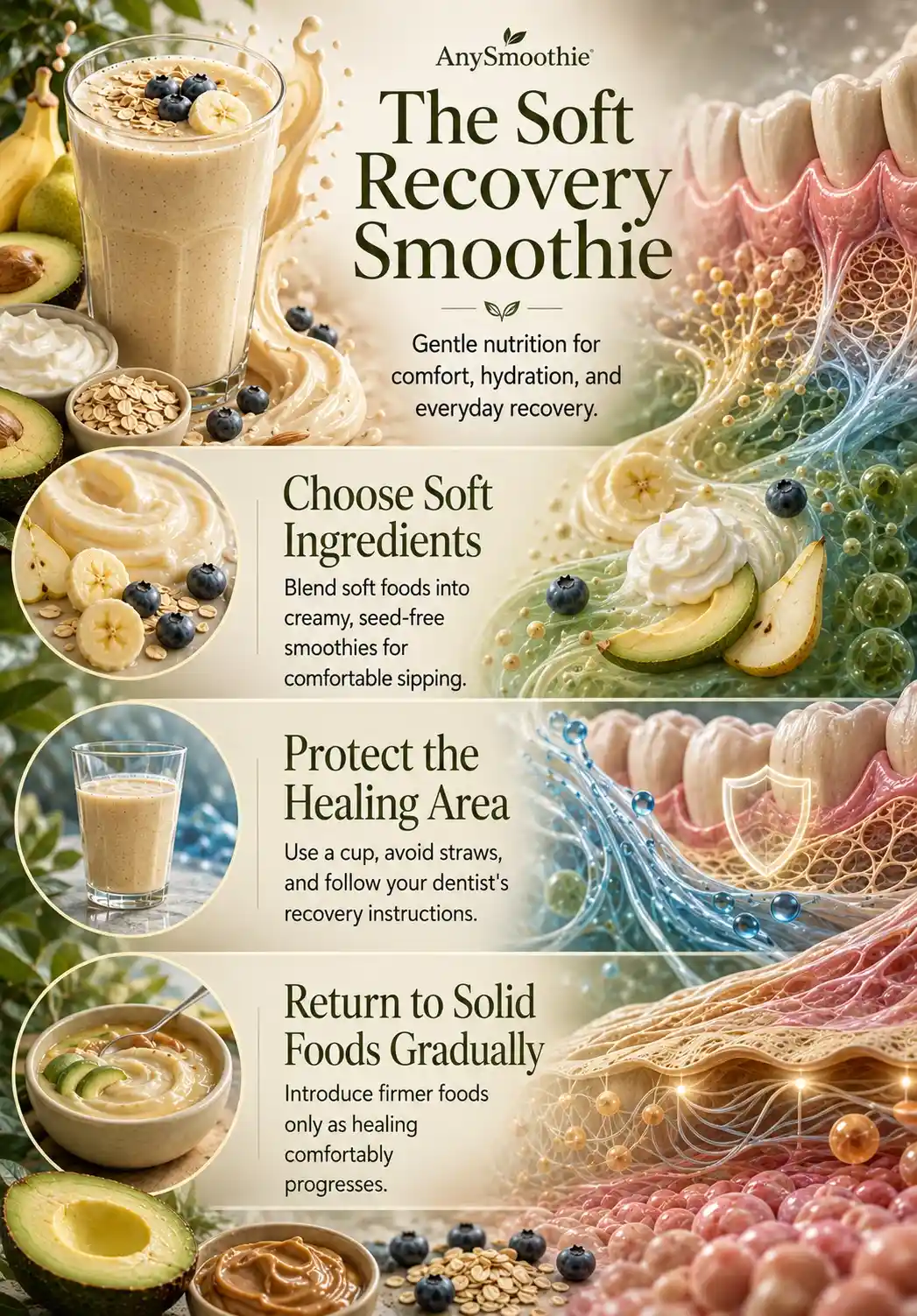
Signs a Smoothie Is Too Thick, Cold, or Irritating
A recovery-friendly smoothie pours easily and has no pieces to chew. If it clings to the cup or feels like a milkshake, add milk or water and blend again.
Let frozen fruit soften before blending, or skip it during the earliest phase. Stop drinking if you notice burning, sharp pain, increased bleeding, or a strong pulling sensation. Don’t probe the socket with your tongue afterward, and don’t rinse forcefully unless your provider told you to do so.
3 Soft Smoothies After Tooth Extraction
Each recipe avoids seeds, crunchy add-ins, and tart fruit. Blend on high until the drink is fully smooth, then strain it through a fine-mesh sieve if you feel any grit.
| Smoothie | Main Ingredients | Protein Source | Texture Tips | Best Time to Enjoy |
|---|---|---|---|---|
| Banana and Greek Yogurt | Banana, Greek yogurt, milk | Greek yogurt | Add extra milk for easy sipping | Breakfast or snack |
| Peach Oatmeal Protein | Soft peaches, cooked oats, yogurt, milk | Yogurt or smooth protein powder | Blend oats until no flecks remain | When you need a fuller meal |
| Avocado and Banana | Avocado, banana, milk, honey | Yogurt, if added | Use ripe avocado and thin as needed | Lunch or afternoon snack |
Banana and Greek Yogurt Smoothie
Ingredients
- 1 ripe banana
- 1/2 cup plain Greek yogurt
- 3/4 to 1 cup milk or unsweetened non-dairy milk
Blend until smooth. Add the liquid gradually until the smoothie pours easily from a cup.
Banana brings mild sweetness and a soft texture. Greek yogurt adds protein, which supports normal daily nutrition when solid foods are off the table. Choose dairy or a non-dairy option that fits your usual tolerance.
A Greek yogurt smoothie recipe can offer a useful base later in recovery. For now, keep it plain, thin, and free of berries, seeds, and crunchy toppings.
Estimated Nutrition per Serving
Estimated with one medium banana, plain nonfat Greek yogurt, and 3/4 cup 2% milk.
- Calories: ~285 kcal
- Protein: ~20 g
- Carbohydrates: ~43 g
- Fat: ~5 g
- Fiber: ~3 g
- Sugars: ~28 g
A very ripe banana blends more completely and leaves fewer fibrous pieces than a firmer one. For this recovery-focused smoothie, give it a little extra blending time and add enough milk to keep the final texture easy to drink without vigorous sipping.
Peach Oatmeal Protein Smoothie
Ingredients
- 1/2 cup soft canned peaches in juice, drained, or cooked peeled peaches
- 1/4 cup fully cooked and cooled oatmeal
- 1/2 cup plain yogurt
- 3/4 cup milk
- Unflavored or mild protein powder, optional
Blend until completely smooth. Add more milk if needed.
Cooked oats add carbohydrates and make the drink more filling than fruit alone. However, oats can leave rough flecks if the blender isn’t powerful enough. Blend longer than usual, inspect the texture, and strain the smoothie if any oat pieces remain.
If you use protein powder, select an unflavored or mild product that dissolves completely. Avoid powders with crunchy inclusions, caffeine, or ingredients that don’t suit your diet.
Estimated Nutrition per Serving
Estimated with drained canned peaches, cooked oatmeal, plain low-fat yogurt, 2% milk, and without optional protein powder.
- Calories: ~260 kcal
- Protein: ~14 g
- Carbohydrates: ~37 g
- Fat: ~7 g
- Fiber: ~3 g
- Sugars: ~24 g
Avocado and Banana Smoothie
Ingredients
- 1/2 ripe avocado
- 1 small ripe banana
- 1 cup milk
- 1 teaspoon honey, optional
- 1/4 cup plain yogurt, optional alternative to honey
Blend until silky.
Avocado’s fat content creates a creamy drink without ice or frozen fruit. Its neutral flavor also works well when your mouth feels sensitive. For a less sweet version, swap the honey for 1/4 cup plain yogurt.
Skip lime, lemon, chili, and sharp seasonings. A tender extraction area may react badly to acidic or spicy ingredients, even when the rest of the smoothie is smooth.
Estimated Nutrition per Serving
Estimated with half a medium avocado, one small banana, 1 cup 2% milk, and without optional honey or yogurt.
- Calories: ~390 kcal
- Protein: ~12 g
- Carbohydrates: ~47 g
- Fat: ~19 g
- Fiber: ~9 g
- Sugars: ~27 g
Avocado thickness changes considerably with ripeness. If the finished drink feels too dense for comfortable recovery drinking, thin it with a little extra milk rather than adding ice; this keeps the texture smooth without introducing hard or coarse pieces.
When Smoothies Are Not Enough During Recovery
Smoothies can cover part of your intake, but one oversized drink can feel unpleasant. Spread calories and protein through the day with several small servings, then add soft foods such as yogurt, mashed potatoes, or scrambled eggs when your provider approves them.
Contact your dentist or oral surgeon for persistent or worsening bleeding, severe pain, fever, spreading swelling, pus, trouble breathing, or trouble swallowing. Seek personalized food guidance if you have diabetes, food allergies, swallowing difficulties, or dietary restrictions.
Recovery times vary depending on the procedure and individual health. Taking care of your teeth and mouth provide additional information about dental care and recovery. Smoothies after tooth extraction support hydration and nourishment, but they don’t replace professional aftercare.
Conclusion: A Comfortable Start to Recovery
Choose mild ingredients, blend out every seed and chunk, and keep the drink thin enough for relaxed sipping. A cup or spoon protects you from the suction created by a straw, while cool temperatures and low-acid ingredients are often more comfortable.
Begin with small portions, adjust the texture as needed, and let comfort guide your progress. If recovery seems unusual or symptoms worsen, contact your dental provider promptly.
🛡️ Safety Notes & Dietary Interactions
- Follow Your Dentist’s Instructions First: These smoothies are designed to support nutrition during recovery but should never replace the specific aftercare advice provided by your dentist or oral surgeon. Follow all instructions regarding eating, drinking, medications, and activity after your procedure.
- Protect the Extraction Site: Drink smoothies from a cup or use a spoon rather than a straw, as suction may disturb the protective blood clot. Choose cool or lukewarm, fully blended drinks without seeds, crunchy ingredients, or sharp acidic flavors during early healing.
- Adapt Recipes to Your Health Needs: If you have diabetes, food allergies, lactose intolerance, swallowing difficulties, kidney disease, or follow a medically prescribed diet, adjust ingredients such as dairy, plant milks, fruit, oats, and sweeteners with guidance from your healthcare professional.
- Seek Prompt Dental Care for Concerning Symptoms: Contact your dentist or oral surgeon if you develop persistent bleeding, increasing pain after the first few days, fever, spreading swelling, pus, difficulty swallowing, trouble breathing, or any signs that healing is not progressing normally.
FAQs
When can I drink a smoothie after tooth extraction?
Most people can enjoy a cool, smooth smoothie once their dentist or oral surgeon says it is appropriate. During the first stage of recovery, choose thin, fully blended drinks, avoid straws, and follow your provider’s specific instructions regarding food and beverages.
Why shouldn’t I use a straw after tooth extraction?
Using a straw creates suction inside the mouth, which may dislodge the protective blood clot that forms over the extraction site. Drinking directly from a cup or eating a smoothie with a spoon helps reduce this risk during the early healing period.
Which ingredients are best for recovery smoothies?
Soft ingredients such as ripe bananas, plain Greek yogurt, avocado, cooked oats, peeled peaches, applesauce, and milk or fortified plant-based alternatives create smooth, nourishing drinks that are generally easier to tolerate while chewing remains uncomfortable.
Which ingredients should I avoid after tooth extraction?
Avoid seeds, nuts, granola, coconut flakes, raw leafy greens, citrus juice, pineapple, spicy ingredients, crunchy toppings, and thick, gritty smoothies that require vigorous sucking or chewing. These ingredients may irritate the extraction site or become trapped near the healing socket.
Can smoothies replace meals while my mouth heals?
For a short period, smoothies can help provide fluids, calories, protein, and other nutrients when chewing is difficult. As healing progresses and your dental provider approves, gradually reintroduce soft solid foods to ensure a varied and balanced diet during recovery.

Medical Disclaimer: AnySmoothie content is for educational purposes only and is not a substitute for professional medical advice. Consult a healthcare provider for personalized guidance. See our full Disclaimer & Terms of Use. AI Transparency: AnySmoothie may use AI to support content development. All content undergoes human editorial review for accuracy, clarity, and editorial quality. See our full AI Transparency.