
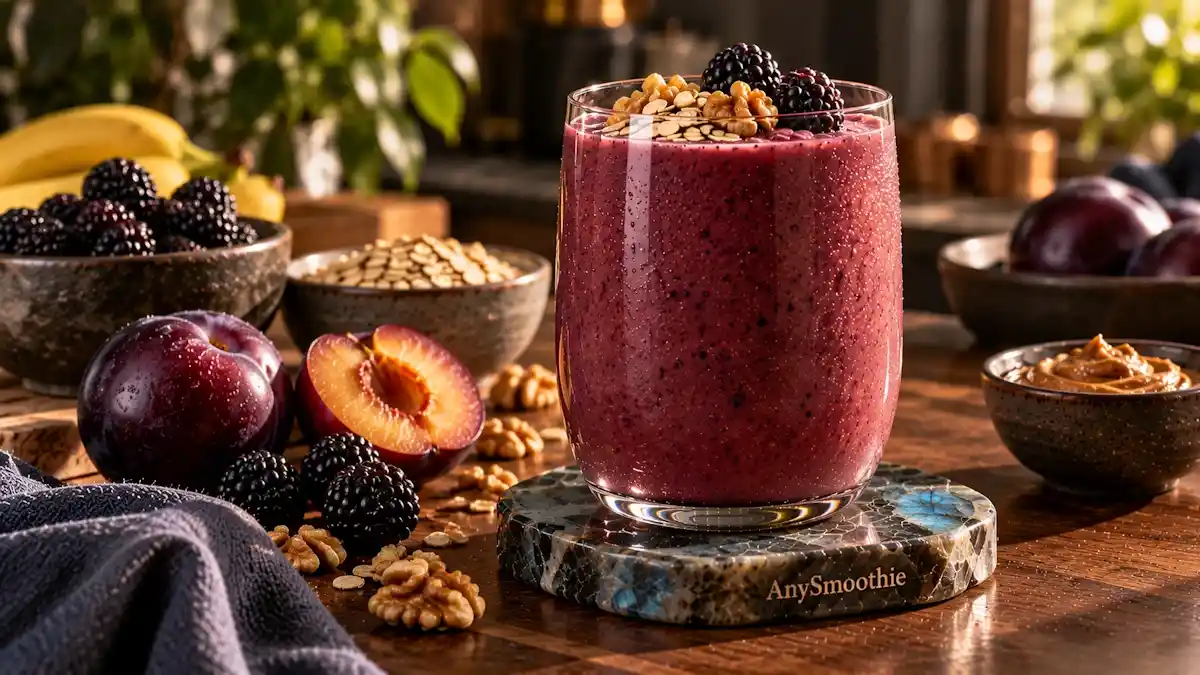
Smoothies can supply nutrients used by normal antioxidant and metabolic systems, but no smoothie is proven to control ferroptosis or prevent disease. When considering smoothies for ferroptosis and lipid peroxidation, distinguish nutrient intake from a demonstrated cellular effect.
Fruit, seeds, and soy milk have familiar nutritional roles, but laboratory findings don’t establish what a blended drink will do inside your body. These three recipes offer practical food choices, followed by a comparison table to help you choose by flavor, texture, and nutrition.
What Ferroptosis and Lipid Peroxidation Mean for Food Choices
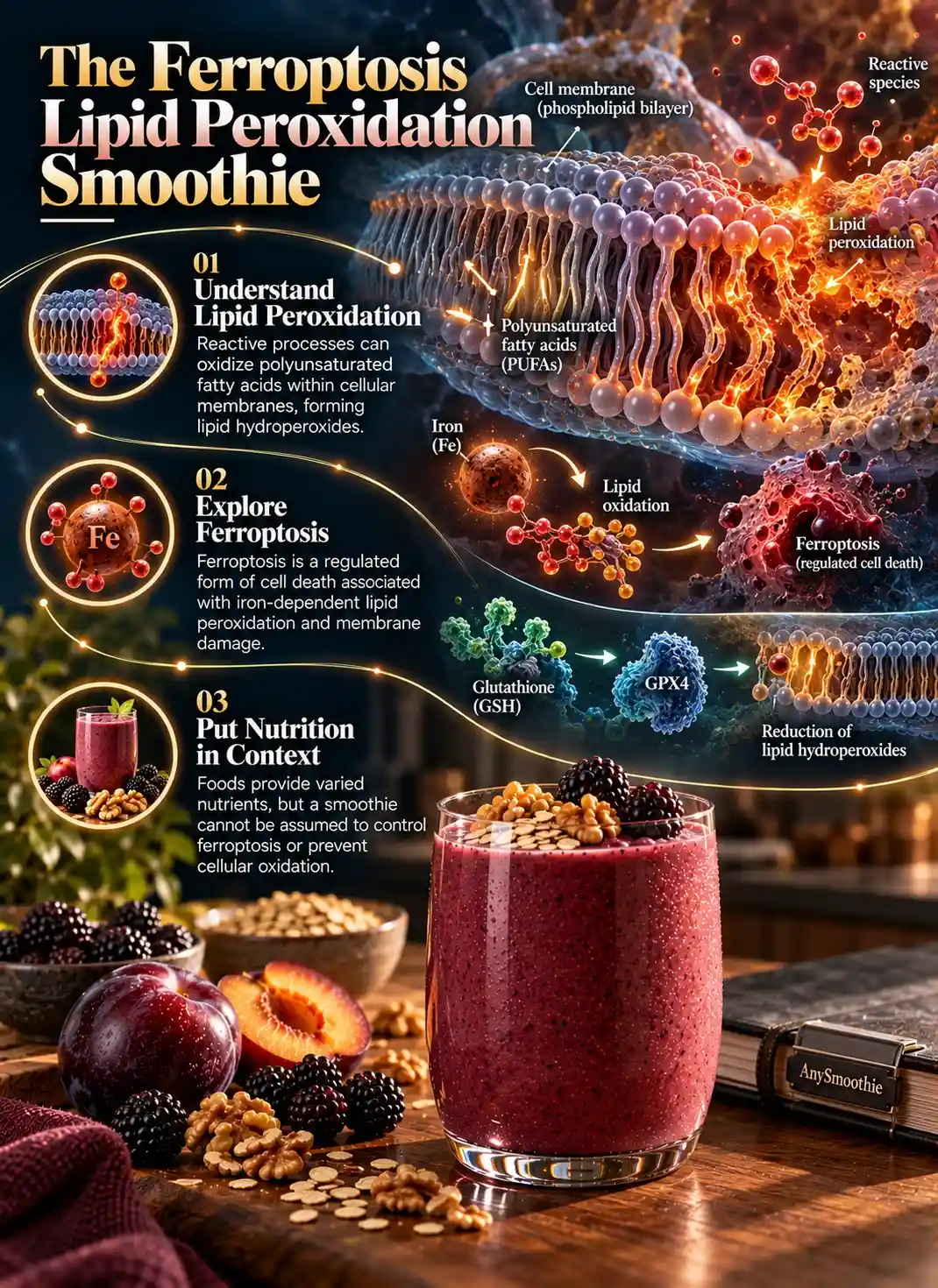
Ferroptosis is regulated cell death involving iron-dependent damage to fats in cell membranes. Lipid peroxidation is the chemical oxidation of fats, which can damage membranes when it exceeds cellular defenses. However, lipid oxidation doesn’t automatically mean a cell will undergo ferroptosis.
For a related look at antioxidant protection of fats, see vitamin e and tocopherol recycling smoothies.
How nutrients relate to the body’s natural pathways
Glutathione is a molecule that participates in normal antioxidant systems. The selenium-dependent enzyme glutathione peroxidase 4, or GPX4, uses glutathione to reduce lipid hydroperoxides. Food supplies nutrients needed for these systems, while antioxidant nutrients also participate in ordinary physiological processes. Eating an ingredient doesn’t selectively direct an enzyme or establish a particular cellular outcome.
For a related discussion of glutathione precursors, see glycine and nac smoothies (glynac). The selenium connection to another enzyme system is explored in selenium smoothies for t4 to t3 conversion.
Why cellular context matters
These processes vary by cell type, iron handling, membrane composition, and health context. Findings from isolated cells also don’t translate directly into dietary instructions. A food’s nutrient content can’t show whether eating it will increase or decrease ferroptosis in a person.
3 Smoothies for Ferroptosis and Lipid Peroxidation
Each recipe makes one serving. Nutrition figures are approximate and vary by ingredient brand and size. They describe the drink, not its effects on cellular pathways.
Berry Citrus Blend
Ingredients
- ¾ cup blueberries
- ½ cup strawberries
- 1 small peeled orange
- ¾ cup plain low-fat kefir
- 1 tablespoon ground flaxseed
- ¼ cup water as needed
Instructions
Place the fruit, kefir, and flaxseed in a blender. Blend until smooth, adding the water as needed to loosen the mixture.
Estimated Nutrition (per serving)
- Calories: ~300 kcal
- Protein: ~13 g
- Carbohydrates: ~48 g
- Fat: ~7 g
- Fiber: ~10 g
- Sugars: ~33 g
Blend the berries, orange, kefir, and flaxseed until smooth. Add a splash of water if it’s thicker than you like. Best enjoyed fresh.
Berries and citrus supply plant compounds and vitamin C. Meanwhile, plain kefir contributes dairy protein and a tangy flavor, and ground flaxseed adds fiber and fats. The orange keeps the blend bright without juice or a separate sweetener. These ingredients don’t establish an effect on ferroptosis.
Kiwi Spinach Smoothie
Ingredients
- 1 peeled kiwi
- 1 cup baby spinach
- ½ medium banana
- ¾ cup unsweetened soy milk
- 1 tablespoon hemp hearts
- ¼ avocado
Instructions
Add all ingredients to a blender and blend until creamy. Pause to scrape down the sides if spinach leaves remain above the mixture.
Estimated Nutrition (per serving)
- Calories: ~260 kcal
- Protein: ~11 g
- Carbohydrates: ~34 g
- Fat: ~12 g
- Fiber: ~8 g
- Sugars: ~17 g
Kiwi supplies vitamin C, while spinach contributes folate and vitamin K. Soy milk provides protein, and avocado and hemp hearts contribute unsaturated fats. Banana softens kiwi’s tartness and helps create a creamy texture. Spinach is a nutrient source here, not an ingredient shown to target ferroptosis.
Cherry Cocoa Smoothie
Ingredients
- 1 cup frozen cherries
- 1 tablespoon unsweetened cocoa powder
- 1 tablespoon almond butter
- 1 cup unsweetened soy milk
- 1 tablespoon chia seeds
Instructions
Place all ingredients in a blender and blend until smooth. Use the blender’s tamper, if available, to move the frozen cherries toward the blades.
Estimated Nutrition (per serving)
- Calories: ~360 kcal
- Protein: ~14 g
- Carbohydrates: ~39 g
- Fat: ~19 g
- Fiber: ~12 g
- Sugars: ~22 g
Tart cherries and bitter cocoa create a chocolate-fruit flavor, with almond butter adding richness. Soy milk contributes protein, while chia supplies fiber and fats. This blend has the most estimated fiber and fat of the three. Chia also thickens the drink as it stands.
Compare the Three Smoothies by Flavor and Nutrition
The best fit depends on your preferences, rather than a claimed effect on ferroptosis.
| Smoothie | Nutrient profile | Texture | Flavor | Best fit |
|---|---|---|---|---|
| Berry Citrus Blend | Carbohydrate-forward, moderate protein | Pourable, lightly textured | Bright, sweet-tart | Lighter, fruit-forward taste |
| Kiwi Spinach Smoothie | Lowest estimated sugars | Creamy and smooth | Mild, fresh, gently tart | Less sweetness |
| Cherry Cocoa Smoothie | Highest estimated protein and fiber | Thick and rich | Chocolatey, tart, nutty | Richer texture |
Although the cherry blend has the most protein, the difference between recipes is modest. Texture and flavor may matter more to your enjoyment. Also, total sugars include naturally occurring sugars, so that figure doesn’t mean the same thing as added sugar.
Choose a Smoothie That Fits Your Needs
Start with the flavor you’ll enjoy, then consider protein, fiber, and portion size. If added sugar matters to you, choose plain kefir and unsweetened milk, and read their labels because brands differ.
For allergies or dietary limits, swap ingredients thoughtfully. A dairy-free kefir or different milk may change protein content, while replacing almond butter changes both flavor and nutrition. Avoid any ingredient you know you’re allergic to.
Anyone managing a health condition should ask a qualified health professional about personal nutrition needs. These smoothies are foods that supply nutrients for normal physiological systems, not treatments or a way to control ferroptosis.
Conclusion: Enjoy the Blend That Suits You
These recipes offer varied whole-food ingredients, different textures, and useful nutrients. Evidence doesn’t show that smoothies directly control ferroptosis or lipid peroxidation.
Choose the blend you enjoy as part of an overall balanced eating pattern. Its nutritional value comes from the foods it contains, without needing a claim about changing cell-death pathways.
🛡️ Safety Notes & Dietary Interactions
- Iron and Cellular Pathways: Ferroptosis involves iron-dependent lipid damage, but these recipes are not designed to alter iron handling. Avoid adding iron supplements unless specifically appropriate for your nutritional needs.
- Allergen Awareness: Kefir, soy milk, almond butter, hemp hearts, flaxseed, and chia introduce different dairy, soy, tree-nut, and seed considerations. Check labels and avoid known allergens.
- Vitamin K Considerations: The kiwi-spinach smoothie provides spinach-derived vitamin K. Anyone taking vitamin K-sensitive medication should keep intake consistent and discuss substantial dietary changes with their healthcare professional.
- Fiber and Portion Size: Flaxseed, chia, hemp hearts, berries, and spinach can make these smoothies fiber-rich. Increase fiber gradually if needed and adjust portions according to individual digestive tolerance.
FAQs
Can these smoothies reduce ferroptosis or lipid peroxidation?
No established evidence shows that drinking these smoothies directly controls ferroptosis or lipid peroxidation in humans. Their ingredients provide nutrients involved in ordinary antioxidant and metabolic systems, but nutrient intake should not be interpreted as a targeted cellular intervention.
Which smoothie has the most fiber?
The Cherry Cocoa Smoothie provides the highest estimated fiber, at about 12 grams per serving. The Berry Citrus Blend provides approximately 10 grams, while the Kiwi Spinach Smoothie provides about 8 grams. Chia, flaxseed, berries, spinach, and other plant ingredients contribute substantially to these differences.
Why does the article mention GPX4 and glutathione?
GPX4 is a selenium-dependent enzyme that uses glutathione to reduce lipid hydroperoxides as part of normal cellular antioxidant defenses. The article uses this pathway to explain nutritional context, not to suggest that eating a particular smoothie selectively increases GPX4 activity.
Is the Kiwi Spinach Smoothie suitable if I need to monitor vitamin K intake?
It contains one cup of spinach, which contributes vitamin K. If you take medication requiring consistent vitamin K intake, the relevant issue is maintaining a stable dietary pattern rather than automatically avoiding spinach. Discuss significant changes with your healthcare professional before making the smoothie a regular habit.
Which smoothie is best if I want something less sweet?
The Kiwi Spinach Smoothie has the lowest estimated sugar content, at about 17 grams per serving, compared with approximately 33 grams for Berry Citrus and 22 grams for Cherry Cocoa. Its spinach, kiwi, avocado, and unsweetened soy milk also create a fresher, less dessert-like flavor.

Medical Disclaimer: AnySmoothie content is for educational purposes only and is not a substitute for professional medical advice. Consult a healthcare provider for personalized guidance. See our full Disclaimer & Terms of Use. AI Transparency: AnySmoothie may use AI to support content development. All content undergoes human editorial review for accuracy, clarity, and editorial quality. See our full AI Transparency.