
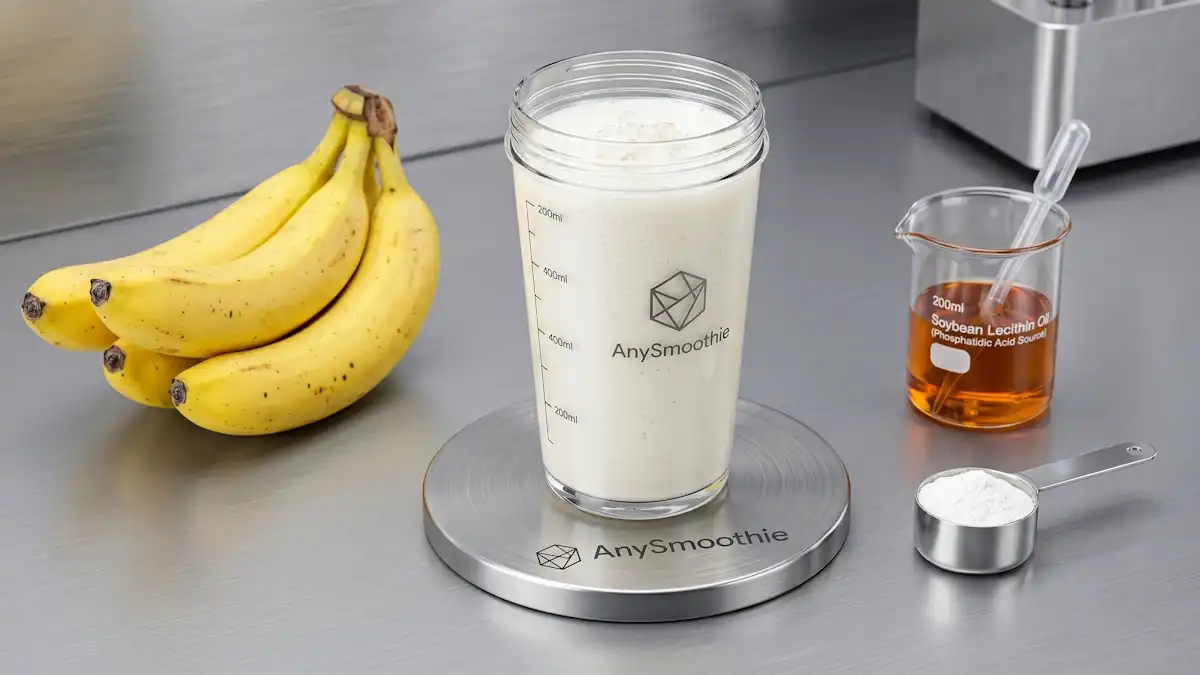
mTOR is a cell signal that helps tell your body when to build and repair. In plain terms, it helps translate nutrients into growth after a hard workout or during a high-demand recovery phase.
That is why some people use a smoothie for mTOR activation after training. The goal is not to make medical claims. The goal is to support anabolic signaling with fast protein, fast carbs, and the right fats.
Three signals matter most here, leucine, insulin, and phosphatidic acid. If you line them up well, the smoothie becomes more than calories in a cup.
The mTORC1 Complex: The Molecular Gateway to Anabolism
mTORC1 is the main growth and repair switch in this context. When it senses enough amino acids and enough energy, it helps turn on protein synthesis. That matters because protein synthesis is where the body starts building new tissue.
Leucine is the key amino acid in this process. A simple way to understand the leucine threshold is this, a cell needs a minimum amount before it treats the meal as a real growth signal. Below that line, the message is weak. Above it, the signal gets much stronger.
Nutrient Sensing: How Intracellular Leucine Concentrations Trigger Rheb
Inside the cell, leucine binds to Sestrin2. That releases GATOR2, which helps allow mTORC1 to turn on. In other words, leucine is the fastest nutrient signal for telling the cell that amino acids are available.
A smoothie is useful here because it delivers protein fast. Whey isolate, EAA powders, and high-leucine foods can raise intracellular leucine quickly. That makes it easier to cross the threshold without a heavy meal sitting in your stomach. For a quick overview, see PubMed’s collection on leucine and mTOR.
| Activator | Physiological mechanism | Activation speed | Best smoothie pairing | Target downstream consequence |
|---|---|---|---|---|
| Leucine | Binds Sestrin2 and frees GATOR2, which helps mTORC1 sense amino acid sufficiency | Fastest nutrient signal | Whey isolate, EAA powder, Greek yogurt | p70S6K phosphorylation, 4E-BP1 inhibition |
| Insulin flux | Activates Akt, which helps phosphorylate TSC2 and keeps the Rheb brake off | Fast, after carbs hit the blood | Dextrose, ripe banana, honey | Stronger translation initiation and nutrient uptake |
| Phosphatidic acid | Supports mTOR through a lipid signal near the rapamycin-sensitive site on mTOR | Moderate | Soy lecithin | Secondary support for mTORC1 signaling |
Leucine starts the process. Insulin helps carry the signal. Phosphatidic acid adds another layer. That is the basic logic behind a strong smoothie for mTOR activation.
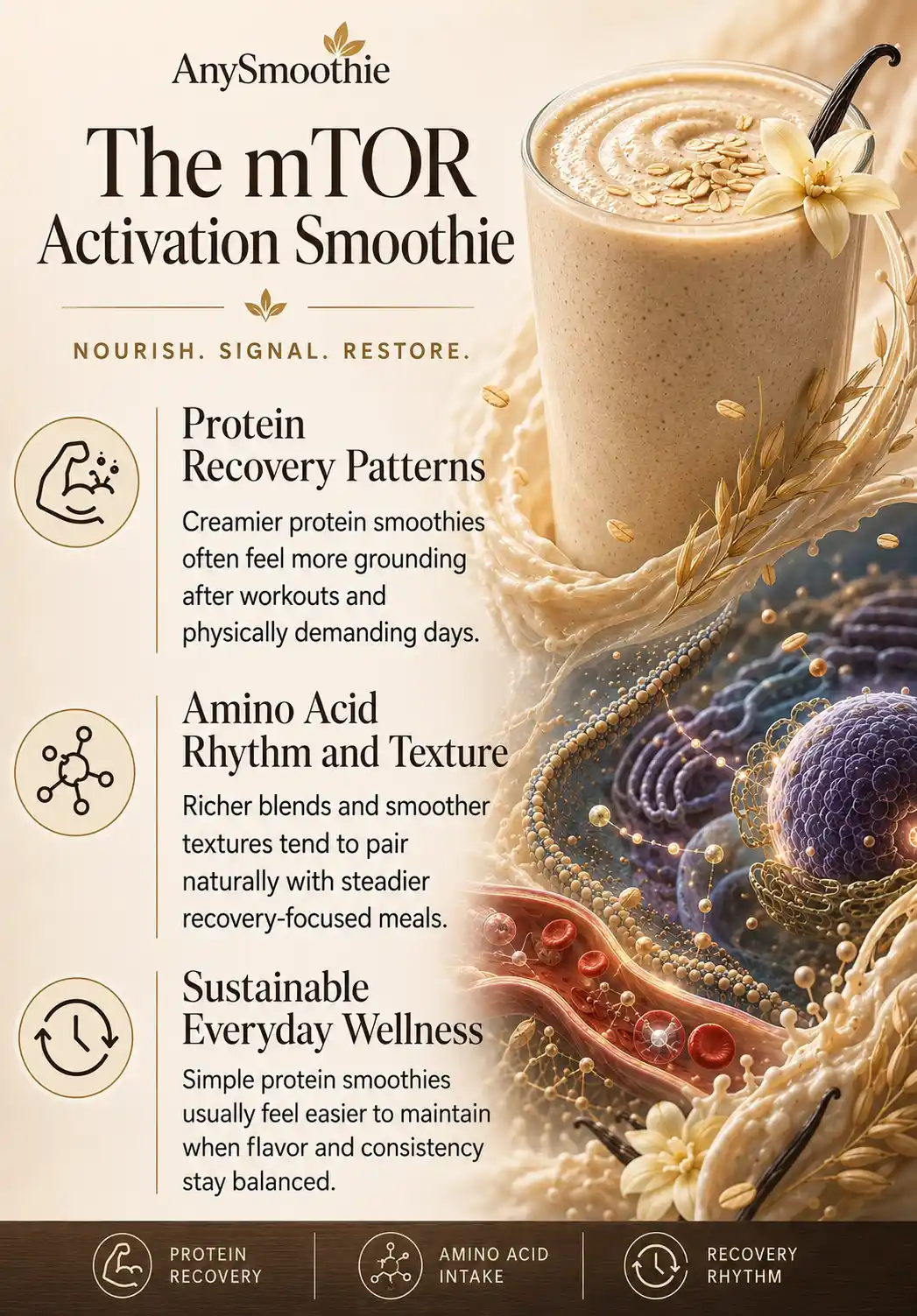
Why mTOR works best when energy and nutrients show up together
Amino acids alone help, but mTORC1 responds better when energy is available too. Insulin activates Akt, Akt eases the TSC2 brake, and Rheb can support mTORC1 more easily. If energy is low, the cell is less willing to spend ATP on growth.
That is why a smoothie can work so well. It delivers amino acids and glucose quickly, in a form the body can absorb fast. For recovery and growth support, that speed matters.
The strongest signal is not just “protein arrived.” It is “protein arrived, energy is here, and the cell can build.”
What Makes a Strong Smoothie for mTOR Activation
A useful formula reads like a three-part message. First, the smoothie needs amino acids. Second, it can add an insulin pulse when the timing calls for it. Third, it can include a lipid signal for extra support.
Use whey or another high-leucine protein to hit the threshold
Whey isolate is one of the best bases for a smoothie for mTOR activation. It digests fast and gives you a strong leucine hit. The point is not to add random protein, it is to hit the leucine threshold quickly.
In practice, many people use about 25 to 35 grams of high-quality protein in a post-workout smoothie. That range often gets you close to the signal you want without making the drink too heavy.
Add fast carbs when you want a stronger insulin signal
Fast carbs can raise insulin and help amino acids move into muscle. Dextrose works well, and so do ripe fruit, banana, or a bit of honey. This is most useful around training, when recovery and growth support matter most.
Carbs are not required in every smoothie. Still, if the session was hard, they can help the signal land better. Think of them as a support rail, not the main event.
Use phosphatidic acid rich ingredients for an extra signaling layer
Phosphatidic acid is a lipid messenger that can support mTOR through a separate route. Soy lecithin is a practical way to add it to a smoothie. The effect is not as immediate as leucine, but it can add another small push.
This works best as a supporting layer. It does not replace protein or energy. It adds weight to the signal you already built.
3 ‘Anabolic-Peak’ mTOR Activation Smoothie Recipes
Post-Workout Nutrient Timing: Maximizing the Translational Window
The period right after training is one of the best times for a smoothie for mTOR activation. Muscles are more ready to take up nutrients, blood flow is higher, and insulin sensitivity is often better. That makes the post-workout window a smart place to place your strongest nutrient pulse.
Pre-workout use is different. It can help you train with less stomach load. Between-meal use is also useful if you need to support growth without a full plate of food. Still, right after training is where the signal is easiest to use well.
Why the period right after training is so useful
Training creates a demand for repair. A post-workout smoothie gives amino acids and carbs while the tissue is primed to use them. That supports protein synthesis more efficiently than waiting too long.
The body is already in a receptive state. Your job is to give it the right inputs without slowing digestion.
Mitochondrial Priming: Fueling the High ATP Demands of Ribosomal Assembly
Ribosomes, repair work, and protein building all cost energy. Mitochondrial priming means giving the cell enough quick fuel to meet that ATP demand. When energy is available, the build phase runs more smoothly.
That is why timing matters. A well-timed smoothie helps the cell handle the work of recovery, not just the calories of it.
Conclusion
The best smoothie for mTOR activation follows a simple pattern, hit leucine first, support insulin when it helps, and add phosphatidic acid when you want another signal layer. That combination lines up with how the body reads nutrients after training.
Fast protein is the anchor. Fast carbs can sharpen the insulin response. Soy lecithin can add a useful lipid signal. Build the next workout smoothie with those steps in mind, and you give your body a cleaner message to grow and repair.
🛡️ Safety Notes & Contraindications
Insulin Spikes and Metabolic Syndrome: CRITICAL: The inclusion of fast-acting carbohydrates (dextrose, honey) designed to trigger an acute insulin pulse is strictly optimized for the immediate post-workout window. Individuals with Type 2 Diabetes, severe insulin resistance, or Metabolic Syndrome should omit isolated dextrose to prevent dangerous, unmanaged post-prandial glucose swings.
Soy Allergies and Lecithin Cross-Reactivity: This protocol relies on soy lecithin as the primary delivery vector for phosphatidic acid. If you have a diagnosed systemic allergy to soy proteins, substitute this ingredient exclusively with Sunflower Lecithin, or omit the lipid signaling block entirely to prevent acute immunological distress.
Renal Filtration Awareness: Delivering a rapid amino acid influx (30-40g of highly bioavailable whey isolate) places a transient ultrafiltration load on the kidneys. While safe for healthy athletes, individuals with pre-existing Chronic Kidney Disease (CKD) or reduced eGFR must calibrate their total protein flooring with a nephrologist.
mTOR Overactivation and Oncological Caution: The mTORC1 pathway is a master regulator of cellular proliferation and growth. If you have a personal history of active malignancies, oncological processes, or are undergoing anti-proliferative clinical therapies, highly targeted anabolic signaling protocols like this are strictly contraindicated.
Gastrointestinal Transit Post-Exercise: Consuming large volumes of fluids too rapidly when blood flow is still preferentially partitioned toward peripheral skeletal muscle (ischemia intestinale transitoria post-workout) can trigger stomach cramps or nausea. Sip the activation matrix slowly over a 10-15 minute window.
FAQ
How does intracellular leucine concentration trigger the Rheb activation cascade?
Leucine functions as an obligatory biochemical key for intracellular translation. Inside the cytosol, leucine binds directly to the sensor protein Sestrin2, which causes it to dissociate from and release GATOR2. This molecular release initiates a cascade that recruits mTORC1 to the lysosomal membrane. Supporting this physiological system with fast-absorbing, high-leucine proteins ensures a rapid intracellular spike, optimizing the natural pathways of cellular amino acid sensing and shifting the tissue from protein breakdown to structural assembly.
Why does the addition of rapid carbohydrates enhance the mTORC1 signal via the Akt axis?
While amino acids bring mTORC1 to the lysosomal membrane, the complex cannot fully fire if the cell’s internal energy brake is turned on. Ingesting high-glycemic carbohydrates (such as dextrose or ripe banana) induces an acute insulin flux. Biochemically, insulin binds to its membrane receptor and activates the PI3K/Akt pathway, which phosphorylates and deactivates TSC2 (Tuberous Sclerosis Complex 2). Supporting this physiological system removes the primary brake on Rheb (Ras homolog enriched in brain), allowing it to directly activate mTORC1 and maximize translational efficiency.
What is the role of “Phosphatidic Acid” as a distinct lipid signaling molecule?
Phosphatidic acid (PA) acts through an independent, non-hormonal lipid pathway to support muscle protein synthesis. Biochemically, PA binds directly to the rapamycin-sensitive domain of mTOR, inducing a conformational change that stabilizes the complex and amplifies its downstream signaling velocity. Supporting this physiological system by integrating phospholipid-dense carriers (like soy or sunflower lecithin) into your post-workout protocol introduces a parallel signaling vector that reinforces the primary amino acid message.
How do downstream targets like p70S6K and 4E-BP1 dictate actual myofibrillar growth?
Once mTORC1 is fully activated by the combined forces of leucine, insulin, and phosphatidic acid, it phosphorylates two key downstream targets: p70S6K (ribosomal protein S6 kinase beta-1) and 4E-BP1 (eukaryotic translation initiation factor 4E-binding protein 1). Biochemically, phosphorylating p70S6K upregulates ribosomal biogenesis, while inhibiting 4E-BP1 releases translation initiation factors. Supporting this physiological system accelerates the actual assembly line of new contractile tissue, driving sarcomere density and force production capacity.
Why does “Mitochondrial Priming” limit or expand the capacity for ribosomal assembly?
Peptide bond formation and ribosomal translation are among the most energy-expensive operations a muscle cell can perform, consuming significant amounts of cellular ATP. Biochemically, if a cell is under-fueled or in an energetic deficit, AMPK (AMP-activated protein kinase) turns on, which directly phosphorylates and shuts down mTORC1 to conserve energy. Supporting this physiological system through immediate post-workout nutrient delivery provides the essential glucose and hydration needed to satisfy the absolute ATP demands of protein assembly, keeping the anabolic gateway wide open.

Medical Disclaimer: AnySmoothie content is for educational purposes only and is not a substitute for professional medical advice. Consult a healthcare provider for personalized guidance. See our full Disclaimer & Terms of Use. AI Transparency: AnySmoothie may use AI to support content development. All content undergoes human editorial review for accuracy, clarity, and editorial quality. See our full AI Transparency.