
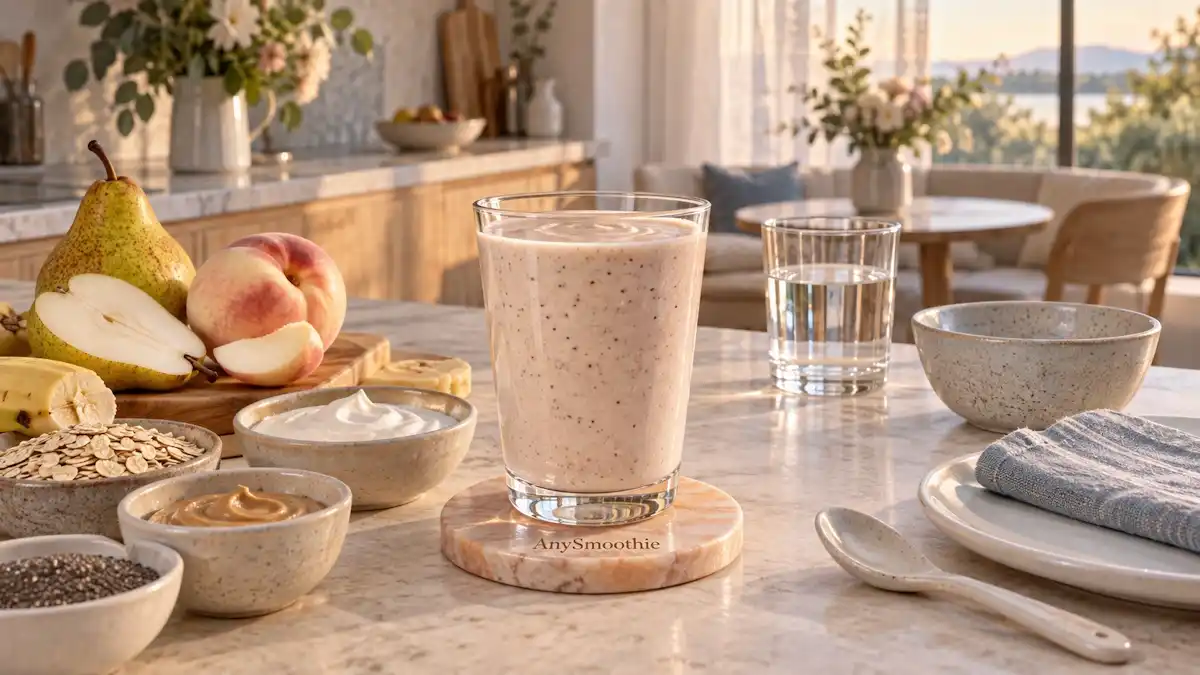
Waking up with little appetite can make breakfast feel like a chore. You may feel full after a few bites, or solid food may seem unappealing before the day even begins.
Morning smoothies when solid food feels too heavy offer a lighter way to take in fluid and nourishment. A balanced blend can provide carbohydrates, protein, fiber, and fats without requiring a large meal. They are a practical breakfast option, not a treatment for persistent digestive symptoms. Start small, keep flavors simple, and pay attention to what feels comfortable.
Why Smoothies May Feel Easier Than Solid Food
Blending changes food’s texture into something you can sip, but your body still digests the ingredients. For some people, a lower-volume drink feels more manageable than chewing a bowl of food first thing in the morning.
Food texture can influence hunger and fullness responses, although individual tolerance and appetite remain important. A systematic review and meta-analysis of food texture and satiety found measurable differences between liquid, solid, and more viscous foods.
Carbohydrates break down into glucose, which supports normal energy production. Protein provides amino acids used for tissue maintenance, while fiber supports regular digestive function. Dietary fat also helps the body absorb fat-soluble vitamins. Together, these nutrients support physiological systems without making breakfast unnecessarily large.
Start with a small glass, then drink slowly. A 10-ounce smoothie is often easier to manage than a large 20-ounce serving.
People dealing with a broader pattern of low appetite may also find smoothies for older adults with reduced appetite useful for additional food-format ideas.
Build a Balanced Smoothie Without Making It Too Heavy
Use a simple formula: fluid, one fruit or vegetable, a modest protein source, and an optional small amount of fiber or fat. Water, dairy milk, or unsweetened plant milk work well as a base.
Choose banana, berries, peaches, or cooked oats for gentle flavor and carbohydrates. Add Greek yogurt, silken tofu, or plain protein powder for protein. Then, if desired, use 1 teaspoon of chia seeds, 1 tablespoon of nut butter, or a few avocado slices.
Large amounts of nut butter, seeds, oats, and sweetened ingredients can make a drink feel dense. Adjust one ingredient at a time so you can identify what suits you.
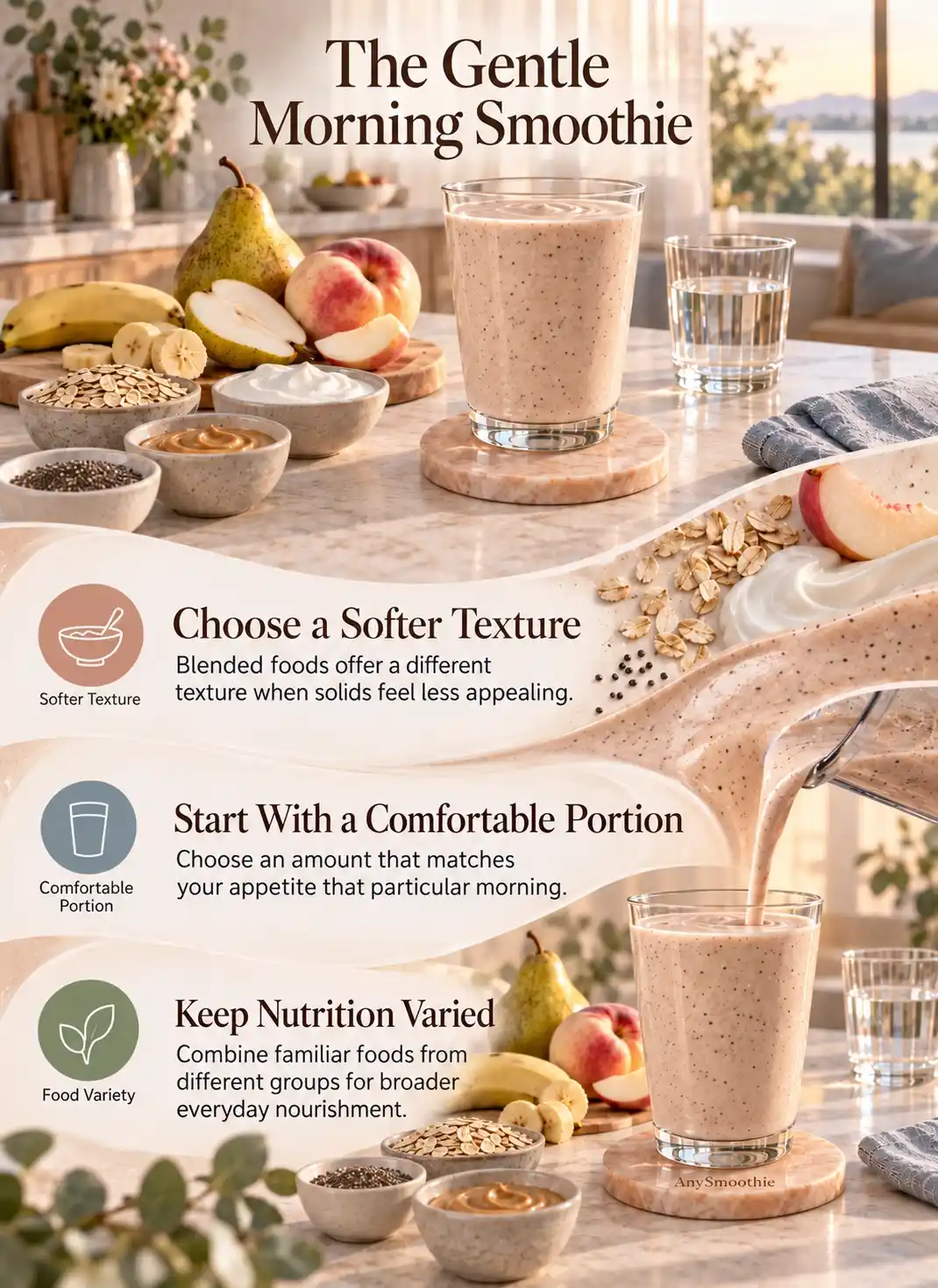
Blending and Serving Tips for a Gentler Morning Start
Blend until completely smooth, especially when using oats, berries, or leafy ingredients. Ripe fruit often tastes sweeter and blends more easily, so you may not need added sugar.
Thin a smoothie with extra liquid before adding more ingredients. Remove peach skins, berry seeds, or other tough bits if texture bothers you. Some people also prefer a cool smoothie rather than one packed with ice.
Prepare measured ingredients the night before, then sip the finished drink over 15 to 30 minutes. People with food allergies, diabetes, or prescribed dietary restrictions should choose ingredients with advice from a qualified health professional.
For mornings when appetite disruption follows a missed eating opportunity, smoothies after missing a meal covers another practical meal-timing situation.
3 Morning Smoothies When Solid Food Feels Too Heavy
These recipes make one modest serving. Blend each recipe until smooth, then add liquid a tablespoon at a time if you want a thinner drink.
| Smoothie | Main ingredients | Protein source | Texture and flavor | Best adjustment |
|---|---|---|---|---|
| Banana oat | Banana, oats, milk | Soy milk or Greek yogurt | Creamy and mild | Use fewer oats for a thinner blend |
| Berry yogurt | Berries, yogurt, water | Yogurt or kefir | Fresh and lightly tangy | Add more water for less thickness |
| Peach tofu | Peaches, silken tofu, plant milk | Silken tofu | Soft and neutral | Use fresh peach and extra liquid |
Banana Oat Smoothie for a Creamy, Mild Breakfast
Ingredients
- 1 small ripe banana
- 1/4 cup quick oats
- 3/4 cup unsweetened soy milk
Steps
Add the soy milk first, followed by the banana and oats. Blend until completely smooth.
Add 1/4 cup plain Greek yogurt or 1 teaspoon nut butter if you want more protein or richness.
Banana and oats provide carbohydrates, while yogurt or soy milk adds protein. The overview of macronutrient roles explains how carbohydrates, proteins, and fats support normal body functions. If this smoothie feels too thick, reduce the oats to 2 tablespoons and add more milk.
Estimated Nutrition per Serving
- Calories: ~225 kcal
- Protein: ~9 g
- Carbohydrates: ~42 g
- Fat: ~4 g
- Fiber: ~5 g
- Sugars: ~16 g
Estimate uses unsweetened fortified soy milk and does not include the optional yogurt or nut butter.
Berry Yogurt Smoothie With a Fresh, Light Flavor
Ingredients
- 3/4 cup berries
- 3/4 cup plain yogurt
- 1/2 cup water
Steps
Add the water and yogurt first, followed by the berries. Blend until completely smooth.
Frozen berries work well, although letting them thaw briefly can create a smoother texture.
Berries add flavor and fiber, while yogurt contributes protein. Strain berry seeds only when they affect your comfort or texture preference. For a lighter drink, use less yogurt and increase the liquid.
Estimated Nutrition per Serving
- Calories: ~180 kcal
- Protein: ~14 g
- Carbohydrates: ~25 g
- Fat: ~3 g
- Fiber: ~5 g
- Sugars: ~18 g
Estimate uses plain low-fat Greek-style yogurt and water.
If I wanted this especially light first thing in the morning, I’d thin it with water before reducing the fruit.
Peach Tofu Smoothie for a Soft, Neutral Option
Ingredients
- 1 ripe peach
- 1/2 cup silken tofu
- 3/4 cup unsweetened soy milk
- A small pinch of cinnamon, optional
Steps
Add the soy milk and silken tofu first, followed by the peach. Blend until completely smooth. Add cinnamon if desired.
Silken tofu blends smoothly and supplies plant protein without a strong flavor. Use fresh peaches, extra liquid, and no added sweetener when you want the simplest version.
Estimated Nutrition per Serving
- Calories: ~195 kcal
- Protein: ~12 g
- Carbohydrates: ~24 g
- Fat: ~6 g
- Fiber: ~3 g
- Sugars: ~16 g
Estimate uses one fresh peach and unsweetened fortified soy milk.
A smoothie should feel drinkable, not like a meal you have to push through.
How to Choose Ingredients When Your Appetite Is Low
Let texture guide your first choices. Peeled fruit, ripe bananas, yogurt, tofu, and well-blended oats usually create a smoother drink than raw vegetables, large seed portions, or thick nut butters.
Fiber supports normal digestive function, so there is no need to remove it automatically. However, a strained blend or peeled fruit can be useful when you prefer a very smooth texture. Keep fats modest because avocado, nuts, and nut butter can increase fullness quickly.
You can also adjust sweetness, temperature, and protein amount. Use unsweetened milk, plain yogurt, or water when sweet flavors feel like too much. If dairy feels too rich, try unsweetened soy milk or silken tofu.
For make-ahead mornings, smoothie storage and micronutrient stability provides additional preparation and storage context.
Pause recipe experiments and contact a healthcare professional if you cannot keep food or fluids down, vomit repeatedly, show signs of dehydration, lose weight without trying, have severe pain, or have symptoms that continue or worsen.
Conclusion
A small, balanced smoothie can make breakfast more approachable when solid food feels heavy. Blend it until smooth, sip slowly, and change one ingredient at a time to find a comfortable texture.
Keep notes on which fruits, proteins, temperatures, and serving sizes work best for you. Comfort matters, and recurring or worsening difficulty eating deserves professional evaluation.
🛡️ Safety Notes & Dietary Interactions
- Persistent Appetite Loss: Occasional low morning appetite can be harmless, but repeated difficulty eating, unintentional weight loss, early fullness, nausea, or worsening symptoms deserve professional assessment rather than relying on smoothies as a long-term workaround.
- Portion and Fullness: Oats, yogurt, tofu, nut butter, and larger servings can make even a drink feel heavy. Start with a modest portion and thin it with water or milk rather than adding more ingredients when appetite is limited.
- Blood Sugar Considerations: Banana, berries, peaches, milk, and flavored products contribute carbohydrate. People managing diabetes or other blood-glucose concerns should adjust fruit portions and protein sources according to their established nutrition plan.
- Food Allergies and Tolerance: Dairy, soy, nuts, oats, and fermented foods may require substitutions for allergies or digestive intolerance. Choose familiar ingredients and avoid introducing several new foods at once when you are already dealing with poor morning appetite.
FAQs
Which smoothie is best when I have almost no appetite in the morning?
The Peach Tofu Smoothie is the simplest and most neutral option because it uses fruit, silken tofu, and liquid without oats, seeds, or nut butter. You can make it even lighter by using extra water or plant milk and a smaller portion of peach, then sip slowly instead of trying to finish a large serving.
Is a smoothie actually easier to digest than solid food?
Not necessarily for everyone. Blending changes texture, which can make food easier to sip and feel more manageable, but the same nutrients still need to be digested. Some people tolerate liquid meals better in the morning, while others may still feel full or nauseated. Personal response matters more than the format itself.
Should I remove fiber if breakfast feels too heavy?
Not automatically. Fiber is useful for normal digestion, but large amounts of oats, seeds, skins, or greens can make a smoothie denser. If texture or fullness is the main problem, try a smaller amount, peeled fruit, or a more thoroughly blended recipe rather than eliminating fiber entirely.
Which protein source is lightest for a low-appetite morning?
Silken tofu, soy milk, and modest portions of plain yogurt can all work well because they blend smoothly and do not require large volumes. The best choice depends on tolerance. Avoid assuming that more protein is always better, since very dense smoothies can be harder to finish when appetite is already low.
When should low morning appetite be checked by a healthcare professional?
Seek professional advice if the problem is persistent, worsening, associated with repeated vomiting, severe pain, difficulty keeping fluids down, signs of dehydration, or unintentional weight loss. A smoothie can make breakfast easier temporarily, but ongoing appetite changes may need evaluation rather than repeated recipe adjustments.

Medical Disclaimer: AnySmoothie content is for educational purposes only and is not a substitute for professional medical advice. Consult a healthcare provider for personalized guidance. See our full Disclaimer & Terms of Use. AI Transparency: AnySmoothie may use AI to support content development. All content undergoes human editorial review for accuracy, clarity, and editorial quality. See our full AI Transparency.