

If you’re looking for a simple smoothie that fits an interest in inosine and purine metabolism, start with a clear distinction. Inosine is a naturally occurring nucleoside, not a fruit, vegetable, or standard smoothie ingredient.
An inosine smoothie for purine metabolism can provide fluid, fiber, vitamins, and minerals. However, it doesn’t automatically control uric acid or change how your body breaks down purines. The three ideas below use whole foods and moderate portions. If you have gout, kidney disease, high uric acid, or a prescribed diet, speak with a qualified clinician before taking inosine supplements.
For food-focused guidance in the same metabolic context, smoothies for high uric acid covers lower-purine ingredient choices separately from supplemental inosine.
How Inosine Fits Into Purine Metabolism
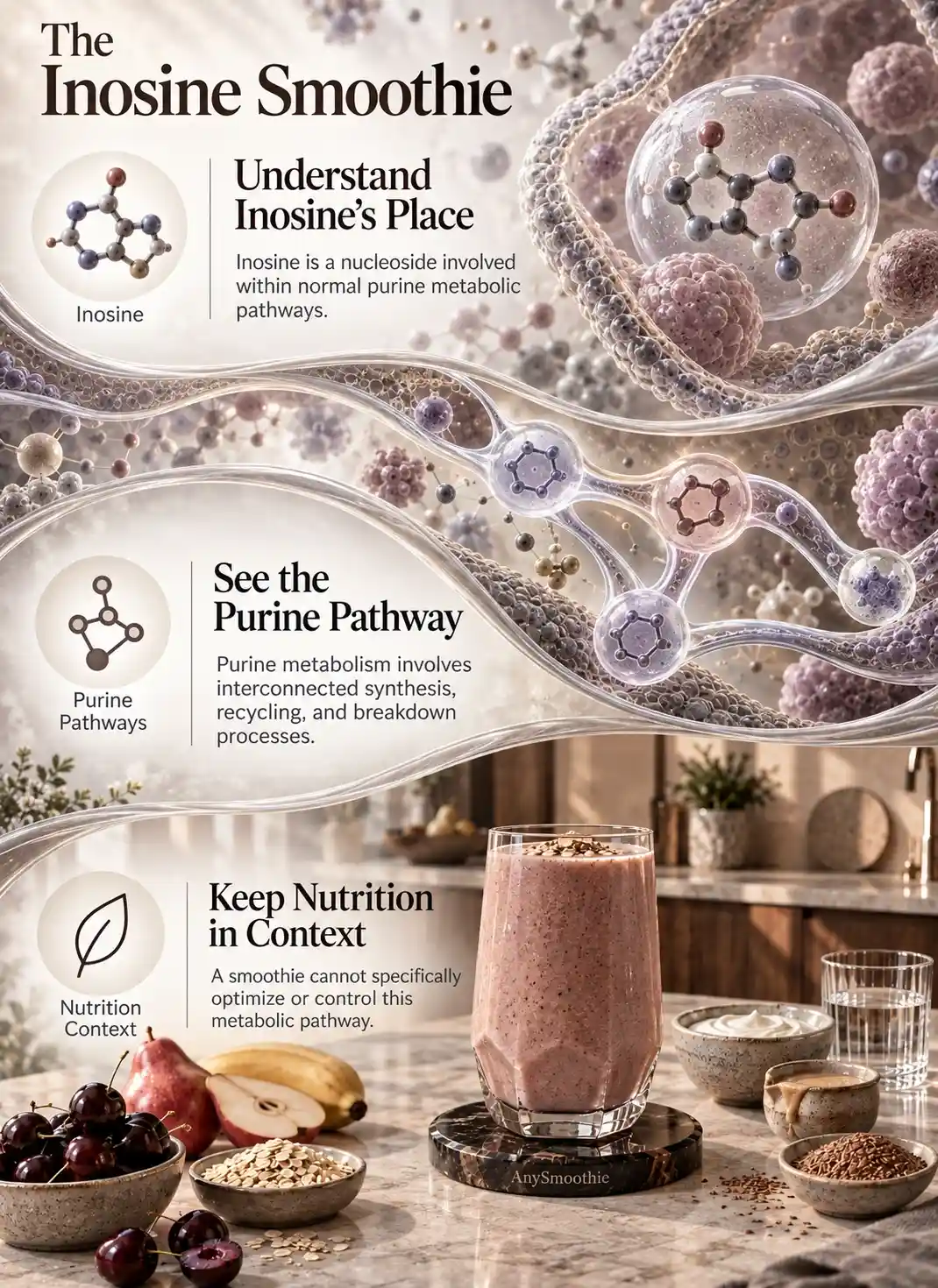
Inosine sits within the body’s normal purine pathway, where it can be converted into downstream compounds involved in uric acid production.
Inosine is part of a normal biochemical pathway
Inosine contains the purine base hypoxanthine joined to a sugar called ribose. Your body forms and breaks down purine compounds as part of normal cell activity.
During purine degradation, the body can process inosine through additional steps that may contribute to uric acid formation. In humans, uric acid is the final product of purine breakdown and leaves the body mainly through urine, as described in NIH’s overview of purine metabolism.
That process doesn’t mean added inosine will optimize purine metabolism. The amount your body needs and how it handles purines depend on many factors, including health status, diet, and kidney function.
Kidney-related dietary needs can change how smoothie ingredients are selected, so smoothies for kidney health may be useful when potassium or phosphorus intake also requires attention.
Smoothie nutrition and inosine supplements are different
Whole-food smoothie ingredients support general nutrition. Fruit supplies carbohydrate and fiber, while yogurt, soy milk, seeds, or oats can add protein or texture. Fluids also support normal hydration.
An inosine powder or capsule is different because it provides a concentrated supplemental compound. A scientific review describes inosine as a metabolite involved in both purine biosynthesis and degradation, with uric acid as a relevant end product in humans.
Use whole fruit rather than fruit juice, and skip syrups, honey, and sweetened drink mixes. Large amounts of added sugar and juice can raise fructose intake without adding much fiber.
Prospective and controlled-trial evidence also distinguishes whole fruit from some concentrated fructose-containing sources when evaluating uric acid and gout risk. A systematic review of fructose food sources found adverse associations for sugar-sweetened beverages and fruit juice that did not clearly extend to whole fruit.
A balanced smoothie can support everyday nutrition, but it isn’t a treatment for gout, elevated uric acid, or impaired kidney function.
3 Inosine Smoothies for Purine Metabolism
These recipes don’t contain a standardized or therapeutic amount of inosine. They are balanced smoothie options for people interested in food choices that support normal physiological systems.
Berry yogurt and chia smoothie
Ingredients
- 3/4 cup frozen mixed berries
- 1/2 banana
- 3/4 cup plain Greek yogurt
- 1/2 cup water
- 1 tablespoon chia seeds
Steps
Add the water and Greek yogurt first, followed by the berries, banana, and chia seeds. Blend until smooth.
The berries bring color and fiber, while yogurt and chia make the drink more filling.
Choose plain yogurt instead of flavored varieties to avoid unnecessary added sugar. For a nondairy version, use unsweetened soy yogurt and soy milk.
Estimated Nutrition per Serving
- Calories: ~275 kcal
- Protein: ~19 g
- Carbohydrates: ~43 g
- Fat: ~5 g
- Fiber: ~10 g
- Sugars: ~20 g
Estimate uses plain nonfat Greek yogurt.
Green kiwi oat smoothie
Ingredients
- 1 peeled kiwi
- 1/2 cup frozen pineapple
- 1 packed cup baby spinach
- 1/4 cup rolled oats
- 1 cup unsweetened soy milk
Steps
Add the soy milk first, followed by the spinach, kiwi, pineapple, and oats. Blend until smooth.
The oats add body without relying on juice or sweeteners.
Pineapple has a bright flavor, so a small portion is enough. If the smoothie seems too thick, add water instead of more fruit juice.
Estimated Nutrition per Serving
- Calories: ~245 kcal
- Protein: ~11 g
- Carbohydrates: ~39 g
- Fat: ~5 g
- Fiber: ~6 g
- Sugars: ~15 g
If I wanted to keep this especially simple, I’d thin it with water rather than increasing the fruit portion.
Peach tofu and ginger smoothie
Ingredients
- 1 cup frozen sliced peaches
- 1/3 cup soft tofu
- 3/4 cup unsweetened almond milk
- 1 tablespoon ground flaxseed
- A small slice of fresh ginger
Steps
Add the almond milk and tofu first, followed by the peaches, flaxseed, and ginger. Blend until smooth.
Tofu gives this smoothie a mild, creamy base with protein.
Frozen peaches work well because they chill the drink without ice. Select unsweetened milk, since sweetened versions can add sugar quickly.
Don’t stir inosine powder or open a capsule into any recipe without checking the product label and getting professional guidance. A smoothie doesn’t make a supplement more appropriate for your needs.
Estimated Nutrition per Serving
- Calories: ~180 kcal
- Protein: ~7 g
- Carbohydrates: ~20 g
- Fat: ~9 g
- Fiber: ~6 g
- Sugars: ~13 g
Estimate uses unsweetened almond milk and plain soft tofu.
How to Choose Ingredients and Use Inosine Responsibly
Ingredient choice matters most when the goal is to keep the smoothie simple, balanced, and separate from supplement dosing.
Build a moderate, whole-food smoothie
A simple formula keeps portions sensible: use whole fruit, add a fiber or protein source, choose an unsweetened liquid, and avoid extra sweeteners. One smoothie is often enough as a snack or breakfast component.
Fiber can slow the pace of digestion compared with juice alone. Greek yogurt, tofu, soy milk, chia, flaxseed, and oats are practical additions that also make a smoothie more satisfying.
| Smoothie | Key ingredients | Best feature | Sugar and fiber considerations | Important cautions |
|---|---|---|---|---|
| Berry yogurt and chia | Berries, yogurt, chia | Creamy protein and fiber | Uses whole fruit with no syrup | Food nutrition differs from inosine supplements |
| Green kiwi oat | Kiwi, pineapple, spinach, oats | Bright flavor with whole grains | Keep pineapple portion moderate | Inosine may not suit uric acid or kidney concerns |
| Peach tofu and ginger | Peaches, tofu, flaxseed | Dairy-free protein option | Frozen fruit avoids juice | Review supplements with a clinician |
Blend fresh and store carefully
Blend shortly before drinking for the best texture. If you need to prepare ahead, refrigerate it in a sealed container and drink it within 24 hours. Stir or shake it before serving because ingredients can separate.
For another make-ahead context, smoothie storage and micronutrient stability covers preparation and storage considerations in more detail.
A smoothie should fit within, not replace, a prescribed eating plan. Review any supplement with a clinician when symptoms, lab results, kidney concerns, gout, or prescription medicines are involved. Research on administered inosine shows it can be converted into purine-related compounds, which is one reason individualized guidance matters.
Conclusion: A Sensible Role for Smoothies
A well-balanced smoothie can support hydration and overall nutrition, especially when it uses whole fruit, unsweetened liquids, and a source of protein or fiber. It should not be presented as a way to control purine metabolism, lower uric acid, or treat a medical condition.
The important distinction is between nutritious smoothie ingredients and supplemental inosine. Choose a low-added-sugar recipe, keep portions reasonable, and seek qualified clinical advice before using inosine if you have gout, kidney concerns, abnormal uric acid results, or a prescribed diet.
🛡️ Safety Notes & Dietary Interactions
- Uric Acid Considerations: Supplemental inosine can contribute to purine breakdown and uric acid formation. People with gout, hyperuricemia, kidney disease, or a history of uric acid stones should not use inosine casually without individualized medical guidance.
- Supplement Versus Food: Berries, kiwi, peaches, oats, yogurt, tofu, and seeds provide ordinary nutrition but do not function like supplemental inosine. Adding a capsule or powder to a smoothie changes the exposure and should not be treated as equivalent to food.
- Hydration Still Matters: Adequate fluid intake supports normal kidney function and uric acid excretion, but a smoothie should not replace regular water. People following prescribed fluid restrictions should use their established clinical plan rather than increasing liquids independently.
- Sugar and Fructose Load: Large amounts of juice, syrups, sweetened yogurt, or multiple high-sugar add-ins can raise total fructose intake quickly. Use whole fruit, unsweetened liquids, and moderate portions, especially when uric acid or metabolic concerns are already present.
FAQs
Can an inosine smoothie lower uric acid?
No. A smoothie cannot be assumed to lower uric acid or improve purine metabolism. In fact, supplemental inosine can be broken down through purine pathways that contribute to uric acid formation. The recipes here are simply balanced food options built around whole fruit, protein, fiber, and unsweetened liquids.
Should people with gout avoid inosine supplements?
They should be especially cautious. Because inosine can contribute to uric acid production, supplemental use may be inappropriate for someone with gout or elevated uric acid. Individual risk depends on health status, medications, kidney function, and current laboratory values, so professional guidance is more appropriate than self-directed dosing.
Which smoothie is best if I want the lowest added sugar?
All three can be prepared without added sugar, but the Peach Tofu and Ginger Smoothie is especially straightforward because it uses unsweetened almond milk and frozen peaches without syrup. The Berry Yogurt and Chia Smoothie also works well when plain yogurt is used instead of flavored versions.
Does soy, tofu, or yogurt make purine metabolism worse?
These foods should not be treated the same way as a concentrated inosine supplement. Their nutritional effects depend on the whole diet and the individual. If you have gout, kidney disease, or a prescribed low-purine eating plan, use the guidance you were given rather than assuming every protein-containing food needs to be restricted.
Can I add inosine powder directly to one of these recipes?
Only if a qualified clinician has already advised you to use that product and you are following the exact labeled or prescribed amount. Mixing inosine into a smoothie does not reduce its biological effects or interaction risks, and it does not make the supplement safer for people with uric acid or kidney concerns.

Medical Disclaimer: AnySmoothie content is for educational purposes only and is not a substitute for professional medical advice. Consult a healthcare provider for personalized guidance. See our full Disclaimer & Terms of Use. AI Transparency: AnySmoothie may use AI to support content development. All content undergoes human editorial review for accuracy, clarity, and editorial quality. See our full AI Transparency.