
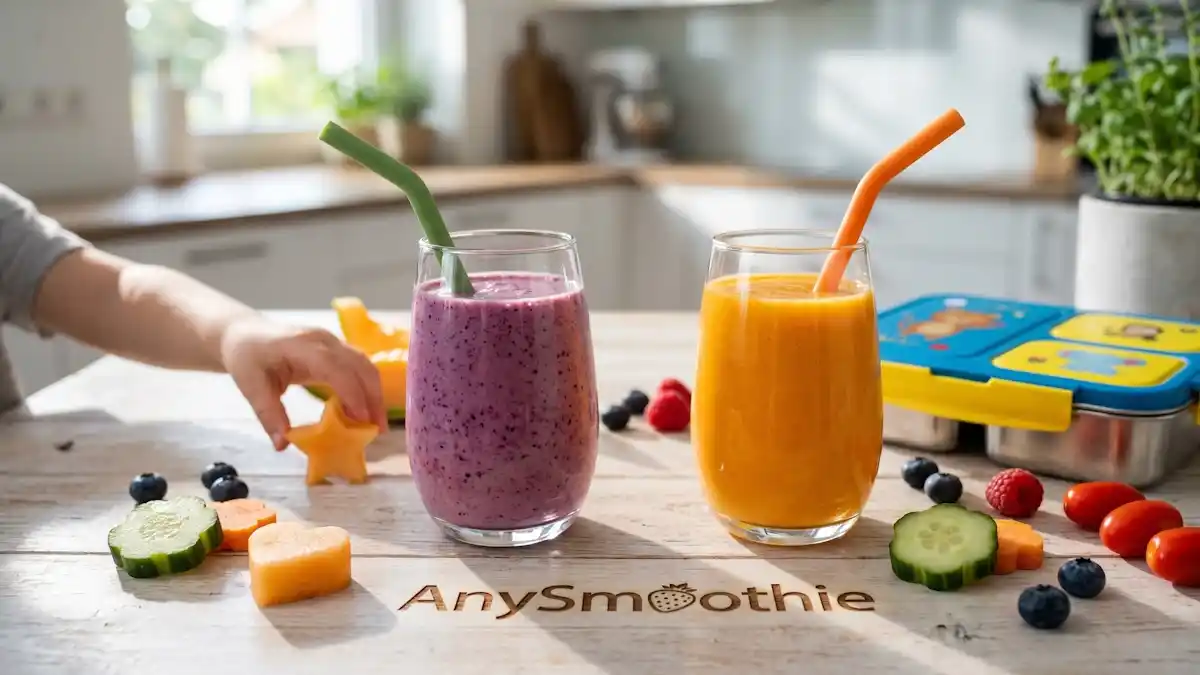
Mornings feel chaotic when kids reject breakfast and head to school on empty stomachs. Picky eaters grab sugary cereals or skip meals altogether. That leads to focus dips by mid-morning, cranky moods, and tired afternoons.
You want options that deliver smart nutrition without battles. Healthy kids smoothie recipes fix this. They pack nutrient density for brain growth, steady blood sugar, and gut health. Kids get omega-3s and fiber for sharp focus and lasting energy. No sugar crashes here.
These blends support cognitive development and microbiome diversity. You’ll find three fun recipes kids love. Parents win with prep under five minutes. Read on for the science and simple steps.
The Developing Brain: Essential Fats and Micronutrients for Learning
Kids’ brains grow fast. They need key fats like omega-3s and choline for memory and focus. These build nerve cells and sharpen attention during school.
Whole foods supply them best. Sugary drinks lack these essentials. A homemade smoothie changes that. It delivers fats from avocado or chia seeds. Choline comes from yogurt. This combo aids learning.
See how smoothies stack up. The table below compares common drinks to a smart kids smoothie.
| Nutrient | Standard Kid’s Fruit Juice | Commercial Yogurt Drink | Homemade Smart Kids Smoothie |
|---|---|---|---|
| Added Sugar Content | 25g | 15g | 0g |
| Brain-Building Fats (DHA/Choline) | None | Low | High (avocado/chia) |
| Fiber Content | Low | Medium | High |
| Duration of Sustained Energy | 30 min | 1 hour | 3+ hours |
The smart smoothie stands out for cognitive endurance. It fuels steady brain power. Studies on omega-3s and choline back this up. They show these nutrients boost synapse formation in young brains.
Choline and Omega-3s: Building the Foundations of Memory and Focus
Choline acts like brain Legos. It stacks cell membranes for strong memory. Find it in Greek yogurt or eggs blended smooth.
Omega-3s from chia seeds protect focus. They reduce inflammation so kids stay alert. Pair yogurt with chia in smoothies. This supports school success.
One study links these to better attention in children. Your child gets a mental edge. Try it in the recipes ahead.
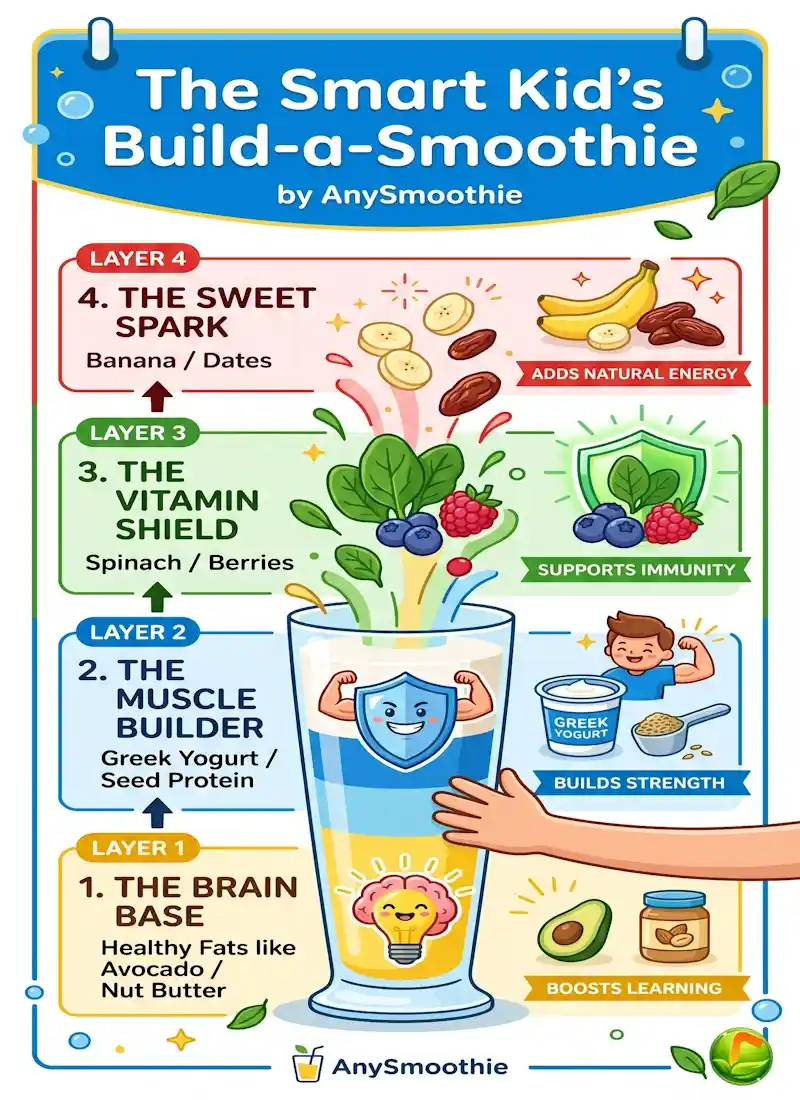
Sugar-Free Energy: Preventing the “School-Morning” Glucose Crash
Juices spike blood sugar fast. Kids crash by recess. Smoothies prevent that with fiber. They release energy slow and steady.
Whole fruits and veggies create balance. No processed junk. This keeps moods even through class.
Fiber binds sugars. It slows digestion for hours of power. Parents notice calmer mornings. Kids avoid the slump.
The Fiber-Fruit Balance: Why Whole Food Blends Beat Boxed Juices
Soluble fiber traps fruit sugars. Blood sugar stays stable. Juices lack this buffer. They cause quick highs and lows.
Aim for a 1:1 veggie-fruit ratio. Add spinach or cucumber. It boosts nutrition without taste change.
Recipes below use this trick. You get longer power than any box drink. Kids stay full till lunch.
3 Kid-Approved “Super-Hero” Smoothie Recipes
Kids drink these like treats. Each has five ingredients max. No added sugars. Prep takes under five minutes for two servings. They tie to brain fuel, steady energy, and gut health.
Calorie counts hover at 200-250 per serving. Tastes mimic dessert. Let kids help blend for fun.
The ‘Brain-Power’ Blueberry Avocado Cream
Ingredients: 1 cup blueberries, 1/2 avocado, 1/2 cup Greek yogurt, 1 banana, handful spinach, 1 cup milk alternative.
Steps: Freeze blueberries first for chill. Pit avocado. Toss all in blender. Blend 30 seconds till creamy. Pour and serve.
Omega-3 fats from avocado sharpen focus. Choline from yogurt builds memory. Antioxidants fight brain fog. Kids love the sweet cream vibe. 220 calories each.
Energy Rocket Banana Chia Blast
Ingredients: 2 bananas, 2 tbsp chia seeds, 1/2 cup oats, 1 cup almond milk, dash cinnamon.
Steps: Slice bananas. Soak chia in milk five minutes. Add oats and cinnamon. Blend smooth. Thickens fast.
Chia fiber stabilizes blood sugar. Oats add protein for fullness. Tastes like banana pudding. No crash, just rocket fuel. 240 calories per serving.
Gut Guardian Berry Kefir Zinger
Ingredients: 1 cup mixed berries, 1 cup kefir, 1/2 cucumber, handful kale, 1/2 apple.
Steps: Chop cucumber and apple. Add frozen berries. Pour kefir. Blend till vibrant. Fresh and zingy.
Probiotics from kefir boost microbiome diversity. Vitamins build immunity. Berries add fiber. Fruity taste hides greens. Kefir smoothies aid gut health. 210 calories each.
Smart Nutrition Hacks: How to Sneak in Greens and Probiotics
Picky eaters spot greens easy. Mask them for wins. Boost nutrient density without fights.
Add spinach under blueberries. It vanishes in sweetness. Probiotics from kefir or yogurt support gut bugs. This aids digestion and mood.
Test small batches. Adjust for taste. You pack more vitamins per sip. Don’t call it a ‘healthy drink.’ Call it ‘Rocket Fuel’ or ‘Focus Juice.’ In the 2026 neurobiology of habits, the label you give the food changes how the brain perceives the flavor. Gamify their nutrition, and they’ll ask for seconds.
Flavor Masking 101: Using Natural Sweeteners for Picky Eaters
Freeze fruits for ice cream texture. Bananas or apples sweeten naturally. Pair kale with pineapple if needed.
Yogurt or kefir adds tang and probiotics. No battles. Kids sip happy. Builds on recipes above. Parents feel like pros.
Conclusion
Healthy kids smoothie recipes deliver brain support, crash-free energy, and gut balance. You fuel growing minds with fats, fiber, and probiotics. Start with one today. Mornings turn smoother. School focus improves.
Share your kid’s favorite in comments. Try these for happier days. Your family wins big.
⚠️ Safety Notes for Healthy Kids Smoothies
Choking Hazards: When adding seeds like chia or flax, ensure they are blended thoroughly or soaked beforehand. For very young children, whole seeds can be a minor choking risk or cause digestive irritation.
Honey and Infants: Never use honey as a natural sweetener if the child is under 12 months old, due to the risk of botulism.
Nut Allergy Cross-Contamination: If using almond or cashew milk, ensure all children sharing the smoothies are not allergic. Always check labels for “processed in a facility with nuts” if serving to highly sensitive children.
Oxalate Balance: While spinach is great for “masking” greens, rotating with low-oxalate options like romaine or kale is better for long-term kidney health in children, as their systems are still developing.
Probiotic Introduction: If your child is not used to kefir or high-probiotic yogurt, start with small amounts (1/4 cup) to avoid temporary gas or tummy rumbles as their microbiome adjusts.
FAQ
How can I get my child to drink a green smoothie?
The “Visual Hack” is key. Use high-pigment fruits like blueberries, blackberries, or even a tiny bit of beetroot to mask the green color of spinach. Start with a “Gateway Smoothie” where the taste is 90% fruit and 10% greens, gradually increasing the ratio as their palate adapts.
Are smoothies a good replacement for a full breakfast?
Yes, if they are “Smart Smoothies.” A breakfast of cereal or toast is often pure carbohydrate. A smoothie that includes protein (yogurt/hemp seeds) and healthy fats (avocado/nut butter) provides a more complete nutritional profile and keeps children full and focused until lunchtime.
What are the best “Brain Foods” to add to kids’ smoothies?
Choline (found in sunflower lecithin or egg yolks, yes, you can blend a pasteurized yolk!) and DHA Omega-3s (from algae oil or walnuts) are vital for the physical construction of brain cell membranes and neurotransmitters.
How do I avoid the mid-morning “sugar crash” in my kids?
Avoid using fruit juices as the liquid base. Use unsweetened nut milks, coconut water, or plain water. By keeping the fiber from the whole fruit and adding a fat source, you slow down sugar absorption, providing steady energy for the classroom.
Is it safe to add protein powder to my child’s smoothie?
It’s usually better to use whole-food protein sources like Greek yogurt, hemp hearts, chia seeds, or nut butters. If you choose a powder, look for a clean, third-party tested “Kids” version or a simple collagen peptide powder without artificial sweeteners or fillers.

Medical Disclaimer: The information on AnySmoothie is for educational and informational purposes only. It is not intended as medical advice or a substitute for professional consultation with a healthcare provider. Always consult your physician before starting any new nutritional protocol, especially if you have underlying health conditions or are taking medication. By using this site, you agree to our full Disclaimer & Terms of Use.