
You just finished your first workout. You’re bloated, crashing hard, and already dreading tomorrow’s session. Sound familiar? Many beginners hit this wall because their bodies cling to sugar for fuel, leaving them tired and craving junk.
The metabolic reset smoothie changes that. It’s a simple blend that delivers steady energy, curbs hunger, and builds metabolic flexibility. You’ll get better insulin sensitivity, support for muscles, and no more post-exercise slumps. Packed with 20-30 grams of protein, fiber, and healthy fats, it’s perfect for newbies.
This guide covers why your metabolism needs a reset, post-workout timing, three easy recipes, and tips to switch to fat-burning. Let’s build your fitness foundation.
The Beginner’s Metabolism: Breaking the Cycle of Insulin Resistance
Beginners often eat processed foods and sit too much. This builds insulin resistance. Your cells ignore insulin, so sugar stays in your blood. Energy crashes follow.
You feel it as afternoon fog or constant snacks. The fix starts with leucine, an amino acid in protein. It hits a threshold around 2-3 grams per meal. This signals muscles to use fuel better. Smoothies with balanced macros create steady-state energy. No spikes, just consistent power.
In 2026, trends favor high-fiber blends at 8-10 grams. They retrain your body to burn fat over sugar.
Commercial shakes fail here. They spike sugar or lack balance. A metabolic reset smoothie stands out.
| Feature | Commercial Fitness Shake (High Sugar) | Pure Protein Shake (No Fiber/Fat) | Metabolic Reset Smoothie |
|---|---|---|---|
| Satiety Duration | 1-2 hours | 2-3 hours | 4+ hours |
| Blood Sugar Impact | Spike and crash | Moderate spike | Stable |
| Micronutrient Density | Low | Low | High |
| Muscle Recovery Support | Poor | Fair (protein only) | Optimal (20-30g protein) |
This table shows why the metabolic reset smoothie retrains metabolism best. It supports fat-burning while others leave you hungry.
Metabolic Flexibility: Training Your Cells to Switch Fuel Sources
Metabolic flexibility lets your body burn carbs or fats as needed. Beginners lack it, so workouts drain fast.
A smoothie with protein, fiber, and fats teaches the switch. Cells improve insulin sensitivity. You sustain longer sessions.
Take spinach, chia, and almond butter. They provide steady fuel. Research in April 2026 confirms balanced macros build this skill. You’ll notice even energy during walks or lifts.
The Post-Workout Window: Nutrition for Recovery Without the Crash
That 30-60 minute window after exercise matters for beginners. Muscles soak up nutrients then. Skip sugar-heavy drinks. They cause crashes.
A metabolic reset smoothie fits perfectly. It refuels without spikes. Aim for 20-30 grams of protein. This hits the leucine threshold for repair. Recent studies back this for muscle synthesis.
Avoid store shakes. They’re low in fiber and fats. Your blend keeps blood sugar steady. Recovery feels easier, soreness drops.
For protein distribution insights, see Metabolic Weekly’s 2026 article on timing.
Protein Pacing: Why 20-30g is the Sweet Spot for Muscle Synthesis
Protein pacing spreads intake across meals. Each hits 20-30 grams. This triggers leucine at 2-3 grams per serving.
Muscles repair without extra calories. Beginners see less soreness and faster gains. Under 20 grams misses the threshold. Over 30 grams wastes it as heat.
Use Greek yogurt or whey in smoothies. Post-workout, it aids no-crash recovery. Studies show even dosing beats big meals. Hitting the 20-30g protein threshold doesn’t just build muscle; it also leverages the Thermic Effect of Food (TEF), meaning your body burns more energy simply digesting protein compared to fats or carbs.
3 Metabolic Reset Smoothie Recipes (Beginner-Friendly)
These recipes pack 20-30 grams protein, 8-10 grams fiber, fats, and greens. Blend in 5 minutes. Use unsweetened milk. Start with less liquid for thickness.
The ‘Core-Four’ Protein, Fiber, Fat, and Greens Starter
This foundational recipe balances macros. Protein powder gives 25 grams protein. Spinach and chia add 9 grams fiber. Almond butter brings fats. Berries flavor it.
Steps: Add almond milk first. Then powder, greens, seeds, butter, berries. Blend low then high. Drink fresh.
It resets metabolism for beginners. Steady energy follows. Optional probiotics from kefir boost it.
Transitioning from Sugar to Fat-Burning: Tips for Sustained Energy
Drink your smoothie same time daily. Pair it with a 10-minute walk. This trains fat use.
Consistency builds the habit. You’ll crave less sugar. In 2026, infused waters trend with electrolytes.
Avoid fatigue by pacing protein. Eat two-three meals, no snacks. Muscles grow, energy stays even.
Hydration and Electrolytes: Preventing the ‘Beginner Fatigue’
New exercisers lose salts through sweat. This causes fatigue in the metabolic shift.
Add a pinch of sea salt or use coconut water. Lemon helps absorb. Potassium from banana or spinach pairs well.
Aim for half your weight in ounces of water daily. Magnesium at 300mg fights cramps. Smoothies hydrate while fueling.
Conclusion
The metabolic reset smoothie lays a strong fitness base. It boosts flexibility, aids recovery, and provides simple recipes. Tips like pacing and hydration prevent crashes.
Start with the Core-Four today. You’ll gain steady energy and drop cravings. Science backs the 20-30 gram protein for real results.
Your first week sets the tone. Blend one post-workout. Share how it fuels your routine. Fitness gets easier from here.
🛡️ Safety Notes & Dietary Interactions
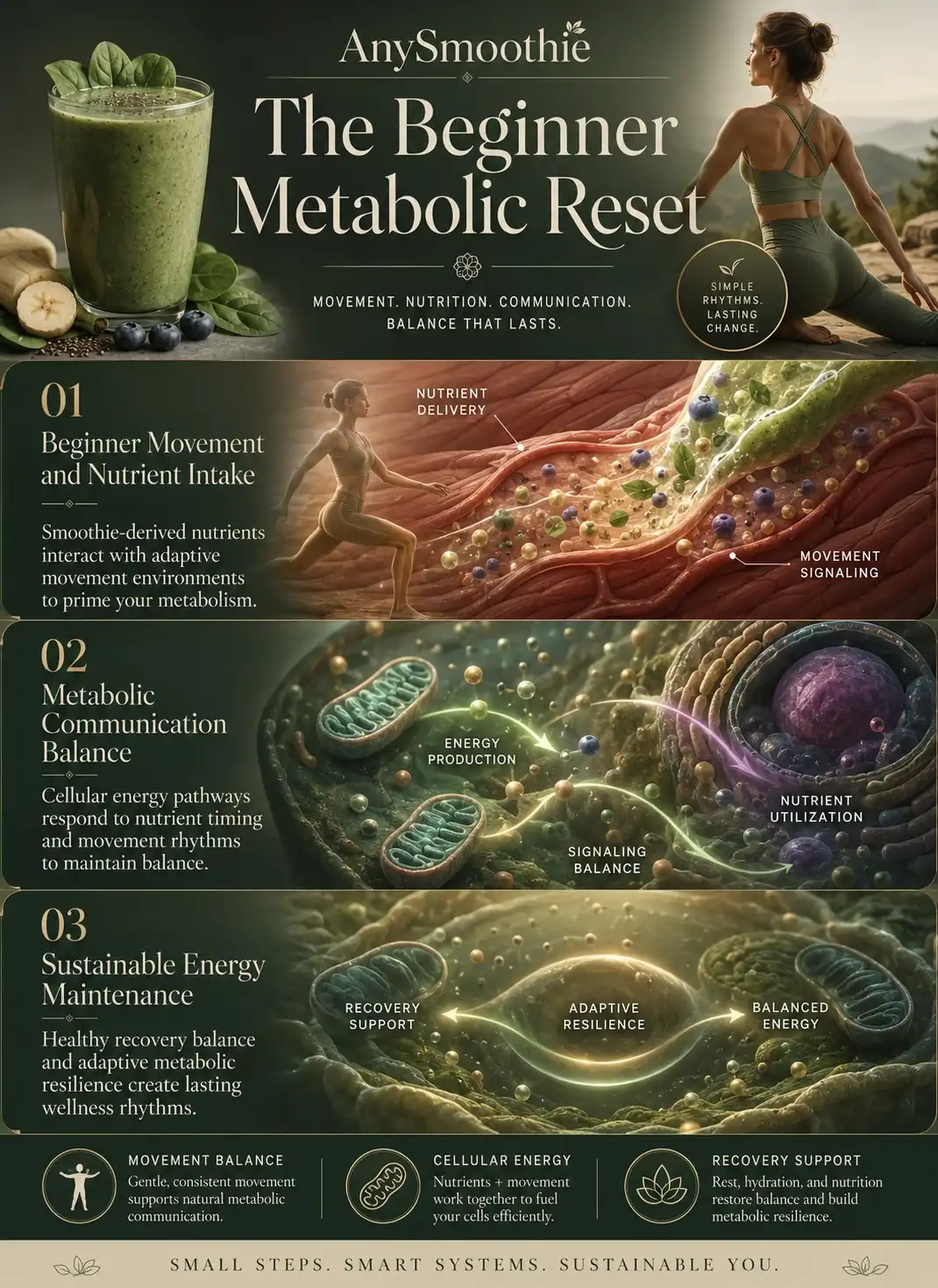
Leucine Threshold Signaling and Muscle Recovery Coordination: Post-workout smoothies designed for beginners work best when they consistently provide around 20–30 grams of quality protein, helping support leucine-triggered muscle protein synthesis pathways without relying on excessive calorie loads. Balanced protein pacing across the day generally supports steadier recovery and metabolic adaptation better than one oversized “cheat meal.”
Metabolic Flexibility and Glucose Stability Dynamics: New exercisers often experience unstable energy because their metabolism relies heavily on rapid glucose turnover. Smoothies combining protein, fiber, healthy fats, and greens may help create smoother fuel transitions between carbohydrate use and fat oxidation, reducing the sharp crashes commonly triggered by sugary recovery drinks or processed snack foods.
Hydration-Electrolyte Balance and Beginner Fatigue Prevention: Early training phases increase fluid and electrolyte demands through sweat loss and higher metabolic turnover. Ingredients like spinach, kefir, banana, coconut water, chia, and mineral-rich add-ins can help support potassium, magnesium, and hydration balance, which often improves exercise tolerance and reduces post-workout fatigue sensations.
Fiber Density and Satiety Communication Support: Commercial fitness shakes often digest quickly because they lack meaningful fiber or fat content. Smoothies built with chia, flax, oats, greens, avocado, or nut butters generally create steadier satiety signaling and slower nutrient delivery, helping beginners avoid the rebound hunger and energy instability that frequently derail consistency.
FAQ
Why do beginners often crash after workouts even when they drink a shake?
Many commercial shakes contain rapidly absorbed sugars with limited fiber, fats, or micronutrients, which can create a short-lived energy spike followed by a crash. Beginners also tend to have lower metabolic flexibility, meaning their bodies struggle to transition smoothly between glucose and fat use. Balanced smoothies help stabilize that transition by slowing digestion and improving nutrient pacing.
Why is the 20–30 gram protein range emphasized so much?
This range is commonly discussed because it generally provides enough leucine and amino acids to support muscle protein synthesis after exercise without dramatically overshooting practical recovery needs. Spreading protein intake more evenly throughout the day often supports recovery and satiety more effectively than consuming most daily protein in one large meal.
How does a metabolic reset smoothie improve metabolic flexibility?
A balanced smoothie teaches the body to handle mixed fuel sources more efficiently by combining slower carbohydrates, healthy fats, fiber, and protein together. Over time, this steadier nutrient structure may help reduce dependence on constant sugar intake while supporting smoother transitions between glucose use and fat oxidation during exercise and daily activity.
Why are greens, chia seeds, and nut butters included in beginner smoothies?
These ingredients improve both nutritional density and digestion speed. Greens provide minerals tied to energy metabolism, chia contributes fiber and hydration support, while nut butters add fats that slow glucose absorption and improve satiety. Together, they help transform the smoothie from a quick snack into a more stable recovery-focused mixed meal.
Why does hydration matter so much during the first weeks of exercise?
New exercisers often underestimate how much fluid and electrolyte balance influences energy, recovery, and muscle comfort. Sweat loss increases mineral demands, especially for magnesium and potassium. Smoothies that include hydrating liquids, greens, fruit, and mineral-supportive ingredients can help support recovery rhythms while reducing cramps, headaches, and post-workout fatigue during early training adaptation.

Medical Disclaimer: AnySmoothie content is for educational purposes only and is not a substitute for professional medical advice. Consult a healthcare provider for personalized guidance. See our full Disclaimer & Terms of Use. AI Transparency: AnySmoothie may use AI to support content development. All content undergoes human editorial review for accuracy, clarity, and editorial quality. See our full AI Transparency.