
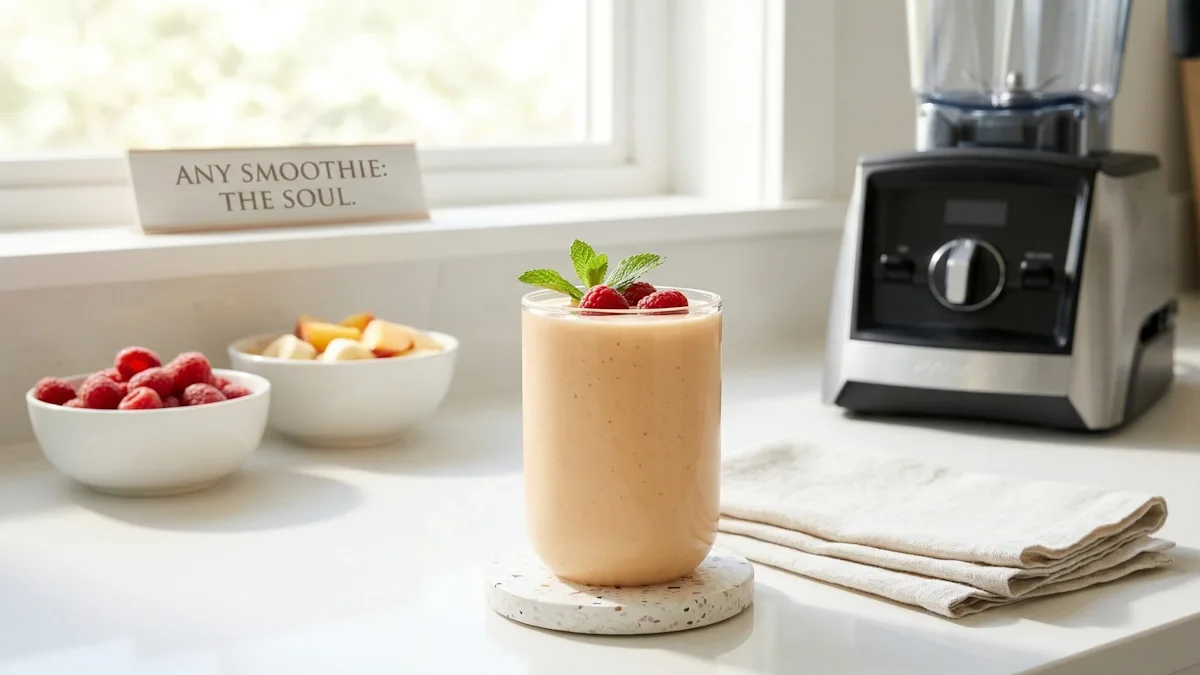
When a diverticulitis flare hits, eating can feel like work. For many people, a doctor may suggest a short-term low-residue or low-fiber approach so the gut can rest and irritation can settle down.
That’s where diverticulitis-safe smoothies: low-residue options can help, because sipping something smooth often feels easier than chewing solid food. Still, not every smoothie fits the moment. High-fiber wellness blends packed with seeds, thick skins, raw greens, or chunky fruit can be too rough during a flare, so the focus here is on gentle texture, simple ingredients, and choices like peeled or strained fruit and easy-to-tolerate liquid bases. If you’re also curious about digestion support beyond a flare, these probiotic smoothies to support digestion may be useful later, when your care plan allows more variety.
This guide stays focused on calm, low-residue smoothie ideas for flare-ups, not heavy, high-fiber blends meant for everyday wellness. Most importantly, your own medical advice comes first, especially if you have severe pain, fever, vomiting, or signs of dehydration. With that in mind, let’s start with what makes a smoothie gentle enough for gut rest.
What “low-residue” means for a diverticulitis-safe smoothie
Weight Loss Programs

Diet & Weight Loss
Diet & Weight Loss
BellyFlush™ – Gut Cleanse and Digestive Detox for Weight Support

Diet & Weight Loss

Diet & Weight Loss
In this context, low-residue means a smoothie that leaves very little behind for your gut to process. That usually means less fiber, fewer rough bits, and a texture that stays silky instead of thick or gritty. For diverticulitis-safe smoothies: low-residue options, the goal is simple: keep the drink easy to sip, easy to digest, and less likely to irritate a tender digestive tract.
During a flare, this often means choosing soft ingredients, removing skins, and skipping anything that adds bulk. If your care team has you on a low-fiber plan, Stanford Health Care’s low-fiber diet for diverticulitis gives a helpful overview of how that approach is usually used for short-term gut rest.
Why smoothie texture matters as much as the ingredient list
Texture can make or break a smoothie when your gut feels raw. A drink may look healthy on paper, but if it’s thick, pulpy, gritty, or full of tiny bits, it can still be hard to tolerate. Think of it like the difference between smooth soup and chunky stew. One slides down easily, the other asks more from your system.
That is why peeled and strained fruit for gut rest often works better than whole raw produce. Fruit skins, stringy fibers, and pulp can turn a simple smoothie into something much heavier. Even banana, which is often gentle, can feel better in a fully blended drink than in a lumpy one. If bananas tend to sit well for you, this banana smoothie for acid reflux shows how a soft, simple blend can be built around easy texture.
A few small changes can make a big difference:
- Peel fruit before blending, especially apples, pears, peaches, or similar produce.
- Blend longer than usual, until the drink is fully smooth.
- Cook certain fruits or vegetables first if raw versions feel too rough.
- Strain the smoothie if your doctor or dietitian has advised a stricter low-residue phase.
Cooking can help more than people expect. For example, gently cooked apples or carrots usually blend into a smoother base than raw ones. As a result, the finished drink is often easier on the stomach and colon. The same idea applies to canned fruit packed in juice, if it fits your plan, because it’s already softer and easier to puree.
A low-residue smoothie is not just about what goes in. It’s also about how smooth it comes out.
Best liquid bases for diverticulosis inflammation or a diverticulitis flare are usually the ones that stay plain and light. Water, lactose-free milk, regular milk if tolerated, or a mild dairy-free option can help thin the blend without adding grit. On the other hand, juices with pulp, raw greens, and thick add-ins can push the texture in the wrong direction.
Is it safe to blend seeds for diverticulitis?
During an active flare, it’s usually smartest to avoid seeds, even when they’re blended. Blending may make them look smooth, but it doesn’t always remove every tiny particle. For some people, those small bits can still feel irritating when the gut is already inflamed.
This is where timing matters. Outside a flare, current research does not support the old blanket rule that everyone with diverticular disease must avoid seeds forever. Reports on newer evidence, such as this summary on nuts and seeds and diverticulitis risk, suggest seeds are not automatically a problem for people who are not actively flaring. Still, that does not mean seed blends are the best pick when symptoms are strong.
In other words, low-fiber smoothies vs high-fiber smoothies are not the same thing when your gut needs rest. Chia, flax, berry seeds, kiwi seeds, and seeded fruit blends may fit later, but they are often too rough for the flare stage. Even if the blender breaks them down, the drink may still end up thicker, grainier, and harder to tolerate.
Tolerance also varies a lot. One person may handle a very smooth blended strawberry mixture just fine, while another feels worse from the tiny seed fragments. Because of that, your own doctor or dietitian should guide the call. If you’ve been told to follow a strict low-residue diet smoothie plan, it’s best to keep seeds out until you are further along in recovery.
A safer rule during flare-ups is to choose seedless, peeled, and fully blended ingredients first. Then, as symptoms settle and your care team says it’s okay, you can test higher-fiber add-ins slowly instead of tossing them all back in at once.
The best ingredients to use, and what to leave out for now
When you’re building diverticulitis-safe smoothies: low-residue options, the ingredient list matters just as much as the texture. A flare is not the time for a “healthy everything” blend. It’s better to think soft, smooth, peeled, and simple.
That usually means choosing foods that blend into a silkier drink and skipping the ones that leave grit, pulp, or tiny bits behind. In other words, low-fiber smoothies vs high-fiber smoothies are not even close during symptom-heavy days. Start plain, keep portions modest, and add variety later when your gut is calmer.
Gentle fruits and add-ins that are usually easier to tolerate
The safest place to start is with ingredients that are naturally soft or already broken down. Ripe banana is often one of the easiest picks because it blends smoothly and adds body without rough texture. Applesauce can work well for the same reason, especially if you want a mild fruit base that doesn’t need extra straining.
Canned fruit can also help, as long as you keep it simple. Canned peaches or pears packed in juice and drained are often gentler than raw versions because they’re softer and easier to puree. If fresh fruit sounds better, try peeled soft fruit only if you tolerate it well. The goal is not variety right now, it’s comfort.
If dairy works for you, a small amount of lactose-free yogurt can add protein and make the smoothie creamier. Smooth kefir may also fit, but only if it sits well with your stomach. Some people do fine with cultured dairy, while others need to keep it out during a flare, so this part is personal. If you’re looking for softer dairy-based ideas later on, these smooth yogurt smoothie ideas can be useful once your gut is more settled.
A little sweetness can also make a big difference when your appetite is low. Small amounts of honey or maple syrup can add calories without turning the drink heavy. That can be helpful if eating feels like a chore and you need something easy to sip.
A simple starting mix might include:
- ripe banana
- unsweetened applesauce
- drained canned peaches or pears
- lactose-free yogurt or smooth kefir, if tolerated
- a little honey or maple syrup, if needed
- enough liquid to keep the blend thin and smooth
During a flare, a modest portion usually works better than a large smoothie. Think snack-size, not meal-size, at least at first.
That small-volume approach matters. Even gentle ingredients can feel like too much if the serving is huge. So if you’re testing smoothies for diverticulitis flare-ups, start with a smaller glass and see how your body responds.
Ingredients that are often too rough during a flare-up
Many classic smoothie ingredients sound healthy, but they can be too harsh when your colon needs rest. This is where a lot of people run into trouble. A blend can look smooth in the blender and still be too fibrous once it hits your gut.
For now, it’s smart to pause ingredients like berries with seeds, citrus pulp, and pineapple. Berries often leave tiny seed fragments behind, while citrus and pineapple can bring both pulp and stringy fiber. Those rougher textures are not a great match for a low-residue phase.
The same goes for bulk-building add-ins. During a flare, it’s usually best to leave out:
- raw greens
- nut butters with bits
- coconut flakes
- oats
- bran
- chia
- flax
- protein powders with added fiber
These foods often fit later, but not during symptom-heavy periods. Chia and flax, for example, are popular in everyday smoothies because they add fiber. During a flare, though, that’s exactly the problem. They can thicken the drink, increase residue, and leave behind tiny particles that may feel irritating.
Raw greens cause similar issues. Even after blending, they can make a smoothie stringy or foamy. Oats and bran can quickly turn a light drink into something thick and bulky. Some protein powders do the same, especially the ones marketed for gut health or fullness because they often include added fiber, gums, or seeds.
If you want more medical background on why simple, low-fiber foods are often used short term during flares, GI Associates’ diverticulitis diet overview offers a useful summary.
The key point is timing. These ingredients are not “bad” forever. They just don’t belong in the early flare stage for many people. Once symptoms improve and your care plan changes, you may be able to bring some of them back slowly, one at a time.
Best liquid bases for a smoother, lower-residue blend
A good smoothie base should thin the drink without adding grit, pulp, or heaviness. In most cases, water is the easiest option. It’s plain, gentle, and lets you control thickness without adding extra ingredients that may not sit well.
You can also use ice in small amounts if you want the smoothie colder, but don’t overdo it. Too much ice can make the drink thick and harder to sip, which works against the whole point. When your gut feels tender, thinner usually goes down easier.
If you want more calories or protein, lactose-free milk is often a solid choice for people who tolerate dairy poorly. Regular dairy milk can also work if it agrees with you. The same goes for soy milk, as long as it’s a plain version and low in added fiber. Some plant milks look light, but they include gums, fiber blends, or seeds that can make the smoothie less gentle.
This is where the idea of the best liquid bases for diverticulosis inflammation often gets overcomplicated. During a flare, the best base is usually the one that stays simple and doesn’t stir up symptoms. That may be water for one person and lactose-free milk for another.
In certain savory-style blends, mild broth can fit too. It won’t work in a fruit smoothie, of course, but it can make sense if you’re blending something more soup-like and want a little flavor without much residue. Keep it mild, low-fat, and not heavily seasoned.
For a smoother result, aim for this order of preference:
- Start with water if you want the gentlest base.
- Use lactose-free milk or dairy milk if you need more substance and tolerate it well.
- Try plain soy milk only if it has minimal additives.
- Save broth for savory recipes where it makes sense.
If you keep the liquid base simple, the whole smoothie becomes easier to manage. That’s often the difference between a drink that feels soothing and one that feels like too much.
How to build a smoothie that is gentle on the gut
When symptoms are active, the best smoothie is usually the simplest one. For diverticulitis-safe smoothies: low-residue options, think of your blender as a tool for making food softer, thinner, and easier to handle, not for packing in extra nutrition at all costs.
That means keeping texture smooth, portions modest, and ingredient lists short. During a flare, a plain blend often works better than a “healthy” one loaded with fiber, seeds, or rough fruit.
A simple formula for low-residue diet smoothie recipes
A repeatable formula makes things easier when you don’t feel like thinking about food. Start with 1 cup of a gentle liquid, such as water, lactose-free milk, regular milk if tolerated, or another plain low-fiber option. Then add 1 soft fruit choice, like ripe banana, unsweetened applesauce, or drained canned peaches or pears.
If it works for you, add a small spoonful of smooth yogurt for more creaminess and a little protein. If you need extra sweetness, use a small amount of honey or maple syrup. Then blend until the drink is completely smooth. If needed, add more liquid so it stays thin and easy to sip.
Less is often better during the first day or two of symptoms. In that stage, low-residue diet smoothie recipes should stay plain and small, almost like a soft landing for your gut. If the texture still seems heavy, strain it. That extra step can make peeled and strained fruit for gut rest feel much easier to tolerate.
A gentle smoothie should feel more like a light drink than a thick meal.
How to make smoothies easier to digest during flare-ups
Even a simple smoothie can feel like too much if it’s too cold, too thick, or too large. That’s why smoothies for diverticulitis flare-ups usually go down better when made with room-temperature or lightly chilled ingredients. Very cold drinks can be uncomfortable for some people, especially when the stomach already feels unsettled.
Portion size matters too. A huge smoothie may sound efficient, but it can hit your gut like a bucket instead of a sip. Start with a small glass, drink slowly, and wait before having more. In many cases, that works better than trying to finish a full meal-sized blend at once.
It also helps to test only one new ingredient at a time. If you change three things at once, it’s hard to know what caused trouble. This matters when comparing low-fiber smoothies vs high-fiber smoothies, because ingredients that seem harmless can still thicken the drink or leave tiny bits behind. If you’re unsure about timing and food stages, this diverticulitis diet menu and phased plan gives a general look at how people often move from liquids to more variety.
For the smoothest result, keep these habits in mind:
- Use ingredients that blend silky, not pulpy.
- Add enough liquid so the smoothie stays thin.
- Sip slowly instead of drinking it fast.
- Stop if your gut starts to feel full or irritated.
- Wait to test extras until symptoms calm down.
In short, the best liquid bases for diverticulosis inflammation and flare-friendly blends are usually the plain ones, and the best method is often the gentlest one.
Three low-residue smoothie ideas to try first
If you want a safe place to start, keep it plain. These diverticulitis-safe smoothies: low-residue options use soft ingredients, mild flavor, and a texture that stays easy to sip. The goal isn’t to build the most nutrient-packed drink. It’s to make something gentle enough that you can actually tolerate it.
Banana yogurt smoothie for a simple, filling option
A banana yogurt smoothie is often the easiest first pick because it asks very little of your gut. Use 1 ripe banana, plain yogurt or lactose-free yogurt, and enough milk or lactose-free milk to thin it to a drinkable texture. If you want a little sweetness, add a small drizzle of honey.
Ripe banana tends to work well because it’s soft, naturally mild, and blends into a smooth, creamy base without skins or seeds. That’s a big reason it shows up so often in low-residue diet smoothie recipes. It adds body, but it doesn’t need much fuss.
Blend this one longer than you think you need to. A banana smoothie should feel silky, not thick or fluffy. If it seems heavy, add a splash more liquid and blend again.
During a flare, a thinner smoothie often goes down better than a spoon-thick one.
Peaches and cream smoothie with soft, strained fruit
If banana sounds too heavy, peaches can be a nice change. Use canned peaches packed in juice, drain them well, then blend them with plain yogurt, milk, and a drop of vanilla if that flavor sits well with you.
Canned peaches are often softer than raw peaches, so they can be a smart pick for smoothies for diverticulitis flare-ups. They break down fast and usually create less rough texture than fresh fruit with skin. If you want the smoothest result possible, strain the finished drink before serving.
This blend has a soft, mellow flavor that feels a bit more comforting than bland, but it still stays gentle. Think of it like the smoothie version of soft canned fruit and cream, light, simple, and easy to manage. For more background on how a short-term low-residue plan is commonly used, see this overview of a low-residue diet for diverticulitis.
Applesauce smoothie for days when you want the blandest option
Some days, bland is exactly what you want. In that case, blend unsweetened applesauce with milk or lactose-free milk. If yogurt agrees with you, add a small spoonful for creaminess. A pinch of cinnamon can work too, but only if spices don’t bother your stomach.
This is one of the mildest options because applesauce already has a soft texture and smooth consistency. There are no peels to deal with, no pulp to fight through, and very little effort for the blender. When you need peeled and strained fruit for gut rest, applesauce is about as close as it gets without any prep.
Keep the flavor simple and the texture loose. That’s what makes this one useful when your appetite is low or your stomach feels touchy. In the debate over low-fiber smoothies vs high-fiber smoothies, this is firmly on the gentle end of the scale.
Knowing when to stop smoothies and call your doctor
Even with diverticulitis-safe smoothies: low-residue options, your body gets the final vote. A smoothie should feel easier than solid food, not like something you have to force through. If symptoms ramp up after drinking, that’s a sign to pause, not push harder.
This matters because even gentle ingredients can miss the mark during a flare. What works one day may not work the next, especially if your gut is already irritated.
Signs a smoothie is not sitting well with your digestive system
Pay attention to what happens in the hour or two after you drink it. If you notice bloating, cramping, more pain, nausea, urgent bathroom trips, or just feeling worse overall, that smoothie is not helping right now. Your gut is waving a red flag.
Sometimes the problem is one ingredient. Other times, it’s the texture, the portion size, or how fast you drank it. A thicker blend, dairy, sweeteners, or fruit that seemed safe can still be too much during active symptoms.
If that happens, keep your next step simple:
- Stop the ingredient you suspect.
- Go back to a plainer smoothie or clear liquids if your doctor advised that.
- Make the texture thinner and smoother.
- Drink less at one time, then wait and see.
Think of it like turning down the volume, not trying to outlast the noise. Pushing through usually backfires when your digestive system is already on edge. For a broader review of food choices during a flare, Cleveland Clinic’s diverticulitis diet guide gives a helpful overview.
If a smoothie consistently makes you feel worse, it’s not the right smoothie for this stage.
Call your doctor if symptoms keep building instead of settling. That includes worsening belly pain, vomiting, fever, trouble keeping fluids down, signs of dehydration, or blood in the stool. Those symptoms need more than a recipe tweak. This overview of warning signs of diverticulitis to watch for can help you spot when a flare may need medical care sooner rather than later.
Conclusion
When symptoms flare, diverticulitis-safe smoothies: low-residue options work best when they stay smooth, simple, and easy to sip. That usually means low-residue diet smoothie recipes made with gentle liquids, soft fruit, and no seeds, skins, or rough add-ins.
Just as important, flare-up nutrition doesn’t look like everyday healthy eating. So it’s okay to choose bland, lower-fiber options for a short time, because low-fiber smoothies vs high-fiber smoothies serve very different purposes when your gut needs rest.
Start simple, use the best liquid base you tolerate, and keep portions small. Then track how you feel, use peeled and strained fruit for gut rest if needed, and follow your doctor’s advice as symptoms change.
Diverticulitis Smoothie FAQ
Is it safe to blend seeds for diverticulitis?
During an active flare-up, it is best to avoid all seeds, even if blended. While blending breaks them down, tiny particles can still irritate an inflamed colon. Once the flare passes, seeds can often be reintroduced slowly.
Why is a low-fiber smoothie recommended for flare-ups?
A low-fiber (low-residue) diet reduces the amount of undigested food traveling through the colon. This gives the digestive system “bowel rest,” allowing inflammation to settle down more quickly.
Should I strain my smoothie for diverticulitis?
Yes, straining through a fine-mesh sieve is highly recommended during a flare. This ensures that any missed skins or fibers are removed, creating a truly low-residue drink that is easier on the gut.

The AnySmoothie team is all about smarter smoothie recipes made with whole-food ingredients. Everything we share centers on balanced nutrition, steady energy, and low-glycemic choices, so you can sip a smoothie that keeps you full, feels good, and helps you avoid sugar crashes.
- Disclaimer: This content is for educational use only. These smoothie recipes and nutrition details aren’t a substitute for medical advice from a licensed health professional. Please read our full Medical Disclaimer here.
Dietary Supplements

Dietary Supplements

Dietary Supplements
Dietary Supplements
Dietary Supplements