
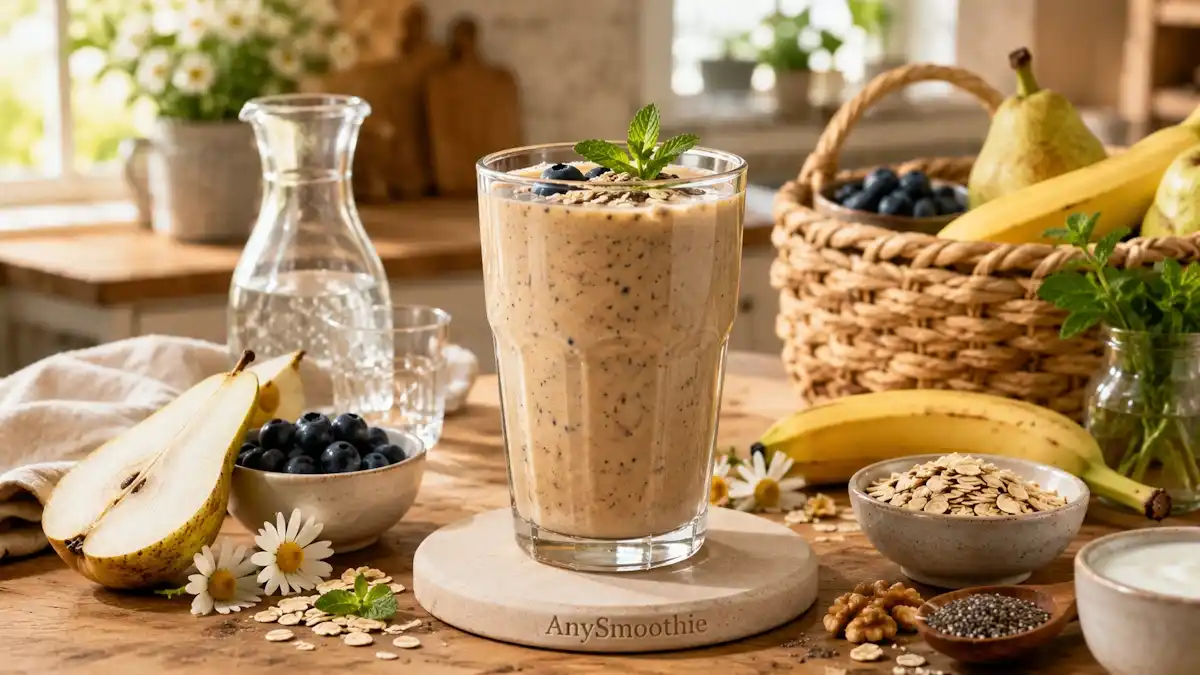
A smoothie can be more than a quick breakfast. With the right ingredients, it can support digestive balance, which means comfortable digestion, regularity, and a calmer gut routine.
That is where bovine immunoglobulin smoothies for digestive balance fit in. People often look at them when they want a more strategic add-in for gut-friendly nutrition, post-meal comfort, or a smoother start to the day. They are not a cure or treatment, but they can fit into a food-first routine with a clear purpose.
What bovine immunoglobulins are, and why people add them to smoothies
Bovine immunoglobulins are proteins from cow’s milk. In supplement form, they are used because they interact with the digestive tract and may help support the gut environment’s normal functions.
A lot of people like them in smoothies because the format is simple. You can mix them into a drink you already make, then pair them with ingredients that feel light and steady on the stomach. For a clinical overview of serum-derived bovine immunoglobulin, see the NIH review on SBI and GI symptoms.
| Add-in | Main focus | Texture effect | Digestive angle | Best use |
|---|---|---|---|---|
| Bovine immunoglobulin powder | Gut support | Usually neutral | Supports digestive balance in a targeted way | A daily smoothie routine |
| Protein powder | Protein intake | Can be thick | Helps satiety and recovery | Meal replacement blends |
| Yogurt | Protein and cultures | Creamy | May feel gentle if tolerated | Breakfast or snack smoothies |
| Fiber supplements | Fiber | Can thicken fast | Supports regularity, but can feel heavy | Small, measured portions |
| Probiotic foods | Live cultures | Varies | Adds fermented food benefits | Mixed with mild fruit bases |
Bovine immunoglobulins sit in a different lane from basic protein. Protein powders mainly add amino acids. Fiber adds bulk and changes stool texture. Probiotic foods add live cultures. Immunoglobulin-focused support is about a more specific gut-friendly function.
If you already build simple blends, digestive-friendly smoothie ideas can give you a useful starting point.
How they differ from regular protein powders
Protein powder is about protein density. Bovine immunoglobulin powder is about a more targeted gut-support angle. That difference matters if you want a smoothie that feels functional without becoming heavy.
A whey or plant protein blend may help you hit macros. Bovine immunoglobulins fit better when the goal is digestive comfort and a calmer routine. They can be used together, but they do different jobs.
Who may want to consider them in a food-first routine
These smoothies make sense for people who want a gentler morning blend, a lighter post-workout option, or a simple add-in for digestion-aware nutrition. They also appeal to anyone who wants fewer variables in the glass.
If your stomach likes consistency, this kind of smoothie can be easy to keep repeating.
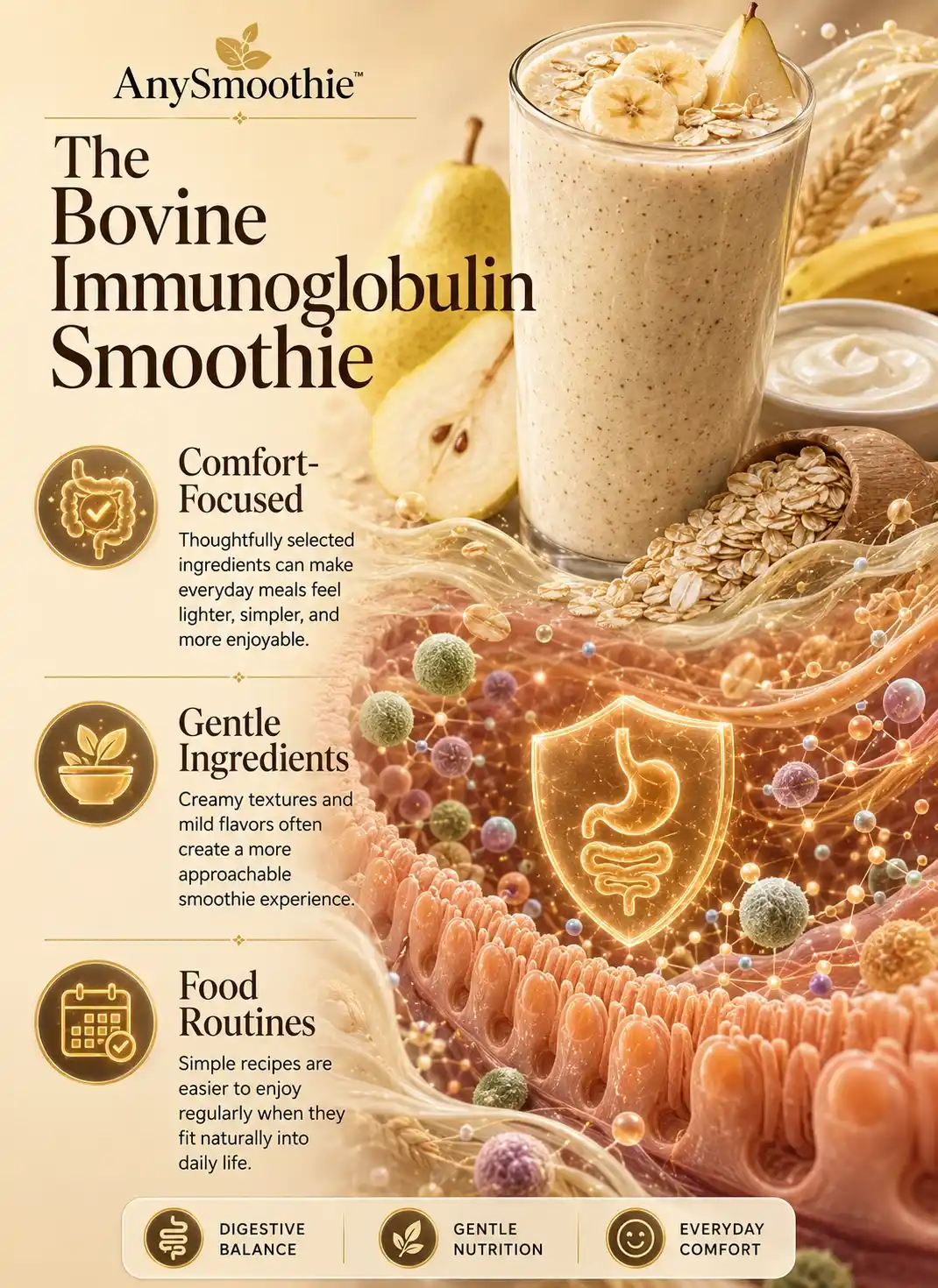
How to build bovine immunoglobulin smoothies for digestive balance
The best smoothie starts with a light base, a modest amount of powder, and ingredients your body already handles well. Keep the first version simple. You can always add more later.
Start with liquid first, then soft fruit, then the bovine immunoglobulin powder. That order helps the blender move smoothly and reduces clumps. Use a smaller serving at first, especially if you do not know how your stomach will respond.
Choose flavors that stay mild. Banana, berries, cucumber, plain yogurt if you tolerate dairy, oats, and a small amount of fat all work well. Heavy cream, lots of nut butter, or a pile of sweeteners can make the drink sit too rich.
If you want more structure, smoothie recipes for gut health can help you keep the base gentle.
Choose ingredients that support a calm gut feel
Banana gives body without much bite. Berries add freshness without turning the smoothie into dessert. Cucumber lightens the mix. Oats bring a soft, steady texture. A little chia, flax, or nut butter can help, but too much can weigh the drink down.
Very high sugar can work against comfort for some people. So can a huge hit of fiber all at once. Keep the mix balanced, not overloaded.
Pick a texture and timing that your body handles well
Some people feel better with thinner smoothies. Others want a creamier blend that feels more filling. Both can work.
Try one as breakfast, a light meal, or a between-meal option. Sip slowly, because gulping can add air and create discomfort. Pay attention to how the drink lands an hour later, not just how it tastes at first.
Start small, sip slowly, and let your own response set the pace.
3 Bovine immunoglobulin smoothies for digestive balance
These three blends keep the ingredient lists short and the flavors easy to live with.
What to watch for before making bovine immunoglobulin smoothies part of your routine
Check the label before you buy. Bovine immunoglobulin products come from dairy, so they are not a fit for dairy allergy. People with lactose sensitivity may also want to start carefully and watch their response.
Ingredient lists matter, too. Some powders add sweeteners, gums, or flavor systems that can change how the smoothie feels. A Frontiers review on bovine IgG and gut effects also highlights how this ingredient is discussed in the context of gut interactions and inflammation pathways.
If a smoothie feels too rich, scale it back. Smaller portions often work better than bigger ones. For people who mainly struggle with bloating, gut-soothing smoothies for bloating can be a simpler place to start.
Signs a recipe may be too rich or too heavy
A smoothie that leaves you overly full, bloated, or uncomfortable needs adjustment. Try less powder, fewer add-ins, or a thinner texture before you give up on the idea.
How to choose a quality bovine immunoglobulin product
Look for clear labeling, transparent ingredient lists, and third-party testing if it is available. A short formula is usually easier to work with. Pick a product that fits your diet and does not hide extra ingredients you do not want.
Conclusion
Bovine immunoglobulin smoothies for digestive balance can fit nicely into a practical, food-based routine. Start with gentle ingredients, keep the first blend simple, and use a smaller serving until you know how it feels.
The goal is steady comfort, not a complicated recipe. When you pay attention to texture, timing, and your own response, you get a smoother routine and fewer surprises. The best recipe is the one that feels easy to keep using.
🛡️ Safety Notes & Dietary Interactions
- Dairy Allergy Considerations: Bovine immunoglobulin products are derived from cow’s milk. Individuals with a milk allergy should avoid these products unless specifically advised by a qualified healthcare professional.
- Start With Smaller Servings: Digestive-support supplements can affect people differently. Beginning with a smaller serving and a simple smoothie recipe may help you evaluate tolerance before making it a regular habit.
- Review Added Ingredients Carefully: Some bovine immunoglobulin powders contain sweeteners, flavorings, gums, or additional digestive ingredients. Reading the full label can help you avoid ingredients that may not fit your dietary preferences or digestive needs.
- Consult a Professional When Appropriate: If you have chronic digestive symptoms, inflammatory bowel conditions, food sensitivities, take prescription medications, or are pregnant or breastfeeding, speak with a healthcare professional before adding bovine immunoglobulin supplements to your routine.
FAQ
What are bovine immunoglobulins?
Bovine immunoglobulins are naturally occurring proteins derived from cow’s milk or serum sources. In supplement form, they are commonly used as part of digestive-support routines because they interact with the gastrointestinal environment and are studied for their role in supporting normal gut function.
Can bovine immunoglobulin powder be mixed into any smoothie?
In most cases, yes. Bovine immunoglobulin powders are often designed to blend into cold beverages and smoothies. Mild ingredients such as banana, berries, oats, yogurt, almond milk, and avocado typically pair well with their neutral flavor profile.
What’s the difference between bovine immunoglobulins and protein powder?
Protein powders are primarily used to increase protein intake and support nutrition goals. Bovine immunoglobulins are used for a different purpose and are typically incorporated into digestive-focused routines. While both contain proteins, they serve different nutritional roles and are not direct substitutes.
When is the best time to drink a bovine immunoglobulin smoothie?
Many people prefer these smoothies at breakfast, between meals, or as part of a digestive-support routine. The best timing is usually the one that fits comfortably into your schedule and allows for consistent use while following the product’s instructions.
How can I make a bovine immunoglobulin smoothie easier on digestion?
Keep the recipe simple at first. Use a gentle liquid base, moderate portions, familiar fruits, and avoid excessive amounts of fiber, sweeteners, or heavy fats. Starting with a smaller serving and slowly adjusting ingredients can help you find a blend that feels comfortable and easy to repeat.

Medical Disclaimer: AnySmoothie content is for educational purposes only and is not a substitute for professional medical advice. Consult a healthcare provider for personalized guidance. See our full Disclaimer & Terms of Use. AI Transparency: AnySmoothie may use AI to support content development. All content undergoes human editorial review for accuracy, clarity, and editorial quality. See our full AI Transparency.