
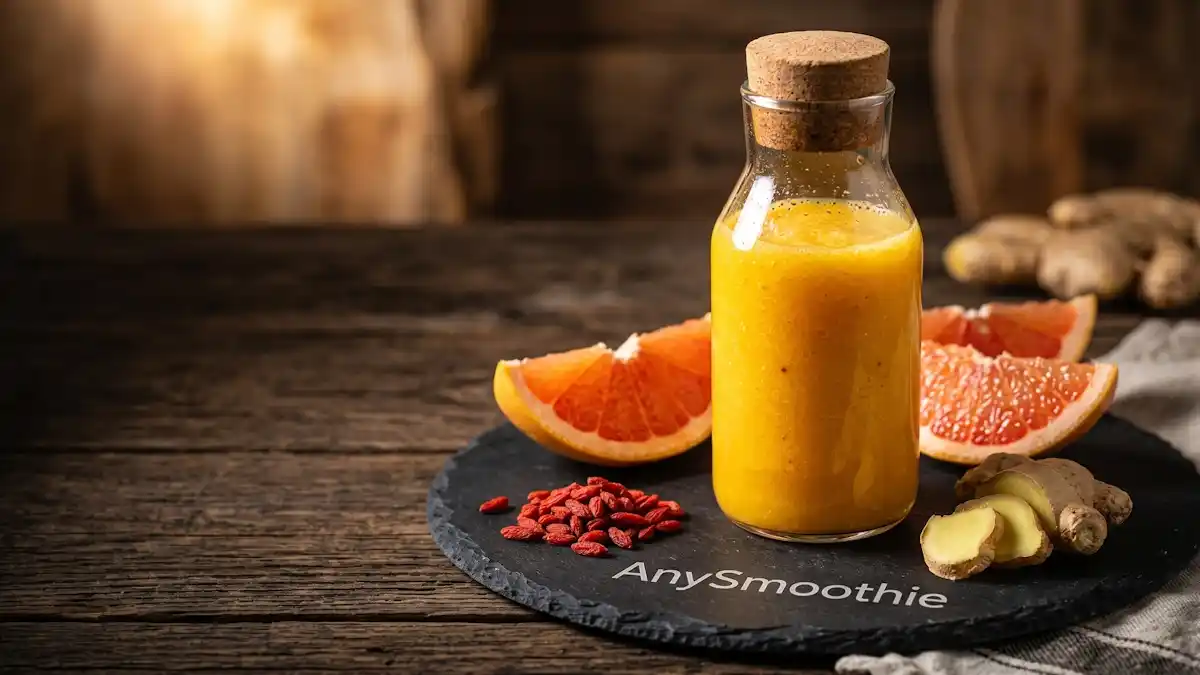
A smoothie can set your day on a steady track, or it can send your energy on a rollercoaster. AMPK is the cell’s energy sensor, and that is why people build AMPK pathway activation smoothie blends around it.
These drinks are not magic fixes. They work best as part of a low-sugar nutrient pattern that supports energy balance, mitochondrial function, and metabolic efficiency.
When the ingredients are chosen well, a smoothie can do more than taste good. It can fit your routine, support cleaner fuel use, and keep your body in a better place to handle the rest of the day.
The Metabolic Master Switch: Understanding the AMPK/mTOR Balance
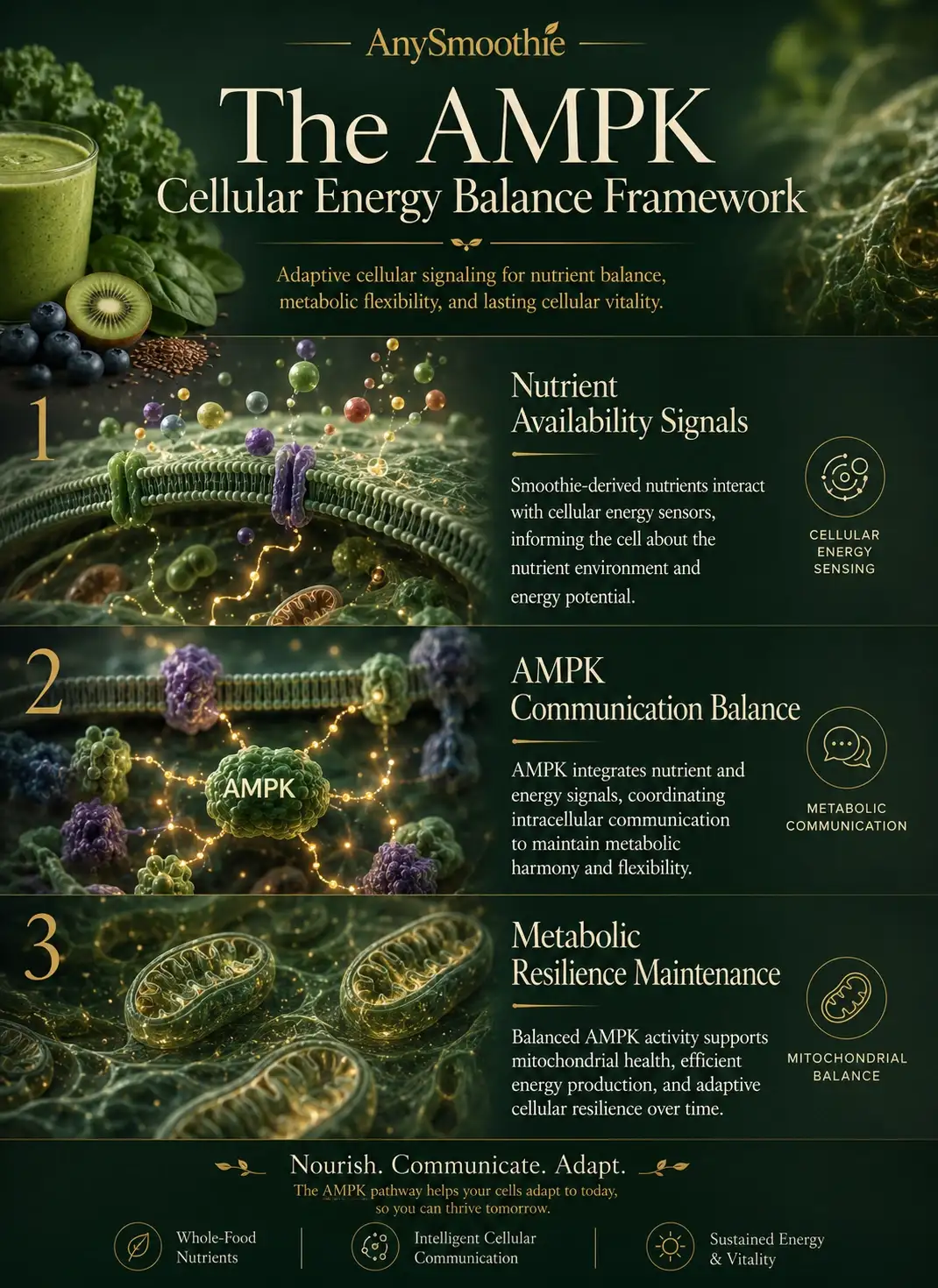
AMPK and mTOR are both useful. AMPK rises when energy runs low, while mTOR rises when nutrients are abundant and the body is ready to build. The goal is balance, because your cells need both repair time and growth signals.
If you want a simple food map for that balance, this AMPK food guide shows why green tea, berries, and leafy plants keep coming up in metabolic conversations.
Energy Sensing: How the AMP to ATP Ratio Triggers Cellular Repair
Inside the cell, the AMP to ATP ratio matters. When ATP drops and AMP rises, AMPK gets the message that energy is tight. That shift supports natural cleanup and repair processes, along with a more careful use of fuel.
That does not mean your body wants low energy all the time. It means cells respond well to periods of lower intake, movement, and simple foods that do not flood the system.
Why mTOR Is a Timing Signal, Not a Problem
mTOR supports growth, protein building, and recovery. It works well after food and training. Problems start when the signal stays high for too long.
That is why smoothie timing matters. A low-sugar blend can fit a fasting window, a morning before activity, or a long workday without pushing constant storage mode.
AMPK Activators: From Berberine to Citrus Bioflavonoids
Plant compounds matter here. A broader look at foods that boost AMPK makes one pattern clear, polyphenol-rich foods show up again and again.
The best blend usually does less. Low sugar, clear timing, and a focused ingredient list beat a crowded recipe.
Here is a quick comparison of common AMPK-supportive compounds:
| AMPK Modulator | Primary Physiological Mechanism | Target Tissue | Best Smoothie Pairing | Synergistic Bio-enhancer |
|---|---|---|---|---|
| Berberine (from barberry) | Supports complex I inhibition and AMPK signaling | Liver, muscle, adipose | Grapefruit, ginger, chia | Fiber and a small amount of fat |
| Hesperidin (from citrus) | Supports glucose handling and antioxidant signaling | Liver and vascular tissue | Lemon, orange, berries | Whole citrus pulp and vitamin C |
| EGCG (from green tea) | Supports AMPK and glucose uptake signaling | Liver and muscle | Cooled green tea, lemon, mint, berries | Vitamin C from citrus |
Berberine is often considered the most potent whole-food AMPK mimetic in this group. Hesperidin and EGCG are lighter supports, but they still fit well in a smoothie formula.
Berberine, the Strongest Option for Many Metabolic Blends
Berberine often works as the anchor ingredient in this kind of blend. It gets attention because it ties into glucose handling and energy signaling in a direct way.
Dose and tolerance matter, though. Some people do better starting low, especially on an empty stomach. Pairing berberine with fiber or a little fat can make the drink feel smoother and can support nutrient partitioning.
Citrus Bioflavonoids and Green Tea Compounds as Lighter Support
Hesperidin from citrus and EGCG from green tea are gentler supports. They do not need to replace berberine. They work well beside it.
Taste matters too. Citrus keeps the blend bright, and cooled green tea adds a clean polyphenol base. Fresh ingredients help these smoothies feel easy to repeat.
Mitochondrial Biogenesis: Signaling for New Power Plants
Polyphenols can also support signaling tied to mitochondrial biogenesis, which is the cell’s way of making more energy-producing machinery. That does not happen from one drink alone.
A blend works best when it sends a clear message, low sugar, strong plant compounds, and a routine the body can recognize.
3 “Metabolic-Switch” AMPK Activation Smoothie Recipes
These recipes stay simple on purpose. Each one keeps sugar lower and gives the plant compounds room to do their job.
Synergistic Strategies: Timing Smoothies for Fasting Mimicry
Timing changes how these blends feel. They can work before a walk, after an overnight fast, or inside a controlled meal window. AMPK activator foods for cellular health points to the same pattern, keep sugar lower and keep plant compounds high.
Lipid Oxidation: Facilitating the Transition to Ketogenic Flux
Lower sugar helps keep the energy curve smoother. Add fiber or fat, and the body can shift between glucose use and lipid oxidation with less of a spike.
That cleaner fuel shift is the main reason these smoothies feel different from a standard fruit drink. They fit a metabolic goal instead of fighting it.
Simple Habits That Make the Blend Work Better
Hydration matters. Sleep matters too. Light movement after the smoothie can help your body use fuel well.
Consistency matters most. One smart blend now and then is fine, but a repeatable routine gives the pathway better input over time.
Conclusion
The best AMPK pathway activation smoothie blends are simple, low-sugar, and built around targeted plant compounds plus smart timing. Berberine, citrus bioflavonoids, and green tea work best as part of a steady routine.
These smoothies support natural pathways tied to energy balance, mitochondrial function, and metabolic efficiency. Pick one recipe that fits your day, keep the formula clean, and repeat it long enough to see how your body responds.
🛡️ Safety Notes & Contraindications: AMPK pathway activation smoothies
Hypoglycemia risk: potent AMPK activators like berberine significantly lower blood glucose; use with extreme caution if you are on insulin or Metformin to avoid severe hypoglycemic episodes.
Gastrointestinal distress: berberine and high doses of green tea extract can cause cramping, diarrhea, or constipation; start with low doses and always include fiber (like chia) to buffer the digestive impact.
Liver enzyme interaction: berberine inhibits several CYP450 enzymes (specifically CYP3A4); this can dangerously increase the blood concentration of medications like statins, immunosuppressants, and certain antidepressants.
Pregnancy warning: berberine can cross the placenta and may cause harm to the fetus (including potential kernicterus in newborns); it is strictly contraindicated during pregnancy and breastfeeding.
Kidney stress: high intake of green tea (EGCG) in concentrated forms has been linked to rare cases of liver and kidney stress; ensure you are using whole-leaf infusions or standardized extracts within recommended limits.
FAQ
How does the AMP to ATP ratio act as a “Molecular Fuel Gauge”?
Adenosine Monophosphate-Activated Protein Kinase (AMPK) is the body’s primary energy sensor. Biochemically, as ATP is consumed, levels of AMP rise. This shift in the AMP:ATP ratio signals to the cell that energy is scarce, triggering AMPK to switch from energy-consuming processes (like growth) to energy-producing ones (like fatty acid oxidation). Supporting this physiological system through targeted smoothies optimizes the natural pathways of metabolic efficiency, ensuring the biochemical mechanics of repair are prioritized when energy demand is high.
What is the “AMPK/mTOR Balance” and why is timing critical?
AMPK and mTOR (mammalian target of rapamycin) act as an antagonistic metabolic switch. While mTOR supports growth and protein building in response to nutrients, AMPK promotes cleanup and energy conservation. Biochemically, they cannot be fully active at the same time. Supporting the physiological systems that balance these signals through low-sugar smoothies facilitates the natural pathways of cellular renewal. This ensures that the biochemical mechanics of “metabolic switching” are functional, preventing the drag of constant storage mode.
How does Berberine function as a “Metabolic Mimetic” in the liver?
Berberine is a plant alkaloid that supports the activation of AMPK by subtly influencing mitochondrial complex I. Biochemically, this mild stressor (hormetic effect) mimics a state of low energy, signaling the liver to optimize glucose handling and lipid oxidation. Supporting this physiological system through berberine-rich smoothie protocols optimizes the natural pathways of energy signaling. This strategy facilitates cleaner fuel use and supports the biochemical mechanics of systemic insulin sensitivity.
Why are Citrus Bioflavonoids (Hesperidin) essential for “Lipid Oxidation”?
Citrus bioflavonoids like hesperidin support the physiological systems involved in fatty acid metabolism and vascular health. Biochemically, they assist in the induction of AMPK-related pathways, encouraging the transition from glucose-based fuel to lipid-based fuel (ketogenic flux). Supporting this natural pathway through whole citrus pulp in smoothies ensures that the biochemical mechanics of nutrient partitioning are supported, preventing rapid energy spikes and promoting a more resilient metabolic steady-state.
How does EGCG from Green Tea support “Mitochondrial Biogenesis”?
Epigallocatechin gallate (EGCG) is a potent polyphenol that supports the physiological systems involved in the creation of new mitochondria (biogenesis). Biochemically, EGCG activates AMPK, which in turn triggers PGC-1alpha, the master regulator of mitochondrial production. Optimizing this natural pathway through cooled green tea smoothies facilitates long-term mitochondrial priming. This ensures that the biochemical mechanics of cellular energy output remain robust and capable of meeting increasing metabolic demands.

Medical Disclaimer: AnySmoothie content is for educational purposes only and is not a substitute for professional medical advice. Consult a healthcare provider for personalized guidance. See our full Disclaimer & Terms of Use. AI Transparency: AnySmoothie may use AI to support content development. All content undergoes human editorial review for accuracy, clarity, and editorial quality. See our full AI Transparency.